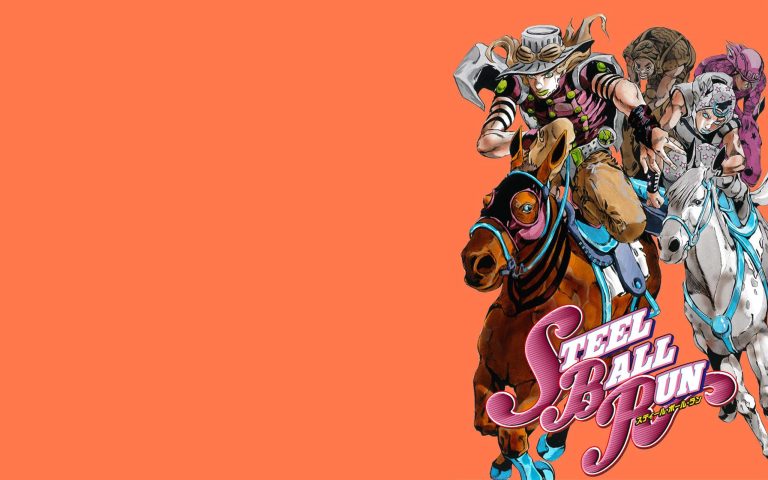
Ever since the climatic, universe-resetting finale of Stone Ocean aired on Netflix, the global anime community has held its collective breath. For casual observers, the saga of the Joestar bloodline reached an audacious conclusion amidst the tropical humidity of Green Dolphin Street Prison. But for manga purists, lore scholars, and seasoned pop-culture observers, everything prior was merely a grand prelude to Hirohiko Araki’s true magnum opus: JoJo’s Bizarre Adventure: Steel Ball Run.
Consistently locked in a dogfight with Berserk for the highest-rated spot on manga aggregate platforms worldwide, Steel Ball Run (Part 7) is not just another generational installment; it is a monumental reinvention of the franchise. Yet, despite the ceaseless clamor of internet discourse, David Production has kept its cards notoriously close to its chest. The silence has only supercharged the buzz. Adapting this epic requires more than the signature hyper-stylized color swaps and musical references that David Production mastered over the past decade. It demands tackling the most technically punishing creative endeavor in modern television animation: an endless, blood-soaked, supernatural equestrian marathon across 19th-century America.
The Frontier Rebirth: How Ultra Jump Liberated Hirohiko Araki
To understand the near-religious reverence surrounding Steel Ball Run, one must examine its turbulent genesis in 2004. Originally serialized in Weekly Shōnen Jump without the explicit “JoJo” moniker attached to its initial branding, the series marked a deliberate narrative and creative divergence. Araki, exhausted by the relentless grind of weekly deadlines and the thematic constraints of traditional shōnen demographics, orchestrated a radical pivot.
When the series migrated to the monthly pages of Ultra Jump in 2005, the shackles came off. The move allowed Araki to luxuriate in pacing, craft intricate double-page spreads, and inject a level of moral ambiguity and psychological grit unseen in the days of punch-ghost skirmishes across Cairo or Morioh. Steel Ball Run reframed the Joestar mythos through the lens of a historical period piece, subverting the American Western myth. It was no longer a binary battle of pure virtue against primordial evil; it was a desperate, 4,000-mile scramble fueled by trauma, manifest destiny, and imperialist ambition.
The Corpse, the Country, and the Race
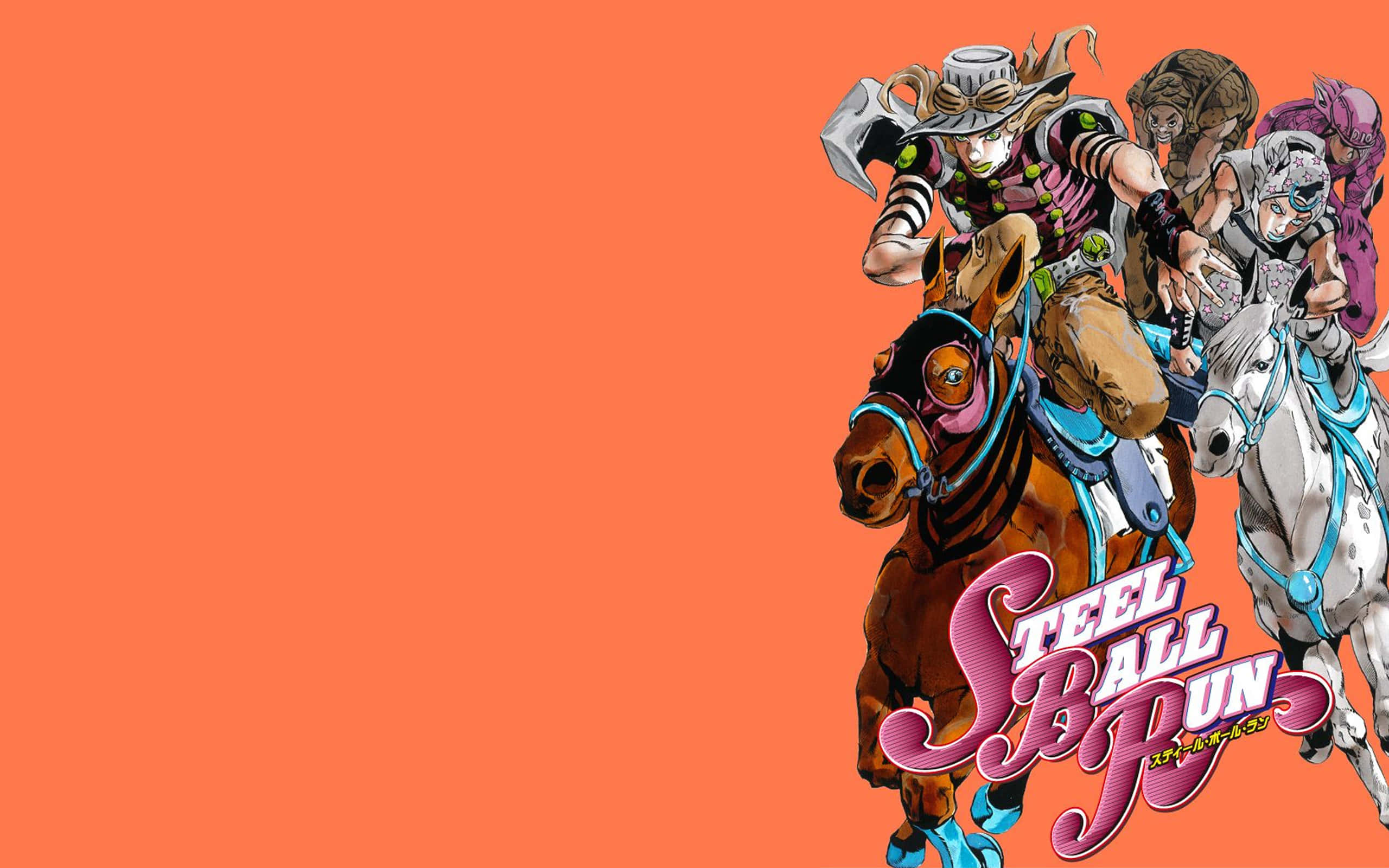
Set in 1890, the plot hinges on the titular trans-continental race orchestrated by charismatic promoter Steven Steel, boasting a staggering fifty-million-dollar prize purse. Yet beneath the dust and spectacle lies an esoteric conspiracy orchestrating the collection of the dismembered mummified relics of an unnamed Saint—heavily implied to be Jesus Christ. In this intersection of hyper-specific Americana, Christian mysticism, and Stand-fueled warfare, Araki discovered his artistic zenith.
Johnny Joestar and Gyro Zeppeli: Anatomy of Araki’s Finest Partnership
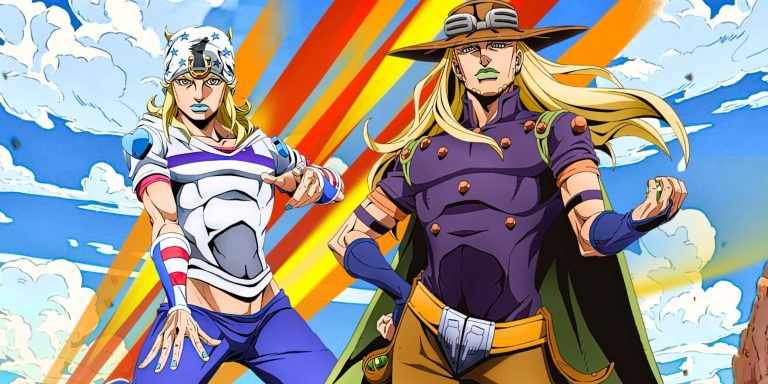
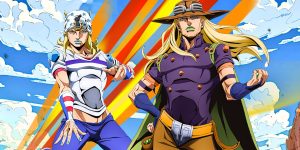
At the beating heart of this sprawling trans-American odyssey lies the psychological alchemy between Johnny Joestar and Gyro Zeppeli. While previous entries coasted on the undeniable charisma of singular archetypes like Jotaro Kujo or Joseph Joestar, Part 7 operates on an uncompromising dual-protagonist dynamic that redefines vulnerability within the battle manga genre.
Johnny Joestar represents a fascinating deconstruction of the conventional heroic archetype. A former prodigy jockey left paraplegic by a reckless display of hubris, Johnny begins his arc stripped of his prestige, physical mobility, and self-worth. He is petty, bitter, and possessed by what characters describe as an “eye of dark determination”—a ruthless, borderline villainous drive to regain his physical autonomy at any collateral cost. His evolution from a broken shell into an enlightened gunslinger remains one of the most mature character trajectories in modern graphic literature.
Acting as his catalyst, foil, and reluctant mentor is Gyro Zeppeli. Hailing from the Kingdom of Naples, Gyro is a disgraced executioner’s son armed with steel spheres, razor-sharp eccentricities, and terrible comedic routines involving mozzarella cheese. Yet beneath the golden-toothed grins lies an agonizing quest for redemption to save an innocent child condemned by the Neapolitan state. The camaraderie forged between Johnny and Gyro avoids the saccharine tropes of the “power of friendship,” developing instead into an authentic, existential brotherhood forged under blazing prairie sunsets and terrifying gun duels.
The Physics of Miracles: The Spin, Tusk, and the Golden Ratio
Mechanically, Steel Ball Run fundamentally reimagined how supernatural powers operate within the series. Rather than relying solely on the established lineage of Stands unlocked by meteorite arrows, Araki introduced the Spin—an ancient, mathematical martial art based on the Fibonacci sequence and the Golden Ratio.
The Spin is kinetic energy elevated to divine heights. Harnessing the rotation of specially crafted steel balls, Gyro can manipulate muscle fibers, shatter stone, and distort organic tissue. When Johnny begins unlocking the Spin’s mysteries through the supernatural manifestation of his Stand, Tusk, Araki bridges the gap between science, sacred geometry, and metaphysical power.
Johnny’s Tusk evolves through distinct “ACTs,” directly mirroring his gradual psycho-emotional healing and spiritual transcendence. By the time Johnny discovers how to channel the infinite energy of a galloping horse into the Spin, the series ascends from a grounded Western into an astonishing meditation on dimensional physics, gravity, and divine will. This thematic fusion creates some of the most conceptually breathtaking battles in anime history, including the climactic confrontations with the enigmatic Diego Brando and the dimension-hopping President of the United States, Funny Valentine.
The Technical Everest: Why David Production is Hesitating
If the narrative of Steel Ball Run is a masterpiece, the production reality of adapting it is a logistical minefield. Across the animation industry, there is an unspoken law that chills production committees: quadrupeds are an animator’s worst nightmare.
Horses are notoriously grueling to animate convincingly. Their biomechanics, rhythmic muscle contortions, and complex bone structures demand an immense volume of frames to convey weight, speed, and momentum. In standard anime productions, equine appearances are kept brief, masked by clever camera angles, or shoved into rigid, poorly blended 3D CGI models that alienate audiences. Steel Ball Run, however, is not a series with a single horse scene; the entire core of the story revolves around scores of riders competing across varied topographies for dozens of chapters at a time.
The CGI vs. Hand-Drawn Crossroads
David Production established their reputation through an uncompromising stylistic lexicon—halftone dots, onomatopoeic kanji floating across the screen, dramatic high-contrast lighting, and loyal 2D character modeling. Translating hundreds of horses dynamically moving across deserts, swamps, and snowdrifts without heavily relying on 3D CGI is practically impossible under modern television production schedules.
The studio faces a perilous crossroads:
- A Pure CGI Hybrid: Emulating studios like Orange (Beastars, Trigun Stampede) by fully committing to hyper-advanced cell-shaded 3D for equestrian assets. However, if poorly integrated with hand-drawn character close-ups, it risks outraging a notoriously passionate fanbase.
- Extended Pre-Production and Multi-Year Delivery: Transitioning away from standard television pipeline pressures into a prestige, staggered seasonal release or a series of theatrical feature projects with bloated budgets and prolonged production windows.
Compounding this technical dread is David Production’s recent packed slate, including Undead Unluck and the reboot of Urusei Yatsura. Reallocating the top-tier creative talent required for SBR’s scale demands an unprecedented commitment of time and resources.
The Inevitable Horizon
Despite the radio silence, the adaptation of Steel Ball Run remains an eventuality rather than an impossibility. The franchise is a multi-million-dollar pillar for Shueisha and Warner Bros. Japan, and the commercial viability of a Part 7 anime is indisputable. Furthermore, the global success of mature, genre-defying anime has proven that international audiences are more than ready for a high-stakes, historical-occult epic.
When the starting pistol finally fires and the opening chords of an official teaser drop, the anime landscape will experience a seismic shift. Steel Ball Run is not just the next chapter of JoJo’s Bizarre Adventure; it is the ultimate trial by fire for David Production—an ambitious, uncompromising race across the frontier that could cement their place in animation history.
What are your expectations for the Steel Ball Run adaptation? Would you accept 3D CGI horses if it meant David Production could deliver the series sooner, or should we hold out for pure 2D perfection? Let us know in the comments below!