For more than a decade, the anime community has treated Hirohiko Araki’s seventh story arc, Steel Ball Run, as something approaching holy scripture. While the animated adaptations of JoJo’s Bizarre Adventure have consistently redefined stylistic excess on television—transforming David Production from an ambitious underdog studio into an industry heavyweight—the silence following the December 2022 conclusion of Stone Ocean has been deafening. The question on every fan’s lips is no longer whether Steel Ball Run should be made, but whether contemporary television animation can physically withstand the creative and technical demands of Araki’s undisputed masterpiece.
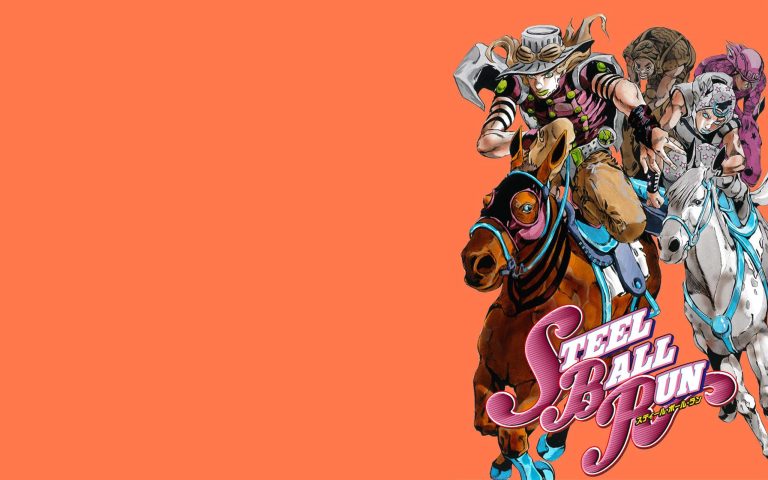
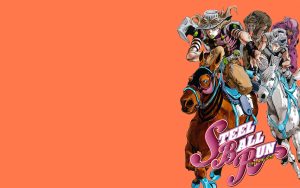
Serialized between 2004 and 2011, Steel Ball Run is not merely another generational shift in the Joestar lineage; it is a creative detonation. Transposing the franchise into a parallel nineteenth-century timeline, Araki stripped away the safety nets of familiar Stand lore and embarked on an unrelenting, 6,000-kilometer cross-country equestrian race across the continental United States. The result is a sweeping, hyper-detailed collision of classical Americana, geopolitical conspiracy, body horror, and theological existentialism. As anticipation reaches fever pitch, the prospect of its adaptation represents David Production’s greatest challenge—and potentially its crowning achievement.
A Seinen Rebirth: The Narrative Weight of Araki’s Western Epic
To understand the ravenous appetite for a Steel Ball Run anime, one must understand its unique publication history. The series began its life in Weekly Shonen Jump before migrating to the monthly pages of Ultra Jump in 2005. That shift in demographic target was revolutionary. Freed from the relentless weekly churn and censorship strictures of standard shonen publishing, Araki’s artistry metamorphosed. His line work grew denser, heavily influenced by classical Renaissance sculpture, haute couture framing, and the rugged, panoramic vistas of Sergio Leone westerns.
More crucially, the morality of JoJo matured. In Steel Ball Run, the battle lines are deliberately fractured. The race itself—orchestrated by the eccentric promoter Steven Steel—serves as an elaborate smokescreen for an international struggle to assemble the mummified Corpse of an unnamed saint, widely interpreted as Jesus Christ. Rather than facing cackling despots like Dio Brando or Yoshikage Kira, our protagonists are positioned against Funny Valentine, the twenty-third President of the United States. Valentine’s fiercely patriotic utilitarianism—encapsulated by his iconic, chilling monologue regarding “taking the first napkin”—presents one of the most morally complex antagonisms in modern manga history. Adapting this text requires an acute understanding of pacing, ideological tension, and historical gravitas that goes far beyond traditional battle shonen conventions.
Johnny Joestar and Gyro Zeppeli: The Anatomy of Brotherhood and Rotational Physics
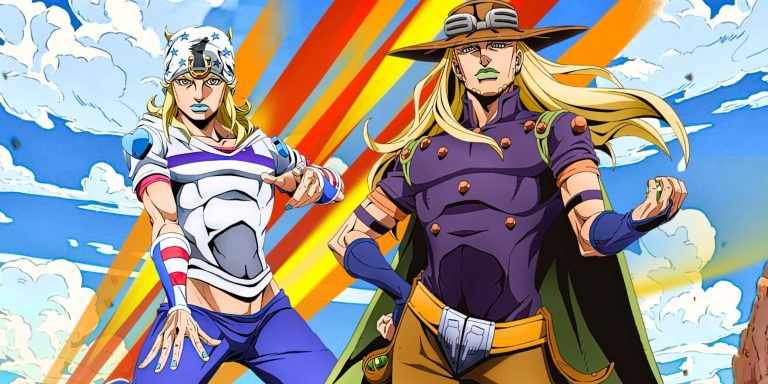
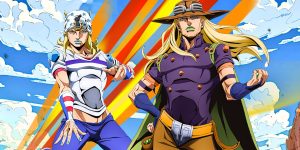
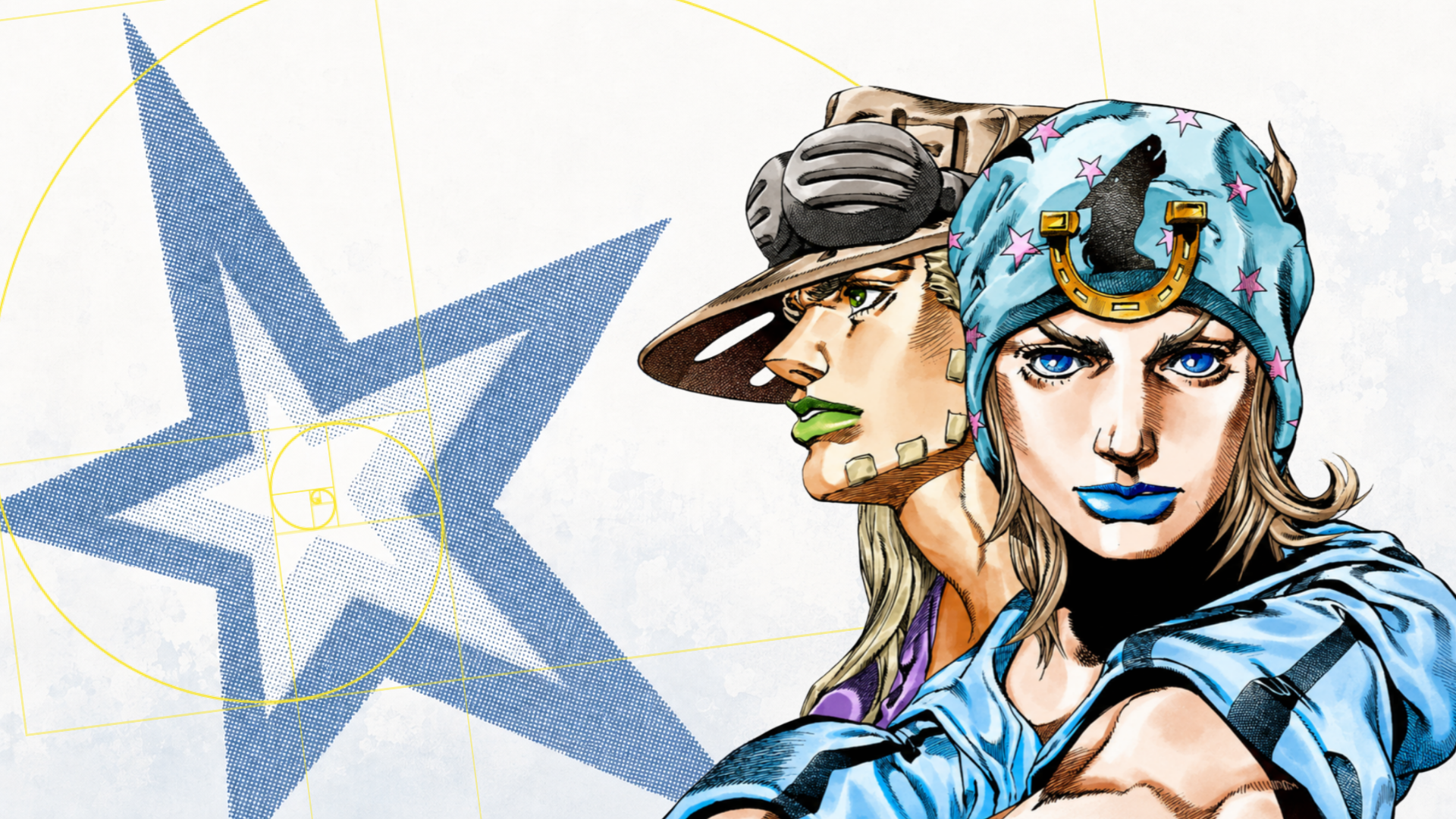
At the beating heart of this sprawling marathon is the most nuanced dual-protagonist dynamic Araki has ever penned. Johnny Joestar is fundamentally unlike any JoJo who preceded him. Paralyzed from the waist down following a tragedy borne of his own arrogant hubris as a former racing prodigy, Johnny begins the story as a cynical, broken shell. He is defined not by ancestral righteousness, but by what Araki explicitly terms “dark determination”—an obsessive, cold-blooded willingness to do whatever it takes to regain his footing and find emotional salvation.
Contrasting Johnny’s sullen introspection is Gyro Zeppeli, a disgraced executioner from the Kingdom of Naples whose flamboyant theatricality masks a heart aching with profound empathy. Gyro is not running for wealth or political supremacy; he is competing to win an amnesty plea for an innocent child condemned to death. Their shared journey across deserts, blizzards, and rivers is not merely a trail of survival; it is a masterclass in psychological codependency and philosophical growth, elevated by spontaneous, absurdist running gags about mozzarella cheese and the days of the week that make their bond feel remarkably human.
The Evolution of Stand Power: The Spin as a Metaphysical Bridge
Mechanically, Steel Ball Run subverts decades of Stand logic by introducing The Spin, an ancient kinetic art based on the mathematical perfection of the Golden Ratio. By channeling the infinite spiral through spinning steel spheres, Gyro introduces a tactile, physics-based power system that seamlessly complements Johnny’s emerging Stand, Tusk.
Johnny’s progressive unlocking of Tusk’s four “Acts” mirrors his traumatic psychological rehabilitation. Watching Tusk evolve from firing fingernail projectiles to harnessing the dimensional-tearing infinite rotation is one of the most satisfying mechanical progressions in the medium. For David Production, rendering the mathematical beauty of the Spin—with its invisible vortexes, atmospheric distortions, and spiraling energy lines—demands an inventive visual language that merges metaphysical geometry with bone-crunching physical impact.
The Technical Frontier: David Production’s Equestrian Nightmare
If Steel Ball Run is universally recognized as brilliant, why has David Production hesitated to officially unveil it? The answer can be summarized in a single word: horses.
In the animation industry, four-legged equestrian locomotion is widely considered the ultimate baptism by fire. Unlike humans, a galloping horse involves complex musculoskeletal shifts, undulating muscle volume, and rhythmic anatomical balance across multiple joints. Now, amplify that complexity: Steel Ball Run features dozens of jockeys galloping simultaneously across dynamic, shifting terrain, engaging in high-velocity gunfights, dodging explosive traps, and maneuvering Stand battles at full sprint.
Animating hundreds of consecutive horse scenes entirely in traditional 2D hand-drawn sakuga is a fiscal and human impossibility in today’s strained anime production ecosystem. The studio must inevitably deploy hybrid 3D CGI assets. However, as series like Berserk (2016) proved, jarring CGI models dropped into an illustrated environment can alienate viewers instantly. David Production previously demonstrated exceptional CGI integration with the vehicular and Stand assets in Golden Wind and the environments of Stone Ocean, but SBR requires an unprecedented technological leap. The studio must develop bespoke, cel-shaded shaders capable of capturing Araki’s cross-hatched, gritty aesthetic without sacrificing the visceral fluid weight of a thoroughbred in mid-stride.
Cultural Anticipation and the Streaming Era: Lessons Learned from Stone Ocean
The conversation surrounding Steel Ball Run is also inextricably tied to distribution politics. When Stone Ocean premiered as a three-part batch drop on Netflix between 2021 and 2022, it sparked massive internal debate within anime culture. The lack of a weekly broadcast rhythm stifled organic water-cooler conversations, blunted fan-art cycles, and caused a season that should have dominated social discourse for a year to evaporate from trending lists within weeks.
For a story as expansive, episodic, and suspenseful as Steel Ball Run, a traditional weekly release is paramount. The narrative is structured like an epic serial novel; cliffhangers such as the terror of Diego Brando’s Scary Monsters or the enigmatic, lethal ambush of Ringo Roadagain’s Mandom need time to breathe. Fan speculation between episodes is the lifeblood of the JoJo phenomenon, and Warner Bros. Japan must recognize that an adaptation of this stature deserves the prestige presentation of a global weekly event.
Final Verdict: The Long Ride Toward a Masterpiece
Hirohiko Araki’s Steel Ball Run stands as a towering monolith at the intersection of manga history and pop culture folklore. It is a work of breathtaking ambition—equal parts existential tragedy, pulse-pounding sports drama, and surrealist supernatural conspiracy. While the technical hurdles facing David Production are staggering, the studio has spent over a decade proving that they revere this source material as much as the fans do.
Whenever the starting pistol finally fires and Gyro Zeppeli’s horse crosses the digital screen, it won’t just be another seasonal premiere. It will be the arrival of anime’s most anticipated modern epoch.
How do you think David Production should tackle the equestrian animation in Steel Ball Run? Are you holding out hope for a weekly broadcast format, or are you ready to binge the entire race? Sound off in the comments below, and keep your browsers locked to Wibux.com for all your frontline anime news and analysis!