
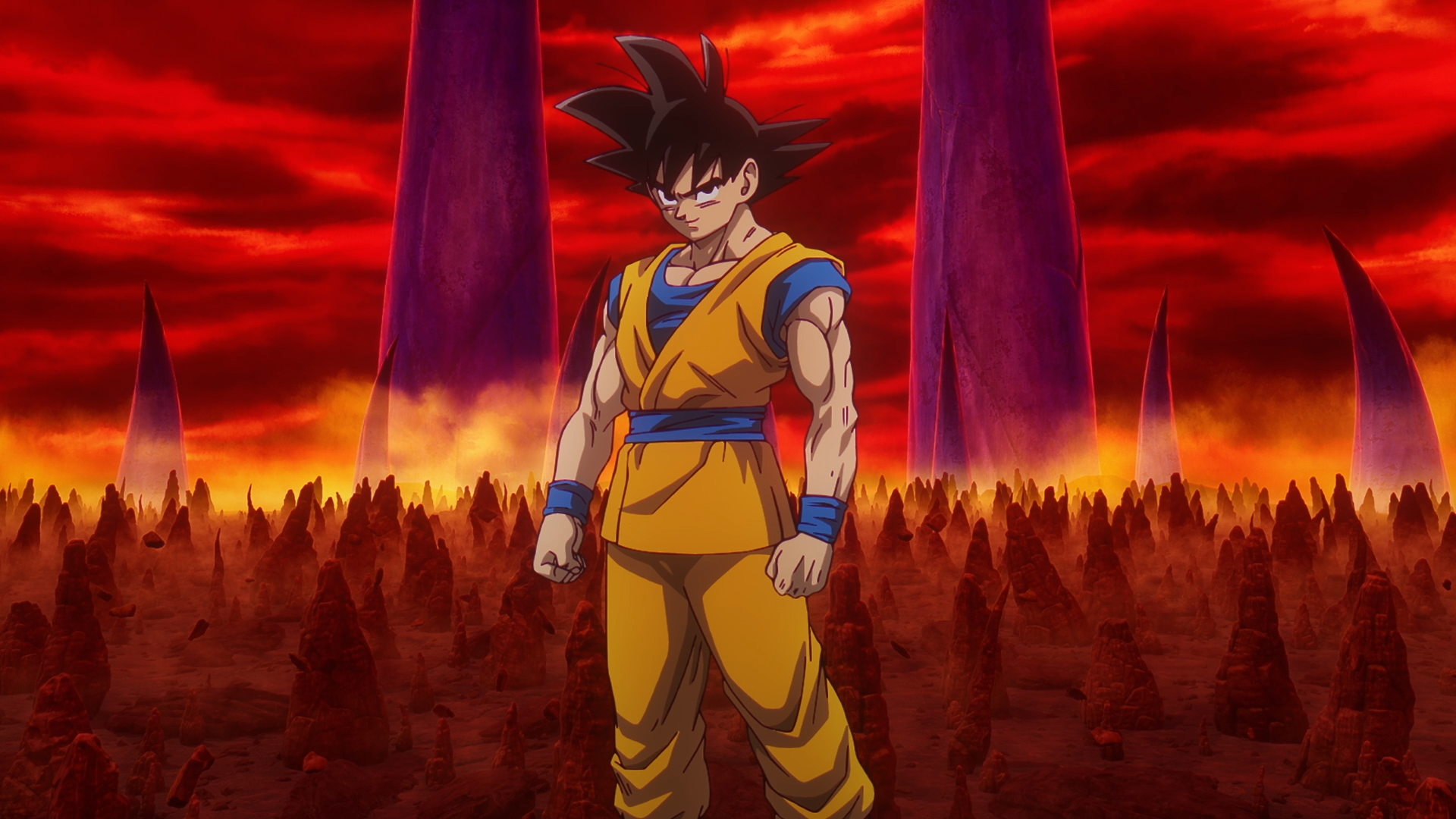
When Akira Toriyama unexpectedly passed away in March 2024, a seismic shockwave rippled through the global pop-culture landscape. Generations of animators, mangaka, and fans felt an irreparable void. Yet, Toriyama left the world one parting gift—an ambitious, deeply personal swansong designed to celebrate the 40th anniversary of his defining franchise. That project, Dragon Ball Daima, has finally premiered, and it instantly dispels any lingering cynicism that this was merely another corporate brand extension. Instead, the premiere delivers an enchanting, lore-heavy, and visually spectacular odyssey that marries the whimsical spirit of the original 1984 Dragon Ball with the sophisticated production values of modern peak anime.
A Rebirth in Miniature: De-Aging Without the GT Ghost
When Toei Animation first revealed that Goku and his comrades would be transformed into children, a chorus of skeptical fandom voices immediately evoked the specter of Dragon Ball GT. The memory of the 1996 anime-original series, which turned Goku into a child to mixed narrative results, made many wary of retreading familiar ground. However, the premiere of Daima executes this transformation with Toriyama’s quintessential narrative elegance and wry self-awareness.
This is not a careless wish made on fractured Black Star Dragon Balls; it is a calculated, politically motivated conspiracy birthed in the shadowed corners of the universe. The premiere takes its time, spending an unprecedented amount of narrative bandwidth grounding the aftermath of the Majin Buu saga. Rather than rushing into action, the episode allows the audience to luxuriate in peaceful domesticity: Trunks’ birthday celebration, Krillin’s domestic bliss, and the lingering scars left by the battle with Babidi’s forces. When the de-aging hex finally strikes, it feels like an organic disruption orchestrated by villains who genuinely fear Earth’s defenders, rendering the physical downsizing a clever equalizer rather than a cheap narrative gimmick.
Unveiling the Makai: Toriyama’s World-Building Reaches New Horizons
For four decades, the Demon Realm—the Makai—existed largely on the fringes of canonical lore. It was a shadowy sandbox briefly teased through Dabura or relegated to non-canon spinoffs like Dragon Ball Heroes and the Xenoverse gaming franchise. In Daima, Toriyama pulls back the curtain himself, taking full authorship of the realm’s sociopolitical architecture.
King Gomah, Degesu, and the Vacuum of Power
The premiere masterfully establishes King Gomah and his sycophantic attendant Degesu (younger brother to the Supreme Kai) observing the events of the Buu Saga via cosmic surveillance. Dabura’s destruction left an unexpected power vacuum on the throne of the Demon Realm, propelling Gomah into an uneasy rulership. Gomah is distinctly Toriyamesque: physically unassuming, anxious, yet cunning. Watching Goku vanquish both Dabura and Kid Buu terrifies Gomah, prompting a preemptive strike against Earth. This dynamic injects fresh narrative energy into the franchise by giving us antagonists driven not by raw, planet-shattering hubris, but by political paranoia and strategic survival.
Redefining Namekian Heritage and the Dragon Balls
The deepest lore revelation in the premiere lies in the introduction of Neva, an ancient Demon Realm Namekian whose powers predate traditional understandings of the race. Toriyama re-contextualizes Namekian ecology by tying their origins directly to the mystical geography of the Makai. The sight of Neva effortlessly reviving Earth’s dormant Dragon Balls not only alters fundamental power dynamics but suggests that the Dragon Balls themselves have roots intertwined with dark, primordial magic. This revelation reframes the franchise’s foundational mythos, rewarding long-time lore scholars without alienating newcomers.
Visual Splendor: Toei Animation Reclaims the Lost Art of Hand-to-Hand Combat
Beyond the narrative intrigue, Dragon Ball Daima stands as an extraordinary triumph of animation pedigree. Under the direction of Yoshitaka Yashima and Aya Komaki, with character designs adapted by legendary animators Katsuyoshi Nakatsuru and Yoshihiko Umakoshi, the premiere showcases a standard of fluidity and kinetic impact rarely seen in serialized television anime.
Where Dragon Ball Super frequently leaned on digital sheen, stiff compositing, and cosmic laser spectacles, Daima consciously pivots back to tactile, weight-driven martial arts. The combat choreography in the premiere—and the promise of Goku reclaiming his iconic Nyoibo (Power Pole)—signals a vital aesthetic course correction. The choreography celebrates center-of-gravity shifts, physics-driven impacts, and deliberate framing. By miniaturizing the cast, the production team has ingeniously lowered the physical scale, forcing combatants to rely on leverage, spatial awareness, and pristine martial technique rather than universe-cleaving ki beams.
Strip Away the Gods: Escaping the Trappings of Infinite Escalation
One of the quiet triumphs of the premiere is how effectively it sidesteps the narrative trap of endless power escalation. Over the last decade, Dragon Ball Super pushed Goku and Vegeta into the domain of divine entities, multiversal gladiators, and reality-warping deities. While entertaining, this trajectory inevitably eroded the sense of vulnerability and personal stakes that made the original adventures resonate.
By transplanting an encumbered Goku into the treacherous, unknown geography of the Demon Realm, Daima restores a crucial emotional element: discovery. Goku is once again an underdog exploring uncharted territory. The Demon Realm is visually alien, teeming with bizarre flora, surreal atmospheric physics, and esoteric monsters reminiscent of early Dragon Quest concepts. Goku’s psychology shifts away from the detached pursuit of divine ascension back toward the infectious, grinning curiosity of a boy with the world at his feet. It is a heartfelt reminder that the soul of Dragon Ball was never just about power levels; it was about the thrill of the journey beyond the horizon.
The Sensei’s Parting Gift: Nostalgia, Legacy, and What Lies Ahead
The premiere of Dragon Ball Daima achieves a rare emotional duality. It functions simultaneously as an exuberant celebration of four decades of cultural dominance and as an unintended, poignant elegy for the creative visionary who started it all. Every frame pulses with Akira Toriyama’s distinctive handwriting: his round, bouncy mechanical designs, his dry comedic timing, and his enduring love for adventurous travelogues.
The anime community’s collective embrace of the premiere reflects not just nostalgia, but a profound appreciation for authentic creative voice. Rather than playing it safe with predictable arena tournaments, Toriyama challenged his audience to embark on one last strange, beautiful adventure through the underworld with the boy with the monkey tail.
What were your favorite moments and lore reveals from the Dragon Ball Daima premiere? Do you think the journey through the Demon Realm can surpass Dragon Ball Super’s highest peaks? Join the discussion in the comments below, and share your theories with the Wibux community!