



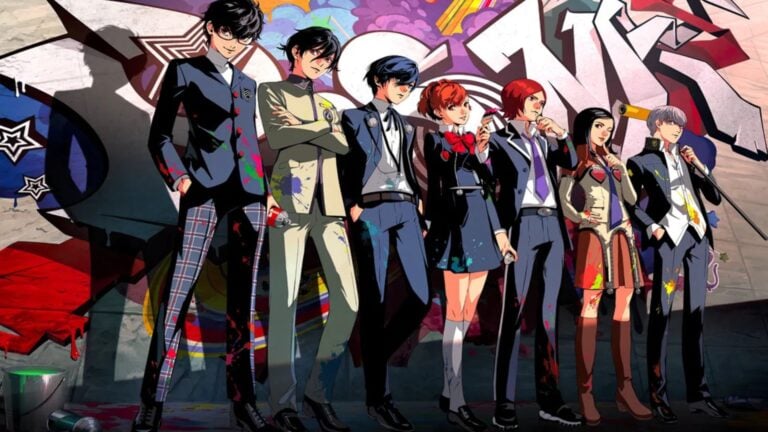
Ever since Persona 5 took over the gaming sphere with its acid-jazz aesthetic and Phantom Thief swagger, fans across the globe have asked the exact same question: how on earth can Atlus ever top it? With the monumental critical and commercial triumph of Metaphor: ReFantazio proving that director Katsura Hashino and Studio Zero can continuously reinvent turn-based RPGs, the spotlight has swung aggressively back toward the mainline franchise. Recent insider reports, development updates, and community leaks indicate that Persona 6 is not only well underway under general producer Kazuhisa Wada, but it is preparing to flip the entire identity of the beloved series on its head.
For nearly a decade, the formula established by Katsura Hashino, character designer Shigenori Soejima, and composer Shoji Meguro served as the gold standard of contemporary role-playing games. Yet, behind the closed studio doors of Atlus and SEGA, a generational transition is unfolding. With seasoned director Kazuhisa Wada taking the helm of the Persona Team, the next installment is deliberately charting a bolder, vastly more dynamic path forward for the PlayStation 5, Xbox Series X|S, and next-generation platforms.
The Green Motif and the End of High School Nostalgia
Each numbered entry in modern Persona history revolves around an evocative thematic color that defines its philosophy and visual design: the melancholic brooding blue of Persona 3, the energetic yellow fog of truth in Persona 4, and the defiant rebellious red of Persona 5. Longtime franchise trackers and reputable industry insiders have repeatedly highlighted that Persona 6 centers around an intense shade of vibrant green. In color psychology and classical Japanese symbolism, green embodies growth, rebirth, nature, and the unpredictable transition toward adulthood.
Crucially, several verified studio leaks suggest that Persona 6 may finally graduate from the traditional Tokyo high school setting that has dominated the series since 1996. Rumors point toward a collegiate campus environment or an ensemble cast navigating young adulthood in a bustling metropolitan backdrop. Shifting the protagonist and social circle to university students would immediately solve the long-standing narrative constraints of curfew mechanics and high school exams, granting Atlus the canvas to tackle mature psychological themes, complex moral dilemmas, and romantic storylines with authentic emotional depth.
Evolving Beyond the Calendar: A Dynamic Social Experience
The time-management system is the beating heart of the Persona experience, yet modern players have increasingly voiced fatigue over rigid, spreadsheet-like day scheduling. Following the design breakthroughs seen in modern titles like Dynasty Warriors: Origins and tactical RPG evolutions, Atlus is reportedly upgrading the Social Link and Confidant framework into an interconnected, semi-open neighborhood ecosystem.
Instead of isolated conversation nodes locked behind strict calendar checkpoints, confidants in Persona 6 are said to inhabit a living world with independent daily routines, reactive dialogue choices, and emergent group outings. Producer Kazuhisa Wada has hinted in multiple Japanese developer roundtables that modern player engagement requires higher agency without sacrificing the emotional gravity of bonding with unforgettable companions.
Turn-Based Combat Reimagined for the Next Generation
Combat in turn-based JRPGs underwent a massive renaissance in recent years, spearheaded by the swift, kinetic menu navigation and press-turn combat seen across modern Atlus releases. For Persona 6, veteran combat designers are taking cues from the seamless real-time skirmishes and fluid tactical transitions pioneered in high-speed Japanese gaming ecosystems, much like the precision mechanics celebrated in Hunter x Hunter: Nen x Impact.
Expect dual-protagonist synergy mechanics, interactive battlefield hazards, and seamless dungeon-to-combat transitions that completely eliminate loading pauses. Rather than repetitive hallway grinding, dungeon exploration is being designed as intricate, vertically expansive cognitive palaces that test both puzzle-solving wit and strategic team synergy.
Musical Evolution: Beyond Shibuya Jazz
The soundtrack of any Persona entry is legendary, with Shoji Meguro’s compositions defining the sonic palette of the entire JRPG genre. While Meguro continues to work as a freelance collaborator, Atlus sound team maestro Atsushi Kitajoh—who delivered iconic tracks for Persona 3 Reload and Persona 5 Strikers—is expected to steer the audio direction. Speculation points toward an eclectic blend of acid jazz, indie dream pop, and contemporary neo-soul featuring dual vocalists to capture both the sunlit beauty and psychological unrest of the game’s core duality.
What Do You Think?
Are you excited to see Persona 6 step away from high school life into a college setting, or should the classic calendar formula stay untouched? Which color theme and musical direction are you hoping Atlus explores next? Drop your thoughts, wildest theories, and wishlists in the comments below!







2 thoughts on “Persona 6 Leaks and Next-Gen Direction: Why Atlus and Kazuhisa Wada Are Setting Up the Biggest JRPG Shakeup in History”