

For nearly a decade, anime enthusiasts and sports drama purists held their collective breath for a showdown that felt destined to define an era. It was a promise whispered in the dusty corners of practice gyms during the Tokyo Expedition Arc, etched into the parallel histories of two aging coaches, and immortalized by the poetic moniker: The Battle at the Garbage Dump (Gomi Suteba no Kessen). Now, following a box-office assault that generated over 11 billion yen domestically and packed international theaters to the rafters, Haikyu!! The Dumpster Battle has officially arrived on global streaming platforms. Far from being just another high-octane tournament chapter, this 85-minute masterwork stands as a monument to sports anime perfection—a breathtaking collision of kinetic storytelling, structural economy, and generational emotional payoffs.
The Decades-Long Promise: The Architecture of an Inevitable Clash
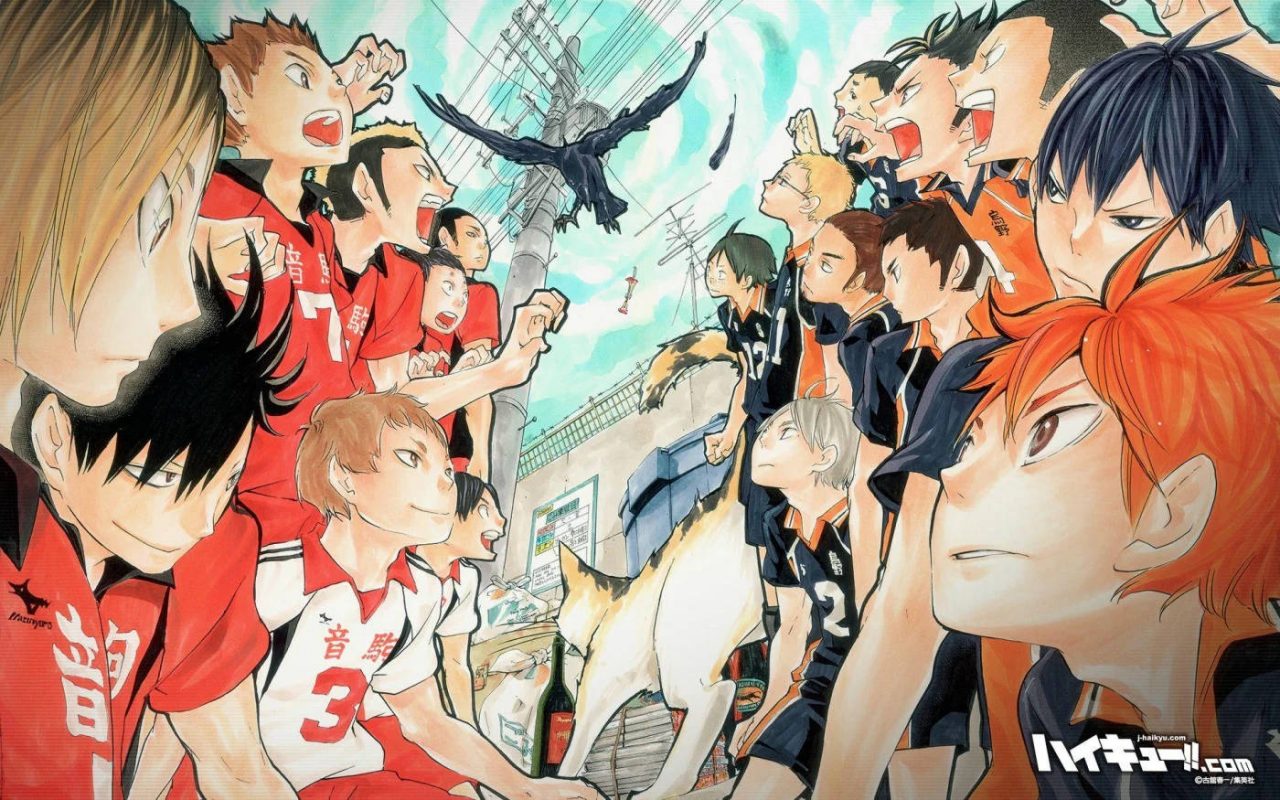
Most sports anime manufacture their tension through animosity. The rival is arrogant, callous, or embodies an existential threat to the protagonists’ dreams. Haruichi Furudate’s Haikyu!! has always rejected this trope, but nowhere is that rejection more radiant than in the storied friction between Karasuno High and Nekoma High. This was never a blood feud born of malice; it was an inheritance. Passed down from the legendary rivalry between former coaches Ikkei Ukai and Yasufumi Nekomata, the matchup was doomed to linger as a ghost—an unofficial training camp fixture that could never materialize on the hallowed floor of the Spring National Tournament.
A Clash of Opposing Philosophies
When the whistle blows on the national stage, the thematic dichotomy between both squads is dazzling. Karasuno represents untamed, voracious kinetic energy: a flock of omnivorous crows constantly mutating their offense, hurling their bodies at the net with reckless abandon, and living on the bleeding edge of high-risk, high-reward volleyball. Nekoma, by contrast, is a pristine, suffocating organism. Their motto—“Connect”—is not merely an inspirational bumper sticker; it is an attrition-based doctrine. Nekoma does not defeat you with overpowering spikes; they slowly, systematically calibrate their defensive perimeter until you suffocate under the weight of your own errors. They are the cat batting relentlessly at the bird until its wings give out.
Kenma Kozume’s Birdcage: The Psychological Chess Match
At the beating heart of The Dumpster Battle is not the thunderous power of an ace or the acrobatics of a libero, but the chilling, introverted brilliance of Nekoma’s setter, Kenma Kozume. The film eschews conventional shonen pacing to frame the center of the match as an unsettling psychological thriller. Kenma treats the volleyball court not as a battleground of physical grit, but as an optimization puzzle—a tactical video game wherein Shoyo Hinata is the sole anomaly requiring containment.
Clipping the Crow’s Runway
Director Susumu Mitsunaka visualizes Kenma’s suffocating strategy with surgical brilliance. Recognizing that Hinata thrives on speed and spatial freedom, Kenma orchestrates a calculated campaign of positional warfare. By serving relentlessly into specific seams, angling tip-ins into Hinata’s path, and forcing Karasuno into disjointed transitional setups, Kenma systematically steals Hinata’s runway. In one of the film’s most haunting visual metaphors, Hinata isn’t merely blocked; he is visually encased in a cold, geometric birdcage, rendered immobile and useless while the game whirs past him.
This dynamic pushes the emotional stakes beyond a simple win-or-loss binary. Hinata’s existential dread at being denied the ecstasy of flight creates a visceral knot in the viewer’s stomach. The eventual tactical counter—Kageyama setting a soaring, vertical “open” ball that allows Hinata to jump not forward, but straight into the stratosphere—is not just an athletic feat; it is a declaration of spiritual liberation that shatters Kenma’s algorithmic cage.
Kinetic Directing: Susumu Mitsunaka and Production I.G’s Technical Apex
Adapting roughly 33 manga chapters into an 85-minute runtime was a maneuver that initially drew skepticism from the fandom. Yet, returning director Susumu Mitsunaka alongside the veteran artisans at Production I.G turned this constraint into an asset of razor-sharp momentum. There is zero wasted motion. The Dumpster Battle foregoes lengthy interior monologues and redundant flashbacks, trusting the audience’s years of investment to anchor the emotional subtext while the animation captures the sheer, unrelenting velocity of modern volleyball.
The Exhaustion and the Iconic Point-of-View Climax
The cinematography here transcends anything the television series previously achieved. The camera swoops beneath diving receives, tracks the sickening spin of the microfiber ball, and uses aggressive focal shifts to simulate court-side whiplash. However, the film’s crowning artistic achievement arrives during its final, exhausting rally: a unbroken, sequence-defying first-person perspective through Kenma’s eyes.
In this tour de force of subjective animation, we don’t just watch Kenma—we inhabit him. We see the blur of his sweat-drenched bangs, hear the ragged, oxygen-starved rasp of his lungs, feel the squeak of court shoes against the hardwood, and experience the terrifying, disorienting descent of the ball as his slippery, burning fingers try to keep it aloft. It is an intensely physical, claustrophobic, and utterly transcendent piece of sakuga that captures the physiological toll of competitive athletics better than almost anything in modern cinema.
“Thank You”: The Transmutation of Passion
For four seasons, Kenma Kozume’s character arc was defined by a profound, lethargic detachment. He played volleyball because his childhood friend Tetsuro Kuroo asked him to; he endured the training because he didn’t want to let others down; he treated games with the impassive apathy of someone finishing a chore. But as the match slips through his sweat-soaked fingers in the dying seconds, something tectonic shifts within him.
Looking up at Kuroo while collapsed on the court, soaked in sweat and trembling from exhaustion, Kenma speaks the four words that represent the true thematic climax of the entire narrative: “Kuro, thank you for teaching me volleyball. It’s fun.” In that single, unadorned exchange, the competitive result dissolves into insignificance. Kuroo’s tearful, triumphant grin captures the profound beauty of high school sports: the scoreboards will eventually be cleared, trophies will gather dust, and graduation will scatter these boys to the winds, but the alchemy of sweat, friendship, and shared suffering forever alters who they are.
The Blueprint for Modern Sports Anime
Now that Haikyu!! The Dumpster Battle is readily accessible to living rooms across the globe, its legacy is cemented. It doesn’t rely on apocalyptic stakes, mythical powers, or hyper-inflated malice to command your undivided attention. Instead, it elevates the simple, human act of six people keeping a ball off the floor into a grand, operatic spectacle about mortality, joy, and the beauty of doing something difficult simply for the love of the game.
As Karasuno prepares for their next hurdle against Kamomedai, the bar has not merely been raised—it has been hoisted into orbit. The Dumpster Battle is not just the high-water mark for Haruichi Furudate’s saga; it is the gold standard by which all contemporary sports anime must now be measured.
Have you streamed Haikyu!! The Dumpster Battle yet? Did Kenma’s POV rally live up to the theatrical hype, or did the runtime leave you wanting more of the manga’s cut material? Drop your thoughts, analysis, and favorite moments in the comments below!