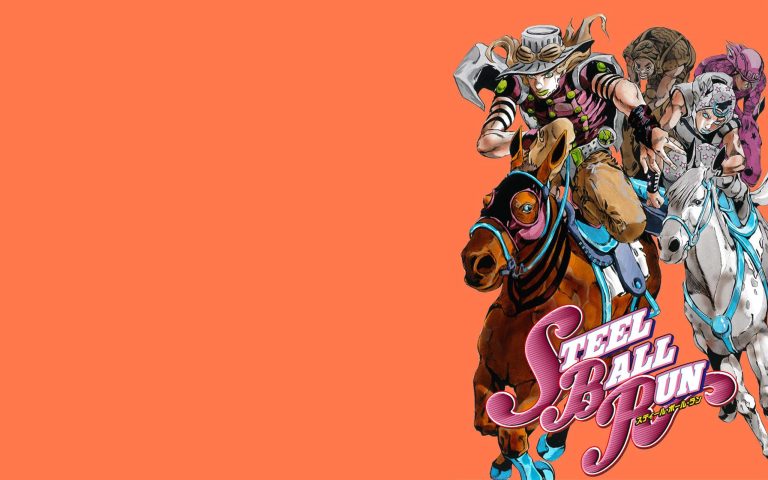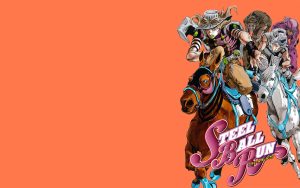
Ever since the bittersweet, timeline-fracturing chords of Stone Ocean faded into memory, an electric undercurrent of anticipation has hummed through the global anime community. Hirohiko Araki’s generational saga has delivered vampires, Aztec deities, serial killers in suburban Japan, and gravity-bending standoffs in Florida penitentiaries. Yet, for over a decade, manga purists and casual viewers alike have looked toward a single, towering horizon: the adaptation of Part 7, JoJo’s Bizarre Adventure: Steel Ball Run.
Consistently locked near the very top of MyAnimeList’s highest-rated manga of all time, Steel Ball Run is not merely another chapter in Araki’s repertoire—it is widely celebrated as his undisputed magnum opus. As David Production wraps up their recent ventures and rumors circulate regarding their upcoming production pipeline, the prospect of an SBR anime adaptation has evolved from wishful forum theorizing into an industry-defining inevitability. But bringing the trans-continental race across 1890s America to the screen is an undertaking fraught with technical nightmares, thematic reinventions, and impossibly high fan expectations.
The Seinen Rebirth: How Araki Redefined His Own Universe
To understand the immense weight carried by Steel Ball Run, one must appreciate its unique genesis. Serialized initially in Weekly Shonen Jump in 2004 before transitioning to the monthly seinen pages of Ultra Jump in 2005, Part 7 marked a radical creative rebirth for Hirohiko Araki. Unshackled from the punishing weekly release schedules and the editorial censorship of teen-oriented publications, Araki pivoted from colorful pop-art melodrama toward gritty historical fiction, moral relativism, and nuanced existential dread.
Set within an alternate timeline following the cosmic climax of Part 6, the narrative thrusts audiences into a grueling, 4,000-mile equestrian race from San Diego to New York City. The prize? Fifty million dollars—and, unbeknownst to the competitors, the scattered, mummified relics of a divine holy corpse that grant unfathomable Stand power. By reframing classic American frontier mythology through a psychedelic, supernatural lens, Araki constructed a sprawling epic that transcends standard battle-shonen conventions.
Johnny Joestar and Gyro Zeppeli: Psychology on the Frontier
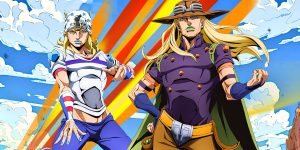
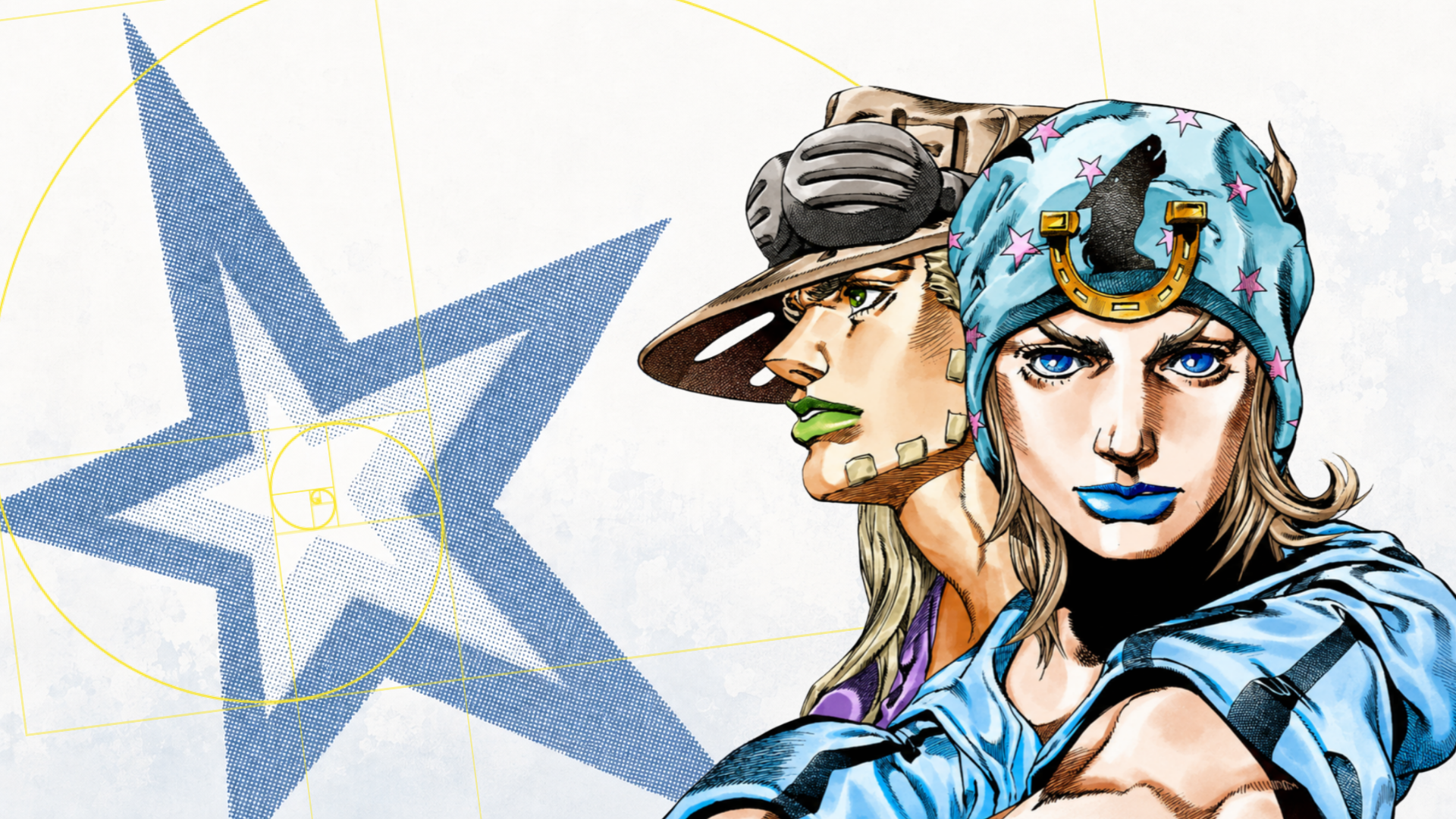
At the beating heart of this cross-country pilgrimage is the dynamic between two of the most thoroughly realized protagonists in modern manga history: Johnny Joestar and Gyro Zeppeli. Their bond departs sharply from the archetypal rivalries or mentor-student dynamics that defined earlier installments.
The Paralyzed Prodigy and the “Dark Determination”
Unlike Jonathan Joestar’s pristine chivalry or Jotaro Kujo’s stoic righteousness, Johnny Joestar is deeply, refreshingly flawed. A former equestrian prodigy struck down by hubris and paralyzed from the waist down in a senseless altercation, Johnny begins his odyssey as a bitter, self-pitying shell of a man. His primary motivation isn’t altruism or world-saving heroism; it is the selfish, desperate desire to regain the use of his legs after witnessing Gyro’s mysterious abilities.
Araki frequently illustrates Johnny with literal “flames of dark determination” in his eyes—a cold, ruthless willingness to kill anyone standing between him and his salvation. Watching an anime protagonist grapple with moral bankruptcy, clinical depression, and gradual redemption provides an unprecedented psychological depth that will challenge voice actors and animators alike.
The Philosophy of the Spin: Beyond Stands and Hamon
Complementing Johnny’s introverted gloom is Gyro Zeppeli, a disgraced Neapolitan executioner armed with steel spheres, a golden smile, and an idiosyncratic sense of humor. Gyro introduces the narrative to the Spin—a sophisticated physical martial art rooted in the Golden Ratio, acting as a metaphysical spiritual successor to the Ripple (Hamon) of Parts 1 and 2.
The interplay between the Spin and Johnny’s evolving Stand, Tusk, produces some of the most conceptually dense battles Araki has ever penned. Rather than relying on simple punch-ghost clashes, SBR’s combat mechanics demand intense spatial awareness, kinetic geometry, and strategic patience. The audiovisual realization of the Spin—its hum, its dimensional distortion, and its golden mathematical spirals—represents an intoxicating canvas for David Production’s sound design and art teams.
The Technical Everest: David Production and the Equestrian Hurdle
While the narrative foundation of Steel Ball Run is rock-solid, the logistical hurdle of animating it is famously terrifying. Ask any veteran animator about their worst industry nightmares, and “horses in dynamic motion” will inevitably sit near the top of the list. Horses possess intricate skeletal architecture, rippling muscle groups, and complex quadrupedal gait patterns that are notoriously grueling to animate convincingly in hand-drawn 2D.
Now multiply that single horse by dozens of galloping steeds crossing unpredictable landscapes—from the scorching sands of the Arizona desert to icy Midwestern blizzards—while riders trade Stand attacks at full sprint. This is David Production’s primary technical Everest.
Industry observers widely anticipate a hybrid visual approach. Much like the colossal movements in modern mecha series or WIT Studio and MAPPA’s complex rendering of dynamic chases in Attack on Titan, David Production will likely rely heavily on advanced 3D CGI models for the horses during wide, high-speed tracking shots, blended seamlessly with hand-drawn close-ups for intimate character acting. The studio proved its technical competence with dynamic camera sweeps in Fire Force and the kaleidoscopic styling of Urusei Yatsura, but Steel Ball Run demands a standard of compositing, lighting, and frame-rate consistency that will push their pipeline to its absolute limit.
Community Appetite and the Release Model Debate
The anticipation surrounding Part 7 is further magnified by how the anime fandom experienced Part 6. Stone Ocean’s release strategy via Netflix—marred by sporadic “batch drops” rather than the traditional weekly episodic broadcast—severely stifled social media momentum, weekly community discourse, and collective viewing rituals.
For an epic of Steel Ball Run’s caliber, fans are vocal in demanding a return to the weekly cultural appointment viewing that turned Stardust Crusaders and Golden Wind into worldwide trending sensations. SBR is structured like a grand serialized sports tournament intercut with existential survival horror; its tension builds stage by stage, checkpoint by checkpoint. A weekly episodic schedule is vital to letting its slow-burn narrative breathe and capturing the cultural zeitgeist.
The Horizon Awaits
Hirohiko Araki’s western masterpiece is no longer just a beloved chapter in manga archives; it is the ultimate rite of passage for modern anime adaptation. When that starting gun inevitably fires in San Diego, audiences will witness something far grander than typical supernatural brawls: a tragic, beautiful, dust-caked quest for purpose across an unforgiving frontier.
David Production has proven time and again that they understand the soul of Araki’s visual language—his sound effects made manifest, his color-shifting emotional crescendos, his swaggering posing. If they can conquer the technical hurdles of the trail, JoJo’s Bizarre Adventure: Steel Ball Run will not merely satisfy the hype; it could stand as one of the definitive anime accomplishments of the modern era.
What are your biggest hopes—and deepest anxieties—for the inevitable Steel Ball Run adaptation? Do you think CGI horses can do justice to Araki’s artwork, or are you holding out for pure 2D spectacle? Drop your thoughts, theories, and dream voice casts in the comments below!