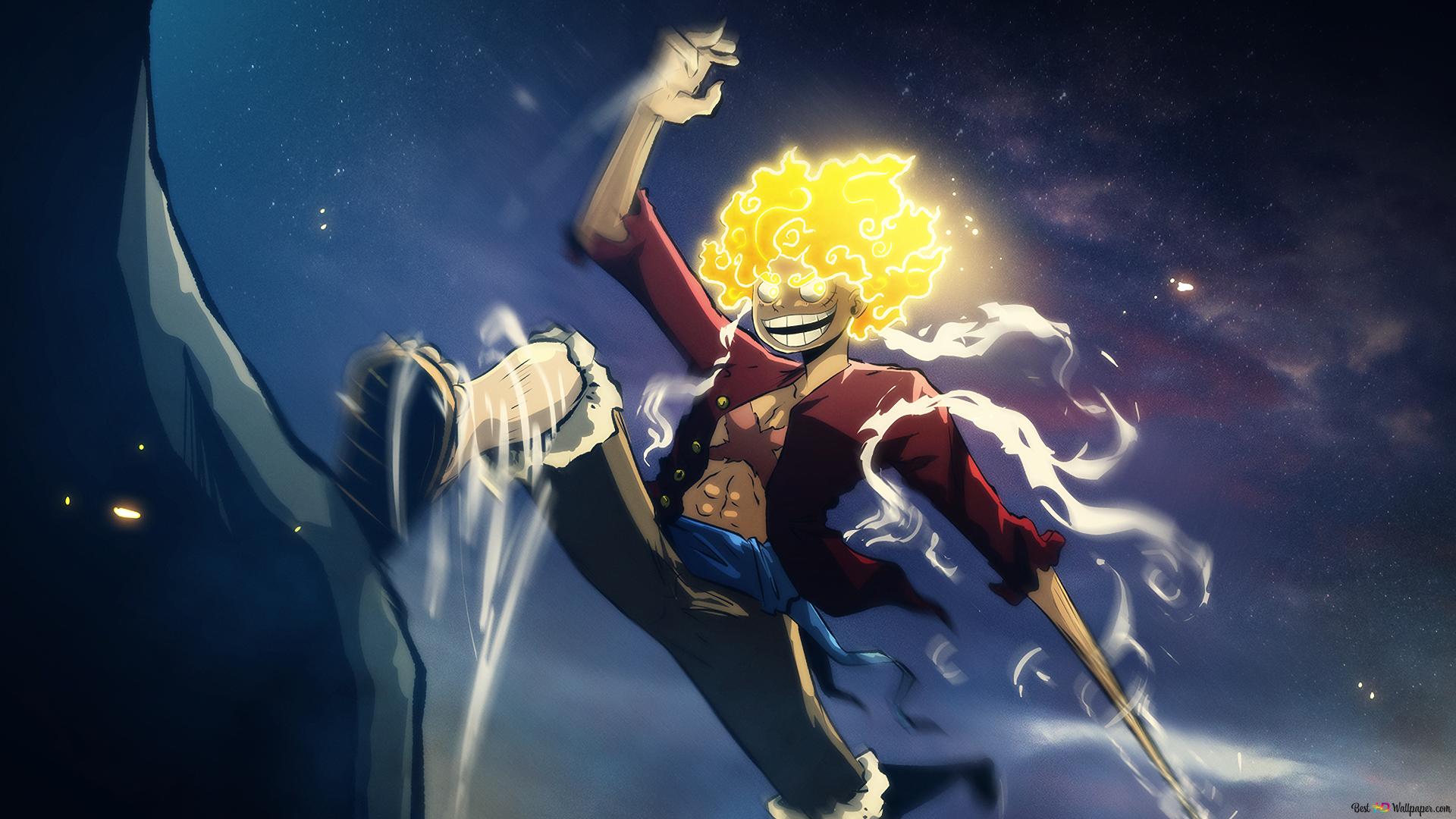
Few cultural artifacts in contemporary media command the generational gravity of Eiichiro Oda’s One Piece. Over nearly three decades, the legendary mangaka has turned numerical milestones into sacred ground. Chapter 100 cemented the voyage into the Grand Line; Chapter 500 introduced the sovereign silhouette of Silvers Rayleigh; Chapter 1000 delivered the thematic apotheosis of the “Red Roc”; and Chapter 1100 broke hearts worldwide with the gut-wrenching genesis of Bartholomew Kuma’s tragic martyrdom. Now, with the Straw Hat Pirates finally setting foot on the sacred soil of Warland Elbaf, the horizon approaches an unimaginable milestone: Chapter 1200.
As the Egghead Incident transitions from historical fallout to an all-out ideological global war, the fandom’s collective gaze has locked onto Elbaf’s deep shadows. Beyond the mead halls and towering canopies lies an inescapable mystery: the chained prince, Loki, and the subterranean depths beneath the roots of Yggdrasil. The prevailing theory sweeping through theory-crafting circles is that Chapter 1200 will not merely be an action set piece, but a tectonic reckoning—the moment when the subterranean Void Century war relics beneath Elbaf awaken alongside the unshackling of Loki’s world-shattering divine wrath.
The Centennial Blueprint: Why Chapter 1200 Demands a Narrative Earthquake
Oda does not waste centennial chapters. They are structural pillars designed to recalibrate the geopolitical equilibrium of the One Piece universe. Following the devastating broadcast of Dr. Vegapunk—which confirmed that the planet is sinking and that the ancient war never truly concluded—the narrative stakes have shifted permanently from a race for pirate supremacy to an existential struggle for planetary survival.
Entering the Elbaf Arc, the story trades the clinical, retro-futuristic dystopia of Egghead for primordial myth and Norse-coded majesty. However, Oda has repeatedly established that past and future are cyclically linked. Just as Egghead’s futuristic technology was merely a facsimile of the Ancient Kingdom’s nine-hundred-year-old science, Elbaf’s primitive, barbarian aesthetic hides the most devastating relics of the ancient war. Chapter 1200 sits at the structural apex of this revelation.
The Sunken Relics of War: Adam’s Roots and Joy Boy’s Secret Armory
For decades, scholars of the series have analyzed the botanical twins of the Grand Line: the Sunlight Tree Eve, which channels illumination into Fish-Man Island, and the Treasure Tree Adam, the indestructible timber from which both the Thousand Sunny and the Oro Jackson were hewn. Elbaf is fundamentally tethered to the mythos of Adam, but fans rarely ask the crucial mechanical question: What is Adam anchoring?
The Subterranean Underworld as an Ancient Kingdom Fortress
In Scandinavian cosmology, Yggdrasil’s roots descend directly into Niflheim and the spring of Hvergelmir, realms of mist, cold, and ancient terrors. In Oda’s geographic framework, the lowest tier of Elbaf is explicitly dubbed the “Underworld.” When Luffy encountered Prince Loki bound in colossal chains, the landscape was not merely barren rock; it carried the foreboding aura of a prison-tomb.
The prevailing theory posits that beneath Elbaf’s mantle rests a cataclysmic garrison left behind by Joy Boy. Egghead introduced Emet, the legendary Iron Giant powered entirely by the rhythm of the Drums of Liberation. Emet was a singular infiltration unit sent to Mary Geoise two centuries ago. What if Elbaf houses the heavy artillery—the mass-produced ancient dreadnoughts, continental terraforming engines, and weapons forged to combat the Mother Flame and Uranus? If the world is slated to sink beneath the tides, the roots of Adam serve as the planet’s remaining geological anchor, hoarding the very machinery designed to prevent the deluge.
Loki Unbound: The Psychological Anatomy of an Accursed God
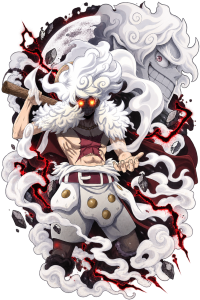
Prince Loki’s long-anticipated introduction dismantled years of fan speculation. Far from an imposing, stoic chieftain like Dorry or Brogy, Loki was unveiled as a chained outcast, blindfolded, dripping with menacing charisma, and radiating raw, nihilistic hostility. Branded the “Accursed Prince” for assassinating his father, King Harald, to consume a legendary, unnamed Devil Fruit passed down through Elbaf’s royal lineage, Loki represents a volatile wild card in Oda’s endgame.
Deicide, Resentment, and the “Divine Wrath”
Loki’s psychological profile mirrors mythological antecedents of tricksters who rebel against tyrannical pantheons. In Norse myth, Loki’s binding directly precipitates Ragnarök—the Twilight of the Gods. In One Piece, his imprisonment via colossal Seastone chains mirrors the wolf Fenrir, bound by the gods out of sheer terror of what he might devour.
The theory surrounding Chapter 1200 centers on Luffy shattering those chains. Luffy’s interaction with Loki already crackles with dangerous curiosity. Luffy does not perceive morality through conventional lenses; he gauges authenticity and freedom. However, freeing Loki will not yield a simple ally. If Loki’s Devil Fruit holds power adjacent to divine retribution—perhaps a Mythical Zoan representing the apocalyptic world-serpent Jörmungandr or the fire-giant Surtr—his unshackling will unleash an unfiltered, divine wrath upon the world. Having spent years in isolation watching his kingdom stagnate under tradition while the World Government engineered the planet’s extinction, Loki’s wrath is poised to scorch friend and foe alike.
The Convergence: Holy Knights, Red Hair Shanks, and the Void Century Pact
The stage of Elbaf cannot be analyzed in a vacuum. Looming in the wings are the World Government’s ultimate executioners: the Holy Knights, now spearheaded by the ideological ascendancy of Saint Figarland Garling. The World Government’s awareness of Elbaf has always been clouded by strategic caution. Big Mom once lamented that control over Elbaf’s giant army would have granted her the crown of the Pirate King; the Gorosei know this equation intimately.
This dynamic reframes the actions of Red-Haired Shanks. Shanks did not simply vacation in Elbaf; he executed Eustass Kid on its shoreline with surgical ruthlessness. Shanks has acted as an ideological gatekeeper. If Shanks personally intervened in subjugating Loki years prior—or if he made a pact with the royal family to guard the subterranean armory until the drums of Joy Boy returned—Loki’s release disrupts Shanks’ entire grand design. Chapter 1200 could present the catastrophic intersection where the Straw Hats, Loki’s unfettered fury, and a Holy Knight invasion collide over the subterranean relics of the Void Century.
The Verdict: The Dawn Breaks Over the War of the Gods
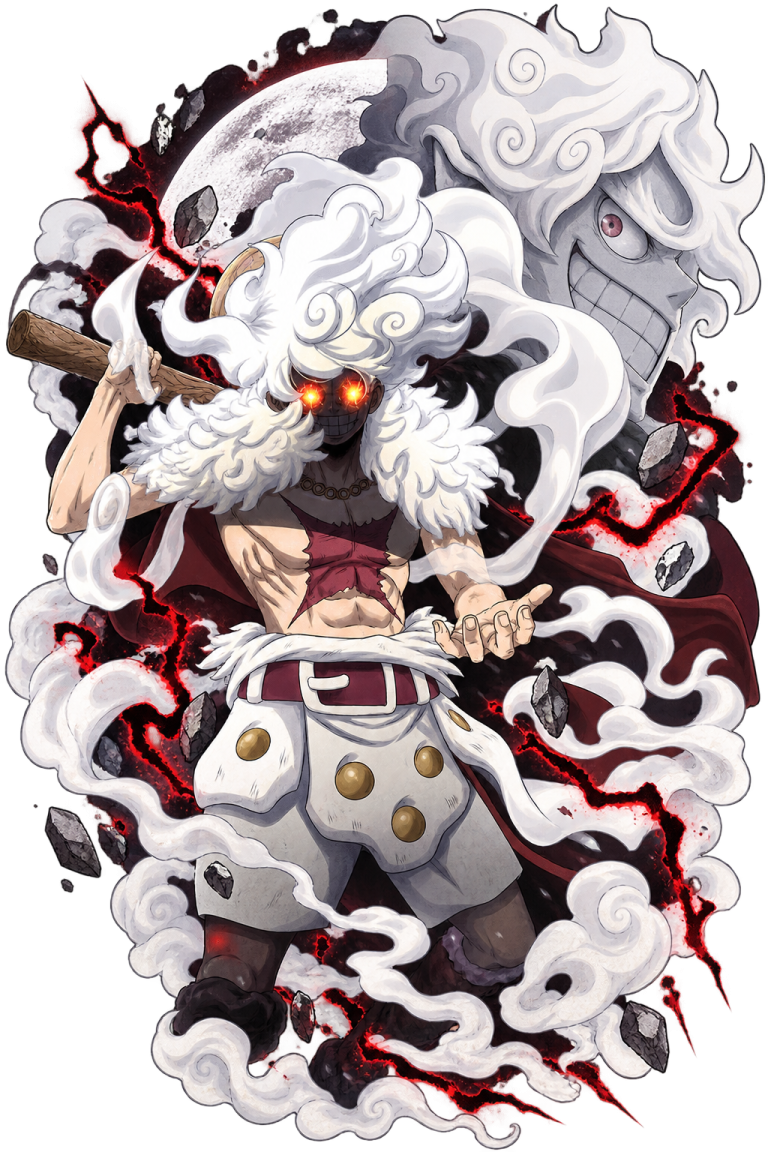
As One Piece edges toward its climax, the traditional pirate narrative has dissolved, giving way to an epic of deific proportions. Monkey D. Luffy is no longer just an adventurous rubber boy; he is Sun God Nika, the herald of dawn. Prince Loki stands as his thematic antithesis: a dark sun steeped in vengeance, chained beneath the earth, waiting for the spark that will ignite Ragnarök.
Should Chapter 1200 deliver on this monumental narrative powder keg, it will mark the decisive transition from the prelude of the Final Saga into the all-out war for planetary existence. The subterranean war relics will unearth the sins of the Ancient Kingdom, the Holy Knights will find their pristine supremacy shattered by giant steel, and Prince Loki will remind the world why the sovereigns of Mary Geoise have spent nine centuries trembling at the shadows cast by the giants.
What are your theories on Prince Loki’s legendary Devil Fruit? Will Luffy break his chains, or will Elbaf become the stage for a tragic civil war before the final battle against the World Government? Sound off in the comments below, and keep your transponder snails tuned to Wibux.com for daily One Piece breakdowns and manga analyses!