Ever since the bittersweet, universe-resetting chords of “Distant Dreamer” faded at the climax of Stone Ocean, the global anime community has lived in a perpetual state of hyper-vigilance. For over a decade, David Production has pulled off one of the most audacious, faithful, and visually inventive adaptations in modern television history, shepherding Hirohiko Araki’s generational saga across six dense, generational sagas. Yet, in the eyes of hardcore manga purists and casual streaming converts alike, everything up to this point has merely been the prologue. The true summit of Araki’s creative vision—and David Production’s ultimate trial by fire—lies across the windswept plains of 1890s North America: JoJo’s Bizarre Adventure: Steel Ball Run.
Ranking consistently behind only Berserk on global manga aggregation boards, Steel Ball Run (Part 7) is not simply another chapter in the lineage of the Joestar bloodline. It is a monumental reboot, an aesthetic renaissance, and a thematic masterpiece that redefines what sequential art can achieve. As industry insiders and social feeds churn with speculation regarding pre-production timelines, the anime world holds its collective breath. Adapting Steel Ball Run is not just a commercial inevitability; it is David Production’s next, and perhaps final, artistic frontier.
The Resonant Rebirth: Why Part 7 is Araki’s Magnum Opus
To understand the deafening buzz surrounding a potential anime adaptation, one must appreciate the context of Steel Ball Run’s serialization. When Araki began penning the story in early 2004, it was initially serialized in Weekly Shonen Jump simply as Steel Ball Run, omitting the “JoJo” moniker to herald a clean break from the weight of six previous parts. However, its subsequent migration to the monthly seinen magazine Ultra Jump in 2005 unlocked something unprecedented. Freed from the relentless grind and censorship constraints of a weekly shonen schedule, Araki’s panelling blossomed into intricate, museum-grade draftsmanship, while his narrative matured into a gritty, morally ambiguous character study disguised as an epic transcontinental race.
The premise is deceptively simple: thousands of eccentric racers from around the globe converge on San Diego to compete in a grueling, 6,000-kilometer cross-country trek to New York City, vying for a staggering fifty-million-dollar grand prize. Yet, beneath the dust, gunfire, and hoofbeats lies a sinister metaphysical conspiracy orchestrating the pursuit of the scattered mummified relics of a divine holy corpse. It is American historical fiction crossed with cosmic body horror, balancing western cinema tropes with Araki’s signature runway-chic avant-garde styling.
Paraplegia, Pizza Mozzarella, and the Golden Ratio: The Johnny-Gyro Dynamic
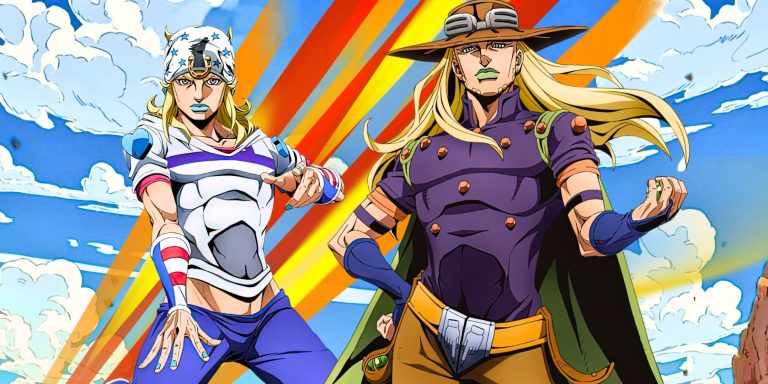
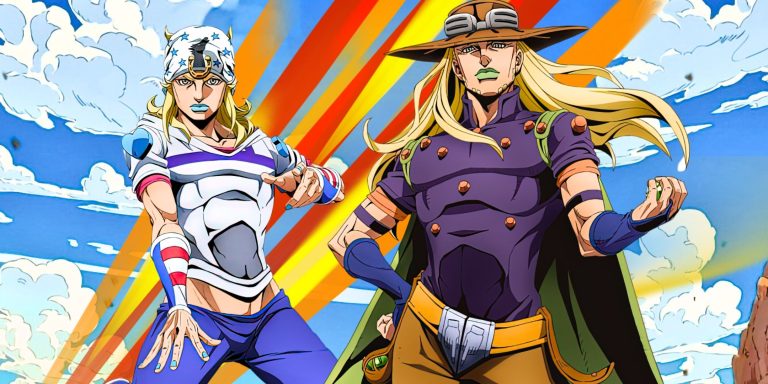
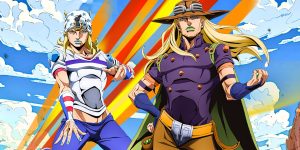
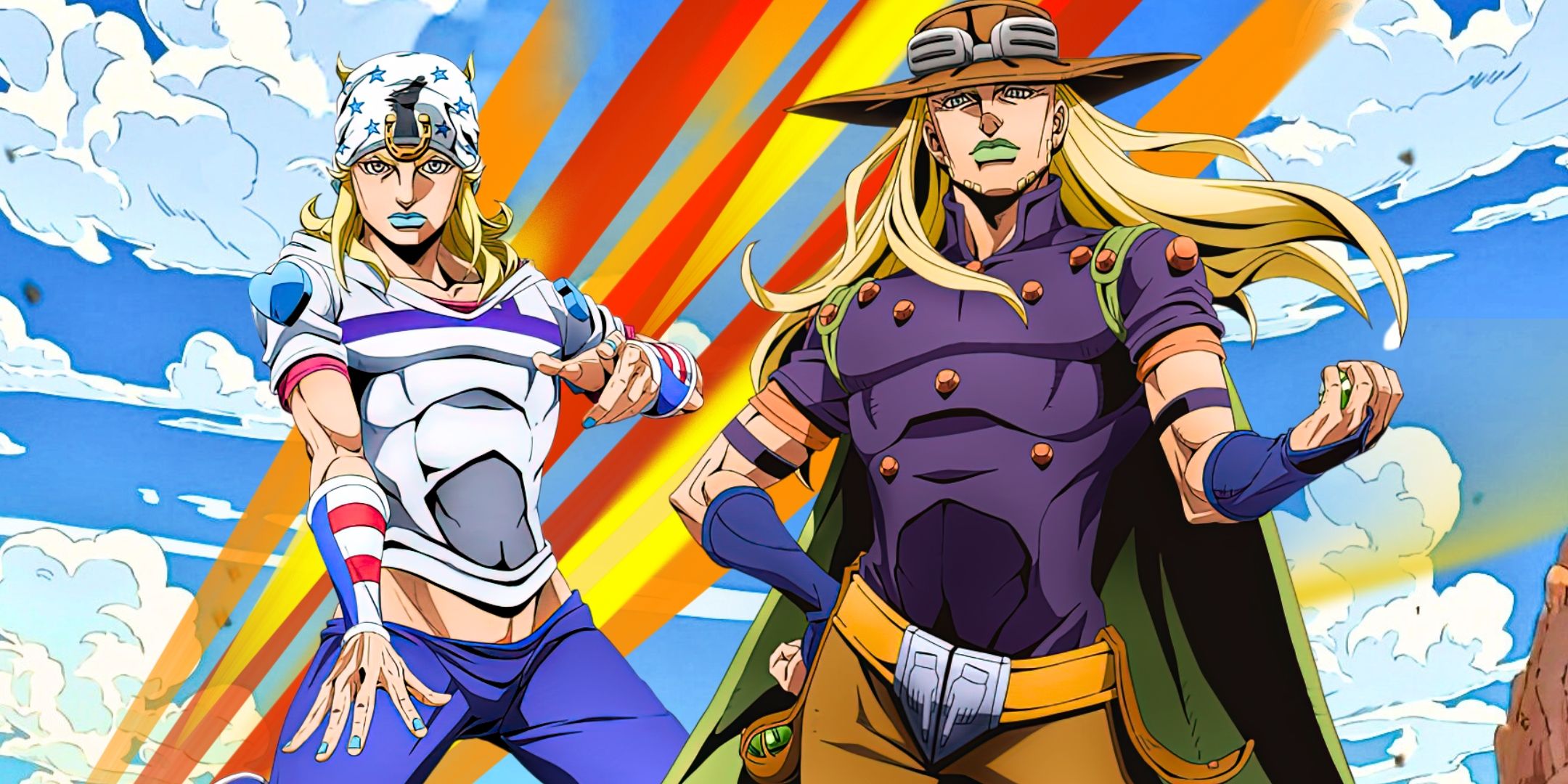
At the beating heart of this sprawling odyssey is the dynamic between Johnny Joestar and Gyro Zeppeli—unquestionably the most nuanced and emotionally resonant duo Araki has ever conceived. Moving away from the stoic righteousness of Jonathan or the effortless tactical genius of Jotaro, Johnny Joestar is an astonishingly imperfect protagonist. A former horse-racing prodigy who lost his fame, family, and the use of his legs to hubristic recklessness, Johnny begins the story bitter, deeply cynical, and emotionally broken.
A Journey from “Negative” to “Zero”
Johnny’s quest is not about saving the world or becoming a celebrated hero; it is a desperate, selfish scramble to reclaim his personal dignity. As Johnny himself puts it, he is not trying to reach a “positive” state—he just wants to claw his way back from “negative” to “zero.” His Stand, Tusk, mirrors this harrowing trajectory, physically and conceptually evolving through four distinct “Acts” as Johnny confronts his deepest psychological traumas.
The Neapolitan Executioner and the Secrets of the Spin
Serving as Johnny’s mentor, foil, and soulmate in arms is Gyro Zeppeli, a disgraced Neapolitan executioner who enters the race to save an innocent child from political death row. Armed with twin steel spheres and an irrepressible flair for theatrical nonsense—including impromptu musical numbers about Italian food—Gyro introduces the foundational metaphysical force of Part 7: The Spin.
A brilliant reimagining of the Ripple (Hamon) from Parts 1 and 2, the Spin is rooted in the sacred mathematics of the Golden Ratio and the Fibonacci spiral. Where previous parts relied entirely on punch-ghost brawls, Steel Ball Run reframes combat as an esoteric, geometric ballet. Gyro’s lessons to Johnny are not just tactical tutorials; they are philosophical treatises on luck, sacrifice, and the relentless inertia of fate.
The Technical Crucible: David Production’s Equestrian Dilemma
If Steel Ball Run is universally heralded as a masterpiece, why hasn’t an anime adaptation already hit screens? The answer lies in the harsh realities of commercial animation. In the sakuga community, there is an infamous, longstanding maxim: nothing breaks an animation pipeline faster than a running horse.
Unlike humanoid characters or mechanical vehicles, equines possess complex, four-legged biomechanics. A horse at full gallop requires an immense number of frame-by-frame drawings to capture the shifting weight, flexing musculature, and anatomical realism demanded of high-end sakuga. Multiply that complexity by dozens of competitors engaged in high-velocity, close-quarters combat across varying terrains for 50-plus episodes, and you have an operational nightmare that would make even industry juggernauts like MAPPA or Ufotable shudder.
David Production faces a monumental technical crossroads:
- The Hybrid 3D Approach: Utilizing high-end cell-shaded 3D CGI models for the horses while compositing hand-drawn 2D riders atop them—a method that risks alienating fans if not integrated with the bespoke prestige of studios like Orange.
- The Rotoscoping Compromise: Leaning into proprietary digital workflows, practical reference tracking, and stylized speed-lines to minimize the sheer weight of in-between frames.
- The Extended Production Cycle: A protracted development window, allowing their elite animation directors to meticulously hand-craft key sequences while outsourcing secondary race segments.
Given the studio’s commitments to projects like Fire Force, Undead Unluck, and the modern reboot of Urusei Yatsura, an adaptation of this scale demands unprecedented structural logistics and budget allocations.
Lessons from Stone Ocean: The Distribution Strategy Matters
Beyond the technical drawing board, David Production and Warner Bros. Japan must grapple with the fallout of the release model that hindered Stone Ocean. The decision to drop Jolyne Cujoh’s prison saga in fragmented, multi-month Netflix “batches” severely undercut the organic weekly discourse, fan art explosions, and episodic tension that made Stardust Crusaders and Golden Wind global cultural events.
Steel Ball Run cannot afford the batch-drop treatment. The tension of the stages, the cliffhangers of Funny Valentine’s dimension-hopping Stand, Dirty Deeds Done Dirt Cheap (D4C), and the escalating terror of the corpse collection demand a continuous, weekly television event format. To preserve the cultural momentum of this modern classic, the production committee must return to traditional, synchronized broadcast schedules that turn every Friday into a global viewing ritual.
The Long Road Ahead
Hirohiko Araki’s trans-American race is a transcendent meditation on human fragility, ambition, and the karmic currents that pull humanity toward glory. For David Production, accepting this challenge means attempting the creative equivalent of crossing the Rocky Mountains on an untamed stallion. Fans do not just want an adaptation; they want an affirmation that Araki’s most ambitious canvas will receive the visual poetry it deserves.
The murmurs from industry whispers and anniversary milestones are growing louder by the day. Steel your nerves, study the Golden Rectangle, and hold onto your saddles. The race of the century is lurking just beyond the horizon.
Are you holding out hope for a hand-drawn marvel, or do you think David Production should embrace high-end CGI for the horses? Which vocal casting choice is your dream pick for Gyro Zeppeli? Sound off in the comments below and join the discussion at Wibux.com!