
One Piece has always played by a simple rule: Devil Fruits come in three flavors — Paramecia, Logia, and Zoan. For over 25 years, that classification held firm. But the Elbaph Arc is quietly tearing down the walls of that system, and what’s rising in its place could be the most significant power system expansion since Haki was introduced.
With the debut of Nerona Imu’s Akuma no Mi — literally “The Devil’s Fruit” — and the shocking appearance of Rain God Zaza in Chapter 1182, Eiichiro Oda is introducing something that doesn’t fit any existing category. This isn’t just a new fruit. This might be an entirely new class of Devil Fruit. And it changes everything we thought we knew about the endgame.
The Problem With Imu’s Akuma no Mi
Every Devil Fruit in One Piece follows a naming pattern. Gomu Gomu no Mi. Hito Hito no Mi. Magu Magu no Mi. The format is consistent: [Element] [Element] no Mi. Even Mythical Zoans follow the rule — Hito Hito no Mi, Model: Nika. There’s always a dual naming convention that places them neatly within the three established types.
Then came Akuma no Mi.
Not “Aku Aku no Mi.” Not “Devi Devi no Mi.” Just Akuma no Mi — The Devil’s Fruit. A single kanji-based name with no parallel in the entire series. The naming itself is the first clue: this fruit exists outside the system entirely.
According to recent chapters, Imu’s Akuma no Mi grants abilities that transcend the Paramecia/Logia/Zoan framework. It’s described as the original Devil Fruit — the source from which all other Devil Fruit powers may have branched. Think of it as the trunk of a tree, while every other fruit is merely a branch.
What This Means for the Lore
If Akuma no Mi is the original Devil Fruit, it suggests a radical retcon of how Devil Fruits work in the One Piece world. Here are the implications:
- All Devil Fruits may share a common origin — Rather than three separate categories existing independently, they could all be diluted echoes of the Akuma no Mi’s original power.
- The “God” fruits are closer to the source — Fruits like the Hito Hito no Mi, Model: Nika (Sun God) and the newly revealed Rain God Zaza may represent branches that retained more of the original power than standard fruits.
- Imu sits above the Yonko power hierarchy — We knew Imu was strong. But if the Akuma no Mi is the progenitor of all Devil Fruits, then Imu’s power doesn’t just surpass the Yonko — it operates on a completely different axis.
Rain God Zaza: The Second “God” Fruit Confirms a Pattern
Just when fans were digesting the implications of Imu’s fruit, Chapter 1182 dropped a bombshell: Rain God Zaza made her official debut through Saint Rimoshifu Killingham’s dream manifestation ability.
This is the second “God”-level Devil Fruit revealed in the series, following Sun God Nika’s reveal in Wano. And the connection is not coincidental.
Zaza was first mentioned 23 years ago — in Chapter 287, during the Skypiea Arc flashback between Noland and Kalgara. Oda planted this name over two decades before revealing it, the same way he planted the Sun God Nika tease years before Wano confirmed it.
Why the “God” Classification Matters
Both Sun God Nika and Rain God Zaza share characteristics that set them apart from standard Mythical Zoans:
- They’re tied to mythological deities recognized within the world’s lore, not just generic creatures
- They have been name-dropped decades before their reveal, suggesting Oda has been building toward a pantheon
- They appear connected to elemental forces of nature — Sun and Rain — that mirror the world’s fundamental balance
- Both seem to operate on a scale that affects the entire world, not just individual combat
If the Akuma no Mi is the trunk, then Sun God Nika and Rain God Zaza might be the two strongest branches — representing opposing natural forces that together maintain the world’s balance. And Imu holds the root.
The Loki Connection: Imu’s Biggest Fight Isn’t With Luffy
One of the most underrated developments in the Elbaph Arc is the confirmed battle between Nerona Imu and Loki, the Accursed Prince of Elbaph. Chapters 1180 and 1181 have set up what many are calling the biggest fight since Luffy vs. Kaido — and it’s not Luffy’s fight at all.
Why would Imu go after Loki? The answer may tie directly into the Devil Fruit hierarchy. Loki is bound by massive chains in Elbaph’s prison, a punishment for a crime so severe that the giants themselves couldn’t decide his fate. If Loki possesses — or once possessed — knowledge or power related to the God-level Devil Fruits, Imu would have every reason to silence him personally.
Chapter 1182 confirms that Imu defeats Loki in battle. But the real question isn’t who wins — it’s what Loki knows that made Imu descend to Elbaph in person. The King of the World doesn’t travel to a single island unless the stakes involve something that threatens 800 years of control.
Luffy’s Gear 5 Upgrade: The Sun Ring Theory
Here’s where things get truly exciting for Luffy. Chapters 1181 and 1182 have been dropping hints about a potential upgrade to Gear 5 that Oda has been teasing for years: the Sun Ring.
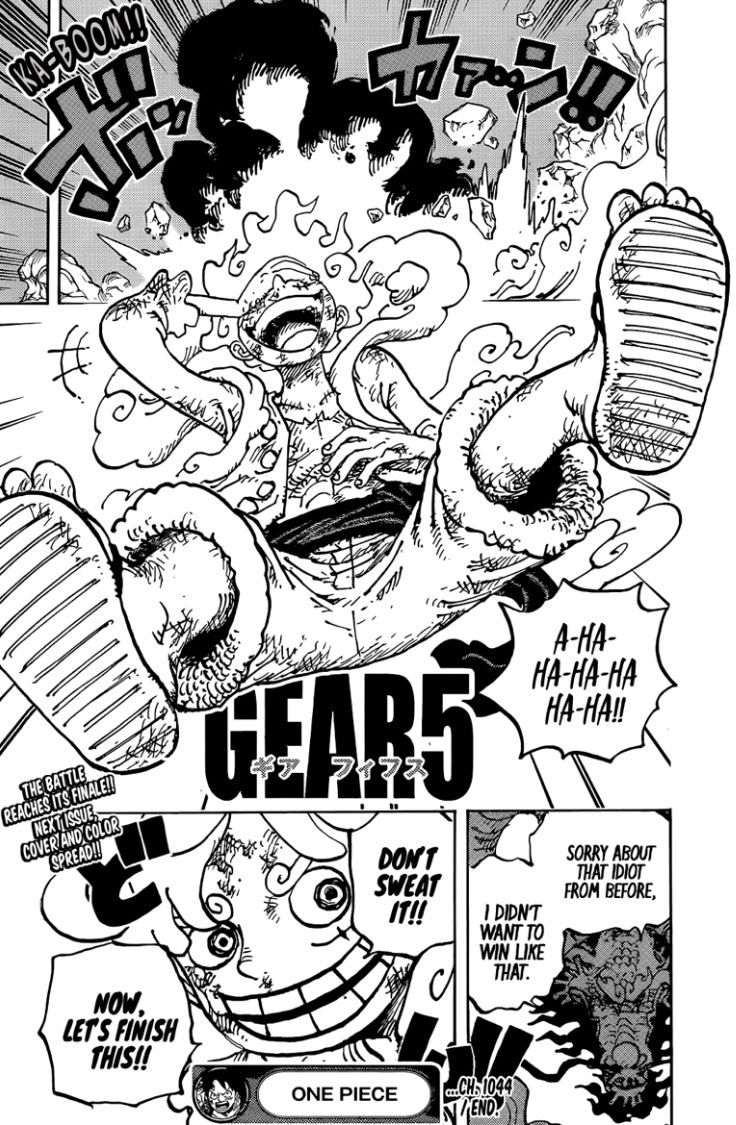
Luffy’s Gear 5, powered by the Hito Hito no Mi, Model: Nika (Sun God), already connects him to one of the God-level Devil Fruits. But the Sun Ring theory suggests that Gear 5 is merely the awakening’s first stage. The full power of the Sun God fruit may involve harnessing the Sun Ring — a concept that has appeared in One Piece lore since the Skypiea Arc.
If Imu controls the original Akuma no Mi, and Luffy possesses the Sun God fruit, then their eventual confrontation becomes a battle between the trunk and the strongest branch. But Luffy can’t win with Gear 5 alone — he needs to reach the Sun Ring level, which would put his fruit’s power on equal footing with Imu’s.
The God Devil Fruit Awakening: What Comes After Elbaph
Multiple sources within the manga suggest that One Piece is setting up what could be the strongest Devil Fruit awakening reveal in the series’ history. After Elbaph, the narrative appears headed toward a confrontation that requires understanding the full scope of what “God” fruits can do.
Consider the pieces on the board:
- Imu’s Akuma no Mi — The original Devil Fruit, source of all powers
- Sun God Nika (Luffy) — Represents liberation, freedom, and the sun
- Rain God Zaza (Killingham via manifestation) — Represents the opposing force of rain and destruction
- Loki — Holds knowledge about God fruits that Imu personally came to suppress
The next arc after Elbaph is already being positioned as the biggest since Marineford. And if the God Devil Fruit awakening plays out as the foreshadowing suggests, it won’t just be the biggest arc — it could be the key to understanding the entire Void Century.
Final Thoughts: Oda’s 25-Year Master Plan
The Akuma no Mi and Rain God Zaza aren’t just new power-ups. They’re the missing puzzle pieces of a design Oda has been sketching since 1999. The naming patterns, the decades-old teases, the careful placement of each God fruit reveal — this is a story about the origin of power itself, and who gets to wield it.
Imu holds the source. Luffy holds the sun. And somewhere in between, the truth about the Void Century, Joy Boy, and the world’s 800-year cover-up is about to be laid bare.
One Piece is no longer about who has the strongest Devil Fruit. It’s about who controls the system that creates them. And that’s a fight that will decide the fate of the entire world.
What do you think? Is the Akuma no Mi the origin of all Devil Fruits? And can Luffy’s Sun Ring upgrade truly match Imu’s power? Drop your theories below!