

When an artist manages to transition from an anonymous Vocaloid producer creating underground digital hymns under the moniker Hachi to the undisputed king of modern Japanese music, the world takes notice. Yet what Kenshi Yonezu is accomplishing in 2026 goes far beyond standard domestic chart triumphs. With his monumental sixth studio album LOST CORNER captivating international charts and selling millions of copies, Yonezu has officially taken his sprawling world tour across prime arenas in Tokyo, Shanghai, Taipei, London, Paris, and Los Angeles. How did a notoriously elusive, deeply introspective Japanese singer-songwriter break through the cultural wall to sell out legendary overseas venues in mere minutes?
The Evolution from Vocaloid Hermit Hachi to Global Pop Titan
To understand the unprecedented cultural weight of the LOST CORNER era, one must look at how Kenshi Yonezu fundamentally revolutionized the J-Pop landscape. Long before he was selling out dome stadiums across Asia and the West, Yonezu was crafting viral, haunting synth masterpieces on Nico Nico Douga. That raw, boundary-pushing DNA has never left his craft. Unlike commercial pop acts built around polished corporate molds, Yonezu writes, composes, illustrates, and conceptualizes every solitary note of his creative universe.
His breakthrough anthems laid the groundwork for this global reckoning. When “Lemon” shattered domestic streaming milestones and became an eternal cultural touchstone, it proved that raw grief and melancholic melodies could resonate across every generational demographic. Now, alongside industry heavyweights like YOASOBI and Vaundy, Yonezu stands at the vanguard of a modern Japanese musical renaissance that refuses to conform to Western pop expectations.
Unpacking ‘LOST CORNER’: A Symphony of Blockbuster Collaborations
The tracklist of LOST CORNER reads like a masterclass in modern multimedia dominance. Rather than isolating his musical ambitions, Yonezu has built bridge after bridge into premier cinematic, gaming, and television experiences:
- Hayao Miyazaki and Studio Ghibli: Yonezu penned the deeply poignant theme “Chikyugi” (“Spinning Globe”) for the Academy Award-winning masterpiece The Boy and the Heron, working in close spiritual collaboration with visionary director Hayao Miyazaki and legendary producer Toshio Suzuki.
- Tatsuki Fujimoto’s Chaos: With the explosive opening anthem “KICK BACK” for Chainsaw Man, co-arranged alongside King Gnu and Millennium Parade frontman Daiki Tsuneta, Yonezu earned historic RIAA Gold certification in the United States—the first Japanese-language track in history to achieve the feat.
- Naoki Yoshida and Square Enix: For the dark fantasy gaming epic Final Fantasy XVI, director Naoki Yoshida personally invited Yonezu to craft the emotional centerpiece “Tsuki Wo Miteita – Moongazing”, fusing high-fantasy tragedy with modern orchestral pop.
- Beyond Goodbye and Azalea: His heartfelt single “Azalea”, produced as the theme song for the acclaimed Netflix drama starring Kasumi Arimura and Kentaro Sakaguchi, proved once again his peerless capacity to translate bittersweet romance into universal sonic poetry.
The Electric Catharsis of the ‘JUNK’ Arena Experience
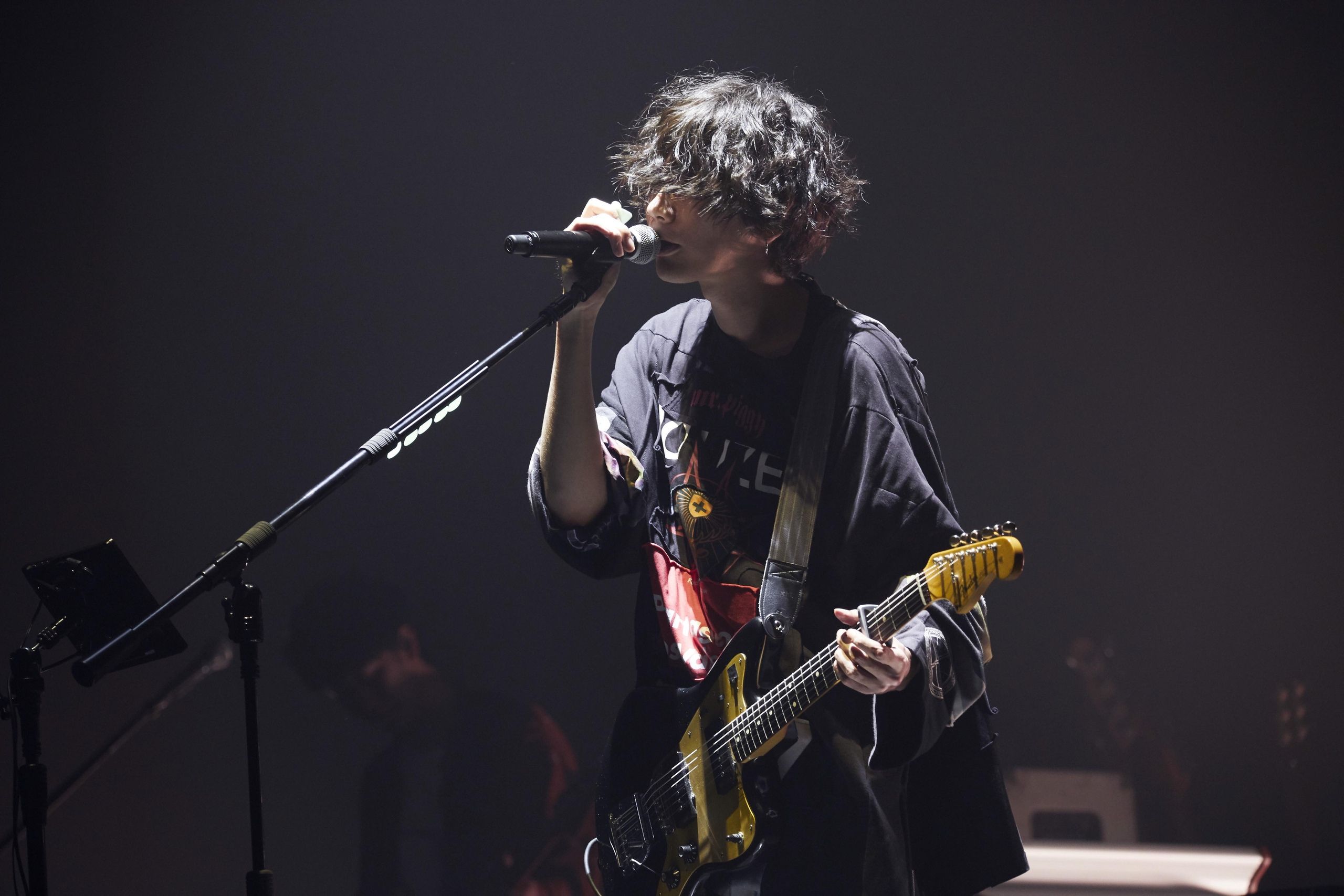
Those fortunate enough to witness Yonezu live during this world tour describe the concert not merely as a pop recital, but as an immersive theatrical odyssey. Emerging beneath colossal architectural lighting rigs that shift between dystopian cityscapes and celestial voids, Yonezu commands the stage with an effortless, magnetic intensity. His vocal delivery shifts from breathy, vulnerable falsettos on acoustic ballads like “Lemon” to jagged, guttural rock screams during the frenetic crescendos of “KICK BACK” and “Garakuta – JUNK”.
Surrounded by a world-class live ensemble featuring master guitarist Yu Sutoh and longtime rhythmic collaborators, Yonezu transforms intimate personal struggles—loneliness, alienation, human fragility, and artistic obsession—into shared arena-wide transcendence. International fans in Taipei, Seoul, and North America were treated to immaculate visual projections personally hand-drawn by Yonezu himself, reinforcing the singular auteur vision that guides his career.
Redefining the Frontiers of International J-Pop Dominance
For decades, Western commentators erroneously believed that non-English musical acts outside the K-pop machinery could not routinely fill Western arenas without heavily compromised English-language crossovers. Kenshi Yonezu has completely destroyed that misconception. By remaining uncompromisingly authentic to his Japanese lyricism, idiosyncratic song structures, and intricate melodic arrangements, he has drawn passionate crowds who sing every intricate Japanese phrase word-for-word.
Much like the groundbreaking trajectory forged by contemporary anisong visionary Tatsuya Kitani, Yonezu demonstrates that storytelling, musical depth, and genuine emotional vulnerability transcend linguistic borders. As the LOST CORNER tour marches across global capitals, Kenshi Yonezu is not just representing modern Japan; he is charting the future of global music culture.
What Do You Think?
Have you had the chance to experience Kenshi Yonezu’s spellbinding live performances during the LOST CORNER world tour, or are you streaming the album on repeat at home? Which track from his legendary discography—from the kinetic fury of “KICK BACK” to the tear-jerking beauty of “Chikyugi”—speaks most deeply to your soul? Drop your thoughts, favorite live moments, and tour setlist wishlist in the comments below!