Ever since the cosmic strings of Father Pucci’s Made in Heaven snapped the original universe of JoJo’s Bizarre Adventure out of existence at the climax of Stone Ocean, a collective, hushed anticipation has dominated the anime sphere. For over a decade, manga readers have maintained an almost religious reverence for what came next. When Hirohiko Araki hit the cultural reset button in 2004, he didn’t just reboot his sprawling multi-generational epic—he evolved it. The result was Steel Ball Run (Part 7), a high-stakes, dust-choked, trans-American horseback odyssey that sits comfortably near the top of MyAnimeList’s highest-rated manga of all time.
Now, with David Production wrapping up their tenure on the original Joestar bloodline, all eyes are locked on the horizon. The chatter surrounding the anime adaptation of Steel Ball Run is no longer a quiet, speculative whisper—it is a deafening roar. Bringing Araki’s acknowledged magnum opus to television screens is not merely a standard production milestone; it represents an unprecedented technical crucible and artistic gamble that could redefine the legacy of David Production forever.
The Seinen Shift: Araki’s Narrative Renaissance
To understand the immense buzz around a potential Steel Ball Run adaptation, one must comprehend its seismic status in the manga industry. Serialized initially in Weekly Shonen Jump before transitioning to the monthly Ultra Jump in 2005, Part 7 freed Araki from the grueling weekly deadlines and thematic constraints of traditional shonen storytelling. The monthly format allowed him to deepen his panels with jaw-dropping anatomical accuracy, cinematic page spreads, and an intensely mature tone.
Set in a reimagined 1890 America, the story centers on the eponymous Steel Ball Run race—a grueling, 6,000-kilometer cross-country trek from San Diego to New York City with a jaw-dropping prize of 50 million dollars. But what begins as an eccentric sports spectacle swiftly morphs into an occult geopolitical conspiracy involving the mummified relics of a divine Holy Corpse. By combining historical western tropes with supernatural metaphysics, Araki fashioned an uncompromising narrative where moral binaries dissolve entirely into grit, dust, and blood.
Johnny Joestar and Gyro Zeppeli: A Masterclass in Character Synergy
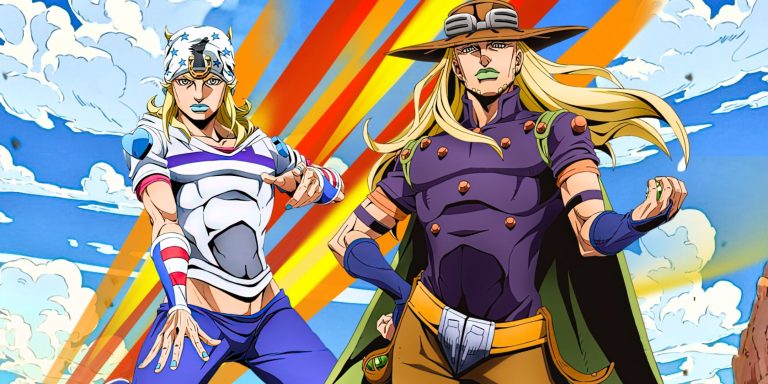
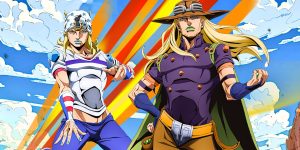
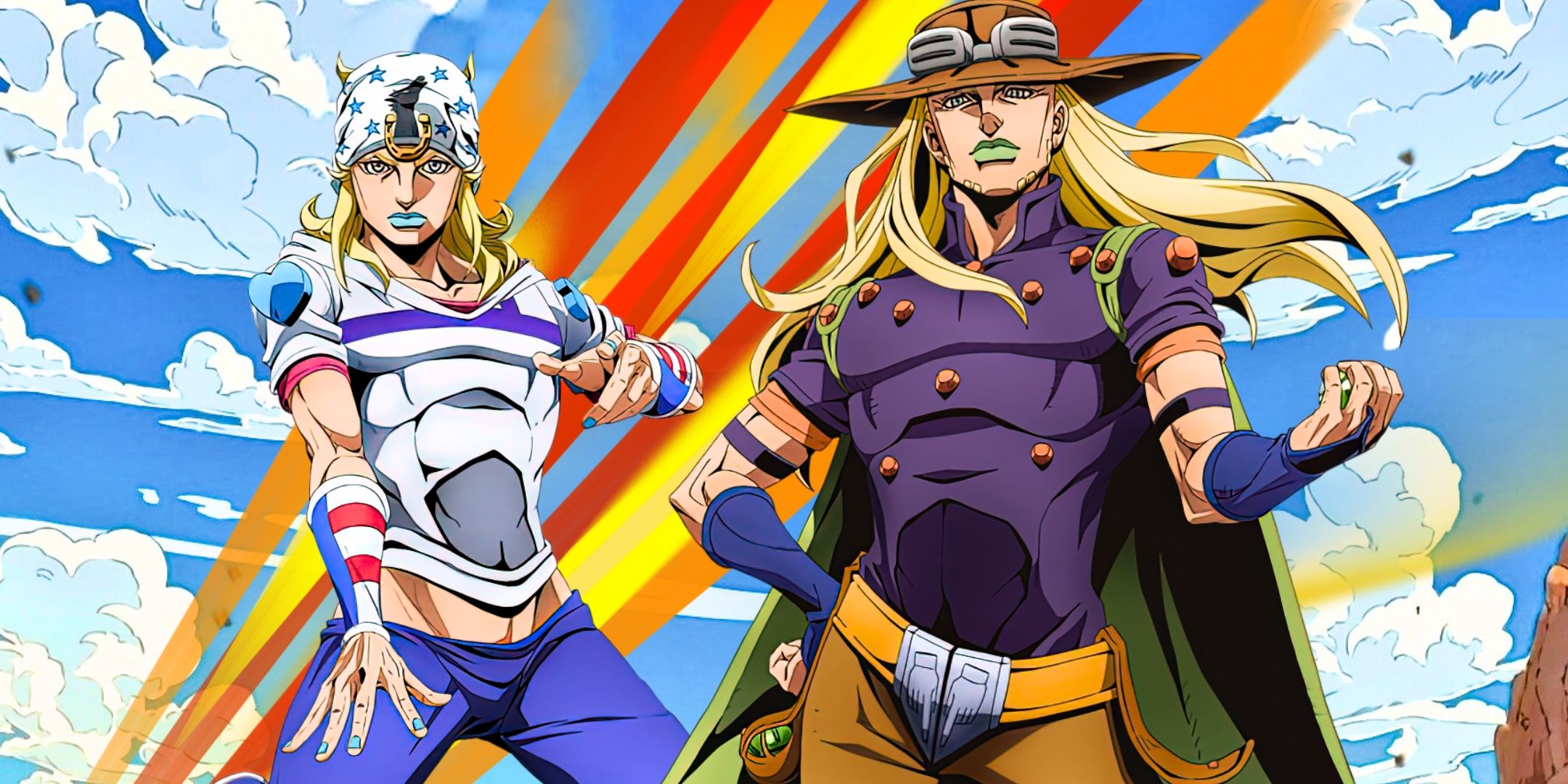
At the beating heart of Part 7’s critical acclaim is the relationship between its two leads: Johnny Joestar and Gyro Zeppeli. Unlike the charismatic, righteous paragons that preceded them—such as Jonathan Joestar or Jotaro Kujo—Johnny begins his arc as a deeply unlikable, fallen prodigy. A former horse-racing sensation rendered paraplegic through his own arrogance, Johnny is consumed by spite, depression, and a sheer lack of purpose.
His salvation arrives not through a noble calling, but through the enigmatic Gyro Zeppeli, an operative from the Kingdom of Naples armed with mystical, revolving steel spheres. When Gyro’s sphere temporarily restores sensation to Johnny’s paralyzed legs, Johnny clings to the Italian executioner with a ruthless, desperate fixation. Their dynamic quickly sheds conventional mentor-student tropes to become one of the most authentically developed friendships in contemporary fiction. Gyro’s boisterous, eccentric levity perfectly balances Johnny’s cold, terrifyingly pragmatist edge—a mindset Araki explicitly defines as possessing “dark determination.”
The Spin vs. Stands: Expanding Araki’s Magic System
While Stands naturally return in Part 7, they share the stage with The Spin, an intricate kinetic martial art rooted in the mathematics of the Golden Ratio and Fibonacci spirals. Through the Spin, Araki revitalizes the tactile, anatomical dynamism that made early Hamon (Ripple) battles so gripping, seamlessly weaving it alongside Stand power-ups like Johnny’s evolving Tusk and Gyro’s devastating Ball Breaker. For an animation studio, translating the visual language of the Golden Ratio—intertwining pure physics with kaleidoscopic, reality-bending Stand clashes—demands a level of visionary artistry that goes far beyond conventional brawls.
David Production’s Greatest Trial: The Equestrian Animation Dilemma
While the demand for the anime is astronomical, the radio silence from Shueisha and David Production is rooted in an infamous, inescapable production reality: animating horses is an industry-wide nightmare. Unlike bipeds, horses possess complex quadrupeds with muscular mechanics, shifting centers of gravity, and intricate hoof sequences that are notoriously punishing to draw by hand frame-by-frame.
Steel Ball Run features dozens of racers charging through the Arizona desert, Rocky Mountains, and frozen plains in sprawling, chaotic clusters. The anime graveyard is littered with productions that crumbled under the weight of poor equine rendering—often resorting to jarring, low-frame-rate 3D models that shatter visual immersion (as seen in controversial adaptations like Berserk 2016 or early seasons of Kingdom).
For David Production to pull this off, they face a multifaceted challenge:
- A Hybrid Pipeline: They must establish an impeccably cel-shaded 3D CGI pipeline for the horses that matches the painterly, hyper-stylized 2D aesthetic of the riders.
- Resource Allocation: The scale of Part 7 cannot be tackled on a standard TV production budget. Rumors within the animation community suggest that the studio may need a split-cour format with elongated hiatuses, or potentially a prestige feature-film kickoff to cover the race’s prologue.
- Visual Palette: Araki’s line work reached its peak during this run. Adapting the fine cross-hatching, realistic muscle striation, and dynamic camera swoops across open western vistas requires David Pro’s finest animation directors working at the absolute limit of their capacity.
Funny Valentine and the Moral Crucible of Manifest Destiny
No dissection of the Steel Ball Run buzz is complete without mentioning President Funny Valentine, widely regarded as Araki’s most compelling and nuanced antagonist. Driven by an uncompromising, fanatical patriotism, Valentine seeks the Holy Corpse to guarantee that the United States claims perpetual dominance over global fortune, using his dimensional-shifting Stand, Dirty Deeds Done Dirt Cheap (D4C).
Valentine’s philosophical conviction is so potent that it frequently forces the audience to question who the true villain is. In an era where modern anime audiences gravitate toward morally complex narratives like Attack on Titan and Vinland Saga, Valentine’s clashes with Johnny Joestar will undeniably ignite the cultural discourse. The ideological confrontation between Johnny’s desperate personal pursuit of “negative to zero” and Valentine’s macrocosmic nationalism elevates Part 7 from a hyper-stylized race into a profound literary confrontation.
The Defining Epoch of Modern Anime Hype
Make no mistake: JoJo’s Bizarre Adventure: Steel Ball Run is the final frontier for David Production. Taking on this project is the animation equivalent of ascending Mount Everest without oxygen. Yet, David Production has earned a rare level of goodwill among anime fandom. From Part 1’s pulp theatricality to Part 5’s runway-chic intensity, the studio has treated Araki’s vision with an almost sanctified dedication.
The transition to Part 7 is not merely a new season of anime; it is an ideological milestone for the industry. If David Production can harness cutting-edge hybrid technology to conquer the equestrian hurdle while honoring the melancholic, character-driven journey of Johnny and Gyro, Steel Ball Run will not just satisfy long-term fans—it will set a towering new benchmark for modern prestige anime.
Are you counting down the days until the starting gun fires on the Steel Ball Run race? Who is your dream voice-casting pick for Gyro Zeppeli and Johnny Joestar? Sound off in the comments below, and stay tuned to Wibux.com for breaking updates on David Production’s next move.