In the pantheon of modern manga, few transitions are as mythologized as Hirohiko Araki’s leap from the pages of Weekly Shonen Jump into the prestige, monthly expanse of Ultra Jump. When the dust settled on the cataclysmic, universe-resetting climax of Part 6: Stone Ocean, fans were not greeted by a conventional continuation. Instead, Araki transported readers to the wind-swept plains of late-19th-century North America, launching an ambitious, cross-country equestrian race known as Steel Ball Run. Today, Part 7 sits comfortably as the second-highest-rated manga of all time on MyAnimeList, universally hailed as Araki’s narrative and artistic magnum opus. With the animated conclusion of Jolyne Cujoh’s Florida prison breakout now firmly in the rearview mirror, the anime community finds itself locked in a state of breathless anticipation. The discourse is singular and deafening: when, and more critically how, will David Production conquer the vast, horse-trodden frontier of Steel Ball Run?
A Masterpiece Born in the Dust: Araki’s Magnum Opus and the Western Frontier
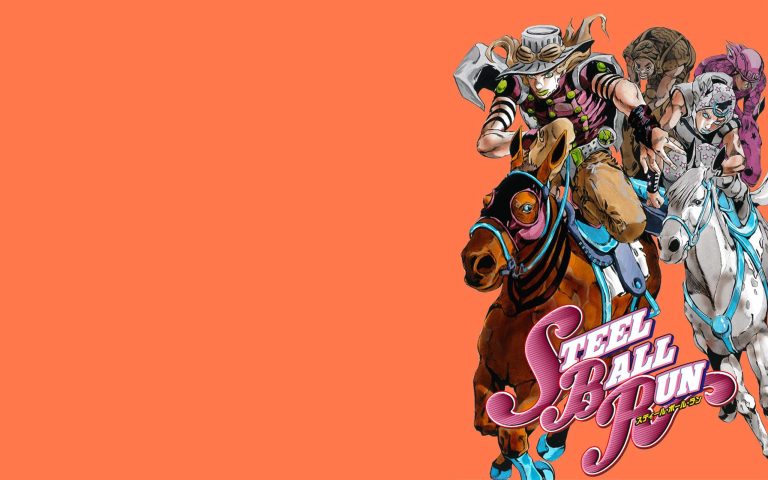
To understand the sheer weight of the buzz surrounding a prospective anime adaptation, one must first deconstruct why Steel Ball Run commands such reverent cultural prestige. Released initially under the standalone title Steel Ball Run in early 2004 before being officially canonized as JoJo’s Bizarre Adventure Part 7, the series represents a radical reinvention of Araki’s narrative toolkit. Unshackled from decades of established continuity and the breakneck deadlines of weekly serialization, Araki used the vast, hostile topography of 1890s America to craft a grounded yet wildly surreal epic.
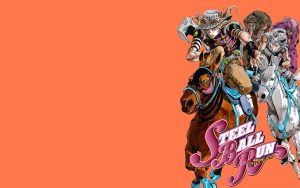
The premise is deceptively simple: eccentric promoter Steven Steel organizes a 6,000-kilometer transcontinental horse race from San Diego Beach to New York City, dangling an astronomical $50 million prize purse. Yet beneath the veneer of an athletic crucible lies an international conspiracy steeped in supernatural espionage, orchestrated by the charismatic, ultra-nationalist U.S. President Funny Valentine. As competitors clash across blisteringly detailed badlands, snow-choked mountain passes, and sprawling prairies, the race morphs into a frantic hunt for the mummified relics of an ancient Saint—an artifact that grants unfathomable power to whatever sovereign nation possesses it. It is historical fiction, supernatural horror, high-stakes sports drama, and political thriller synthesized through Araki’s unreplicable, fashion-forward visual lens.
From Shonen Limitations to Seinen Maturity
The mid-run migration to Ultra Jump fundamentally rewired Araki’s storytelling mechanics. With larger page counts and older demographics came psychological complexity that classic shonen tropes could never accommodate. The violence evolved from cartoonish amputations into visceral, gut-wrenching brutality; the philosophical stakes transformed into meditations on fate, geopolitical imperialism, and individual trauma. For David Production, adapting Steel Ball Run is not merely a matter of animating another colorful monster-of-the-week procedural; it requires capturing the prestige, mature atmosphere of a gritty prestige drama disguised as a bizarre adventure.
The Paraplegic Jockey and the Neapolitan Executioner: Character Psychology Reimagined
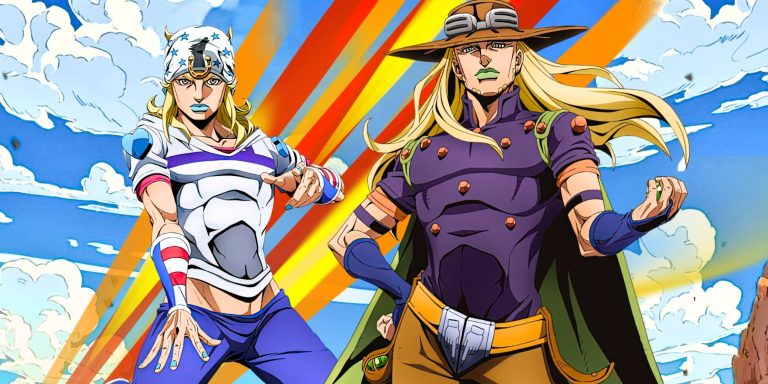
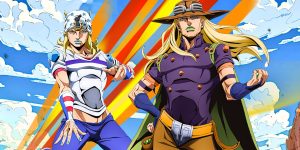
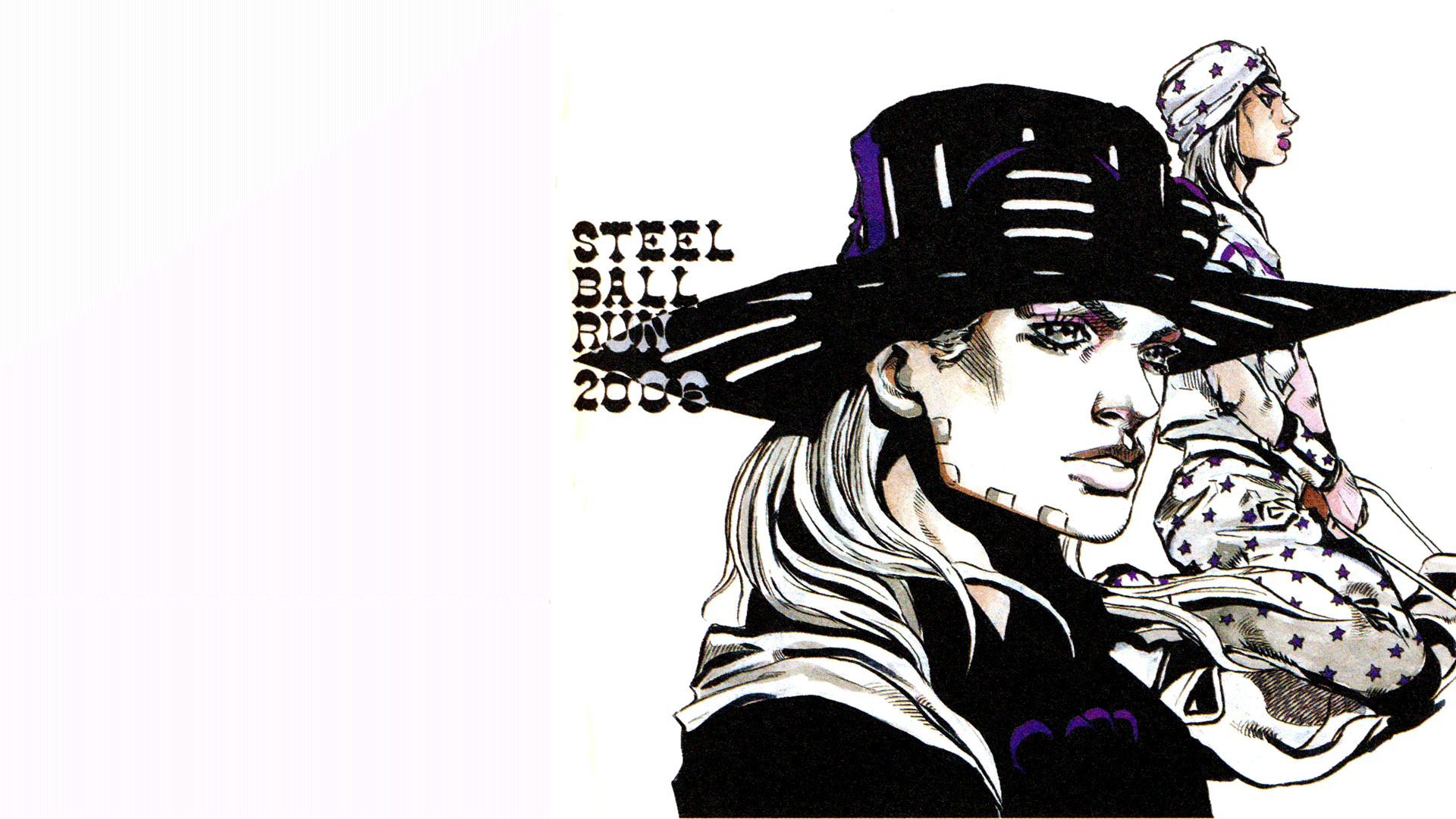
At the beating heart of Steel Ball Run lies the relationship between Johnny Joestar and Gyro Zeppeli—widely considered by critics and fans alike to be Araki’s most fully realized protagonists. Unlike his noble ancestor Jonathan or the swaggering, indestructible Jotaro Kujo, Johnny begins his journey as an unlikable, fallen prodigy. Crippled from the waist down in a reckless act of youthful arrogance, Johnny is consumed by depression, cynicism, and an aching yearning to climb back from “negative” to “zero.” He is explicitly not a hero; in critical junctures, Araki illustrates Johnny with cold, unblinking eyes burning with what characters describe as “dark determination”—a ruthless willingness to kill to reclaim his mobility and dignity.
His foil and spiritual tether is Gyro Zeppeli, a disgraced executioner hailing from the Kingdom of Naples. Gyro enters the race not for personal glory, but to secure amnesty for a nine-year-old shoemaker’s boy condemned to death for crimes he did not commit. Despite bearing the heavy guilt of his lineage, Gyro presents a flamboyant, deeply idiosyncratic exterior, complete with gold teeth engraved with “GO! GO! ZEPPELI,” absurd pun routines about mozzarella and pizza, and an infectious, boisterous humanity. The dynamic between Johnny and Gyro subverts the traditional mentor-student archetype into a codependent brotherly bond forged over shared campfires, absurd jokes, and catastrophic physical peril.
The Philosophy of the Golden Spin
Narratively, Part 7 reimagines the franchise’s power scaling through the introduction of the Spin—a sacred martial art rooted in Renaissance-era anatomy and the mathematical perfection of the Fibonacci Sequence and the Golden Ratio. Where Hamon harnessed the energy of the sun and Stands visualized personal psyche, the Spin is a craft of pure kinetic physics and natural harmony. The way Johnny gradually manifests his Stand, Tusk, mirrors his psychological rehabilitation through each incremental Act, while Gyro’s use of rotating steel balls to manipulate flesh, water, and trajectory provides a tactical, cinematic rhythm that will demand spellbinding visual direction on screen.
The Equestrian Gauntlet: David Production’s Technical Everest
While narrative hype is at an all-time high, the elephant—or rather, the thoroughbred—in the room is the monumental technical hurdle facing David Production. In the commercial anime industry, horses are notoriously regarded as the bane of traditional 2D animators. A horse’s anatomy, quad-legged gait cycles, shifting musculature, and realistic locomotion are monstrously labor-intensive to draw consistently. Steel Ball Run does not merely feature a horse occasionally; it features dozens of horses galloping shoulder-to-shoulder through stampedes, torrential storms, and multi-chapter combat sequences.
2D Hand-Drawn Purity vs. Hybrid CGI Integration
Industry analysts and fans often point to WIT Studio’s work on Attack on Titan or CygamesPictures’ seamless digital wizardry in Uma Musume: Pretty Derby as theoretical blueprints. However, translating Araki’s dense, hyper-detailed cross-hatching and iconic linework into 3D models while preserving his distinctive aesthetic is a minefield. If David Production leans too heavily into unpolished, clunky CGI models for the horses, the immersion of the iconic transcontinental trek could fracture instantly. Conversely, animating hundreds of thousands of frames of organic equestrian movements completely by hand is practically impossible without unprecedented production timelines and an astronomical budget.
David Production has proven its mettle across six previous parts, establishing an illustrious track record for dynamic, stylized color shifts, iconic sound design, and faithful adaptation choices. However, after the controversial, fractured release model of Stone Ocean on Netflix—which many purists argued robbed the series of episodic weekly momentum and pushed animators through brutal crunch—the studio knows it cannot rush Steel Ball Run. Part 7 requires a complete artistic reimagining, potentially adopting hybrid compositing technologies, bespoke custom cell-shading pipelines, and an uncompromised production schedule.
The Cultural Phenomenon: Fan Speculation, Memes, and Global Fervor
Even without an official greenlight announcement, the internet treats the Steel Ball Run anime as an absolute eventuality. Across YouTube, TikTok, and Twitter, fan-made opening themes, custom rotoscoped teaser trailers, and orchestral renditions of Western folk songs routinely rack up millions of views. Fandom debate over casting choices—whether it’s who can capture Gyro’s charismatic Neapolitan rasp or Funny Valentine’s chilling presidential oratory—dominates anime forums alongside impassioned pleas regarding how the music should sound. Enthusiasts passionately demand a soundtrack infused with Ennio Morricone-inspired spaghetti western guitars, brass horns, and rustic Americana acoustic strings, mixed with classic JoJo synth-bass lines.
The hype is not rooted merely in consumer desire for “more content.” It stems from the recognition that Steel Ball Run holds rare narrative real estate: it is an artistic elevation that transformed Hirohiko Araki from an ingenious, eccentric mangaka into one of the most culturally significant creative minds in modern sequential art. Bringing this sprawling, tragic, transcendent race to international television is the ultimate litmus test for David Production’s artistic legacy.
Crossing the Finish Line: When Will the Race Begin?
All signs point to David Production methodically biding its time. Between ongoing obligations to other high-profile anime properties and the logistical reality of planning what will likely need to be a 40-plus episode run split across multiple high-budget cours, patience remains the fandom’s greatest virtue. When the starting gun for the Steel Ball Run race inevitably fires, it will not just be another anime premiere; it will mark the dawn of an entirely new era for the JoJo franchise—one defined by grit, mathematical perfection, and existential glory across the American dust.
How do you think David Production should tackle the legendary horse race—pure 2D, state-of-the-art hybrid CGI, or something entirely new? Who is your dream voice actor for Gyro Zeppeli? Sound off in the comments below, and stay tuned to Wibux.com for all breaking anime and manga updates!