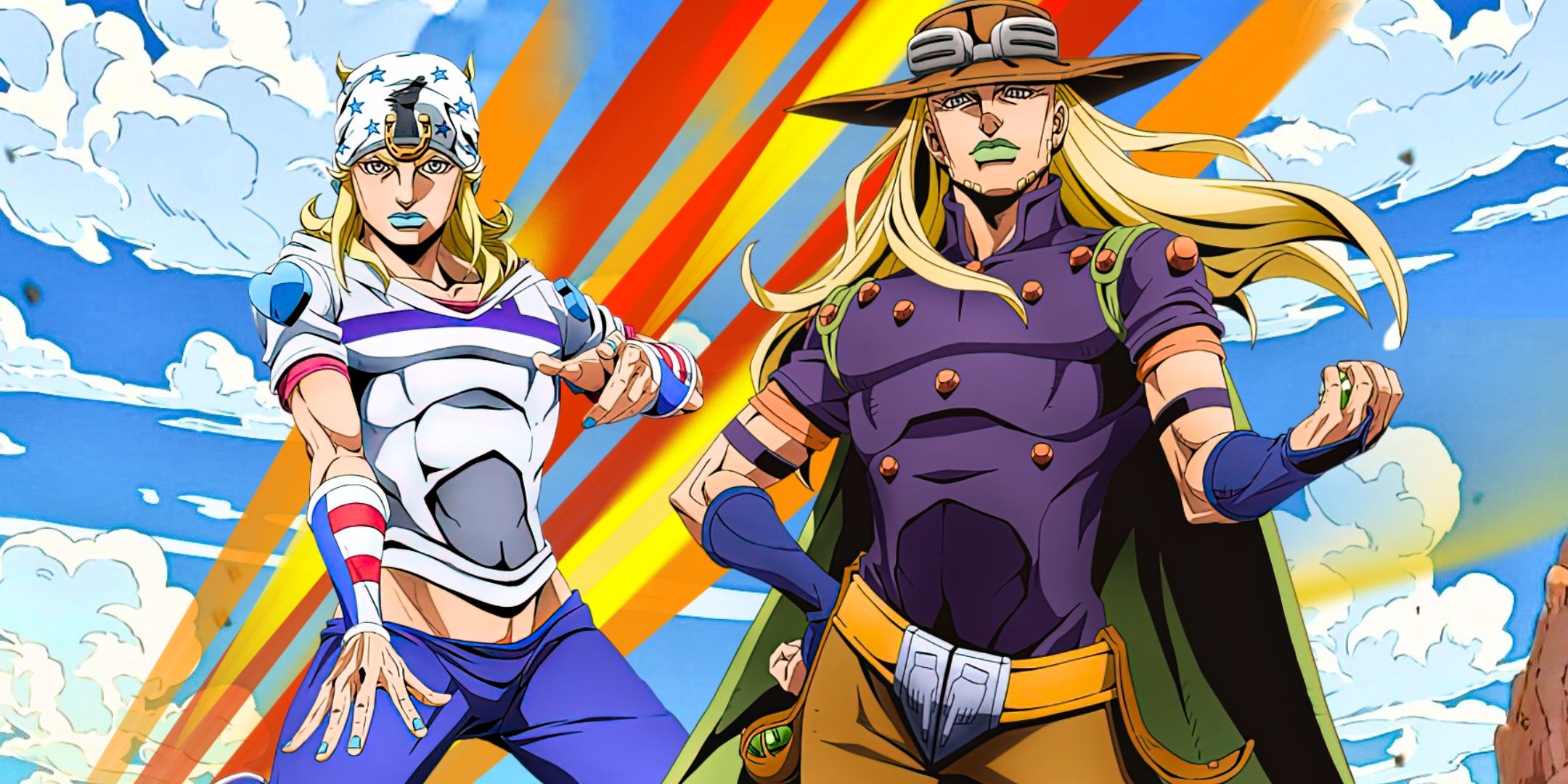
Ever since the cosmic, universe-resetting finale of Stone Ocean aired on Netflix, anime fandom has found itself trapped in a collective, breathless vigil. For over a decade, whenever David Production’s name surfaces in industry leaks or studio announcements, a singular, thunderous chant reverberates across social feeds, forums, and convention halls: Part 7 when? We have officially reached the event horizon of that anticipation. JoJo’s Bizarre Adventure: Steel Ball Run is not merely the next canonical installment in Hirohiko Araki’s multi-generational saga; it is widely hailed as his magnum opus—a narrative tour de force that currently sits comfortably near the absolute pinnacle of manga ranking sites worldwide. Adapting this 1890 trans-continental equestrian race is both the ultimate creative flex and the single most terrifying logistical challenge the Tokyo-based studio will ever face.
The Seinen Shift: Unshackling Hirohiko Araki’s Masterpiece
To truly grasp the fever pitch surrounding Steel Ball Run, one must understand its evolutionary DNA. Serialized between 2004 and 2011, the series initially masqueraded as a standalone western epic before shedding its skin to reveal its true identity as a reimagined, alternate-universe continuation of the JoJo mythos. More importantly, its migration from the squeaky-clean pages of Weekly Shonen Jump to the monthly, mature-skewing Ultra Jump marked a profound creative metamorphosis for Araki.
Unshackled from demographic boundaries, Araki traded straightforward battle-shonen tropes for moral nihilism, psychological decay, and visceral, dusty brutality. Gone were the localized street skirmishes of Morioh or the subterranean mafia hideouts of Italy. Instead, Steel Ball Run throws its sprawling ensemble into an unforgiving, sun-baked race across the United States—from the Pacific shores of San Diego to the bustling metropolis of New York City. The prize? Fifty million dollars, personal salvation, and, unbeknownst to the general public, the desiccated relics of a sacred corpse that hold dominion over planetary fortune.
Johnny Joestar & Gyro Zeppeli: A Study in Flawed Camaraderie
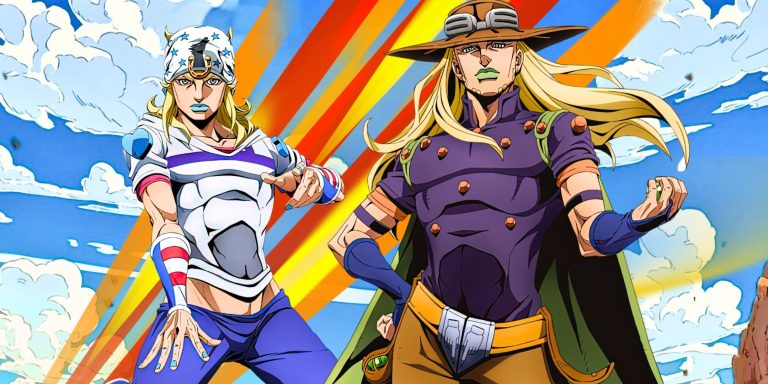
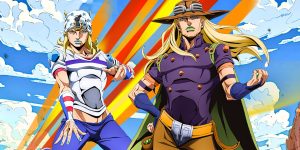
At the beating heart of this sprawling dust bowl is the dynamic between Johnny Joestar and Gyro Zeppeli, arguably the most brilliantly layered dual protagonists in modern sequential art. Johnny is not your typical righteous Joestar archetype. Paraplegic, stripped of his racing fame by a hubristic tragedy of his own making, and deeply cynical, Johnny operates on raw desperation. He is a young man driven by what the narrative describes as “dark determination”—an obsessive, pitch-black willingness to cross ethical boundaries if it means discovering a reason to keep living, walking, and breathing.
Complementing Johnny’s venomous vulnerability is Gyro Zeppeli, an eccentric executioner from the Kingdom of Naples carrying the crushing burden of an unjust capital sentence handed down to an innocent boy. Gyro balances flamboyant vanity—complete with green-studded teeth spelling out “GO! GO! ZEPPELI”—with lethal competence and existential gravitas. Their relationship isn’t the instantaneous, heroic brotherhood of Jonathan and Zeppeli from Phantom Blood; it is a slow-burning, mutually transformative partnership forged over campfire jokes about Italian cuisine, shared trauma, and bullet-strewn canyons.
The Spin vs. The Stand: Sacred Geometry in Battle
What elevates their journey mechanically is the introduction of The Spin. Moving far beyond the solar breathing techniques of Hamon and refining the metaphysical mechanics of Stands, Araki introduced a combat discipline grounded in Renaissance art, classical mathematics, and the Golden Ratio. Watching Gyro harness the centrifugal perfection of steel spheres to manipulate muscle fibers, bypass spatial shields, and warp atmospheric pressure is an intellectual feast.
Meanwhile, Johnny’s progression through the stages of his Stand, Tusk—from firing localized spinning fingernails (ACT 1) to commanding an omnipotent, dimension-shattering vortex (ACT 4)—serves as a poetic mirror to his own psychological rehabilitation. Bringing this intricate choreography of micro-rotations and cosmic physics into motion will test the visual storytelling grammar of any team tasked with directing it.
The Technical Mountain: Animating the Equestrian Nightmare
Why hasn’t David Production immediately dropped a trailer? The answer is simple, terrifying, and four-legged: horses. Ask any veteran animator about the most labor-intensive, anatomy-punishing subjects to draw by hand, and horses will rank near the top of the list. Their complex muscular transitions, galloping stride cycles, shifting skeletal weights, and unpredictable organic movement make sustained 2D equestrian animation an economic and physical sinkhole for production pipelines.
Steel Ball Run features dozens, sometimes hundreds, of horses thundering across sand dunes, snow drifts, and raging rivers at terminal velocity. Look at how prestigious productions like Attack on Titan or Vinland Saga navigated this dilemma: even top-tier studios leaned on heavily disguised 3D CGI models during complex equestrian sequences, reserving traditional hand-drawn frames for high-impact close-ups.
David Production has built its brand on kinetic hand-drawn flair, vibrant color-palette inversions, and bold, onomatopoeic pop-art stylings. If the studio relies too heavily on rigid, lifeless 3D models for the race sequences, it risks shattering the kinetic soul of the manga. Conversely, attempting to draw every horse in full 2D could crush production schedules and burn out key animators. Industry insiders speculate that the studio has spent the past several years developing proprietary hybrid rendering pipelines—refining non-photorealistic cell-shading to seamlessly marry 3D horse armatures with Araki’s distinctively scratchy, hyper-detailed 2D character models.
Funny Valentine and the American Nightmare
Beyond the technical obstacles lies an ideological juggernaut of an antagonist: President Funny Valentine. Armed with the reality-fracturing Stand Dirty Deeds Done Dirt Cheap (D4C) and driven by an uncompromising, messianic brand of American exceptionalism, Valentine challenges modern storytelling conventions. He is not a villain who desires wealth or chaotic destruction; he genuinely seeks to hoard the world’s fortune for his nation, actively passing all national suffering onto the rest of the planet.
His legendary “First Napkin” monologue is a philosophical thesis on power dynamics, social authority, and political inevitability that will spark endless discourse across the pop-culture landscape once voice-acted with the prestige David Production routinely commands. Navigating the delicate cultural and thematic balance of Valentine’s ideology within a global release framework will require surgical precision in tone and translation.
The Long Road to San Diego
David Production’s work on JoJo’s Bizarre Adventure over the past decade represents one of the most faithful, artistically reverent manga-to-anime adaptations in history. But Steel Ball Run is the final frontier. It is the mountain they have been climbing toward since Jonathan Joestar first clashed with Dio Brando in the fiery ruins of the Joestar mansion back in 2012.
Adapting this seismic masterpiece requires unyielding patience from the community, boundless resources, and an animation team willing to push the medium to its absolute limits. If David Production can harness the golden rectangle of production timing, artistic integrity, and cutting-edge hybrid animation, we won’t just be witnessing another seasonal anime hit; we will be witnessing the arrival of a modern television masterpiece.
How do you think David Production should tackle the horse animation dilemma? Can any voice actor ever do justice to Gyro’s “Pizza Mozzarella” song? Drop your thoughts, theories, and Dream Voice Casts in the comments below, and keep your browsers locked to Wibux.com for breaking JoJo updates!