
When the universe collapsed and reconstituted itself at the bittersweet climax of Stone Ocean, fans knew the slate had been cleared for something unprecedented. For over a decade, anime-only viewers watched David Production navigate the generational bloodlines of the Joestar clan with visual swagger, sonic flair, and an intoxicating dedication to Hirohiko Araki’s stylistic quirks. Yet, even as Cape Canaveral faded into memory, a monolithic shadow loomed over the horizon: Steel Ball Run. Long hailed on critical aggregate sites as the undisputed crown jewel of Araki’s four-decade career—and frequently trading punches with Berserk for the top spot on global manga leaderboards—Part 7 represents more than just the next production cycle. It is a seismic cultural pivot, a reinvention of mythos, and arguably the most technically terrifying project David Production will ever touch.
The Seinen Evolution: Araki’s Masterwork of Historical Revisionism
To understand the ravenous hunger surrounding a potential Steel Ball Run adaptation, one must appreciate the context of its creation. Serialized initially in Weekly Shonen Jump in 2004 before shifting to the monthly seinen pages of Ultra Jump, Part 7 unshackled Araki from the editorial confines of youth demographics. The consequence was nothing short of miraculous: an expansive, dusty, hyper-detailed 1890s America serving as the backdrop for a trans-continental horse race stretching from San Diego Beach to New York City.
The premise carries the visceral texture of Cormac McCarthy blended with the psychedelic absurdism only Araki can muster. Conceived by the enigmatic promoter Steven Steel, the eponymous race is ostensibly a grueling six-thousand-kilometer endurance test boasting a fifty-million-dollar prize. Beneath the frontier dust, however, lies an occult hunt of geopolitical consequence: the pursuit of the mummified Corpse Parts of an unnamed holy figure, scattered across the American badlands and possessing the power to grant miraculous Stand abilities. By shifting into historical fiction interlaced with supernatural body horror and divine providence, Araki elevated JoJo’s Bizarre Adventure from an ingenious battle manga into an existential western epic.
Johnny Joestar and Gyro Zeppeli: A Masterclass in Character Psychology
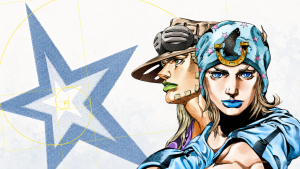
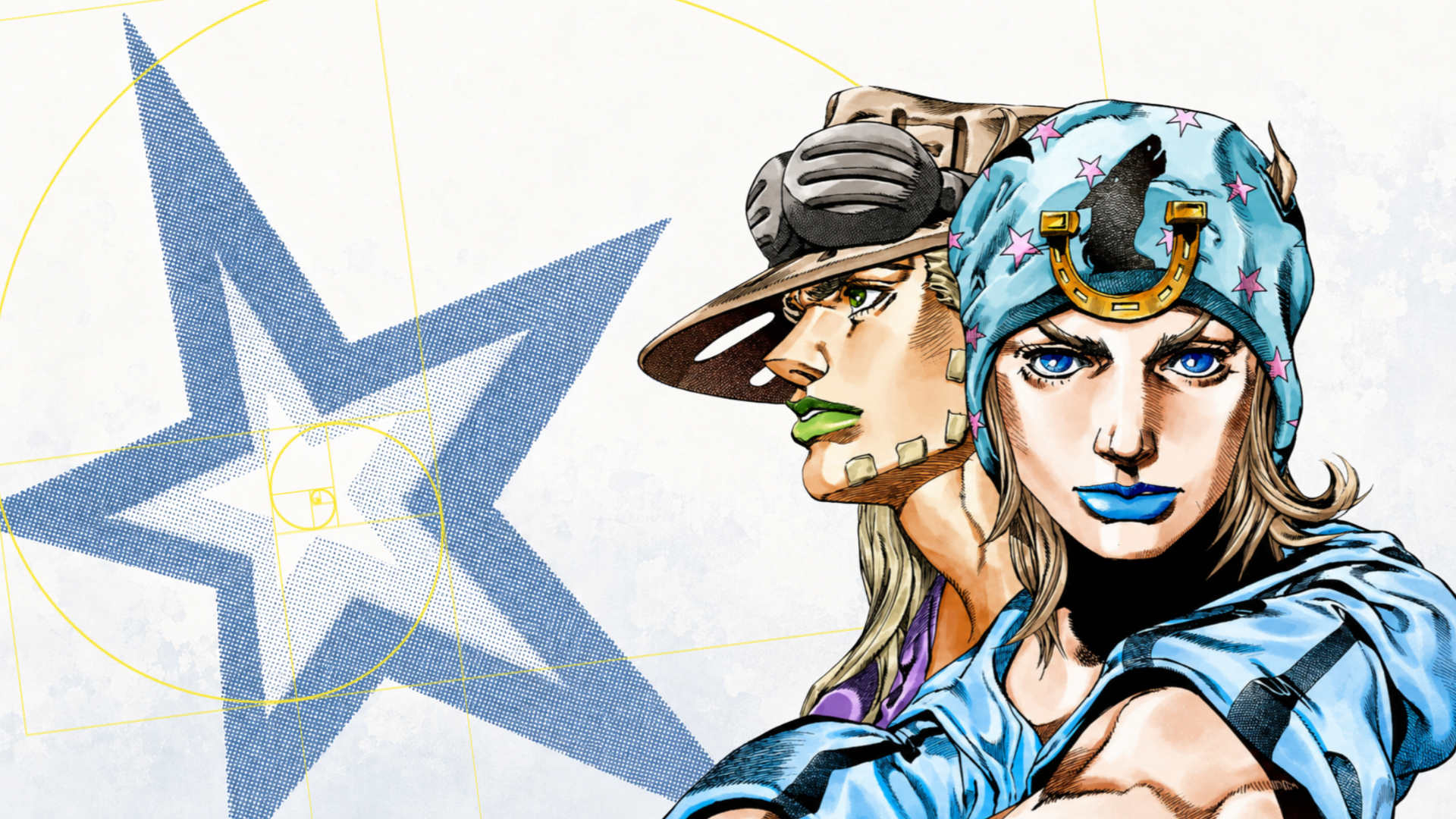
At the beating heart of this sprawling journey is the electric, emotionally jagged dynamic between Johnny Joestar and Gyro Zeppeli. Prior JoJo protagonists carried ancestral mantles of righteousness—from Jonathan’s chivalry to Jotaro’s stoic justice. Johnny subverts every heroic expectation. A former prodigy jockey paralyzed from the waist down due to his own youthful hubris, Johnny begins his odyssey not out of altruism, but through a selfish, desperate glimmer of redemption. When he witnesses Gyro’s mysterious abilities, he realizes the Italian’s mystical techniques might allow him to walk again. He is petty, traumatized, and driven by what Araki explicitly characterizes as a “dark determination”—an unnerving moral ambiguity that makes his character arc the most satisfying in the franchise.
Counterbalancing Johnny’s brooding desperation is Gyro Zeppeli, a disgraced executioner from the Kingdom of Naples with a sharp grill, a razor-sharp tongue, and an impossible heart. Gyro is the ideological and literal tutor of the narrative, a man entering the brutal race to secure an amnesty for an innocent child condemned to death. Their camaraderie transcends the conventional shonen mentor-student archetype; it is a symbiotic brotherhood forged over campfire bad jokes, shared blood, and philosophical awakenings under desolate desert skies.
The Golden Ratio: Deconstructing the Lore of the Spin
Narratively, Part 7 introduces a brilliant mechanical successor to Part 1 and 2’s Ripple: The Spin. Grounded in Neapolitan executioner traditions and Renaissance mathematics, the Spin manipulates rotational energy derived from the Fibonacci sequence and the Golden Rectangle. Unlike the raw biological resonance of Hamon, the Spin is conceptual physics weaponized—manifesting through Gyro’s oscillating steel spheres to twist flesh, manipulate terrain, and warp visual perception.
When this ancient discipline coalesces with Johnny’s burgeoning Stand, Tusk, the power progression feels earned in a way battle anime rarely achieves. Johnny’s evolution through four distinct “Acts” mirrors his internal healing, advancing from firing his own spinning fingernails as rudimentary bullets to tearing open dimensional barriers with infinite gravitational rotation. Adapting this visual taxonomy requires an animation studio to treat kinetic momentum as its own narrative language.
The Equestrian Gauntlet: David Production’s Formidable Obstacle
If the creative buzz around Steel Ball Run is deafening, so too is the industry anxiety surrounding its realization. The primary reason an announcement has taken so long is not a lack of interest, but an undeniable logistical nightmare: horses.
In modern animation, quadrupeds in sustained motion represent the absolute zenith of technical difficulty. A human running cycle involves predictable pivots, but a horse galloping across rough terrain involves intricate muscle contraction, undulating skeletal frames, realistic mane physics, and shifting perspectives. Multiply that by dozens of competing riders in high-speed tactical jockeying, and the workload becomes astronomical. Hand-drawn 2D sakuga for an entire cour of equestrian racing across prairies, snowfields, and canyons would break virtually any major Japanese production pipeline.
The discourse within the community frequently centers on whether David Production will lean into 3D CGI integration, akin to the models used in recent historical and mecha productions, or attempt a hybrid pipeline. The studio proved its mettle with the stylized cel-shaded openings of Parts 1 through 3 and demonstrated exceptional compositional framing throughout Fire Force and Urusei Yatsura. However, Part 7 demands a delicate balance. If the horses feel weightless, rigid, or detached from their hand-drawn riders, the visceral grit of the frontier dissolves. Fans are not merely awaiting a confirmation; they are anticipating an animation showcase that could redefine how modern anime handles kinetic creature design on an epic scale.
The Political Crucible of Funny Valentine
An adaptation of Steel Ball Run is only as potent as its primary antagonist, and in President Funny Valentine, Araki penned what many critics consider his thematic magnum opus. As the 23rd President of the United States, Valentine is an ultra-nationalist operating under an intoxicating veneer of moral absolute righteousness. His goal is not megalomaniacal slaughter, but patriotic preservation: to secure the Saint’s Corpse so that America may hold the “first napkin,” projecting misfortune to the rest of the world while ensuring eternal prosperity for his nation.
Valentine’s Stand, Dirty Deeds Done Dirt Cheap (D4C), introduces multiverse-hopping mechanics that push spatial tension to dizzying heights. It forces viewers to engage with questions of utilitarian ethics, systemic violence, and manifest destiny. The climactic philosophical duel between Johnny’s desperate individualism and Valentine’s fanatical patriotism remains one of the most intellectually charged confrontations in serialized graphic fiction.
The Cultural Inevitability
The buzz surrounding JoJo’s Bizarre Adventure: Steel Ball Run is not speculative hype born of impatience; it is the natural culmination of a decade-long renaissance. David Production has shepherded Hirohiko Araki’s vision from Victorian England to modern Florida, proving time and again that their reverence for the source material borders on sacred devotion. Part 7 is the final frontier—a sprawling, blood-soaked reimagining of the American dream wrapped in the golden glow of the Italian Spin.
Whether David Production unveils a teaser at the next major Jump Festa or holds their cards close to their chest to perfect the complex equestrian rendering, the message from the global anime fandom is unified and crystal clear: Run, don’t walk. The starting pistol is waiting to fire, and when it does, the landscape of prestige anime television will never be the same.
What do you think is the biggest hurdle David Production faces in adapting Steel Ball Run—the complex CGI horses or casting the legendary voices of Gyro and Johnny? Let us know in the comments below!