Ever since the sun dipped beneath the horizon on the poignant finale of Stone Ocean in December 2022, the collective anime zeitgeist has been caught in a suspended state of manic anticipation. For over a decade, David Production accomplished the seemingly impossible: serializing Hirohiko Araki’s labyrinthine generational epic across six distinct eras without losing an ounce of the mangaka’s feverish, runway-ready eccentricities. Yet, the true holy grail has always loomed just beyond the Florida coastline. We are, of course, talking about JoJo’s Bizarre Adventure: Part 7 – Steel Ball Run.
Widely regarded by critics and purists alike as Araki’s magnum opus—and regularly ranked among the highest-rated manga series of all time on MyAnimeList—Steel Ball Run is far more than a routine seasonal follow-up. It is an ontological reboot, a radical western odyssey, and an excruciatingly ambitious production gauntlet. As industry whispers reach a fever pitch and David Production charts its next developmental frontier, the hype surrounding the trans-American horseback duel is no longer a fringe fandom theory; it is the most anticipated prospective production in modern anime history.
A Continental Reset: The Transcendence of Hirohiko Araki’s Magnum Opus
To grasp why Steel Ball Run commands such reverent hushes in anime circles, one must appreciate the context of its creation. Originally debuting in 2004 within the pages of Weekly Shonen Jump simply as Steel Ball Run, the series was deliberately distanced from the JoJo moniker before migrating to the monthly seinen publication Ultra Jump in 2005. That editorial shift changed everything.
Unshackled from the relentless weekly churn and teenage demographic constraints, Araki’s storytelling underwent an artistic renaissance. The trans-American setting of 1890—spanning from the beaches of San Diego to the concrete sprawl of New York City—traded the claustrophobic corridors of Green Dolphin Street Prison for a canvas of sun-bleached prairies, haunted mountain ranges, and brutal wilderness. With a colossal $50 million grand prize baiting outlaws, shamans, aristocrats, and supernatural operatives, the Steel Ball Run race became an allegory for imperialist manifest destiny, spiritual atonement, and the human condition.
The Golden Ratio: When Stands Evolved into “The Spin”
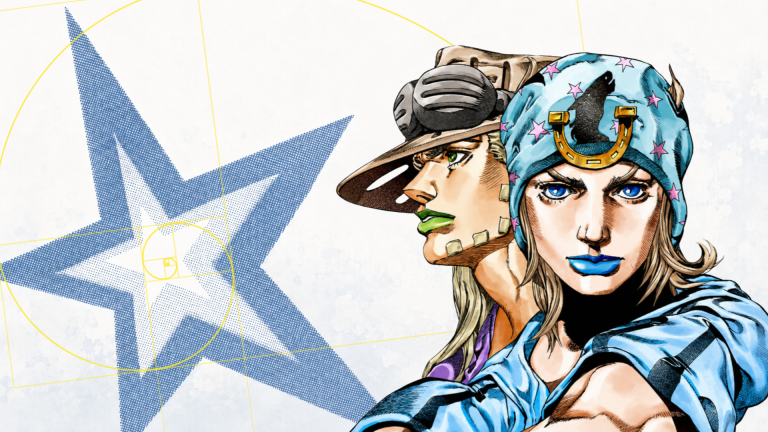
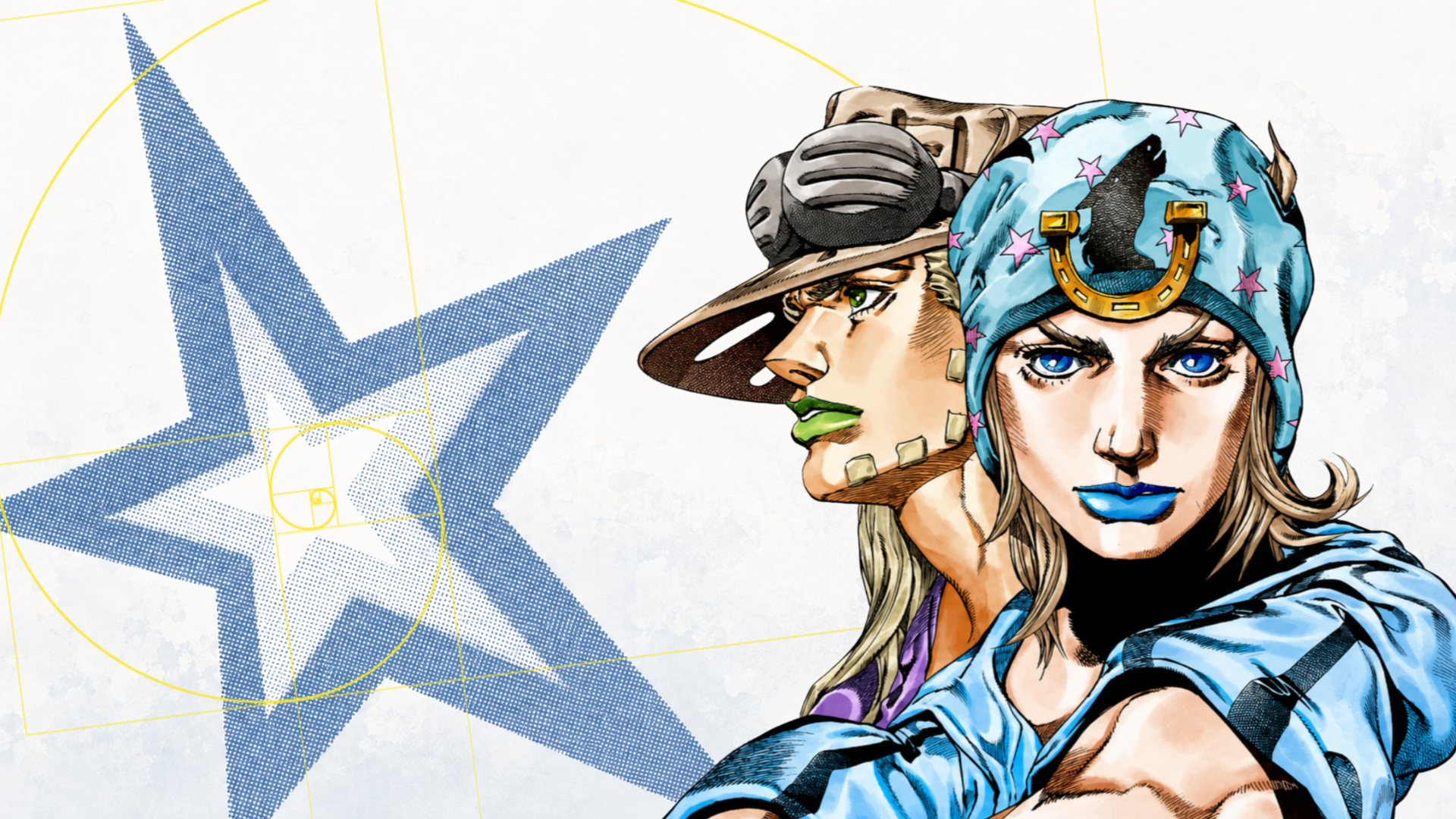
While Stand battles remain a hallmark of the narrative, Araki cleverly retrofitted his combat engine with a primal predecessor: The Spin. Grounded in the mathematical perfection of the Fibonacci sequence and the Golden Rectangle, this rotational martial art elevated tactical battles from punch-ghost skirmishes to high-concept kinetic physics. Watching how the Spin intertwines with Johnny Joestar’s evolving Stand, Tusk, and Gyro Zeppeli’s lethal iron spheres provides a visceral, cerebral thrill that will fundamentally revitalize the franchise’s visual vocabulary on screen.
Johnny and Gyro: Deconstructing the Joestar Heroism
At the beating, bleeding heart of Part 7 is the dynamic between Johnny Joestar and Gyro Zeppeli—a partnership that represents Araki’s finest character writing to date. Where previous JoJos were born heroes or natural paragons of justice, Johnny arrives as a deconstructed, profoundly flawed protagonist.
A former horse-racing prodigy whose hubris, entitlement, and arrogance ended in a catastrophic gunshot wound that left him paraplegic, Johnny begins the race stripped of his dignity and purpose. He is cynical, morally compromised, and openly selfish. His pursuit of Gyro is not fueled by altruism or sportsmanship, but by an obsessive desperation to walk again after witnessing Gyro’s Spin temporarily revitalize his inert legs. Johnny’s signature “dark determination”—manifested in cold, unblinking eyes willing to kill for his goal—paints him as one of the most uniquely anti-heroic figures ever to bear the Joestar lineage.
Conversely, Gyro Zeppeli acts as Johnny’s philosophical foil, mentor, and emotional anchor. A Neapolitan executioner weighed down by the impending execution of an innocent child back home, Gyro masks his existential burden behind theatrical bravado, gold-plated grillz, and absurd running gags (including the legendary cheese song). The brotherhood forged between these two outcasts over dusty campfires and mutual brushes with death is intimate, tragic, and uncharacteristically poignant for a franchise known for bombast. Their chemistry will demand tour-de-force voice acting and immaculate directorial restraint when adapted.
The Horse in the Room: David Production’s Greatest Technical Crucible
If Steel Ball Run is universally celebrated as a masterpiece, why has the anime adaptation taken so long to materialize? The answer can be summed up in a single, terrifying word for animators: horses.
Equestrian animation is notoriously the graveyard of production budgets. Unlike bipedal human forms, horses possess a complex, quadrupedal anatomy with intricate muscle contraction, skeletal shifting, and distinct gait transitions—from walk to trot, canter, and full gallop. Now, multiply that physiological complexity by dozens of competitors jostling for position in high-speed, dynamic tracking shots across open plains, all while trading Stand barrages and golden-ratio projectiles.
David Production, a studio celebrated for its stylized sound effects, bold line work, and signature color-palette shifts, faces an existential crossroads:
- The CGI Necessity: Hand-animating hundreds of distinct, constantly galloping horses over a projected 36-to-48 episode run is a logistical impossibility in the modern anime economy. An adaptation will inevitably rely on 3D computer graphics for crowd races and wide-angle maneuvers.
- The Hybrid Challenge: The defining test will be seamless integration. If the 3D models feel floaty, detached from the terrain, or clash aggressively with hand-drawn 2D close-ups of Johnny and Gyro, the visual immersion shatters. David Production’s previous experimentation with 3D elements (seen in the vehicle chases of Golden Wind and the sweeping prison architecture of Stone Ocean) indicates they have been iteratively refining this pipeline.
- Scale and Environmental Scope: Unlike the localized settings of Morioh or Cairo, Steel Ball Run is an environmental tour de force. Monument Valley, the Great Plains, petrified forests, and freezing blizzards are not just backdrops; they are dynamic combat obstacles that require world-class background art and compositing.
For David Production, conquering Part 7 is not merely an adaptation duty—it is their ticket to cementing themselves alongside the elite production powerhouses of the industry.
Why the World Still Waits for Funny Valentine
You cannot discuss the fever pitch surrounding Part 7 without invoking its principal antagonist: the 23rd President of the United States, Funny Valentine. In an era where modern media often leans into cartoonish villains, Valentine stands as an ideological monolith. Armed with the terrifying, multiverse-hopping Stand Dirty Deeds Done Dirt Cheap (D4C), Valentine does not desire conquest, wealth, or petty revenge. He desires the divine prosperity of his nation, genuinely believing his ends justify any unholy means.
His philosophical discourse on “taking the first napkin”—the idea that society is dictated by whoever boldly sets the standard for the collective to follow—remains one of the most culturally referenced antagonist manifestos in contemporary manga. The clash between Johnny’s desperate, individual pursuit of salvation and Valentine’s fanatical, macroscopic patriotism turns the climax of Steel Ball Run into an explosive ideological war.
The Verdict: An Inevitable Cultural Tsunami
The murmurs surrounding JoJo’s Bizarre Adventure: Steel Ball Run are not whether the anime will happen, but when David Production will deem the industry’s technology and their internal pipeline mature enough to do it justice. The studio has deliberately slowed its cadence, allowing room for original projects like Undead Unluck and Fire Force, perhaps gathering the exact structural bandwidth needed for this colossal undertaking.
When the starting pistol finally fires and the opening bars of a new brass-heavy, Ennio Morricone-inspired JoJo theme ring out across the San Diego shoreline, anime culture will witness a seismic shift. Steel Ball Run has waited nearly two decades to take its victory lap on the small screen. When it lands, the anime medium may never look at the western genre the same way again.
Now it’s on you, JoJo fans: How do you think David Production should tackle the equestrian animation hurdles? Are you team 2D purist or hoping for cutting-edge cel-shaded CGI? Sound off in the comments below!