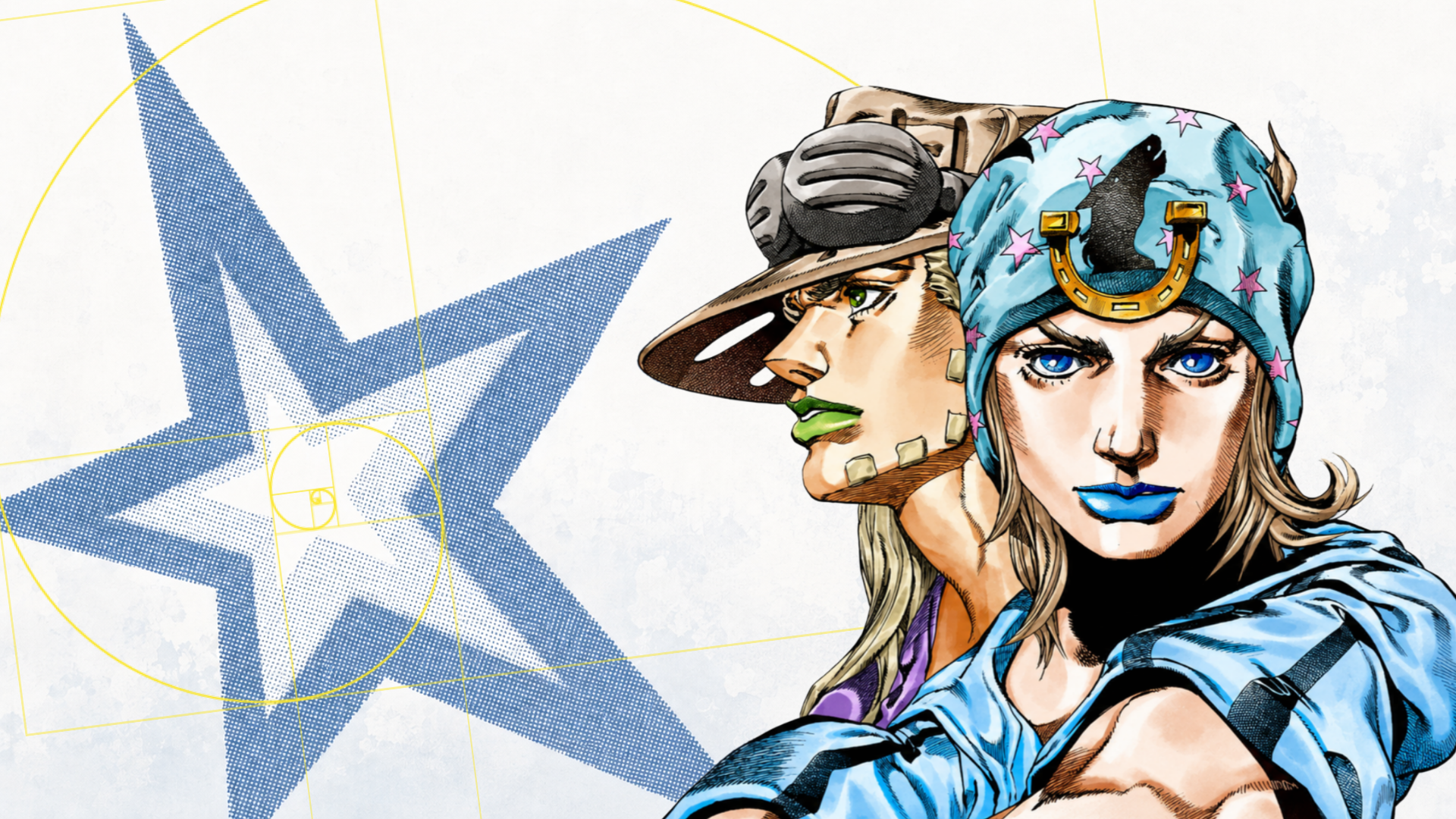
Ever since the melancholic notes of “Distant Dreamer” faded over the ocean-soaked finale of Stone Ocean in late 2022, a collective, breathless hush has fallen over the anime community. The conclusion of Jolyne Cujoh’s tragic yet triumphant crusade brought Hirohiko Araki’s original Joestar lineage to a definitive, cosmic end. Yet for diehard fans and casual observers alike, the end of the original universe was never seen as a eulogy. Instead, it was viewed as the necessary clearance of the board for something monumental: the long-awaited adaptation of Part 7: Steel Ball Run.
Widely regarded by critics, mangaka peers, and the global fandom as Araki’s magnum opus, Steel Ball Run sits proudly in the upper echelons of manga history, frequently rivaling Kentaro Miura’s Berserk and Takehiko Inoue’s Vagabond on critical rating aggregators. But adapting a sprawling, hyper-detailed epic set across the untamed American frontier of 1890 isn’t merely a matter of greenlighting another cour of television. For David Production—the animation powerhouse whose identity has been intrinsically tied to JoJo’s Bizarre Adventure since 2012—Steel Ball Run represents an unprecedented artistic, technical, and narrative frontier.
The Frontier Reimagined: Why Part 7 is Araki’s Masterpiece
To understand the deafening buzz surrounding a potential anime announcement, one must understand the seismic shift Steel Ball Run brought to the franchise when it debuted in 2004. Originally serialized without the “JoJo” moniker before making a high-profile move from the restrictive deadlines of Weekly Shonen Jump to the prestige pages of the monthly Ultra Jump, the series freed Araki from editorial constraints. The monthly release schedule granted him the canvas to experiment with cinematic composition, grotesque body horror, and dense, morally ambiguous geopolitical intrigue.
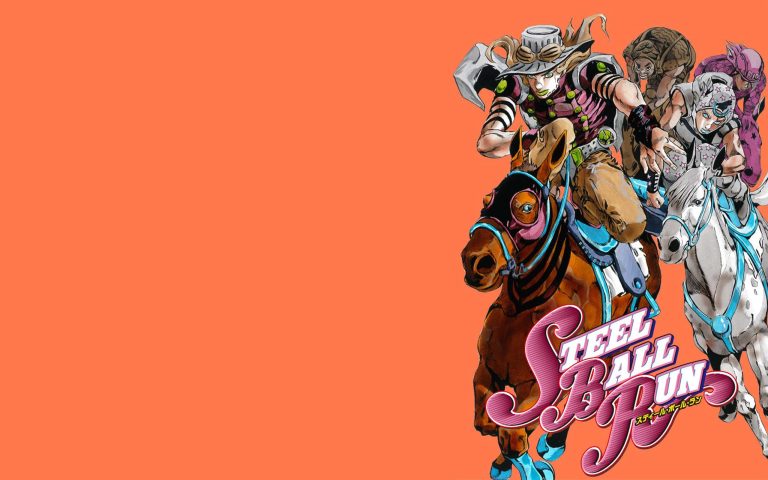
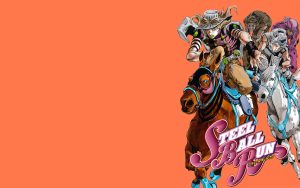
The premise is intoxicatingly grandiose: eccentric steel magnate Steven Steel organizes an unprecedented, 6,000-kilometer cross-country horse race spanning from San Diego Beach to New York City. The purse is a staggering fifty million dollars. Yet beneath the veneer of historical sports Americana lies an occult conspiracy orchestrated by the charismatic, ultra-nationalist U.S. President Funny Valentine. As competitors perish across deserts, treacherous mountain ranges, and frozen plains, the race quickly mutates into a desperate scramble to assemble the mummified, miraculous fragments of the Saint’s Corpse—implied heavily to be the physical remains of Jesus Christ himself.
Johnny Joestar and Gyro Zeppeli: Dual Protagonism and Moral Ambiguity
At the beating, bruised heart of this trans-continental odyssey is perhaps the most nuanced, emotionally resonant relationship Araki has ever penned. Unlike the upright chivalry of Jonathan Joestar or the unyielding stoicism of Jotaro Kujo, Part 7 introduces us to an entirely different breed of protagonist.
Johnny Joestar: The Flawed Paraplegic and His ‘Dark Determination’
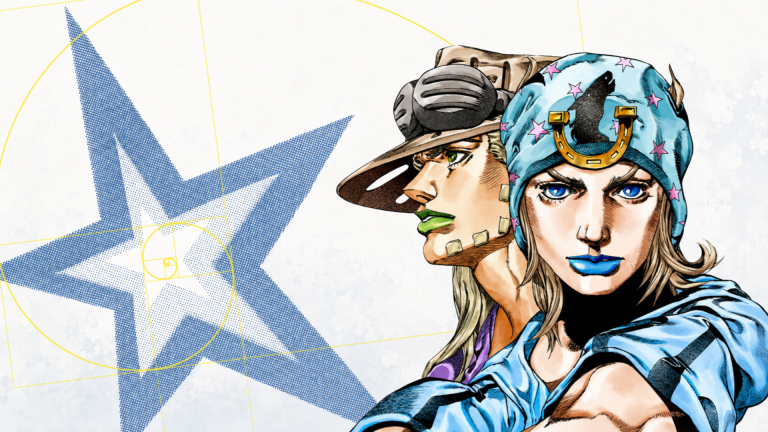
Johnny Joestar is fundamentally unheroic at his inception. A former prodigy jockey whose career and mobility were stolen by his own arrogant hubris, Johnny begins the story bound to a wheelchair, consumed by bitter cynicism and despair. He does not enter the grueling Steel Ball Run to save the world, reclaim his family fortune, or prove his honor. He joins simply because touching the revolving steel sphere of a mysterious foreigner caused his paralyzed legs to reflexively twitch for a fraction of a second. Johnny’s journey is explicitly framed around reaching “negative to zero”—a desperate, raw struggle just to claw back his basic humanity. Throughout the narrative, Araki frequently draws Johnny with a chilling, vacant stare—the infamous “dark determination”—signifying a killer’s resolve willing to sacrifice any moral code to reach his singular goal.
Gyro Zeppeli: The Executioner’s Duty and the Mastery of Spin
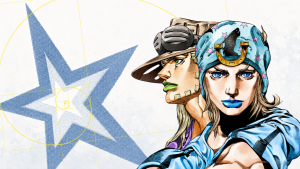
Acting as Johnny’s mentor, companion, and philosophical foil is Gyro Zeppeli, a disgraced royal executioner from the Kingdom of Naples. Armed with green steel spheres, gold-plated grill teeth bearing the words “GO! GO! ZEPPELI,” and an absurd penchant for nonsensical songwriting, Gyro carries a quiet, tragic burden. He rides in the race to win imperial clemency for an innocent child condemned to death back home. Where Johnny’s aura is ruthless and introspective, Gyro’s is dynamic, charismatic, and stubbornly principled. The chemistry between these two—bickering over bad jokes around a desert campfire one moment, and executing lethal, synchronized tactical warfare against terrifying Stand users the next—elevates Steel Ball Run from a great supernatural action serial to an unforgettable character study.
The Mechanical Revolution: The Spin vs. The Stand Metagame
From an aesthetic and mechanical standpoint, Steel Ball Run fundamentally revolutionizes the power dynamics of the franchise. While Stands remain a centerpiece, Araki reinvents the physiological roots of supernatural ability through the concept of the Spin. Inherited through centuries of Neapolitan medical and anatomical science, the Spin is a spiritual and physical successor to Part 1 and 2’s Ripple (Hamon), framed around the mathematical precision of the Golden Ratio and Fibonacci sequence.
Watching this power visually manifest is one of the biggest reasons fans are clamoring for an adaptation. The progression of Johnny’s Stand, Tusk, from basic, fingernail-spinning projectile warfare (ACT 1) to wormhole-opening spatial navigation (ACT 2 and 3), culminating in the reality-shattering, gravity-defying infinite rotation of ACT 4, represents Araki at his absolute creative zenith. Translating this intricate blend of sacred geometry, kinetic trajectory, and baroque Stand designs into fluid, animated spectacles is a tantalizing prospect for any animation team.
The Horse in the Room: David Production’s Ultimate Technical Gauntlet
Why hasn’t Steel Ball Run been animated yet? The answer lies within the brutal realities of the contemporary anime industry. In the lexicon of traditional 2D animation, there is no creature more universally feared than the horse. The quadrupedal anatomy, the complex undulating of muscle groups beneath dynamic lighting, and the distinct four-beat rhythm of a gallop are notoriously labor-intensive to draw by hand. Now, imagine not just one horse, but dozens of horses continuously running through dust clouds, stampedes, and surrealist Stand battlegrounds across dozens of episodes.
David Production, who has maintained an astonishing level of artistic integrity and fidelity to Araki’s shifting art styles over the past decade, faces its greatest logistical hurdle yet. The studio cannot simply rely on cheap, unblended 3D models without facing massive pushback from an uncompromising fanbase. If Steel Ball Run is to succeed, David Production will have to pioneer a seamless hybrid pipeline—blending state-of-the-art 3D CGI chassis for equine locomotion with meticulously retouched 2D cel-shading, or outsource the vehicle/animal models to specialized studios like Orange or Graphinica.
Furthermore, Araki’s character designs in Part 7 transitioned into hyper-detailed realism with delicate hatching, ornate western attire, and subtle facial micro-expressions. Translating these intricate character sheets into something animatable over a 36-to-48 episode run will require the most talented animation directors Japan has to offer, undoubtedly requiring prolonged pre-production cycles.
The Cultural Horizon: When Can Fans Expect the Flag to Drop?
Speculation surrounding the adaptation reached fever pitch throughout late 2023 and 2024, exacerbated by trademark filings, promotional merchandise events celebrating the anime’s 10th anniversary, and cryptic comments from production staff regarding their future ambitions. While an official greenlight has yet to be publicly proclaimed by Warner Bros. Japan, the sheer financial viability and prestige value of Steel Ball Run make its adaptation an inevitability rather than an uncertainty.
When the starting gun finally fires, it will mark the dawn of what could be one of the most culturally dominant runs in modern anime history. Steel Ball Run is not just a western, nor is it merely a sports manga or a supernatural thriller; it is a profound deconstruction of ambition, physical disability, and the relentless quest for redemption across an unforgiving continent.
What are your thoughts on a potential Steel Ball Run anime? Do you trust David Production to nail the complex horse animation with a hybrid CGI approach, or should they take all the time they need to deliver pure 2D spectacle? Drop your theories, voice-casting wishes, and predictions in the comments below!