Ever since the melancholic chords of Duffy’s “Distant Dreamer” carried the reset universe of Stone Ocean into anime history, the global pop-culture sphere has maintained an almost breathless vigil. For more than a decade, David Production pulled off what was long deemed commercially and stylistically impossible: translating Hirohiko Araki’s idiosyncratically flamboyant, hyper-stylized generational saga into a globally beloved modern anime phenomenon. Yet, for all the viral acclaim generated by Jotaro’s stoic pummeling and Giorno’s operatic piano drops, the entire anime adaptation has quietly served as an extended prologue for the true promised land. We are, of course, talking about JoJo’s Bizarre Adventure: Steel Ball Run.
Universally lauded across critical review boards and ranked consistently among the top manga of all time on MyAnimeList, Part 7 is not merely the next chapter in an anthology—it is Araki’s undisputed magnum opus. Combining the grimy, revisionist mythos of late-19th-century Americana with biomechanical body horror, supernatural politics, and metaphysical martial arts, Steel Ball Run stands as David Production’s greatest potential triumph and its most intimidating technical frontier.
The Seinen Evolution: Transcending Shonen Boundaries in 1890 America
From Weekly Constraints to Monthly Mastery
To grasp the seismic weight of a potential Steel Ball Run adaptation, one must understand its historic shift in publication. In 2004, Araki began serializing Part 7 in Weekly Shonen Jump before transitioning the series to the monthly seinen catalog of Ultra Jump in 2005. This move unlocked unprecedented narrative real estate. Unshackled from weekly page-count crunch and the censorship demands of young-demographic publishing, Araki’s visual artistry deepened into intricate cross-hatching, hyper-detailed musculature, and sprawling double-page panoramas that evoked Sergio Leone’s widescreen cinematic westerns.
The premise alone marks an audacious departure: in 1890, eccentric eccentric-promoter Steven Steel orchestrates a grueling, coast-to-coast horseback race across the United States. Spanning 6,000 kilometers from San Diego Beach to New York City, the $50 million contest attracts outlaws, aristocrats, assassins, and supernatural operatives from every corner of the earth. Beneath this high-stakes sporting event lies a Machiavellian conspiracy engineered by the 23rd President of the United States, Funny Valentine, revolving around the sacred, scattered mummified Corpse Parts of an unnamed holy figure. The narrative stakes transition seamlessly from an athletic survival test to an existential battle over the geopolitical soul of the world.
Johnny Joestar and Gyro Zeppeli: Flawed Humanity and the Golden Spin
Subverting the Archetypal JoJo Protagonist
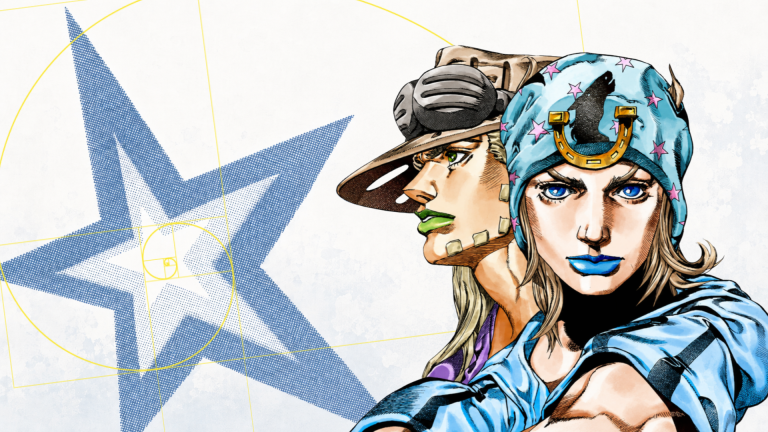
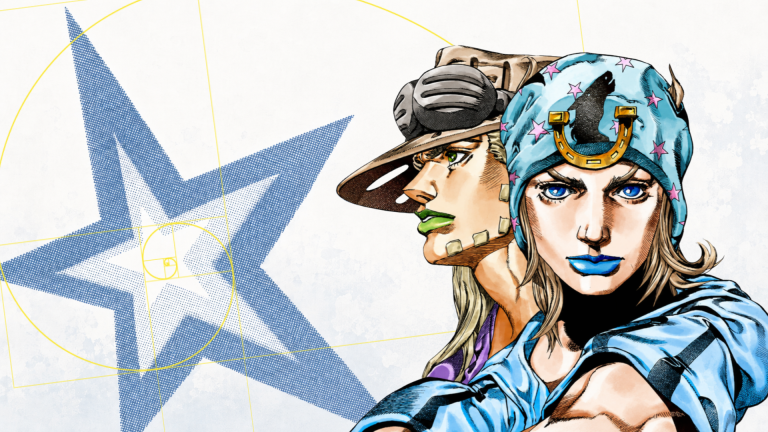
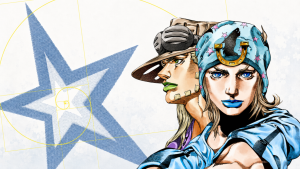
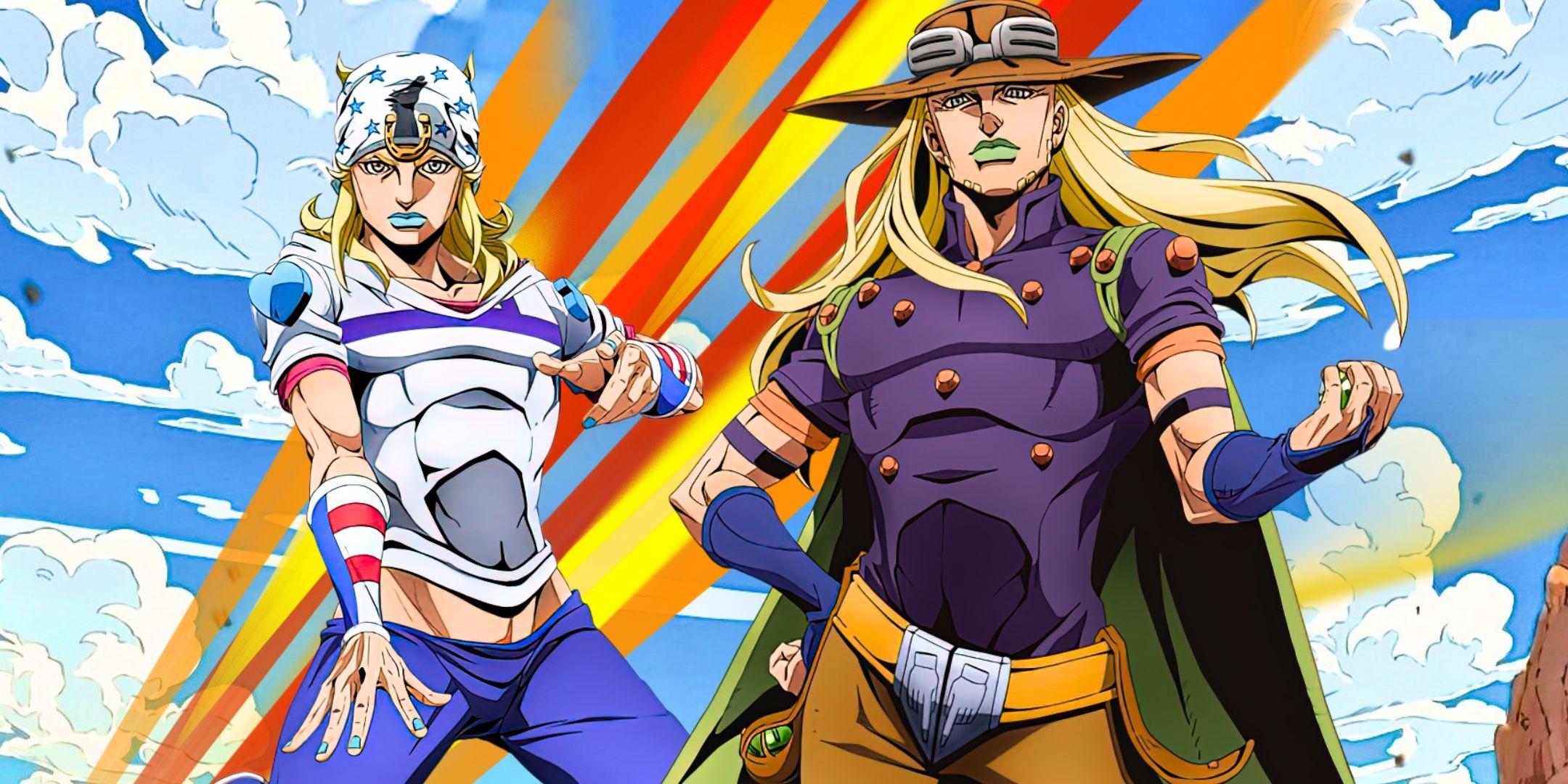
Central to Steel Ball Run’s enduring acclaim is its peerless character writing, anchored by the poignant dynamic between Johnny Joestar and Gyro Zeppeli. Unlike the morally pristine Jonathan Joestar or the effortless cool of Jotaro Kujo, Johnny represents Araki’s most vulnerable, psychologically scarred protagonist. A former horse-racing prodigy whose reckless arrogance resulted in a gunshot wound that paralyzed him from the waist down, Johnny enters the narrative not as a beacon of justice, but as a shell of a man poisoned by self-loathing.
His motivation is distinctly devoid of classic shonen altruism. Johnny does not seek glory, patriotic salvation, or even revenge; he simply wants to stand again. When he witnesses Gyro Zeppeli wield the mystical martial art of “the Spin”—a kinetic family secret using revolving steel orbs that momentarily triggers neuro-muscular reactions in Johnny’s legs—Johnny’s obsession is sparked. Araki frequently paints Johnny with what characters within the text call a “dark determination,” an unwavering, sometimes terrifying willingness to sacrifice his own morality to achieve his ends. It is an extraordinary subversion of heroic convention that demands top-tier voice acting and nuanced, intimate storyboarding to translate faithfully to the screen.
The Golden Ratio and the Geometry of Combat
In contrast to Johnny’s simmering interiority, Gyro Zeppeli explodes across the page with flamboyant charisma, golden grillz, and an absurd penchant for opera and terrible puns. Yet Gyro bears his own heavy cross: an exiled royal executioner from the Kingdom of Naples racing to win clemency for an innocent boy condemned to death. Their escalating camaraderie—forged over campfire banter, shared trauma, and tactical life-or-death battles—forms the emotional bedrock of the series.
Furthermore, Part 7 radically recontextualizes the franchise’s combat mechanics. While Stands remain integral—evolving from basic utility to grotesque cosmic horrors like Valentine’s dimensional-hopping Dirty Deeds Done Dirt Cheap (D4C)—they are harmonized with the Spin. Rooted in the mathematical mysticism of the Fibonacci Sequence and the Golden Rectangle, the Spin feels distinct from early-series Ripple (Hamon). Its scientific-yet-occult choreography, culminating in the transcendent evolution of Johnny’s evolving Stand, Tusk, presents an electrifying canvas for dynamic visual effects that David Production must painstakingly execute.
The Technical Mountain: Animating the Trans-American Equestrian Crucible
The Animator’s Greatest Nightmare
If the creative desire to adapt Steel Ball Run is a foregone conclusion, its technical viability has long been the primary point of industry hesitation. In the modern anime production pipeline, there is no logistical nightmare quite as universally feared as quadrupeds—specifically, horses.
Four-legged anatomical locomotion requires an obscene amount of rotational drawing, muscular articulation, and frame-by-frame dimensional awareness. When you multiply that individual kinetic challenge by hundreds of stampeding horses traversing diverse, shifting topographies—rocky Arizona canyons, punishing snowy mountain trails, and windblown midwestern plains—the sheer budget and timeline demands skyrocket exponentially. We have seen even titan studios like MAPPA and WIT lean heavily on 3DCG models to handle dynamic cavalry charges in shows like Attack on Titan and Vinland Saga, often generating polarizing visual friction among audiences.
David Production’s Signature Aesthetic at a Crossroads
David Production has consistently proven its mastery over mixed-media approaches, striking a rare balance between heavy line-weights, explosive onomatopoeic typography, and kaleidoscopic color swaps. But Steel Ball Run cannot survive on clever camera trickery or static speed-lines alone; the visceral sensation of speed, galloping momentum, and dust-choked dirt is intrinsic to the story’s soul. For an adaptation to achieve legendary status, the studio will likely need to pioneer an unprecedented hybrid pipeline: custom-shaded, high-framerate 3DCG horse rigs meticulously smoothed over with hand-drawn 2D corrective animation for close-up maneuvers, character riding postures, and Stand clashes.
The Fandom’s Reckoning: Distribution Models and Cult Hype
The anticipation surrounding a Steel Ball Run announcement is amplified by the lessons learned from Stone Ocean. While Part 6 was an emotional and creative triumph, its disjointed “batch drop” release structure on Netflix severely compromised the weekly communal discourse that has historically sustained the JoJo phenomenon. Memetic culture, speculative deep-dives, and weekly soundtrack celebrations were choked by algorithmic binge modeling.
For Steel Ball Run, fans and media critics alike are practically begging for a return to the classic weekly episodic rollout. A transatlantic race divided into rigorous chronological stages naturally mirrors a multi-cour, weekly broadcast format. The communal experience of riding along with Johnny and Gyro stage-by-stage is vital to the epic’s slow-burn gravitas.
The Final Stretch
Hirohiko Araki’s seventh installment is widely considered his crowning achievement because it marries the unapologetic weirdness of his earlier works with the literary depth, philosophical cruelty, and transcendent visual poetry of his creative peak. Adapting it is not merely a box-ticking exercise in completing the JoJo canon—it is David Production’s defining trial by fire. If the studio can conquer the logistical terrors of its equestrian world and channel the raw, bruised humanity of Johnny Joestar’s redemption, this adaptation will not simply break the internet; it will redefine what prestige anime can look like in the modern era.
How do you feel about the inevitable Steel Ball Run adaptation? Do you prefer a hybrid 3DCG pipeline to handle the equine chaos, or should David Production take an extended production hiatus to pull off hand-drawn sakuga magic? Drop your theories, dream voice casts, and standouts in the comments below!