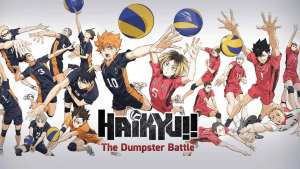

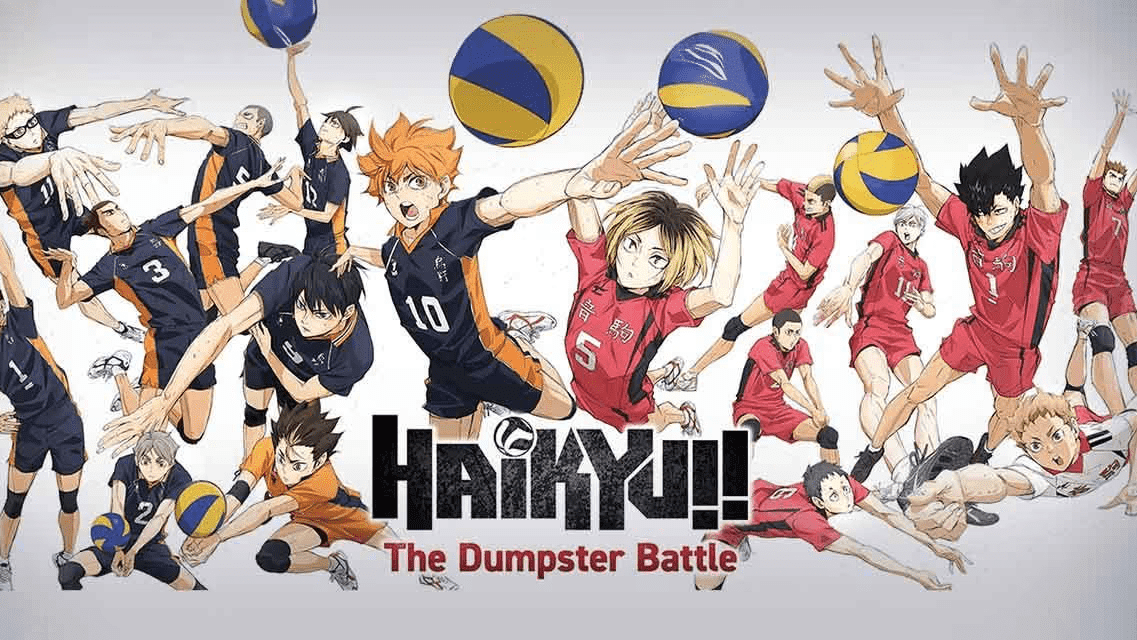
For nearly a decade, sports anime enthusiasts have lived with a singular, lingering promise echoing in the back of their minds: a match played not in the sterile, brightly lit halls of a standard tournament bracket, but symbolically atop a heap of scrap metal. When Haruichi Furudate first pitted the feral crows of Karasuno High against the sleek, calculating cats of Nekoma High back in 2014, the clash was framed as the revival of a generational bloodline—a spiritual grudge match inherited from elderly coaches who never got their own cinematic closure. Now, following an earth-shattering domestic theatrical run in Japan that raked in over 11 billion yen, Haikyu!! The Dumpster Battle has officially landed on global streaming platforms. The verdict is unequivocal: this isn’t just a triumphant victory lap for an iconic franchise; it is an airtight, masterfully executed masterclass in sports storytelling that redefines how kinetic action and psychological drama intersect.
A Decade in the Making: The Narrative Weight of the Promised Rematch
In modern shonen storytelling, rivalries are often forged in fire, trauma, or apocalyptic friction. You have your Naruto and Sasuke, your Midoriya and Bakugo—dynamics fraught with existential baggage and contrasting moral philosophies. Haikyu!!, however, has always operated on an entirely different emotional frequency, and The Dumpster Battle represents the absolute apex of this ethos. Karasuno and Nekoma do not hate each other. In fact, their bond is forged from mutual salvation. Nekoma gave Karasuno their footing when the Fallen Crows were wandering in developmental obscurity; Karasuno provided Nekoma with the chaotic catalyst needed to sharpen their defensive talons.
Because of this intrinsic camaraderie, the stakes of this Spring Interhigh third-round match transcend simple tournament progression. There are no villains on the court. There is no looming existential dread, no threat of school closures, and no vindictive score to settle. The sheer, suffocating tension of the film stems from a far more poignant reality: the finality of the game itself. For the third-year seniors—Kuroo, Yaku, Kai, Daichi, Sugawara, and Asahi—this eighty-five-minute sprint is the terminal station of their high school athletic lives. The tragedy isn’t that someone will lose; it’s that the game must eventually end.
The Mind of Kenma Kozume: Architect of Karasuno’s Suffocation
While the series has historically anchored its narrative gravity around the volcanic partnership of Shoyo Hinata and Tobio Kageyama, The Dumpster Battle consciously reallocates its emotional axis to Nekoma’s quiet, hyper-analytical setter, Kenma Kozume. Kenma is an anomaly in sports anime: an unapologetically lethargic, introverted gamer who plays volleyball not out of a burning passion for the sport, but because his childhood friend Tetsuro Kuroo asked him to, and because he possesses a terrifying, savant-like ability to deconstruct complex biological algorithms.
Clipping the Crow’s Wings: Tactical Claustrophobia
What director Susumu Mitsunaka captures with predatory precision is Kenma’s systematic, cerebral dissection of Hinata. For multiple seasons, Hinata has been the ultimate disruptor—a ball of pure kinetic instinct whose verticality tears through defensive rotations. In The Dumpster Battle, Kenma doesn’t match Hinata’s athleticism; he quarantines it. Through deliberately angled receives and calculated sets that starve Hinata of his essential approach run, Kenma builds a psychological and spatial cage around Karasuno’s middle blocker.
The visual metaphor deployed by Production I.G here is staggeringly effective. Hinata is repeatedly framed within literal, geometric enclosures—shadows crosshatching like birdcage bars, angles shrinking until the court feels claustrophobic. The film forces the audience to experience Hinata’s internal terror: the existential horror of an organism built for flight realizing its wings have been trimmed without a single blow ever being thrown.
Kinetic Intimacy: Production I.G’s Directional Masterclass
The return of director Susumu Mitsunaka—who steered the helm during the series’ legendary first three seasons—proves to be the creative catalyst that elevates this film into elite animation territory. While the fourth television season (To the Top) faced justifiable scrutiny for its inconsistent visual cadence and outsourced cuts, The Dumpster Battle operates on a level of uncompromised cinematic lavishness. Production I.G does not merely animate volleyball; they capture the visceral physics of dynamic exertion.
Every element of the court’s ambient environment is weaponized to build sensory realism. The squeak of rubber soles against polished hardwood carries real acoustic weight; the spray of sweat under stadium lights is tracked with microscopic intent. The camera doesn’t merely witness the action from the sidelines; it dives through the net, orbits mid-air spikes with rotational fluidity, and compresses space during split-second receive setups to simulate the blinding speed of a 100-kilometer-per-hour jump serve.
The Final Rally: A First-Person Descent into Athletic Reality
The aesthetic zenith of the film arrives during its breathtaking, uninterrupted climax—a sequence destined to be studied in animation colleges for years to come. In the dying moments of the third set, Mitsunaka violently shifts the perspective into a raw, first-person Point-of-View shot directly through the eyes of an utterly exhausted Kenma Kozume. The frame warps with visual distortion; droplets of sweat smear across the camera lens like water on glass; Kenma’s ragged, wheezing gasps drown out the stadium roar.
We see the ball arc skyward not as a stylized sports visual, but as an unbearable physical chore that refuses to drop. Karasuno’s relentless offense and Nekoma’s desperate, sprawling floor defense transform into an unbroken visual river of motion. By trapping the audience within Kenma’s physical breakdown, the production strips away the romantic glamour of anime athletics, leaving behind the primal, suffocating reality of what it feels like when the human body is driven past its structural limits in pursuit of a single leather ball.
Beyond Victory: The Subversion of Shonen Clichés
Where lesser sports narratives rely on miraculous, logic-defying game-winners or hyper-dramatized finishing moves, Haikyu!! has always found its divinity in the unscripted flaws of reality. The Dumpster Battle does not conclude with a net-breaking super-spike or an immaculate dive. It ends on an anticlimax that is thematic perfection: a simple, unavoidable consequence of human perspiration. The ball simply slips. The friction is gone. The rally dies not because of a tactical failure, but because physics finally claimed its toll.
It is in this precise moment that Haruichi Furudate’s grand narrative design locks into place. As Kenma lies sprawled on the court, completely depleted, gazing at the rafters with his hair plastered across his face, he looks over at Kuroo and utters the five words the entire series has been building toward: “Kuro… thank you. It’s fun.”
In that singular line delivery, the entire structure of competitive sports anime is inverted. Winning didn’t matter. National supremacy didn’t matter. The entire arc of Kenma Kozume—a boy who never cared, who found life exhausting, who played out of obligation—culminated in the realization of pure, uncomplicated joy. The match of the decade was never about the crown; it was about convincing a friend that the game was worth loving.
The Benchmark for Modern Sports Anime
As Haikyu!! The Dumpster Battle makes its streaming rounds across international territories, it cements itself as a watershed moment for the genre. By consolidating an entire match into a hyper-focused feature film, Production I.G eliminated the narrative bloat and recaps that occasionally hamper weekly televised sports anime, crafting instead an unrelenting, emotionally devastating ninety-minute symphony of kinetic drama.
With the theatrical sequel on the horizon to wrap up the Kamomedai clash and the emotional aftermath of the Spring Tournament, The Dumpster Battle stands as a monumental high-water mark. It honors the generational coaches who planted the seeds, validates the sweat of every third-year athlete who will never touch a competitive court again, and reminds us why this medium, at its absolute best, can make a game of high school volleyball feel like the most essential story on Earth.
Did the cinematic POV sequence live up to your expectations, or do you still prefer the pacing of the original episodic anime seasons? Drop your thoughts in the comments below, and let us know your all-time favorite rally from the Karasuno vs. Nekoma showdown!