

The Holy Grail War has always been defined by rigid rules, ancient European magecraft lineages, and the strict boundaries of seven master-and-servant pairs competing in Fuyuki City. But when Type-Moon author Kinoko Nasu handed the reigns of the franchise over to Baccano! and Durarara!! creator Ryohgo Narita, every single convention of the Nasuverse was thrown into the incinerator. Following the explosive success of the initial special OVA, Aniplex and A-1 Pictures have officially pulled back the curtain on the full-length Fate/strange Fake television series, and anime fans worldwide are scrambling to prepare for what might be the most absurdly overpowered, high-stakes battle royale in dark fantasy history.
Set against the sprawling, dusty backdrop of Snowfield, Nevada, Fate/strange Fake does not merely participate in the Holy Grail ritual; it dismantles it from the inside out. With a duplicate ritual engineered by American magi seeking sovereign mystical dominance, an intentional absence of the Saber class in the initial summoning, and power tiers reaching cosmic, divine thresholds, this adaptation is set to redefine the global anime landscape just as Bleach Thousand-Year Blood War and Jujutsu Kaisen Season 4 pushed the limits of modern production.
The Snowfield Anomaly: How a False War Broke the Holy Grail System
To understand why anime communities are losing their collective minds over Fate/strange Fake, one has to examine the premise that Ryohgo Narita established in the original light novels. Traditional Grail Wars summon seven standard classes: Saber, Archer, Lancer, Rider, Caster, Assassin, and Berserker. In Snowfield, an American magus consortium partnered with enigmatic factions to replicate the Third Fuyuki Holy Grail War ritual—except their ritual is inherently flawed, incomplete, and deliberately corrupted.
The result is a “False Holy Grail War” where the Saber class was never summoned, opening up chaotic paradoxes. But just as the six False Servants take the field, a second, clandestine “True Holy Grail War” begins unfolding in parallel, summoning six True Servants to counter them. Twelve legendary entities clash across modern American expressways, casinos, and clandestine military labs, turning an entire American metropolis into ground zero for mythological demigods.
God-Tier Matchups: Gilgamesh, Enkidu, and Unfathomable Mythological Titans
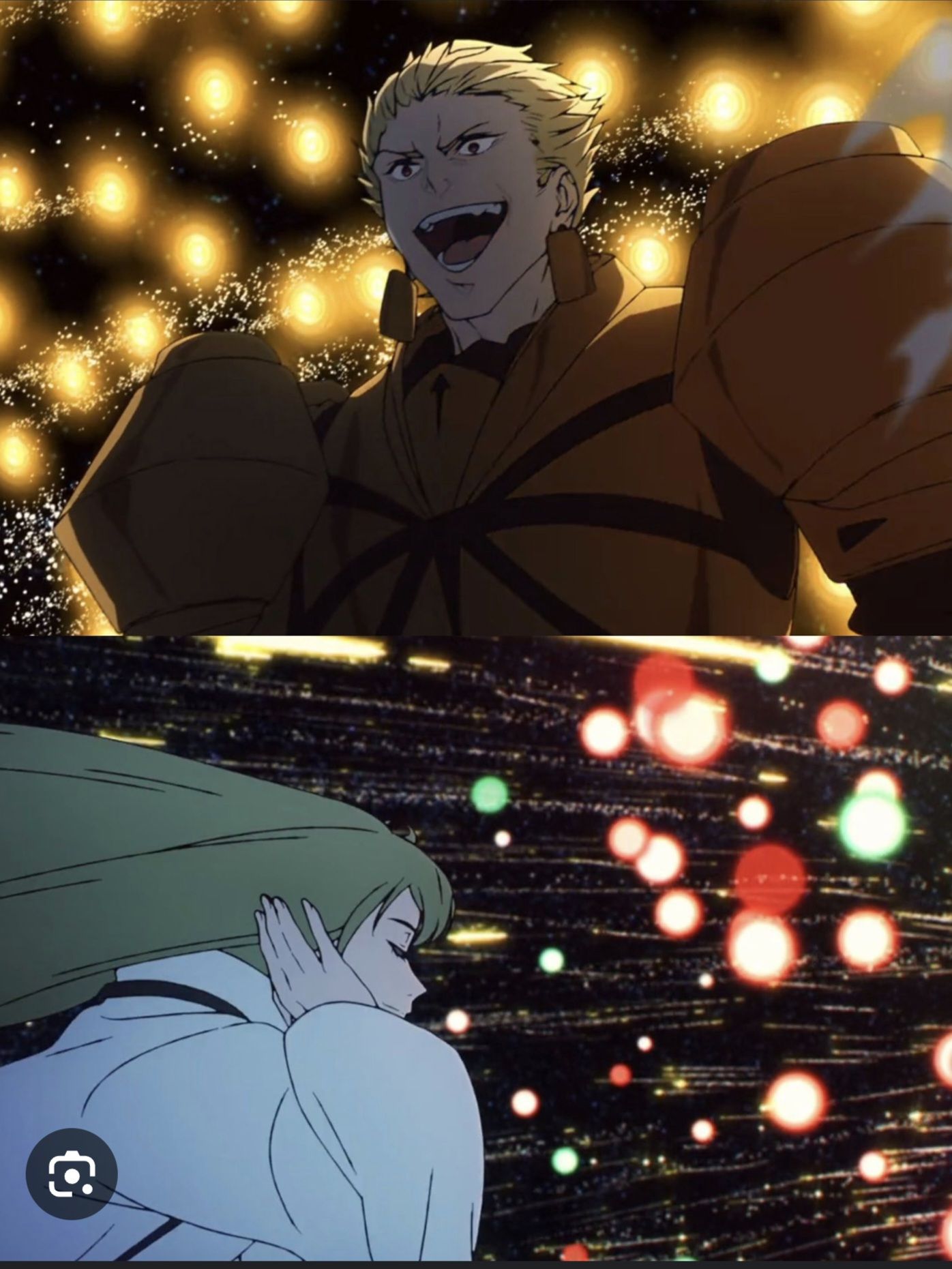
Longtime Type-Moon enthusiasts know that the King of Heroes, Gilgamesh, has historically served as the ceiling of Servant power in Fate/stay night and Fate/Zero. His Gate of Babylon houses every Noble Phantasm prototype in human existence. However, Gilgamesh has rarely been pushed to fight at total, earnest, uninhibited capacity—until now.
Within the opening acts of Fate/strange Fake, Gilgamesh faces the one being in existence he considers his equal: Enkidu, the clay automaton forged by the Mesopotamian gods. Their first clash in the Nevada desert does not merely trade sword strikes; it triggers atmospheric shockwaves, cratering miles of desert terrain with Enuma Elish colliding against Enuma Elish. It is an astronomical display of raw mythological devastation that makes standard Servant duels look like street-corner skirmishes.
Beyond Gilgamesh and Enkidu, the roster of Servants appearing in Fate/strange Fake challenges every known metric of Type-Moon lore:
- Archer Alcides (Heracles corrupted): Denying his divine heritage due to his master’s brutal Command Spells and mud from the Holy Grail, the greatest hero of Greek mythology discards his divine immortality to wield pure, relentless mortal spite and the stolen Nine Lives combat technique.
- True Rider (Pale Rider): A conceptual Servant representing the Four Horsemen of the Apocalypse, embodying Pestilence and Death itself, manifesting as a creeping, sentient plague across the city.
- False Caster (Alexandre Dumas): A writer capable of taking mundane modern weapons and forging them into genuine Noble Phantasms for human soldiers to wield against mythological legends.
- False Berserker (Jack the Ripper): Not a single person, but the collective amorphous fear and hysteria of London’s legendary serial killer, able to morph into any creature or identity at will.
A-1 Pictures and the Visual Spectacle: Can the Production Match the Hype?
Adapting Ryohgo Narita’s writing is famously demanding. His multi-threaded storytelling features dozens of viewpoint characters operating simultaneously across a dense urban landscape, reminiscent of Baccano!. When A-1 Pictures animated the introductory prologue Whispers of Dawn, directed by Shun Enokido and Takahito Sakazume with a pulsating soundtrack by Hiroyuki Sawano, critics and fans were stunned by the kinetic cinematography and jaw-dropping action direction.
Industry insiders have confirmed that A-1 Pictures has dedicated an unprecedented production schedule to maintain this cinematic visual benchmark across the entire television run. Every battle in Fate/strange Fake is designed with environmental scale in mind, utilizing state-of-the-art compositing, fluid hand-drawn effects, and Hiroyuki Sawano’s grand orchestral drops to give every Noble Phantasm release the apocalyptic gravity it deserves. Much like how studio shifts revolutionized franchises like Black Clover Season 2, the standard set here promises to challenge even ufotable’s legendary work on Fate/stay night: Heaven’s Feel.
Fan Theories: What Narita’s Climax Means for the Nasuverse Multiverse
Because the light novel series has reached its culminating volumes, long-standing lore theorists are buzzing with speculative debates about how the anime will handle the deep metaphysical mysteries of Snowfield:
- The Origin of the Blackened Grail: Theories suggest that the American faction’s attempt to siphon the Grail ritual tapped into Dead Apostle Ancestors from Tsukihime lore, intertwining Vampire and Heroic Spirit cosmology like never before.
- The Fate of Gilgamesh: In the novel’s middle arcs, Gilgamesh suffers a catastrophic ambush that leaves his status precarious. Fans are eagerly theorizing whether the anime will expand his inner dialogue with Enkidu before the final conflict.
- The True Saber’s Identity: The revelation of Richard the Lionheart and his enigmatic Noble Phantasm, Excalibur Lowell, has sparked endless discussions regarding Arthurian connections and the Counter Force’s subtle intervention in American soil.
Why 2026 Belongs to the Dark Fantasy Renaissance
Between grand cinematic spectacles and long-awaited adaptations finally receiving the spotlight they deserve, modern anime has entered a golden age of production ambition. Fate/strange Fake is not just another spin-off in an already sprawling franchise; it is the ultimate celebratory collision of high-octane spectacle, intricate tactical warfare, and rich historical mythology crafted by two of Japan’s most imaginative storytellers.
Whether you are a veteran Type-Moon scholar who knows the inner workings of the Root and Marble Phantasms, or a newcomer drawn in by the pure visual adrenaline of two ancient demigods demolishing a desert highway, this series is guaranteed to dominate anime discussions upon its premiere.
Which Servant matchup are you most eager to see fully animated in the upcoming television series—will it be the world-shaking clash between Gilgamesh and Enkidu, or the tragic struggle of Heracles as Alcides? Drop your theories and predictions in the comments below!
One thought on “Fate/strange Fake TV Anime Officially Dated: Why Ryohgo Narita’s Holy Grail War Will Rewrite the Entire Nasuverse Hierarchy”