

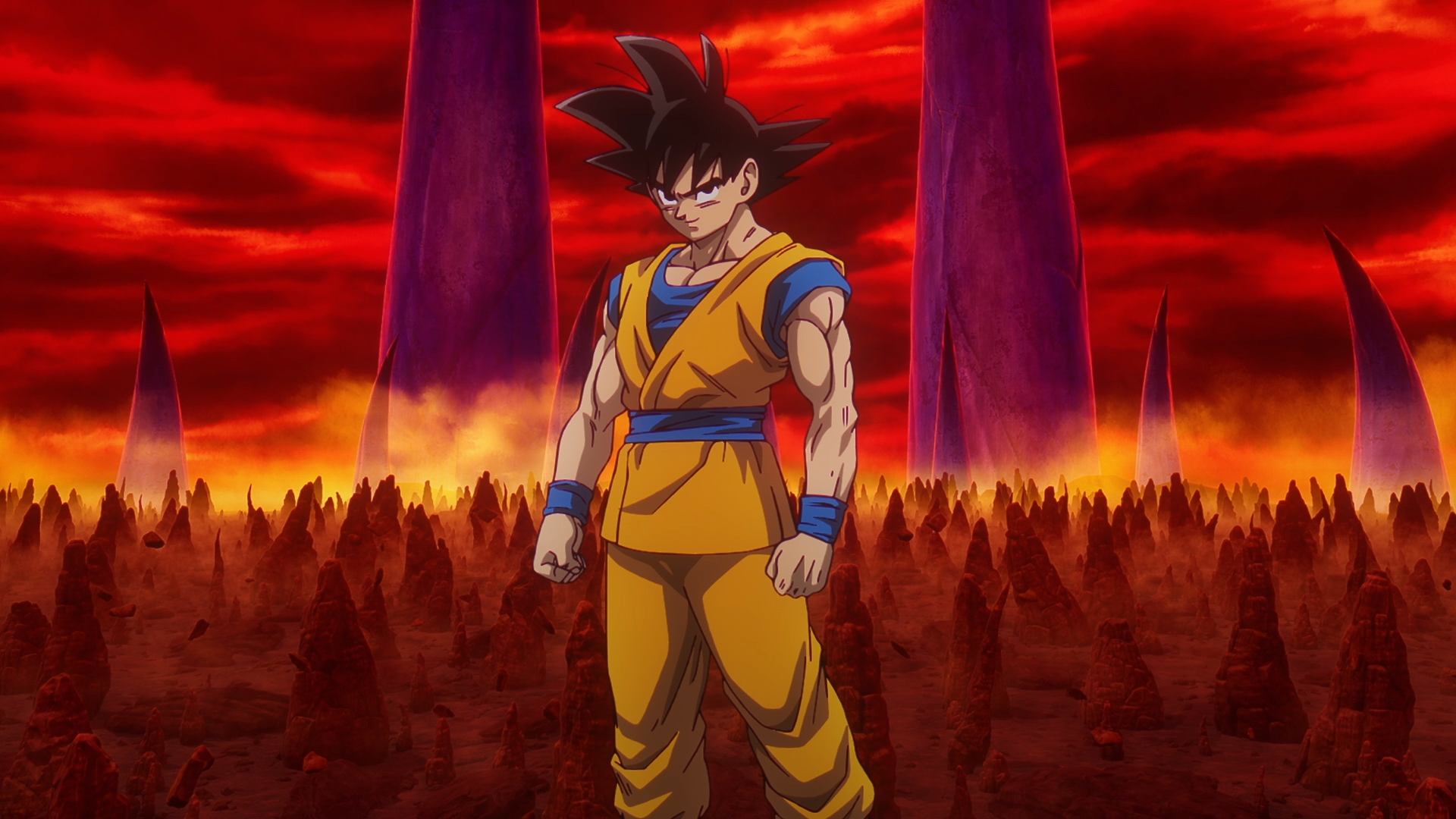
When the first frame of Dragon Ball Daima flickered across screens worldwide, the collective breath of the global anime community caught in its throat. What was originally conceived as an exuberant 40th-anniversary celebration of Akira Toriyama’s epochal manga has transformed into something far more poignant: a posthumous love letter from the master himself. Following Toriyama’s heartbreaking passing in March 2024, Daima carries an astronomical emotional weight. Yet, rather than collapsing under that melancholy pressure, the premiere episode delivers a masterclass in vintage Toriyama whimsy, world-building expansion, and dazzling martial arts dynamism. It reasserts an enduring truth: nobody understands the rhythmic pulse of adventure quite like Dragon Ball‘s creator.
A Bittersweet Swansong: Toriyama’s Hands-On Creative Fingerprints
Unlike previous multimedia endeavors where Toriyama’s involvement hovered in the realm of conceptual outlines and character briefs, Dragon Ball Daima features the author deeply entrenched in the creative engine room. Toriyama crafted the story, designed the environments, forged the narrative mechanics, and penned a surprising amount of dialogue. From the very first sequence, his unmistakable narrative handwriting is visible everywhere.
The premiere doesn’t rush into apocalyptic brawling; instead, it takes a delightfully measured breath. Toriyama takes audiences back to the aftermath of the Majin Buu Saga—the thematic climax of his original manga run—recontextualizing familiar events through a completely fresh, outsider lens. By anchoring Daima so precisely in this liminal period, Toriyama bypassed the stratospheric, universe-shattering stakes of Dragon Ball Super to return to what made his storytelling legendary: mischievous comedy, tactical curiosity, and personal stakes.
Unlocking the Makai: The Demon Realm Lore We’ve Waited Decades to Explore
For decades, the Demon Realm (Makai) remained one of the franchise’s most enticing narrative blanks. Aside from Dabura’s brief tenure as Babidi’s spit-flinging henchman and supplementary lore found in video games like Dragon Ball Heroes and Xenoverse, the mainline canon largely left the underworld shrouded in mystery. Daima blows the gates of Makai wide open, establishing a complex cosmological hierarchy that immediately enriches the broader mythos.
The Shadow Throne and the Fall of Dabura
The premiere introduces King Gomah, the diminutive, anxious new sovereign of the Demon Realm who inherited the throne not through valor, but by sheer default after Dabura’s demise on Earth. Flanked by Degesu—the smarmy younger brother of Universe 7’s Supreme Kai, Shin—and the delightfully calculating Dr. Arinsu, Gomah represents classic Toriyama villainy: petty, self-conscious, and humorously insecure about his own power. Rather than seeking multiversal destruction, Gomah acts out of sheer, unadulterated paranoia. He monitors Goku and the Z-Fighters via archival surveillance footage, terrified that the mortals who vaporized Kid Buu might one day descend upon his throne.
Rewriting Divine Heritage: The Glind Revelation
In one of the most stunning lore drops in the franchise’s four-decade history, the premiere rewrites the very origins of Universe 7’s deities. We discover that Shin, Degesu, and Arinsu belong to an ancient sub-race known as the Glind, originating directly from the Demon Realm’s Second World. This revelation re-contextualizes the Supreme Kai from an ethereal, celestial bureaucrat into an expatriate of a deeply stratified underworld. By giving Shin familial roots and personal baggage in Makai, Toriyama retroactively injects dramatic stakes into a character who spent much of Dragon Ball Super playing spectator.
De-Aging the Legends: Nostalgia, Combat Restraints, and Dynamic Stakes
When the initial teaser for Daima revealed Goku and his friends turned into children, cynical corners of the internet predictably cried “Dragon Ball GT 2.0.” However, the premiere renders such comparisons obsolete. Gomah’s wish upon the Demon Realm’s Dragon Balls—which introduces a terrifying, weaponized dragon guardian known as the Tamagami—is not a lazy plot contrivance; it is a stroke of structural genius designed to cure modern shonen’s greatest affliction: power creep.
By shrinking the Z-Fighters into “mini” versions of themselves, Daima physically constrains their god-tier abilities. The transformation instantly recalibrates character psychology and combat physics:
- Goku’s Unyielding Joy: While others panic, Goku greets his pint-sized form with buoyant curiosity, treating the physical handicap as an exciting new puzzle to solve.
- Vegeta’s Bruised Royalty: The Prince of Saiyans suffers the indignity of having his scowl compressed into a toddler’s silhouette, providing prime comedic real estate while preserving his fierce determination.
- The Revival of Martial Arts: With Ultra Instinct and planet-busting energy blasts presumably throttled, Goku is forced to reclaim the Nyoibo (Power Pole), steering the choreography back toward the tactile, hand-to-hand acrobatics of early 1980s Dragon Ball.
Animation Pedigree: Toei Animation Uncages Its A-Team
A narrative shift this profound demands visuals to match, and Toei Animation answered the call by assembling an undeniable dream team. Directed by Aya Komaki (celebrated for her visionary work on One Piece’s Wano arc) and veteran Yoshitaka Yashima, alongside legendary character designer Katsuyoshi Nakatsuru, Daima looks leagues ahead of the franchise’s standard television output.
The premiere boasts fluid, kinetic character animation that favors volume, expressive acting, and organic line art over digital stiffness. When the Buu Saga recap unfolds in the opening minutes, it isn’t recycled archive footage; it is meticulously re-animated with modern digital compositing that still honors the textural weight of 90s cel animation. The lighting in the Demon Realm—saturated with rich purples, eerie bioluminescent greens, and dusty crimsons—creates an atmospheric identity that feels completely distinct from the gleaming white palaces of Zeno or Beerus. It feels tactile, dusty, and delightfully strange.
The Verdict: A Triumphant Awakening for a Global Phenomenon
Dragon Ball Daima succeeds where so many long-running legacy revivals falter: it refuses to simply coast on hollow nostalgia. By bravely subverting the franchise’s power-scaling obsession, Toriyama returned to the core philosophical engine that launched Goku from Mount Paozu forty years ago—the unquenchable thirst to explore the unknown.
The premiere functions as both a warm embrace and an exciting prologue. It honors the grief fans carry for Toriyama while reassuring them that his creative flame burns brighter than ever. Daima is not a compromise; it is an exuberant, visually breathtaking celebration of martial arts storytelling, proving that even after four decades, Dragon Ball can still make the world feel wonderfully, magically small.
What did you think of the Dragon Ball Daima premiere? Do you love the return to old-school martial arts, or are you waiting for Goku to break out Super Saiyan? Let your voice be heard in the comments below, and stay locked to Wibux.com for weekly episode breakdowns!