
When the opening chords of Dragon Ball Daima’s premiere echoed across screens worldwide, the collective breath of the global anime community hitched. It was not merely the debut of another seasonal heavyweight or a standard franchise extension; it was an encounter with history, grief, and unadulterated celebration. Arriving in the momentous 40th anniversary year of Akira Toriyama’s seminal manga, Daima carries an impossible emotional weight following the master’s untimely passing in March 2024. For months, fans wondered what Toriyama’s final, deeply involved creative endeavor would look like. Would it lean into the cosmic arms race of Dragon Ball Super, or retreat into pure, nostalgic fan service? The premiere delivered an answer that is as defiant as it is enchanting: Dragon Ball Daima is a revitalizing return to Toriyama’s whimsical, martial arts-driven roots, disguised as an epic plunge into the franchise’s most elusive territory—the Demon Realm.
The Shadow of Makai: Unraveling Toriyama’s Demon Realm Lore
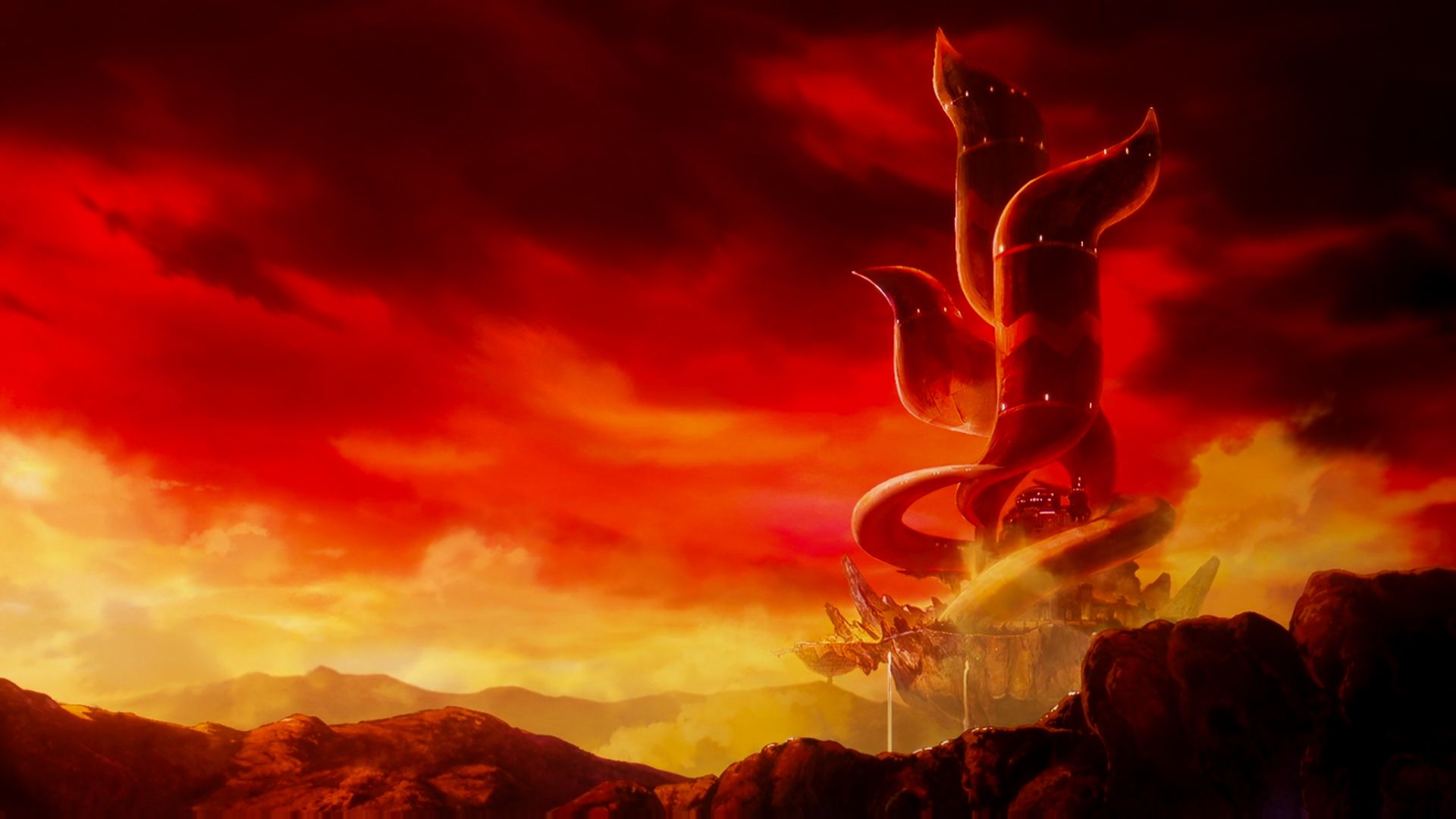
For decades, the Demon Realm (Makai) existed in the periphery of Dragon Ball canon. It was a cryptic footnote dropped during the Buu Saga with the introduction of Dabura, teased in video game spin-offs like Dragon Ball Heroes and Xenoverse, but rarely given sovereign narrative space within the primary timeline. Daima completely shatters this restraint right out of the gate.
The premiere wastes no time recontextualizing the fall of Majin Buu through the eyes of its new antagonists: King Gomah, the newly elevated ruler of the Demon Realm, alongside his scheming aide Degesu and the ancient Namekian mystic Neva. Viewing the Earthlings’ triumph over Buu via magical surveillance, Gomah does not just fear Goku and his allies—he is profoundly unsettled by their casual disruption of universal balance. By establishing the Demon Realm as an intricately structured bureaucracy divided into distinct territories with its own caste system and unique set of Dragon Balls guarded by the formidable “Tamagami,” Toriyama crafts his most substantial piece of world-building since the Namek Saga.
A Canon Revolution for Namekian Heritage
Perhaps the premiere’s most thrilling lore revelation centers on Neva. The ancient Namekian’s presence within the Demon Realm rewrites long-held assumptions regarding the species’ origins. By revealing that Namekians originated from or had deep historical roots within this dark realm, Daima weaves an organic bridge between alien mysticism and demonic sorcery. This isn’t superficial retconning; it is prime Toriyama connective tissue, injecting mythic weight into a narrative universe that had increasingly relied on sterile divine hierarchies like Angels and Gods of Destruction.
Little Bodies, Big Fists: Subverting the “GT” Stigma
When the initial teaser trailers revealed that Goku and the Z-Fighters would be transformed into children—or “Mini” versions of themselves—a vocal contingent of the fandom reflexively cried foul, citing uneasy memories of 1996’s Dragon Ball GT. The premiere forcefully dismantles that comparison within minutes of the transformation sequence taking place.
Unlike GT’s accidental, single-target wish, King Gomah’s preemptive strike against Earth is a calculated act of asymmetric warfare. Diminishing the Earth’s defenders into prepubescent forms is not a narrative gimmick to reset power levels arbitrarily; it is a stroke of thematic genius. Modern Dragon Ball had backed itself into a cosmic corner. When battles involve shaking the fabric of the universe through multi-dimensional ki shockwaves, tension inevitably erodes. By compressing Goku’s physical stature, Toriyama engineered an elegant narrative reset that forces the Saiyan to rely on tactical martial arts, spatial awareness, and raw physical leverage once more.
The return of the Nyoibo (Power Pole) is the emotional linchpin of this shift. Seeing Goku unsheathe the red staff isn’t cheap pandering—it signals a profound pivot away from cataclysmic beam-struggles and back to kinetic, close-quarters kung-fu choreography. Goku’s psychology remains undeterred; his immediate reaction to his shrunken state isn’t existential dread, but boundless curiosity and an instinct to test his center of gravity. That infectious, indomitable spirit is the quintessential signature of Toriyama’s storytelling.
Cinematic Craftsmanship: Toei Animation Assembles Its Dream Team
From an audiovisual standpoint, Dragon Ball Daima feels less like a weekly television anime and more like a sequence of interconnected theatrical films. The premiere radiates a level of polish that vastly outshines the turbulent early days of Dragon Ball Super. This visual triumph is the direct result of Toei Animation deploying its absolute finest pedigree to steward Toriyama’s swansong.
Under the dual direction of Aya Komaki (famed for her stellar work on One Piece Film: Red and the series’ iconic Wano climax) and veteran Dragon Ball storyboarder Yoshitaka Yashima, the premiere exhibits extraordinary visual discipline. Every frame is imbued with deliberate framing, atmospheric lighting, and fluid character acting. The recap of the Buu Saga alone—rendered with modern compositing, expressive hand-drawn linework, and kinetic camera movement—reinvigorates iconic manga panels with breathtaking reverence.
Furthermore, the influence of legendary animator Katsuyoshi Nakatsuru—working directly from Toriyama’s fresh character designs—is evident in every scene. The Demon Realm itself is rendered not as a monotonous hellscape of fire and brimstone, but as a rich, atmospheric fantasy landscape filled with idiosyncratic Toriyama vehicles, quirky alien fauna, and a warm, storybook color palette. The choreography in the minor skirmishes of the opening episode showcases weight, impact, and momentum, trading excessive digital aura effects for crisp, readable, hand-to-hand combat.
The Bittersweet Legacy: Toriyama’s Purest Vision in Decades
What elevates Daima beyond standard anime releases is the indelible footprint of its creator. In the twilight of his life, Akira Toriyama was famously hands-off with large swathes of extended media, often providing broad outlines and character concepts while letting teams of writers fill the blanks. Daima was radically different. Toriyama penned the overarching plot, designed the world, created the entire cast, and was intimately involved in the scriptwriting process.
The fandom’s reaction to the premiere has been an emotional rollercoaster of catharsis and awe. Across social media platforms, fan forums, and watch parties, the prevailing sentiment is one of grateful vindication. For an audience that watched Goku grow up over four decades, seeing Toriyama’s trademark comedic timing—dry, mischievous, and delightfully absurd—pulsing through the premiere serves as a comforting, bittersweet embrace. The introduction of the mysterious masked Shinigami-esque warrior Glorio and the unraveling political turmoil within the Demon Realm prove that Toriyama never lost his narrative edge. He simply preferred delivering high-stakes adventures wrapped in joyful innocence.
A Whimsical Journey Into the Great Unknown
The premiere of Dragon Ball Daima accomplishes something truly miraculous: it honors four decades of historical legacy while charting a fresh, vibrant, and artistically daring course for the franchise’s future. By daring to pull Goku away from cosmic deities and grounding him once again in a journey of mystery, strange worlds, and hand-to-hand martial arts, Akira Toriyama left us not with a somber goodbye, but with a grand adventure waiting to be explored.
As Goku leaps aboard a brand-new spacecraft bound for the treacherous layers of the Demon Realm, staff in hand and grin intact, we are reminded of why we fell in love with this universe in the first place. The journey has just begun, and the magic is as alive as it has ever been.
Now it’s your turn, Wibux readers: What was your favorite moment from the Dragon Ball Daima premiere? Do you think the lore additions to the Namekians and the Demon Realm will reshape franchise canon forever? Sound off in the comments below with your wildest theories!