


What happens when the visionary behind Metal Gear Solid decides that saving humanity isn’t enough, and instead takes us beyond the borders of America into an unpredictable, terraformed global frontier? Ever since legendary auteur Hideo Kojima first unveiled the mesmerizing footage for Death Stranding 2: On the Beach, fans and critics alike have been gripped by one burning question: can Kojima Productions pull off what might be the single most ambitious, emotionally charged, and mechanically audacious sequel in modern PlayStation history?
When the original game launched in 2019, it boldly challenged conventional industry dogmas by turning traversal, isolation, and quiet human empathy into its core gameplay loop. Yet, as recent reveals and technical deep-dives confirm, Death Stranding 2: On the Beach isn’t just doubling down on what worked—it is completely reinventing the franchise’s philosophy, weaponizing natural disasters, dynamic terrain shifts, and high-octane combat encounters that could silence skeptics once and for all.
The Evolution of Sam Porter Bridges: Norman Reedus Returns to an Unforgiving World
At the beating heart of this strange new odyssey stands Norman Reedus, reprising his career-defining role as the weathered, silver-haired Sam Porter Bridges. But Sam is no longer the solitary courier marching under the banner of the Bridges organization. In On the Beach, Sam finds himself recruited by Drawbridge, a private humanitarian and exploration faction bankrolled by a mysterious patron and spearheaded by returning ally Fragile, portrayed with striking vulnerability and grace by Léa Seydoux.
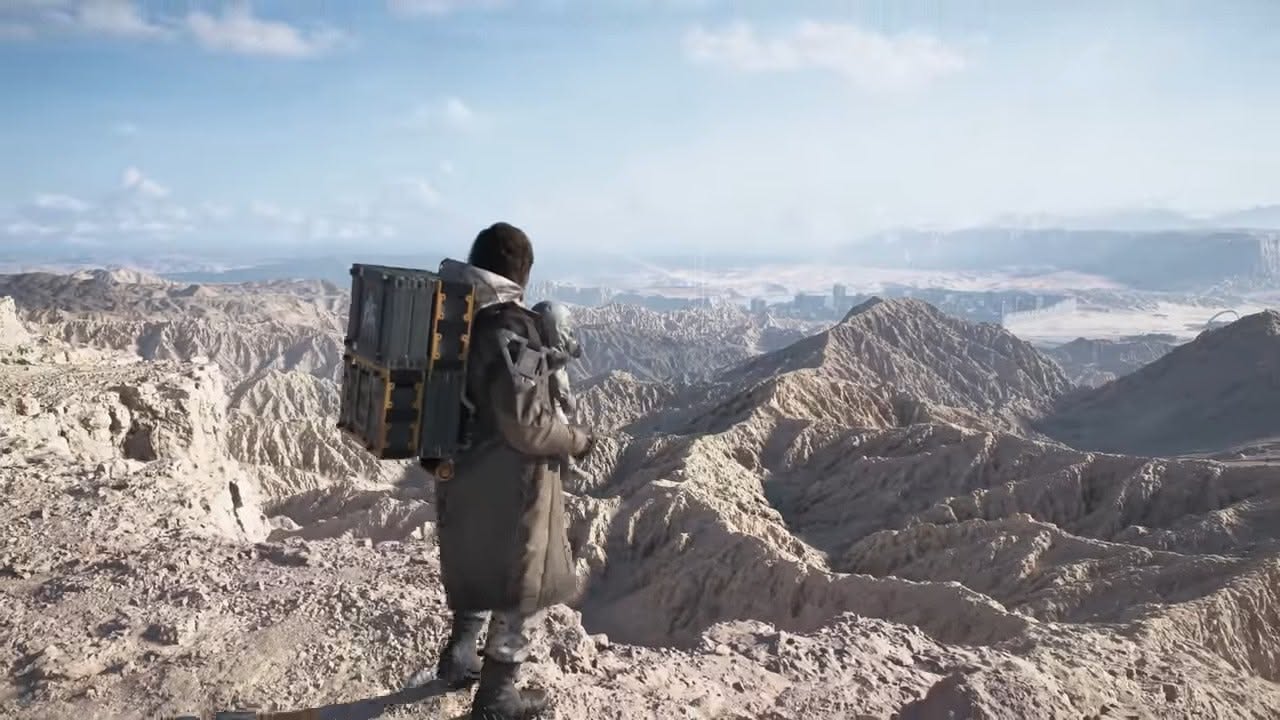
Drawing Sam back into active service is not just duty, but deep personal guilt and enigmatic revelations tied to Lou (BB-28). Fragile’s mobile command headquarters, the subterranean-swimming megaship known as the DHV Magellan, serves as Sam’s mobile base of operations as he ventures beyond the United States into the rugged landscapes of Mexico and unexplored southern continents. With environmental physics dialed to unprecedented fidelity, every river crossing, mudslide, and earthquake presents life-or-death navigation challenges that make traversing this untamed continent feel truly alive.
A Star-Studded Ensemble: George Miller, Elle Fanning, and the Madness of Higgs
Kojima Productions has assembled one of the most remarkable ensemble casts ever seen in interactive entertainment. Among the standout additions is Hollywood directing maestro George Miller (the mastermind behind Mad Max: Fury Road), who lends his likeness to the enigmatic DHV Magellan captain known as Tarman. Tarman’s analytical presence contrasts brilliantly with the peculiar animated companion Dollman, portrayed through physical performance by acclaimed director Fatih Akin.
Meanwhile, Hollywood darling Elle Fanning steps into a pivotal role as Tomorrow, a mysterious young woman emerging from the chiral cocoon whose origins appear intrinsically tied to the extinction entities and the bleeding veil between life and the Beach. Paired alongside rising Japanese actress Shioli Kutsuna as Rainy—a woman living under constant supernatural rainfall—the narrative explores profound emotional depth rarely tackled in AAA blockbusters.
And then there is the electrifying return of Troy Baker as Higgs Monaghan. Sporting flamboyant kabuki-inspired cybernetic face paint, dual mechanized guitars that fire lightning bolts and plasma blades, and a voice dripping with theatrical menace, Higgs represents the pinnacle of Kojima’s unhinged cinematic creativity. Baker’s performance promises to push the narrative into breathless psychological warfare.
Dynamic Disasters and Expanded Combat: How Gameplay Takes a Giant Leap
While the first title emphasized solitary trekking and peaceful infrastructure building, Death Stranding 2: On the Beach radically overhauls its environmental dynamics and tactical combat systems. Players will now contend with real-time natural catastrophes:
- Wildfires and flash floods: Rapidly changing weather patterns force players to adapt delivery routes on the fly, as roaring forest fires cut off mountain passes and raging river torrents sweep away cargo and bridges.
- Active earthquake faultlines: Tectonic rifts tear open deep chasms across the map in real time, swallowing previously paved roads and requiring quick deployment of off-road buggies and specialized climbing gear.
- Modular weapon crafting: Sam now commands customizable firearms, stun tridents, and deployable defensive turrets, allowing gamers to tackle robotic patrol squads and rogue separatist militias with lethal or non-lethal tactical freedom.
- Night ops and stealth infiltration: Enhanced stealth mechanics enable players to cut power generators, utilize optical camouflage blankets, and neutralize high-tech enemy compounds without alerting the whole sector.
Much like how Monster Hunter Wilds explores living ecosystems and apex predators, Kojima’s Decima-powered open world treats nature itself as an evolving antagonist that reacts dynamically to player interventions.
Aural Splendor: Woodkid’s Soundtrack and Decima Engine Fidelity
Audiophiles and visual enthusiasts are in for an extraordinary treat. French musician and visionary director Woodkid (Yoann Lemoine) joins the production to helm an evocative, brass-heavy original soundtrack that elevates every emotional crescendo and perilous cliffside journey. Together with iconic licensing tracks and immersive 3D Tempest audio, the auditory experience immerses players directly into the melancholy winds of the post-apocalyptic continent.
Visually, the enhancements engineered into Guerilla Games’ Decima engine run at native 4K with stunning lighting, photorealistic skin shaders, and fluid 60 frames per second on PlayStation 5. For action RPG enthusiasts captivated by sprawling epics like Elden Ring’s challenging co-op expansions or Nintendo’s reimagined urban ecosystems in Pokémon Legends: Z-A, Death Stranding 2 promises an unparalleled standard of technical prestige.
Should We Have Connected? The Philosophical Shift of the Sequel
Perhaps the most fascinating aspect of Kojima’s new thesis is the tagline that haunts the reveal: “Should we have connected?” The first game was an optimistic tribute to rebuilding broken societal bonds across a fragmented continent. Yet in the years following the UCA’s reunification, new conflicts, digital surveillance, and ideological tribalism have emerged.
Kojima poses a chilling contemporary reflection: what if hyper-connectivity does not unite mankind, but instead accelerates its fragmentation and existential decay? It is this profound narrative backbone that elevates the game from a standard open-world adventure into a transformative cultural piece.
What Do You Think?
Are you excited to step back into the boots of Sam Porter Bridges and brave the treacherous new frontiers of Mexico and beyond? Does the return of Troy Baker’s Higgs with his electrified guitar combat have you hyped, or are you most looking forward to unraveling the secrets of Elle Fanning’s character and the DHV Magellan? Drop your theories, expectations, and thoughts in the comments below!