

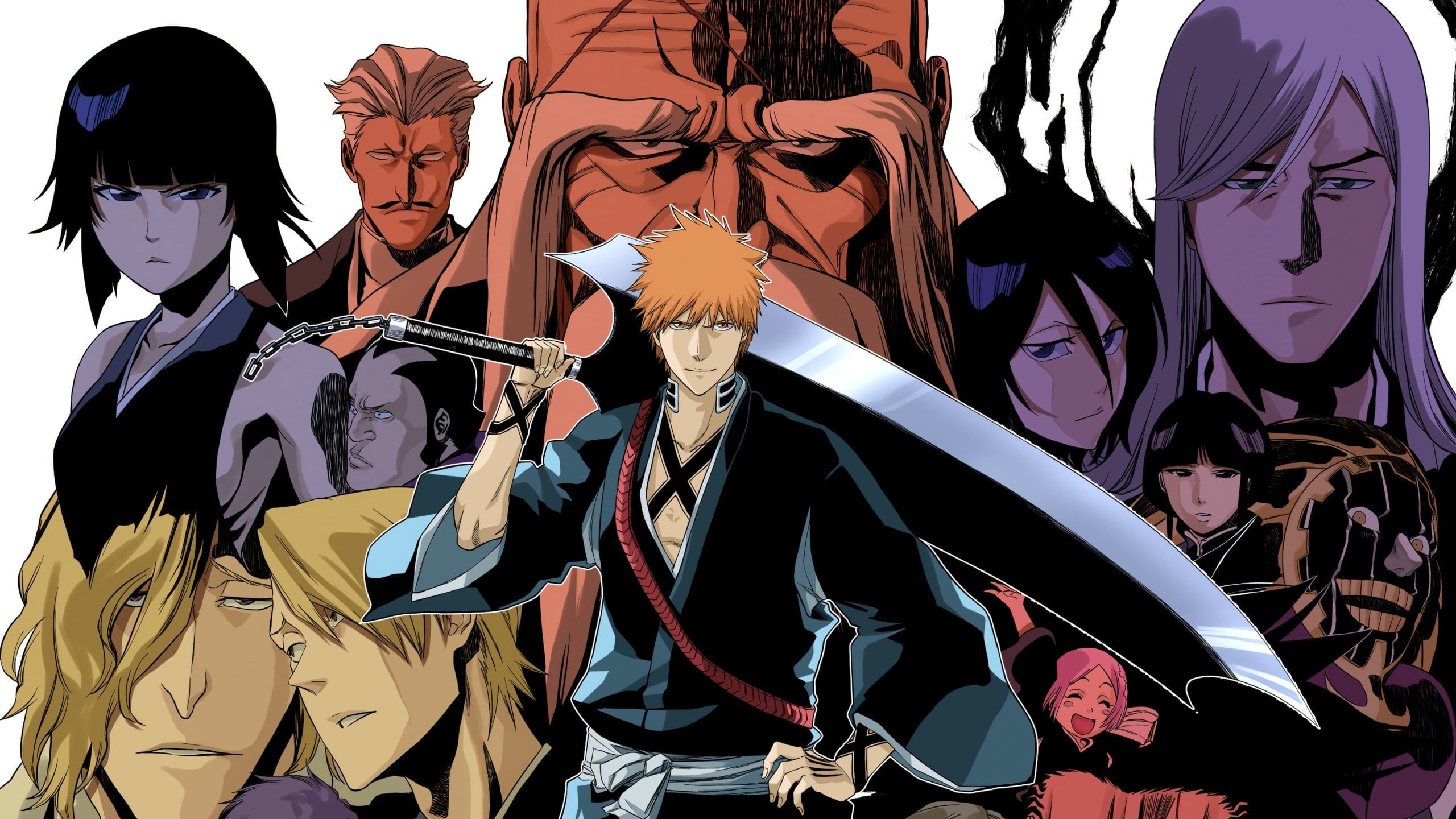
When Tite Kubo dropped the 73-page anniversary chapter No Breathes From Hell in the late summer of 2021, fans initially braced themselves for a harmless victory lap—a sentimental coda designed to celebrate twenty years of bankai, black coats, and hollow masks. What they received instead was an existential earthquake that fundamentally demolished two decades of established Soul Society dogma. Far from a nostalgic epilogue, the chapter operates as a brutal, swaggering prologue to an unannounced masterstroke: the long-theorized Hell Arc. By transforming the afterlife’s spiritual elite from righteous guardians into damned fuel for an infernal ecosystem, Kubo pulled off one of the sharpest theological bait-and-switches in modern shonen history.
The Dark Elegance of Konso Reisai: When Funerals Become Damnation
For hundreds of chapters, Soul Society masqueraded as a flawed but fundamentally salvific sanctuary. If a Soul Reaper performed Konso on a Plus, that soul crossed over safely; if they slew a Hollow, its sins were purified. Even the death of a Captain was treated with somber, poetic finality. Yet in No Breathes From Hell, Shunsui Kyoraku reveals the horrifying secret festering beneath the Gotei 13’s ceremonial pride: the Konso Reisai (Soul Resting Festival).
According to ancient Soul Society law, the spiritual bodies (Reishi) of normal souls dissolve back into the spiritual earth, fueling the natural cycle of reincarnation. However, souls possessing Reiatsu of Class 3 or higher—which includes all Captain-level combatants—are too dense, too powerful, and structurally incompatible with the soil of the Seireitei. They simply cannot decompose. To prevent this ambient spiritual fallout from destabilizing the realm, Soul Society established a sacred funerary ritual twelve years after a Captain’s demise. The tragic, perverse irony? The ritual does not release these souls into the cosmos. It drags them down and exiles them directly into the primordial jaws of Hell.
This revelation forces an excruciating psychological reckoning upon characters like Shunsui, Ichigo, and Byakuya. The very rites they performed to honor fallen comrades like Genryusai Shigekuni Yamamoto, Retsu Unohana, and Jushiro Ukitake were not acts of memorialization—they were unwitting executions of eternal banishment. The Gotei 13 has spent millennia acting as unwitting psychopomps for their own mentors, consigning their greatest protectors to the abyss.
Breaking the Cosmic Seal: A Universe Bereft of Titans
The philosophical terror of this setup extends beyond the tragedy of individual characters; it rewrites the geopolitical and eschatological balance of the Bleach multiverse. Enter Szayelaporro Granz, emerging from the Maw of Hell not as a defeated Espada, but as an emissary boasting the twisted biology of the damned. His monologue lays bare the catastrophic consequence of the series’ preceding wars.
For centuries, the balance between realms was maintained not merely by the Soul King, but by massive concentrations of spiritual pressure acting as gravitational locks. Sōsuke Aizen’s overwhelming power held sway; Yhwach’s tyrannical Reiatsu pushed against reality’s seams; Yamamoto’s scorching flame was a celestial pillar. But with Yhwach annihilated, Aizen confined in the sensory-deprivation silence of the Muken, and the classic Gotei old guard slaughtered, the scales broke. The upper realms lost their heaviest spiritual weights, while the underworld became exponentially denser with every Captain dumped into its fires.
As Szayelaporro chillingly observes, the lid has blown off. Hell is no longer an impassable cage, but a pressurized furnace ready to swallow the surface world whole. The gates have cracked open from the inside because the underworld’s spiritual mass now eclipses the depleted heavens above.
Ghosts of the Gotei: Yamamoto, Ukitake, and the Tragic Reversal
The emotional apex of the one-shot arrives in its closing moments, delivering an image burned into the collective consciousness of the fandom: Jushiro Ukitake’s massive, twin-bladed Zanpakuto, Sogyo no Kotowari, manifesting out of a gate to Hell, skewer-dragging Szayelaporro back into the depths. This single action confirmed the nightmare: Ukitake is down there. Yamamoto is down there. Unohana is down there. And they are not resting peacefully.
This development tees up the most morally harrowing conflict the Gotei 13 could ever face. If the Hell Arc materializes into a fully realized serialization, Ichigo and his allies will not be squaring off against external invaders like the Arrancar or the Quincy Wandenreich. They will be staring down the transformed, corrupted, or perhaps dutifully hardened ghosts of their own idols. What does Yamamoto look like when baptized in the eternal flames of Tartarus? How does Shunsui Kyoraku draw his blades against Ukitake, his closest confidant and moral anchor, when the latter emerges bearing the insignia of the abyss?
The Kazui Variable: Innocence Masking Chthonic Power
Equally destabilizing is the introduction of Kazui Kurosaki, Ichigo and Orihime’s son. Where the next-generation trope often settles into derivative shonen repetition, Kubo injects a vein of spine-chilling cosmic horror. Kazui is sweet, polite, and completely dissociated from the terrifying nature of his abilities. He casually manifests a carp-shaped psychopomp, commands portals to Hell, and speaks to the restless spirits with a serene, unnerving familiarity.
Kazui is not simply an heir to Ichigo’s hybrid lineage; he is an anomaly who appears fundamentally wired to the architecture of the underworld. Whether he represents the underworld’s chosen avatar or a beacon that accidentally summons armageddon, Kazui injects an unpredictable wild card into the narrative that keeps the stakes dangerously personal.
The Pierrot Films Factor: Primed for Kubo’s Darkest Canvas
The narrative foundation of the Hell Arc is rock-solid, but its real-world viability has never been stronger thanks to Studio Pierrot’s modern industrial renaissance. The astonishing visual standard set by Bleach: Thousand-Year Blood War demonstrated what happens when Tite Kubo is directly empowered as an executive supervisor, collaborating with a passionate production unit that treats his high-fashion aesthetics and dynamic panel compositions with cinematic reverence.
With the formation of Pierrot Films—the studio’s elite boutique subsidiary dedicated to prestige, high-budget, sakuga-heavy adaptations—the logistical puzzle of the Hell Arc solves itself. Kubo notoriously stepped away from weekly serialization due to agonizing physical burnout and torn shoulder tendons. He no longer needs to grind through the grueling weekly Shonen Jump schedule to tell this story. The blueprint is clear: Kubo can direct the narrative through structural treatments, character design sheets, and storyboard guidance, leaving Pierrot Films to unleash the Hell Arc as an anime-first prestige project or a meticulously paced seasonal manga.
The visual language of Hell—brutal iron gates, blood-red skyscapes, phosphoric chains, and gothic spiritual designs—is tailored precisely for the hyper-stylized lighting and saturated color palettes Pierrot has perfected in the modern era. The stage is thoroughly built, polished, and waiting for the curtain to rise.
Verdict: The Inevitable Reckoning of Soul Society
By transforming Soul Society’s honored dead into the world’s most catastrophic existential threat, Tite Kubo accomplished what few mangaka manage decades into their career: he revitalized the lore of his universe without diminishing its history. No Breathes From Hell was not a nostalgic goodbye; it was a promise written in fire, bone, and Reiatsu.
Soul Society was founded on brutal original sins, structural cruelty, and convenient lies told to maintain cosmic balance. Now, the bill is finally coming due. As fans brace for the grand conclusion of the Thousand-Year Blood War anime, one truth looms larger than ever: Bleach isn’t finished. Its darkest, most intoxicating descent has only just begun.
What are your theories on the Hell Arc? Do you believe Yamamoto and Ukitake will return as tragic villains, or will they serve as Hell’s guardians against an even greater primordial terror? Drop your thoughts in the comments below, and stay tuned to Wibux.com for all your frontline anime analysis!