

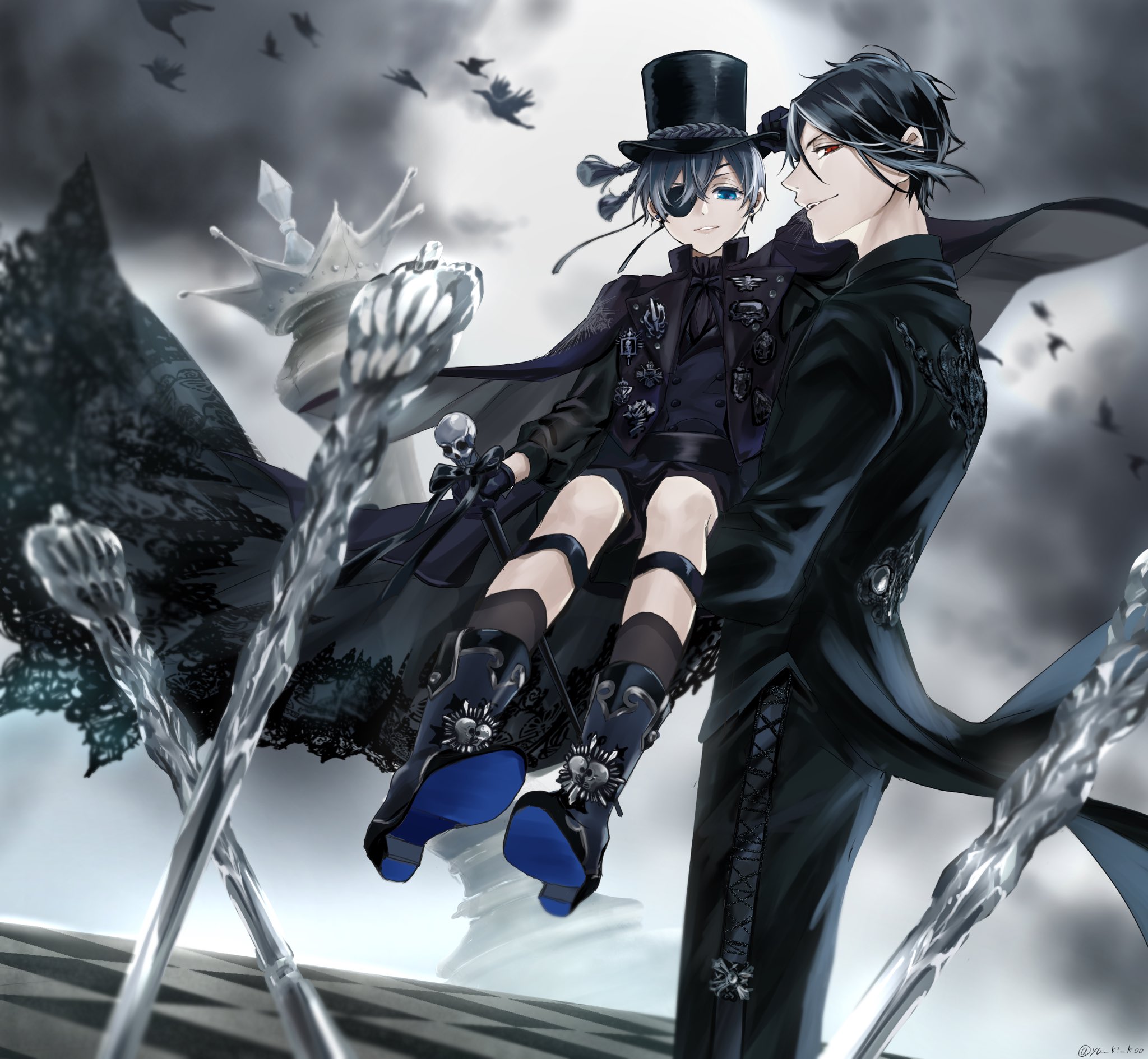
When CloverWorks breathed new life into Yana Toboso’s Victorian gothic masterpiece with the Public School Arc, fandom skeptics were cautiously optimistic. Adapting a manga as aesthetically decadent, morally ambiguous, and tonally precise as Black Butler is no small feat—especially following a decade of fragmented OVAs, non-canonical diversions, and theatrical features. Yet, the series did not merely survive its modern resurrection; it flourished. Now, the gothic juggernaut prepares to step out of the polished halls of Weston College and plunge directly into an inescapable nightmare. The confirmation of the Emerald Witch Arc (Midori no Majo-hen) represents not just another episodic assignment for the Queen’s Watchdog, but the official greenlight for what many purists consider the narrative zenith and psychological crucible of the entire franchise.
Transporting Earl Ciel Phantomhive and his infernal butler, Sebastian Michaelis, far beyond the comfortable boundaries of British high society, this forthcoming adaptation promises a radical shift in tone. Out are the cricket tournaments and polite drawing-room deceptions; in their place stands an impenetrable German forest steeped in folkloric terror, ancient curses, and a grotesque miasma that blurs the boundary between the supernatural and the harrowing dawn of modern industrial slaughter.
Into the Wolfsschlucht: A Gothic Descent into Germany’s Darkest Folklore
The premise of the Emerald Witch Arc thrusts the Phantomhive household into an unfamiliar geopolitical nightmare. Queen Victoria dispatches her Watchdog across the English Channel to the remote wilderness of southern Germany. The objective: investigate a string of mysterious, inexplicable deaths within the Wolfsschlucht—the Werewolves’ Forest. Legend dictates that any who step past the forest’s boundaries are struck down by an ancient curse, their bodies rotting from within, driven mad by nocturnal lycanthropes who guard the territory.
Where previous arcs treated folklore with an air of aristocratic skepticism, the Emerald Witch narrative immediately leans heavily into classic German romantic dread. The setting is suffocatingly atmospheric. Ancient stone wards, decaying timber houses, and dense, sun-starved canopies create an insular ecosystem designed to isolate the cast completely. By stranding Sebastian and Ciel in a community governed by pagan rituals and terrified reverence for the supernatural, Toboso subverts the familiar dynamics of the series. Sebastian’s demonic omnipotence and Ciel’s imperial clout mean extraordinarily little to an isolated population that answers only to an enigmatic child mystic: the Emerald Witch.
Sieglinde Sullivan: The Emerald Witch and the Tragedy of Bound Genius
At the beating heart of this cursed realm sits Sieglinde Sullivan, a character who instantly reshapes the philosophical framework of Black Butler. Introduced as the diminutive, wheelchair-bound ruler of the forest hamlet, Sieglinde is ostensibly a centuries-old spiritual guardian reincarnated into the body of an eccentric young girl. Subjected to the horrific custom of foot-binding to keep her tethered to the village, she commands the absolute loyalty of her hulking, fiercely protective steward, Wolfram Gelber.
A Distorted Reflection of Phantomhive Manor
The thematic mirror between Ciel and Sieglinde is intentional, profound, and deeply unsettling. Both are hyper-intelligent children stripped of their bodily and emotional innocence, forced to bear the crushing administrative and moral weight of their lineages. Both lean entirely on dark, monolithic figures who execute their every command. However, where Ciel deliberately bartered his soul for the cold calculus of vengeance, Sieglinde’s authority is born from a horrific tapestry of institutional gaslighting and manufactured divinity.
Watching Sebastian and Ciel navigate their interactions with Sieglinde and Wolfram provides some of the sharpest psychological friction in the entire series. Sebastian’s sardonic disdain for humanity clashes sharply with Wolfram’s visceral, hyper-protective devotion, while Ciel is forced to confront what an aristocratic child looks like when she has not been hardened into a ruthless state apparatus, but rather manipulated into becoming one.
The Illusion of Magic: Deconstructing Folklore Through Nineteenth-Century Warfare
Without veering into outright spoiler territory for anime-only viewers, what elevates the Emerald Witch Arc above a standard monster-hunting yarn is Yana Toboso’s masterful narrative pivot. The arc performs an audacious genre deconstruction: what begins as an occult fairy tale ultimately morphs into a scathing indictment of the nineteenth-century military-industrial complex.
The “curse” that rots the flesh of wanderers, the impenetrable miasmas, and the howling specters among the pines are not merely demonic occurrences. Instead, Toboso uses the gothic aesthetic as a smokescreen to interrogate the grotesque emergence of chemical warfare. The Black Forest becomes the crucible for weapons of mass destruction that history would later recognize on the blood-soaked battlefields of the First World War. By framing proto-chemical agents—specifically nerve and mustard gas precursors—through the prism of folkloric curses, the series delivers a chilling thesis: the calculated cruelties of modern science and imperial warmongering far eclipse the malice of any demon prowling the dark.
Ciel Phantomhive Unraveled: Trauma, Vulnerability, and Sebastian’s Impatience
While the broader political and military machinations are undeniably gripping, the emotional core of the Emerald Witch Arc lies in the total psychological collapse of Ciel Phantomhive. Exposed to the toxic environmental hazards of the forest, the Earl suffers an agonizing physical and mental regression. The ironclad composure Ciel has maintained since the traumatic massacre of his family shatters entirely.
For the first time since the series’ inception, audiences will witness Ciel reduced to a weeping, hyperventilating child, paralyzed by the vivid resurfacing of his past abuse. This collapse triggers a profound narrative crisis:
- The Contract in Jeopardy: Sebastian’s loyalty is strictly transactional. He is bound not by sentiment, but by a demonic contract that feeds on an arrogant, uncompromising soul. When Ciel’s resolve snaps, Sebastian’s facade of the immaculate gentleman butler slips, revealing the ravenous, impatient predator underneath.
- The Loyalty of the Phantomhive Servants: The arc provides vital narrative real estate to the Phantomhive household retinue—Finny, Mey-Rin, and Bardroy. Stripped of their master’s razor-sharp strategic commands, the servants must step up as lethal, dedicated protectors, demonstrating why they were uniquely chosen to safeguard the Phantomhive estate.
This vulnerability humanizes Ciel at a critical juncture in the overarching narrative, establishing stakes where survival is no longer guaranteed by the simple flick of Sebastian’s silver butter knives.
CloverWorks at the Helm: Crafting Atmospheric Dread
Following their visually opulent work on the Public School Arc, CloverWorks faces a drastically different visual mandate for the Emerald Witch Arc. Where Weston College demanded pastel palettes, immaculate Victorian architecture, and bright, crystalline sunlight, the German forest demands claustrophobic shadow-play, sickening toxic greens, and muddy, visceral period grit.
Early promotional materials and key visual teases confirm that the studio is doubling down on cinematic lighting and heavily textured environments. The contrast between Sieglinde’s decadent yet archaic chambers and the suffocating fog of the Wolfsschlucht will require CloverWorks to flex their background art and compositing mastery. If the studio maintains the technical excellence and faithfulness to Toboso’s hyper-detailed costume designs seen in their previous outing, the Emerald Witch Arc has the potential to be the most visually distinctive chapter in modern dark-fantasy anime.
Verdict: The Return of Peak Gothic Shonen
The adaptation of the Emerald Witch Arc is a monumental victory for the Black Butler community. It bridges the gap between historical drama, gothic horror, and military mystery, daring to drag its iconic protagonists through hell, gas, and psychological devastation. As Ciel and Sebastian prepare to enter the Wolfsschlucht, one thing is abundantly clear: neither the master nor his demon will emerge from these woods unchanged.
Are you prepared for the darkest chapter yet, or will the secrets of the Werewolves’ Forest prove too toxic to bear? Drop your theories, favorite manga moments, and expectations for Sieglinde’s debut in the comments below!