
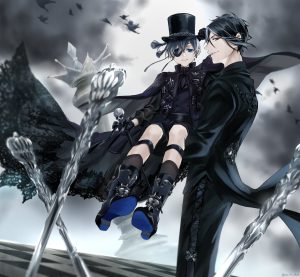

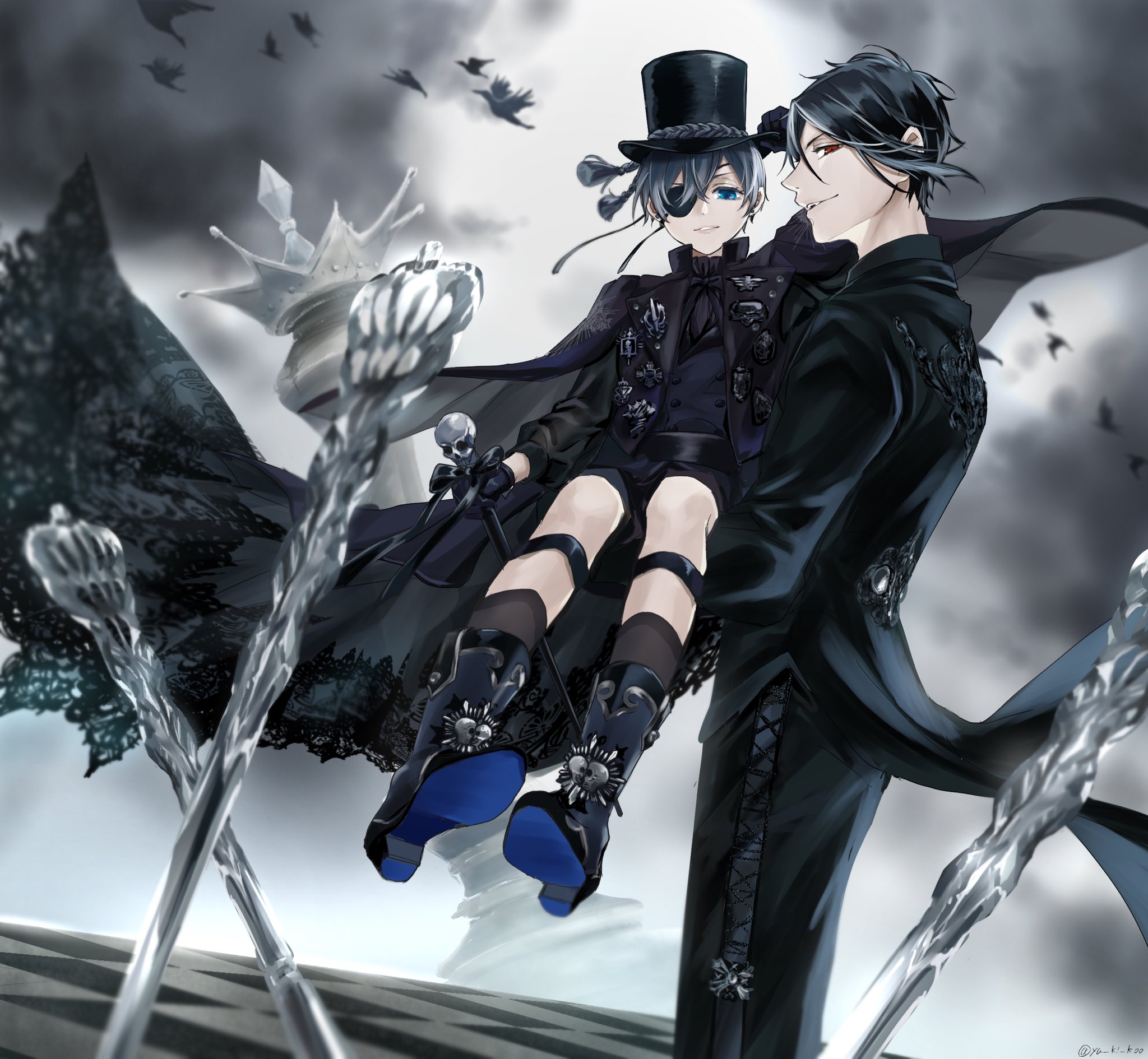
Few franchises have navigated the turbulent tides of the modern anime landscape quite like Yana Toboso’s Black Butler (Kuroshitsuji). After a dormant spell that left purists wondering if the Victorian underworld had permanently closed its iron gates, the franchise has roared back with a vengeance. Hot on the heels of the immaculate, tension-soaked Public School Arc, Aniplex and studio CloverWorks have confirmed what manga devotees have whispered about in hushed reverie for nearly a decade: the Emerald Witch Arc (Midori no Majo-hen) is officially on the horizon. This is not merely another episodic detour into supernatural intrigue; it is widely considered the psychological apex of the manga—a terrifying convergence of gothic folklore, harrowing trauma, and the industrial horrors of nineteenth-century warfare.
Into the Wolfsschlucht: Folklore Meets Victorian Realpolitik
For years, Black Butler operated comfortably within the mahogany-lined drawing rooms of London high society and the shadowy alleys of the East End. Yet the Emerald Witch Arc uproots Ciel Phantomhive and his demon butler Sebastian Michaelis entirely, casting them into the suffocating, mist-choked expanse of southern Germany’s Black Forest. Queen Victoria, ever the calculating sovereign, dispatches her young “Watchdog” to investigate a string of mysterious, gruesome deaths within an isolated domain known as the Wolfsschlucht (the Werewolves’ Valley). Travelers who cross its perimeter reportedly succumb to a supernatural curse—rotting from the inside out or being mauled by phantom beasts.
What makes this geographical pivot so electrifying is Toboso’s seamless weaving of Germanic folklore with ruthless geopolitical subtext. The narrative abandons British cobblestones for archaic Bavarian architecture, where feudal superstition still holds sway over isolated villagers who live in trembling terror of forest spirits. From the opening moments Ciel and Sebastian set foot into this fog-laden nightmare, the tonal shift is visceral. The aristocratic smugness that usually shields Ciel is stripped away by an oppressive, suffocating atmosphere where even Sebastian’s demonic intuition is challenged by anomalies he cannot immediately categorize.
The Tragic Enigma of Sieglinde Sullivan
The Genius in the Cursed Cottage
At the beating heart of this arc lies Sieglinde Sullivan, the so-called Emerald Witch. Far from the typical antagonist or one-note eccentric, Sieglinde is one of Toboso’s most layered creations: an eleven-year-old child prodigy burdened with the horrific custom of foot-binding—leaving her physically dependent on her intimidating yet fiercely protective butler, Wolfram Gelbritz. Sieglinde has spent her entire life enclosed within a compound, taught to believe that her magical rituals and concoctions are the only shield protecting her village from the wrath of the werewolves.
Her dynamic with Ciel is a revelation. While Ciel often operates as a cynical adult trapped in the frame of a child, Sieglinde is an intellectual titan possessing the genuine innocence and naivety of an isolated girl who has never known the taste of an ordinary pastry or the warmth of the sun outside her toxic perimeter. Their interactions oscillate between poignant vulnerability and high-stakes gamesmanship, presenting a mirror to Ciel’s own stolen childhood that forces the young Earl to confront aspects of his identity he had long sealed away.
Deconstructing the Supernatural: The True Horror of Chemical Warfare
Without wandering into outright spoilers for those experiencing the story for the first time through animation, the Emerald Witch Arc marks a historic turning point in how Black Butler conceptualizes evil. While early arcs relied heavily on the shock value of Jack the Ripper, rogue shinigami, or demonic transfigurations, the Emerald Witch Arc pulls off a brutal bait-and-switch. The supernatural dread hanging over the forest gradually gives way to a far more terrifying, historically grounded reality: the inception of modern biochemical warfare.
The “witch’s miasma” that melts the flesh of interlopers is not mystical ectoplasm; it is a prototype for the mechanized, chemical slaughter that would eventually define the trenches of World War I. Toboso’s genius is in exposing how the rhetoric of folklore and ancestral curses is weaponized by military industrial complexes to manipulate human innocence. In this narrative crucible, the true monsters are neither the werewolves in the thicket nor the demon standing in butler’s attire—they are the calculating, bureaucratic warmongers who view human intellect merely as ammunition.
Ciel Phantomhive’s Dark Night of the Soul
This tonal descent triggers what is unarguably Ciel’s most profound psychological collapse in the entire series. Exposure to the village’s toxic reality shatters the Earl’s carefully cultivated stoicism, unearthing repressed trauma from his time in the sacrificial cult that first summoned Sebastian. For multiple chapters—and undoubtedly several devastating episodes—Ciel is reduced to a catatonic, trembling husk, regressing into a state of pure, childlike terror.
This breakdown alters the fundamental power dynamic between master and servant. Sebastian, bound by contract to protect his “meal” but structurally incapable of genuine human empathy, must navigate Ciel’s incapacitation with clinical frustration and razor-thin patience. It forces the audience to confront the ugly, predatory truth of their pact: Sebastian is not a dark guardian angel; he is an ancient predator waiting for the slightest breach of contract to consume his prize.
CloverWorks and the Aesthetic of Despair
When CloverWorks inherited Black Butler for the Public School Arc, they brought a kinetic polish and painterly aesthetic that revitalized the property. However, the Emerald Witch Arc presents a vastly different production challenge. It demands an oppressive visual vernacular: suffocating foliage, decrepit timber-framed cottages, hallucinatory fever dreams, and graphic bodily deterioration. The series must balance beauty and revulsion in equal measure.
Given the studio’s stellar background in ambient worldbuilding and lighting design, expectations among the global anime community are towering. Translating the dense, miasma-filled woodlands and the surreal, nightmare-sequence choreography will require CloverWorks to lean heavily into psychological horror, pushing the animation beyond classic Victorian melodrama into true atmospheric dread.
The Verdict: Kuroshitsuji’s Most Essential Adaptation
The confirmation of the Emerald Witch Arc is more than just another seasonal renewal—it represents the definitive bridge connecting Black Butler’s early gothic-mystery origins to the seismic, existential revelations waiting in the manga’s ultimate endgame. By tackling heavy themes of child exploitation, industrial slaughter, and absolute mental collapse, the anime is poised to capture the attention of modern anime fans who crave complex, uncompromising narratives.
As Ciel and Sebastian prepare to cross the German border, one thing is certain: neither the Earl nor his butler will emerge from the Black Forest unscathed, and the series will never be the same again.
What are your expectations for the Emerald Witch Arc? Are you ready to see Sieglinde Sullivan brought to life by CloverWorks, or does Ciel’s darkest chapter intimidate you? Let us know in the comments below!