
In the pantheon of sequential art, few creative works cast a shadow as colossal, agonizing, and magnificent as Kentaro Miura’s Berserk. When Miura tragically passed away in May 2021, the global creative landscape collectively stopped spinning. From the grueling mechanics of FromSoftware’s Dark Souls and Elden Ring to the blood-slicked battlefields of modern dark fantasy manga like Chainsaw Man and Jujutsu Kaisen, the DNA of the Black Swordsman is woven inextricably into modern pop culture. Yet, despite four decades of undisputed literary reverence, the medium that should have been Berserk’s most transcendent canvas—television anime—remains haunted by a lingering curse of incompletion and technical compromise.
For millions of fans worldwide, Berserk is not merely a grimdark revenge epic; it is a sacred text dissecting the agonizing intersections of trauma, free will, and existential resilience. As Studio Gaga and Miura’s lifelong confidant Kouji Mori labor to carry the manga toward its poignant horizon, an urgent cultural question resurfaces across anime boardrooms and fan communities alike: why does this towering monument of dark fantasy still lack the definitive, uncompromising, long-form screen adaptation it so desperately deserves?
The Visual Chiaroscuro: Miura’s Ink vs. Modern Animation Constraints
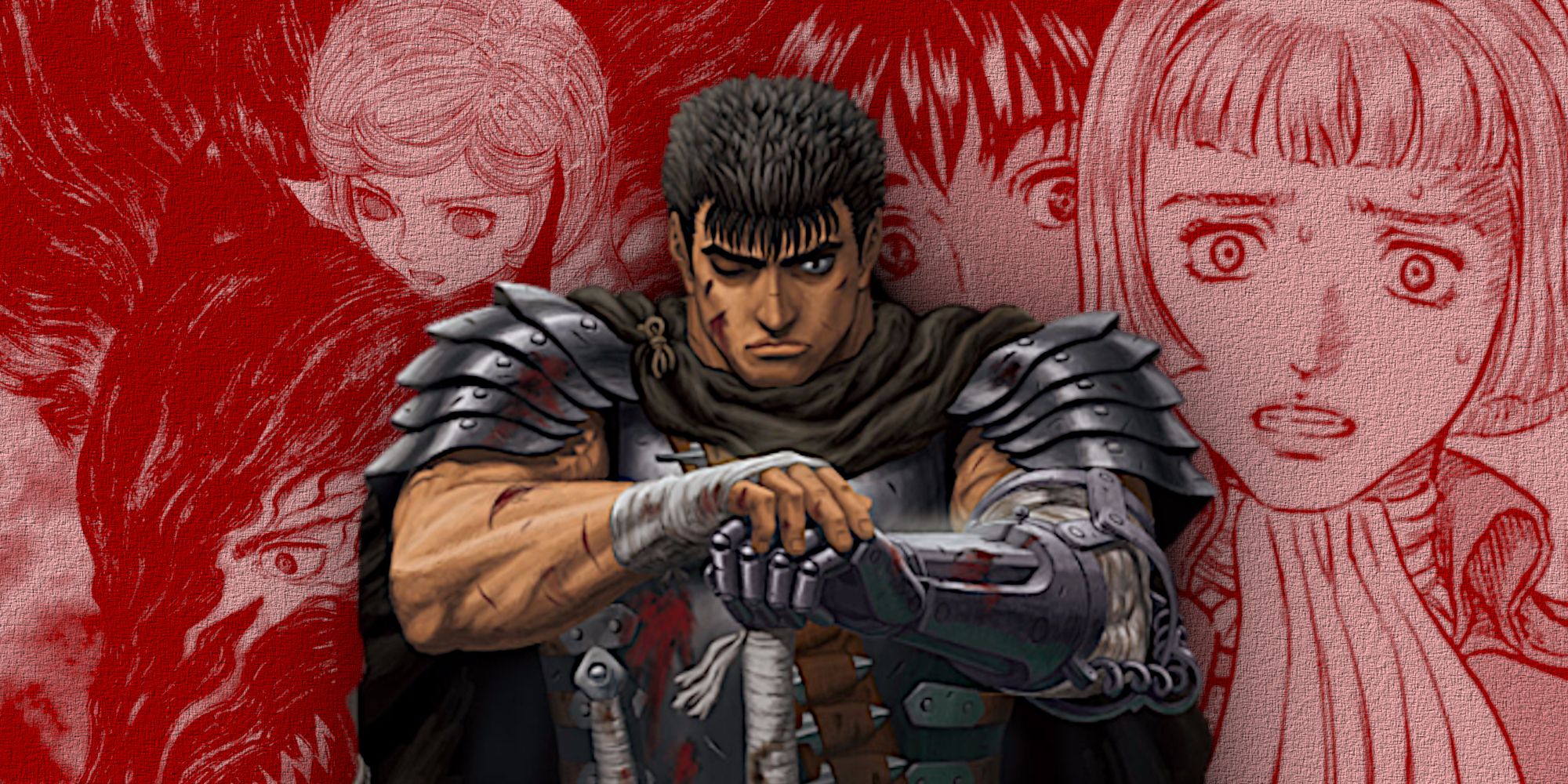
To understand why a faithful adaptation of Berserk represents the holy grail of modern anime production, one must first confront the intimidating reality of Miura’s illustration style. Berserk is not built on standard shonen iconography or easily replicable character sheets. Miura’s line work is an exercise in obsessive, classical draughtsmanship—evoking the intricate apocalyptic engravings of Albrecht Dürer and Gustave Doré alongside the hyper-visceral anatomy of 1980s heavy-metal fantasy.
Every swing of the massive Dragonslayer sword drags through pages dense with cross-hatching, baroque demonic architecture, and visceral gore that feels tangible and horrifyingly heavy. Modern anime pipelines, optimized for digital vector lines and flat, easily composited color flats, shudder when faced with such raw textural density. Capturing the organic horror of the God Hand or the chaotic majesty of the Berserker Armor requires astronomical budget allocations, unyielding scheduling, and an elite team of animators possessing classical anatomical mastery. Translating that hand-drawn, ink-drenched despair into 24 frames per second without losing its terrifying tactile soul remains one of the greatest production challenges in the history of the medium.
The Architectural Terror of the Astral Realm
Nowhere is this challenge more apparent than in the later arcs—most notably the Millennium Falcon and Fantasia storylines. While the mercenary grit of the early chapters demands grounded historical weight, the merging of the physical and astral worlds demands a surreal, neoclassical grandeur. Rendering scenes where monumental sea gods clash against ethereal fairy forests requires an aesthetic ambition that transcends ordinary seasonal production schedules, demanding the meticulous artisanal care usually reserved for standalone prestige cinema.
Ghosts of Adaptations Past: Nostalgia, Compromise, and Catastrophe
The history of Berserk on screen is a tragic saga of brilliant sparks and catastrophic blunders. For a quarter of a century, the community has lived in the long shadow of the 1997 OLM television series. Directed by Naohito Takahashi and immortalized by Susumu Hirasawa’s ethereal, haunting soundtrack, the ’97 anime captured the atmospheric melancholia and philosophical weight of the Golden Age Arc with staggering poetic precision. Yet, hindered by severe budgetary limits, it relied heavily on painterly still frames and infamously ended on the ultimate traumatic cliffhanger—the apocalyptic horror of the Eclipse—leaving general audiences severed from Guts’ subsequent journey as the Black Swordsman.
Over a decade later, Studio 4°C attempted to rectify this with their Golden Age Arc film trilogy (2012–2013), later repurposed into 2022’s Memorial Edition. While these cinematic entries achieved soaring peaks of fluid combat choreography and refined their hybrid 2D/3D technology by the third film, they committed the cardinal sin of compression. Seminal narrative linchpins—such as the quiet philosophical intimacy of the “Bonfire of Dreams” and the psychological unraveling of the mercenary Band of the Hawk—were trimmed to fit cinematic runtimes, once again confining the screen legacy of Berserk strictly to its prologue.
Then arrived the infamous 2016 and 2017 series by Millepensee and GEMBA. Widely reviled across the anime ecosystem, the production committed what many view as an artistic desecration. Hobbled by low-poly CGI models, frantic and disorienting camera movements, flat lighting, and an absurd, metallic “frying pan” sound effect for the Dragonslayer, the project gutted the monumental Conviction and Falcon of the Millennium Empire arcs. It stood as a tragic testament to the dangers of corporate cost-cutting, turning an operatic tragedy into an unwatchable technical cautionary tale.
Causality and Catharsis: The Psychology Anime Must Reclaim
Beyond the visceral dismemberment and cosmic horrors, the core reason Berserk demands a comprehensive adaptation lies in its unmatched psychological interiority. Pop-culture discourse frequently reduces Guts to an archetypal raging berserker, yet Miura’s writing is intensely tender and philosophically nuanced. Guts is not driven merely by bloodlust; he is an acutely traumatized survivor actively defying the machinations of deterministic destiny—a concept personified by the cosmic puppetry of Causality and the enigmatic God Hand.
Contrasting Guts’ grueling humanity is Griffith, an extraordinary study in toxic ambition, narcissistic collapse, and sociopolitical ascendancy. Their dynamic is not a simple morality play of good versus evil; it is a profound thesis on codependency, vulnerability, and the existential cost of dreams. Furthermore, Casca’s harrowing journey—from a fierce battlefield commander to a deeply fractured victim of sexual trauma, and ultimately toward her hard-fought psychological restoration in the sanctuaries of Elfhelm—provides the emotional spine of the narrative. An adaptation that sanitizes, rushes, or mishandles this raw exploration of human fragility under the guise of mindless action utterly misses the fundamental soul of Miura’s thesis.
Grassroots Defiance and the Modern Production Horizon
Exhausted by decades of official half-measures and studio neglect, the Berserk fandom has refused to go quietly into the night. The emergence of grassroots initiatives—most notably the ambitious independent undertaking by Studio Eclypse with their Berserk: The Black Swordsman fan animation—signals an undeniable groundswell of cultural passion. Millions of views on fan-made trailers and proof-of-concept animations reflect a global audience screaming a singular truth: the hunger for an authentic, unapologetic, and adult Berserk adaptation has never been higher.
Moreover, the modern anime industry is finally evolving to a point where a faithful prestige adaptation is technically and commercially viable. The runaway global success of mature, uncompromising seinen adaptations—such as Wit Studio and MAPPA’s work on Vinland Saga, or the cinematic ferocity of Chainsaw Man—proves that modern audiences possess a voracious appetite for dark, complex thematic material handled with adult sophistication. If a production committee were to grant a visionary studio the necessary timeline, an unrestricted R-rating, and a hybrid pipeline of bespoke 2D artistry accented by high-end compositing, the result would inevitably become an instant global streaming phenomenon.
The Final Struggle: Honoring the Black Swordsman
Kentaro Miura spent his life pouring his physical vitality onto paper, crafting an immortal testament to the resilience of the human heart in the face of insurmountable cosmic despair. To leave his defining masterpiece stranded between an incomplete 1990s classic, a clipped cinematic trilogy, and an embarrassing CGI misfire is an unresolved artistic injustice. The story of Guts, Casca, and Griffith transcends standard entertainment metrics—it is a towering mythos about humanity’s quiet, desperate choice to pick up the blade and fight back against impossible darkness.
The time for hesitant adaptations and half-hearted cinematic experiments has passed. The anime industry possesses both the technology and the global platform to honor Miura’s legacy with the multi-season, prestige adaptation it has earned through decades of sweat and blood. The brand of sacrifice has already been etched into the consciousness of millions; now, we wait for the studio brave enough to raise the Dragonslayer and see the struggle through to the very end.
What studio do you believe possesses the vision and technical mastery to finally do justice to Kentaro Miura’s Berserk? Is a definitive adaptation possible without compromising the manga’s explicit horrors? Let your voice be heard in the comments below, fellow Strugglers.