

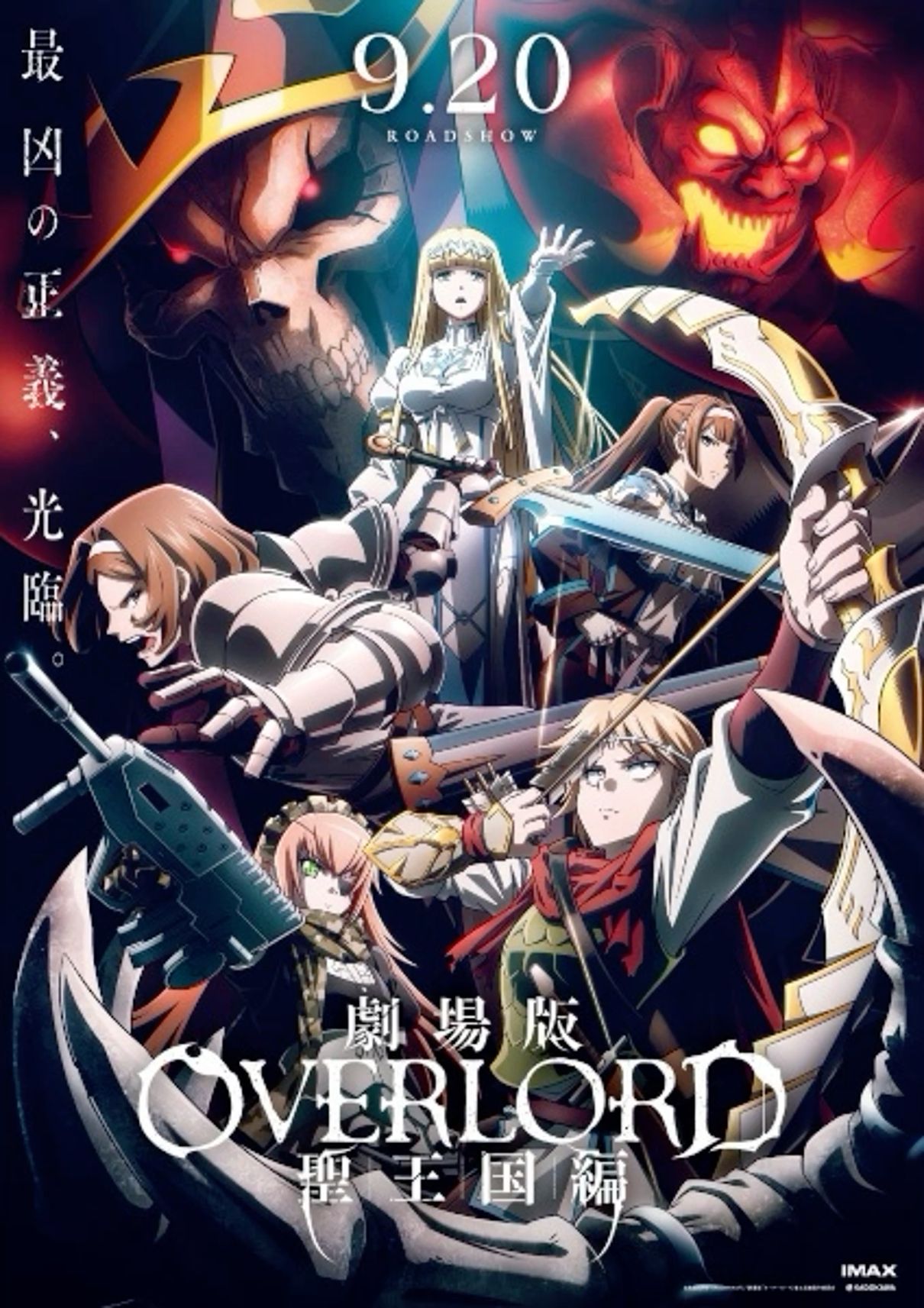
What happens when the line between a benevolent savior and an unstoppable grim reaper completely vanishes into thin air? For years, dark fantasy enthusiasts have debated whether the Great Tomb of Nazarick could ever push its terrifying moral ambiguity beyond the confines of a weekly television broadcast. Now, with the highly anticipated theatrical arrival of Overlord: The Sacred Kingdom (Overlord: Sei Oukoku-hen), legendary animation powerhouse Studio Madhouse has officially answered that question with jaw-dropping scale, spine-chilling psychological warfare, and unmatched brutality.
The Long-Awaited Holy Kingdom Arc Comes to Life
Adapted directly from the critically acclaimed Volumes 12 and 13 of the original light novel series by Kugane Maruyama, the movie delves into what readers widely consider the definitive masterwork of the franchise. Under the masterful direction of veteran series director Naoyuki Itou, the film strips away every layer of romanticized heroism to deliver a haunting war epic set along the fortified borders of the Roble Holy Kingdom.
Unlike previous seasons where the Sorcerer Kingdom engaged in political intrigue across the Re-Estize Kingdom and the Baharuth Empire, this cinematic chapter confronts genuine human desperation. When the monstrous Archdevil Jaldabaoth—voiced with chilling menace by Masayuki Katou—shatters the Holy Kingdom’s colossal border wall and unleashes an army of demi-humans, the nation’s desperate leadership is forced to beg the Sorcerer King, Ainz Ooal Gown, for military salvation.
Neia Baraja and the Moral Dilemma of Absolute Power
At the beating heart of this theatrical triumph is Neia Baraja, voiced with extraordinary vulnerability and intensity by Yoshino Aoyama. As an overlooked squire harboring deep insecurities alongside her lethal archery skills, Neia becomes the emotional anchor for the entire audience. Through her troubled perspective, viewers witness the supreme majesty—and cold pragmatism—of Ainz Ooal Gown (portrayed with iconic gravitas by Satoshi Hino).
Her tense ideological friction with Paladin Captain Remedios Custodio (voiced by Hitomi Nabatame) elevates the film into profound philosophical territory. Remedios clings fiercely to rigid, dogmatic notions of justice even as her people face merciless slaughter, whereas Neia begins to see the terrifying truth of their harsh world: weakness is a sin, and power is the only shield against extinction. This compelling character dynamic transforms what could have been a standard dark fantasy confrontation into an unforgettable meditation on faith, propaganda, and survival.
Studio Madhouse Delivers High-Octane Animation and Visceral Combat
Cinemagoers and critics alike have praised Studio Madhouse for bringing illustrator so-bin’s iconic character aesthetics to life on the silver screen with breathtaking fidelity. From the claustrophobic dread of besieged city streets to sweeping magical explosions that light up entire battlefields, the theatrical budget elevates every single frame.
The film captures the same breathless momentum seen in other blockbuster theatrical shonen releases, such as the explosive cinematic spectacle of Chainsaw Man – The Movie: Reze Arc. Furthermore, anime fans seeking deep world-building and high-stakes survival will appreciate how the Holy Kingdom narrative mirrors the tension seen in Black Butler: Emerald Witch Arc and the ambitious narrative scope of Dr. STONE Science Future Final Season.
Why Overlord: The Sacred Kingdom Is Essential Viewing
Beyond its jaw-dropping action sequences and complex tactical maneuvers, the movie excels because it refuses to pull its punches. Key highlights that make this film an instant classic include:
- Unmatched World-Building: The strategic maneuvering between demi-human warlords, desperate holy paladins, and Nazarick’s hidden agenda creates unmatched tension.
- A Masterclass in Anti-Hero Storytelling: Satoshi Hino delivers his finest vocal performance yet, effortlessly shifting between Momonga’s panicked internal monologues and Ainz’s terrifying presence.
- Uncompromising Grimdark Tone: Madhouse stays true to the source material’s unvarnished brutality, delivering an authentic adaptation that rewards long-time light novel loyalists.
- Global Theatrical Impact: Backed by worldwide theatrical distribution via Sony Pictures and Crunchyroll, the movie proves that mature anime films have a thriving global audience.
What Do You Think?
Did Ainz Ooal Gown’s intervention in the Holy Kingdom prove that power truly defines justice, or did Jaldabaoth’s invasion leave an irredeemable scar on the realm? How does Neia Baraja’s journey rank among your favorite character arcs in the entire franchise? Share your thoughts, favorite moments, and theories in the comments section below!