



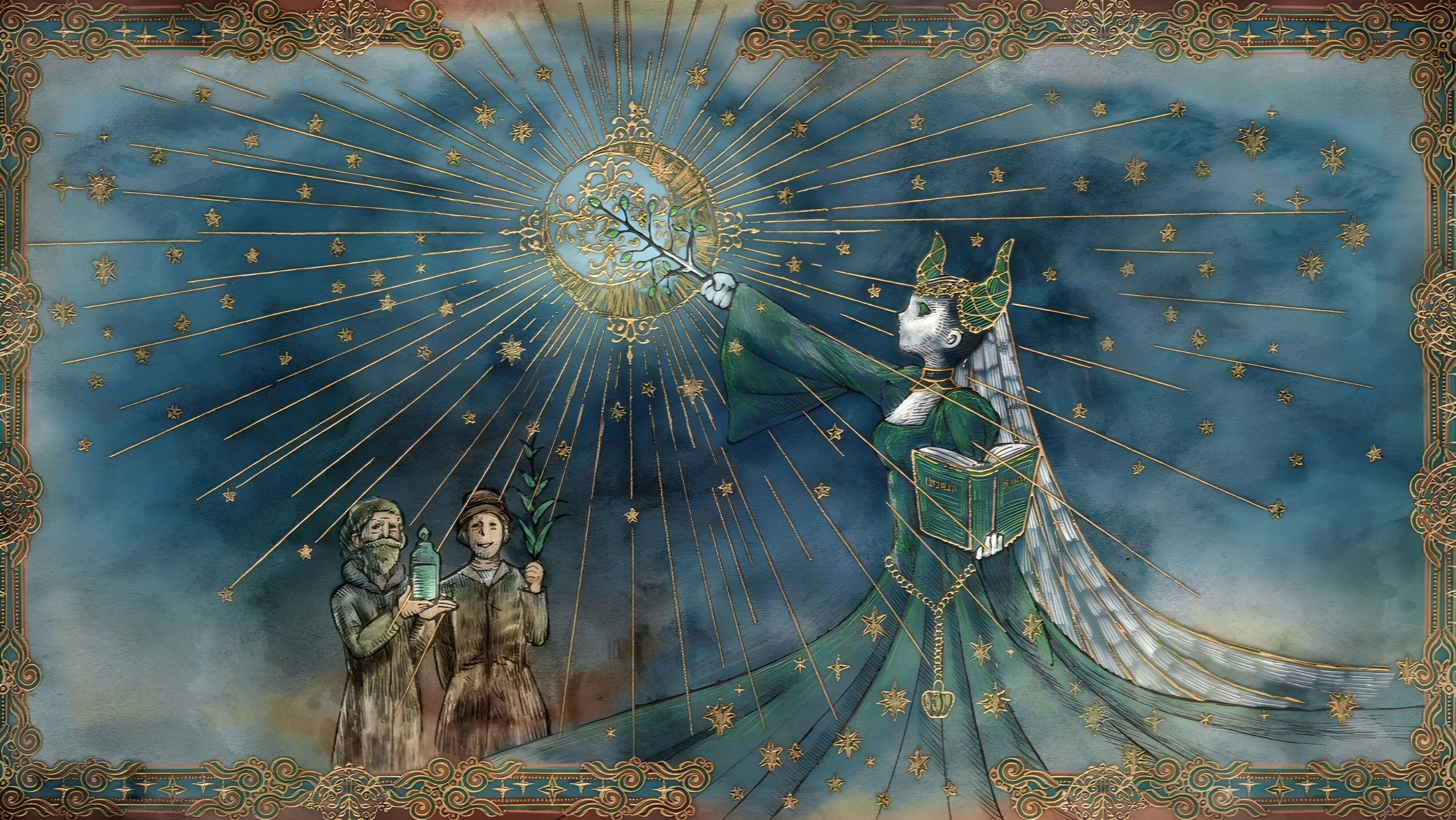
The gothic renaissance of Yana Toboso’s masterwork is officially reaching its dark zenith. When CloverWorks resurrected Black Butler (Kuroshitsuji) for 2024’s Public School Arc, the anime community rejoiced at seeing the franchise liberated from the fragmented, non-canon detours of its early-2010s adaptations. Yet, even as the crisp cricket greens and tea-time intrigue of Weston College charmed long-time devotees, seasoned manga readers knew that the series’ true trial by fire lay just beyond the English Channel. With the official confirmation that the Emerald Witch Arc (Midori no Majo-hen) is set for production, the Phantomhive estate is trading collegiate espionage for chthonic folk horror, primeval terror, and psychological ruin.
For more than a decade, the Emerald Witch Arc has stood as the magnum opus of Yana Toboso’s narrative craft—a sprawling, claustrophobic saga that upends everything fans assumed about the boundaries between supernatural mysticism and gritty historical reality. Transporting our titular earl and his hell-spawned butler to the mist-shrouded valleys of southern Germany, the upcoming arc promises to deliver the most visceral, emotionally harrowing adaptation the franchise has ever attempted.
A Descent into Folk Horror: The Cursed Werewolves of Germany
The premise of the Emerald Witch Arc breaks away sharply from the domestic comforts of Victorian London. Under direct orders from Queen Victoria—whose imperial benevolence continues to curdle into calculating ambition—Ciel Phantomhive and Sebastian Michaelis are dispatched to the heart of the Black Forest. The mission is shrouded in grim hearsay: British nobles and local travelers venturing near the secluded valley known as the Wolfsschlucht (Wolf’s Glen) are turning up dead, allegedly struck down by an ancient, invisible hex that rots the flesh and twists the mind, enforced by the fabled Werewolves’ Forest.
The Myth of the Hexenwald
Unlike the high-society masquerades and occult murder mysteries of previous arcs, the setting here evokes the grim, isolationist dread of traditional European fairy tales. The dense German canopy functions almost as a character itself—an impenetrable, suffocating labyrinth steeped in superstitions that time forgot. Villagers live in petrified subservience to the “forest spirits,” terrified of incurring the wrath of monstrous, bipedal lycanthropes who guard the borders of their sanctuary with savage finality.
This stark atmospheric pivot allows CloverWorks to flex an entirely different aesthetic palette. Gone are the vibrant pastels and golden-hour lighting of Weston College; in their place, viewers will be treated to muted, sickly greens, damp earthen tones, and thick, omnipresent fog that mimics the miasma of an open grave. It is pure German gothic romanticism filtered through Toboso’s unapologetically macabre lens.
Sieglinde Sullivan: The Tragic Genius of the Emerald Witch
At the beating heart of this cursed domain sits Sieglinde Sullivan, the titular “Emerald Witch” and arguably the most nuanced guest protagonist Toboso has ever conceived. Bound to a feudal manor house and revered as a divine protector by her superstitious community, Sieglinde is a child prodigy whose intellect is both her salvation and her prison.
The Architecture of Manufactured Ignorance
Sieglinde presents an immediate, fascinating ideological mirror to Ciel Phantomhive. Like Ciel, she is a prepubescent child thrust into absolute authority; like Ciel, she bears physical and psychological scars designed to keep her dependent on the machinations of adults. Subjected to the horrific practice of foot-binding under the guise of an ancient witch’s ascetic tradition, Sieglinde is physically crippled, reliant entirely on her hulking, devoted steward, Wolfram Gelzer, for mobility.
Yet, behind her ornate gowns, eccentric outbursts, and innocent curiosities lies an astonishingly acute scientific mind. The dynamic between Ciel—cynical, weary, and weaponized by trauma—and Sieglinde, brilliant yet artificially shielded from the truth of the world outside her valley, provides the emotional bedrock of the arc. Watching Ciel navigate the realization that this girl is a pawn in a game far crueler than her supernatural titles suggest is storytelling at its absolute sharpest.
Psychological Rupture: Ciel Phantomhive at His Absolute Breaking Point
While the aesthetic grandeur and new cast members will undoubtedly draw eyes, the Emerald Witch Arc is celebrated among manga readers primarily for one thing: it is the moment Ciel Phantomhive completely shatters.
When the Faustian Contract Falters
Early in their investigation of the forest, the Earl and his butler are exposed to the legendary “curse” of the miasma. The consequences are catastrophic. Ciel’s frail constitution fails him entirely, triggering severe respiratory collapse coupled with violent, hallucinogenic trauma. For the first time since the sacrificial altar of his childhood, Ciel’s unyielding aristocratic mask dissolves into pure, unadulterated panic.
The sequence pushes their master-servant dynamic past the point of polite subtext. Sebastian Michaelis is, after all, not a benevolent protector, but an apex predator waiting for his meal. When Ciel regresses into a traumatized, weeping infant who refuses to command his butler, Sebastian’s demonic apathy rears its terrifying head. The contractual tension becomes suffocating: if Ciel cannot summon the will to honor his side of the Faustian bargain, Sebastian has no obligation to keep him alive. The voice work demanded here—particularly from Maaya Sakamoto as Ciel and Daisuke Ono as Sebastian—promises to be a career-defining tour de force of emotional vulnerability and cold, demonic menace.
From Supernatural Superstition to Industrial Warfare
Without diving into explicit late-game spoilers, the true narrative triumph of the Emerald Witch Arc lies in Yana Toboso’s subversive sleight of hand. The narrative drapes itself in the velvet robes of witch trials, lycanthrope sieges, and medieval sorcery, only to pull back the curtain and expose something infinitely more horrific: the birth of modern military-industrial warfare.
The Real Horror of the Nineteenth Century
Toboso masterfully uses the myth of the “witch’s miasma” to explore the grotesque emergence of weaponized chemical agents—early prototypes of the mustard and chlorine gases that would later define the trenches of the First World War. The monsters in the woods do not belong to the underworld; they belong to the burgeoning armaments race of the late nineteenth century, cloaked in folklore to exploit the gullibility of a desperate populace.
This revelation contextualizes Black Butler not merely as a dark fantasy escapade, but as a scathing historical critique. The real evil is not the demon who wears the tuxedo, nor the witch who brews in the forest; it is the ruthless, nationalist machinery of state empires willing to sacrifice innocent children on the altar of technological annihilation.
CloverWorks’ Stewardship and the Fandom’s High Stakes
The reception to the arc’s announcement across social platforms and dedicated anime communities has been nothing short of rapturous. After years of wondering whether the anime would ever reach the manga’s most critically acclaimed stretch, fans are eager to see CloverWorks maintain the visual prestige and faithfulness established in Season 4. The studio proved they could capture the refined, painterly elegance of Toboso’s covers; now, they must prove they can render the dirt, gore, and chemical terror of military siegecraft.
Between Wolfram’s acrobatic, berserker combat choreography, Sebastian’s increasingly unrestrained demonic displays, and the emotional resonance of Sieglinde’s eventual awakening, the adaptation carries immense weight. If executed with the precision CloverWorks brought to The Public School Arc, this adaptation may well cement Black Butler as one of modern anime’s most successfully revived vintage properties.
The Verdict: An Essential Chapter in Modern Gothic Anime
The confirmation of the Emerald Witch Arc is a monumental victory for dark fantasy enthusiasts. It represents a bold, uncompromising turn into high-stakes folk horror, anchored by a poignant interrogation of trauma, science, and the true cost of imperial ambition. Ciel and Sebastian are walking into a nightmare from which neither will emerge unchanged, and the anime landscape will be all the richer for it.
Are you ready to venture into the Werewolves’ Forest, or do you think the franchise’s shift into industrial warfare changes the gothic charm too much? Drop your thoughts, theories, and Sieglinde Sullivan casting predictions in the comments below!