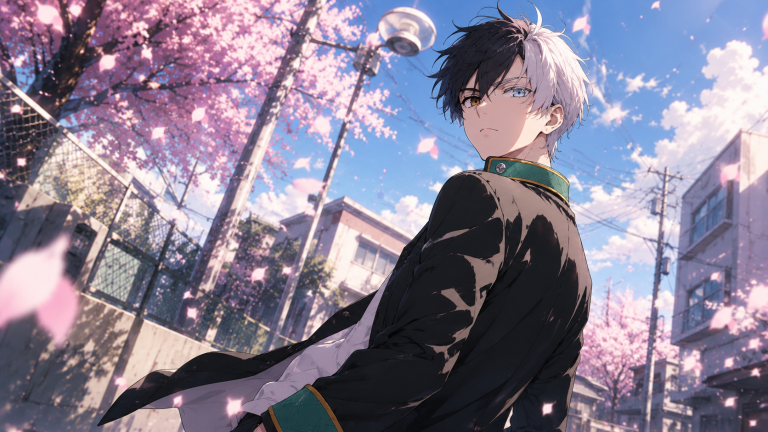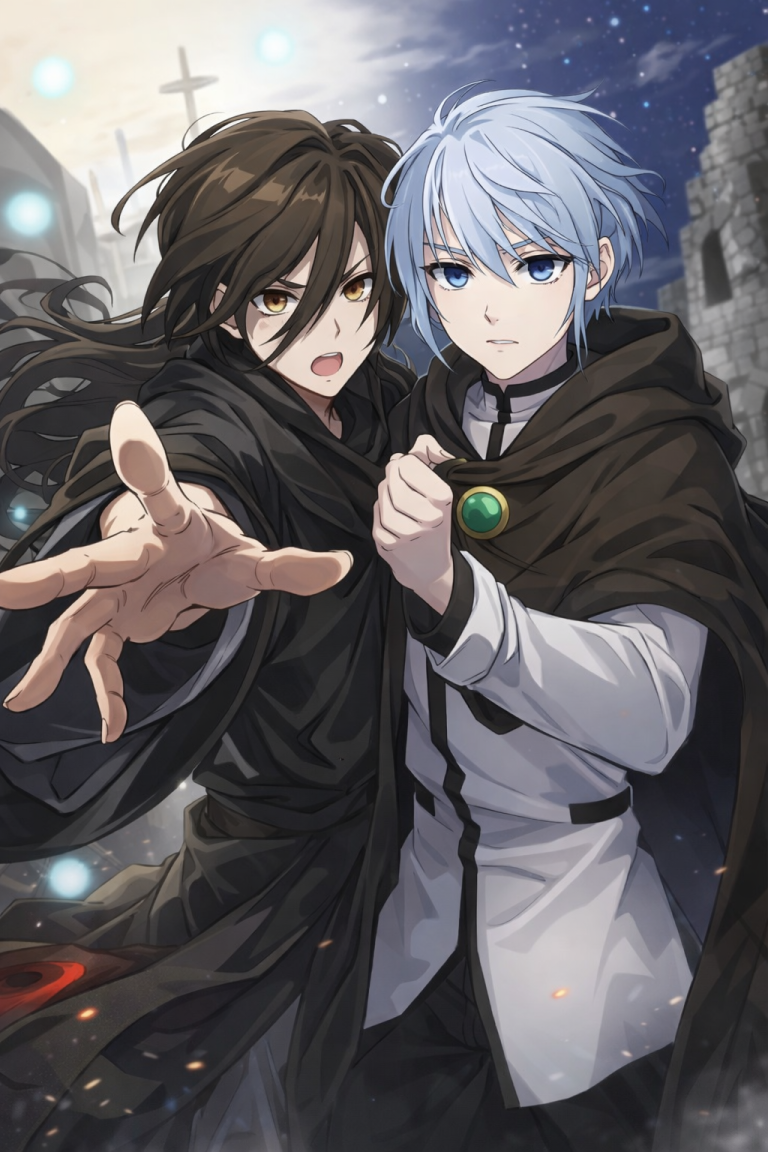
For nearly a decade, the virtual reality MMO subgenre found itself trapped in an existential loop. Ever since Sword Art Online codified the “trapped in a death game” conceit, adaptations consistently relied on high-stakes mortality or dreary grimdark melodrama to validate their digital stakes. Then came Shangri-La Frontier—a masterclass in unadulterated, mechanic-driven ludology that dared to ask a revolutionary question: What if playing a video game was simply intensely, breathtakingly fun? Following a sensational debut season produced by Studio C2C, the series returns for Season 2 not just as a cult favorite, but as the reigning monarch of modern gaming anime. Riding the seismic shockwaves left in the wake of the Gravekeeper Wezaemon raid, Sunraku and his battle-forged coalition, the Wolf Gang, are stepping onto a canvas where the world itself has fundamentally changed.
The Shattered Paradigm: Wezaemon’s Fall and the Genesis of Wolfgang
The climactic defeat of Gravekeeper Wezaemon was not merely a seasonal victory; it was a structural detonation of Shangri-La Frontier’s digital cosmos. In Katarina’s original web novel and Ryosuke Fuji’s manga adaptation, Wezaemon represents an insurmountable barrier—a tragic relic of the forgotten “Age of the Gods” that top-tier, corporate-backed guilds like Schwarz Wolf had spent thousands of hours failing to decipher. Enter Sunraku (Rakuro Hizutome), Arthur Pencilgon (Towa Amane), and Oikatzo (Kei Uomi). Operating entirely outside the bureaucratic bloat of standard MMO raid culture, this ragtag triumvirate dissected Wezaemon not through overwhelming level advantages, but via surgical exploitation of frame data, phases, and parry windows.
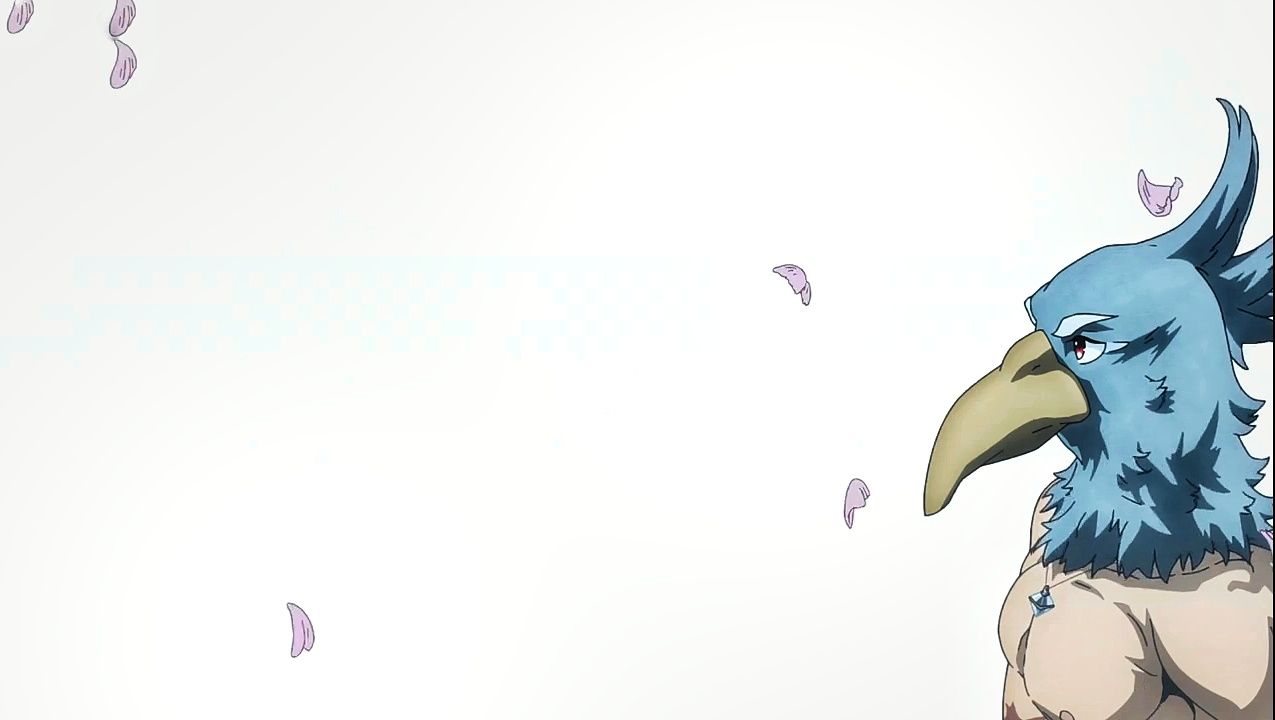
The downing of Wezaemon yielded consequences that redefine the narrative scope of Season 2. By executing the server-first defeat of one of the Seven Colossi, the Wolf Gang triggered the “World Story” transition, shifting the game state into an uncharted era. For the broader player base, it was an unprecedented humiliation delivered by an unguilded, half-naked rogue wearing a bird mask. For the core trio, it solidified their alliance into Wolfgang: an elite, hyper-focused syndicate whose sole mandate is to bypass mundane progression loops and hunt down the remaining unique monsters lurking across the continent.
The Aftermath: Loot, Legacy, and the Age of the Gods
Wezaemon’s demise did more than scramble the leaderboard; it unlocked the encrypted architecture of the world’s hidden mythology. The narrative weight of Alice Frontier and the mechanized juggernaut Kirin proved that Shangri-La Frontier’s ambient lore carries genuine emotional gravity beneath its sparkling UX. Season 2 wastes no time mining this legacy. The relic materials harvested from the Tomb—specifically the remnants of ancient magitech and esoteric crafting recipes—have transformed Sunraku from an eccentric wanderer into the prime catalyst of the server’s technological revolution. Guided by the Vorpal Bunny patriarch Vash and the aspiring blacksmith Bilac, Sunraku’s access to the “Ancient Craftsman” questline bridges the gap between raw player skill and world-altering power.
Kusoge Pedigree Meets Divine Lore: Sunraku’s Subversive Psychology
At the center of this hurricane remains Sunraku, a protagonist whose psychological appeal lies in his complete indifference to power fantasies. Sunraku is an unrepentant kusoge (trash-game) aficionado. He is a player conditioned by buggy hitboxes, glitched collision mechanics, and abusive game balance. When transplanted into Shangri-La Frontier—a pristine, flawlessly coded kamige (god-tier game)—his instincts do not mirror those of a noble hero. Instead, he treats this hyper-realistic virtual reality with the irreverent curiosity of an exploit-hunter testing a developer’s patience.
This dynamic shines brilliantly as Season 2 unpacks the post-Wezaemon fallout. While major guild masters like Saiga-0 (Rei Saiga) navigate the social politics and territorial scrambles caused by the world’s progression, Sunraku’s motivation remains refreshingly intrinsic. He does not want to rule the server; he wants to dance on the knife-edge of mechanical defeat. His glass-cannon build—mandated by the lingering Lycagon curse that leaves his torso bare and forbids piece-meal armor—forces a hyper-athletic, zero-margin-for-error combat loop that keeps every encounter exhilarating. In an anime landscape saturated with over-powered protagonists who sleepwalk through their conflicts, Sunraku’s sheer sweat equity makes every micro-step forward feel legitimately earned.
The Next Colossus in the Crosshairs: The Deep Shadow of the Seven
While Wezaemon was an immovable object of historical tragedy, the remaining Colossi represent fundamentally different design philosophies. Season 2 broadens the horizon toward the monster that catalyzed Sunraku’s journey: Lycagon the Nightslayer. The spectral shadow-wolf is not a set-piece boss locked inside a designated arena; it is an ambient terror that stalks players across open terrain, challenging the very concepts of stealth, tempo, and sensory awareness.
Simultaneously, the narrative begins setting its compass toward the enigmatic deep: Ctarnidd of the Abyss. Where Wezaemon tested frame-perfect reflexes and resource management against a humanoid duelist, Ctarnidd represents the esoteric, environmental terror of the deep sea—a boss that bends the rules of spatial geometry and reality within the world of Shanfro. The strategic preparation required to confront these apex predators forces Wolfgang to expand their horizons. Season 2 brilliantly portrays the reality of high-end gaming: you do not simply march into an end-game raid; you grind side-systems, cross-train in other competitive genres (such as Sunraku and Oikatzo’s brief, hilarious excursions into fighting games and mech simulators), and painstakingly craft specialized resistance gear.
Studio C2C’s Kinetic Masterclass: Visualizing the Language of Play
Any analytical retrospective of Shangri-La Frontier is incomplete without recognizing the kinetic wizardry of Studio C2C. Under the direction of Toshiyuki Kubooka, the production team has executed a rare feat: translating raw gaming literacy into dynamic cinematography. Many video game adaptations rely on static overlays, garish translucent UI screens, and rigid text boxes to inform the audience of game mechanics. C2C takes the inverse approach, communicating systemic interaction almost entirely through choreography, spacing, weight, and sound design.
The combat sequences are a marvel of visual coherence:
Every parry carries a crisp, percussive chime that mimics the tactile feedback of a perfect block. Footwork matters. Inertia matters. When Sunraku triggers skills like Spiral Slash or slips past a lethal swing by mere pixels, the animation compresses and snaps with an elasticity that mirrors the peak responsiveness of an uncapped frame rate. Season 2 retains this uncompromising visual fidelity, escalating the scale from claustrophobic tomb duels to sprawling biomes and multifaceted skirmishes. It is an aesthetic treatment that respects the medium it portrays, celebrating the visual language of fighting games and character action titles with kinetic reverence.
The New Golden Standard of Virtual Reality Fiction
Shangri-La Frontier Season 2 consolidates what the first season boldly promised: that video game anime does not require existential dread or psychological entrapment to cultivate pulse-pounding stakes. The stakes are the thrill of execution; the tension is the dread of a mis-timed input; the reward is the breathtaking spectacle of unlocking a mythic world’s deepest secrets alongside companions who share your mania.
As the legacy of Nightslayer Wezaemon ripples across the server and Wolfgang turns its sights toward the untamed beasts of the Age of the Gods, Sunraku stands as the avatar of every gamer who ever pushed through an impossible boss run at three in the morning just to see what lies beyond the horizon. Shangri-La Frontier has permanently rewritten the rules of the VRMMO genre—and the raid is only just getting started.
Are you keeping up with Sunraku’s journey through Season 2? Which of the Seven Colossi are you most desperate to see animated next? Drop your theories and character builds in the comments below!