
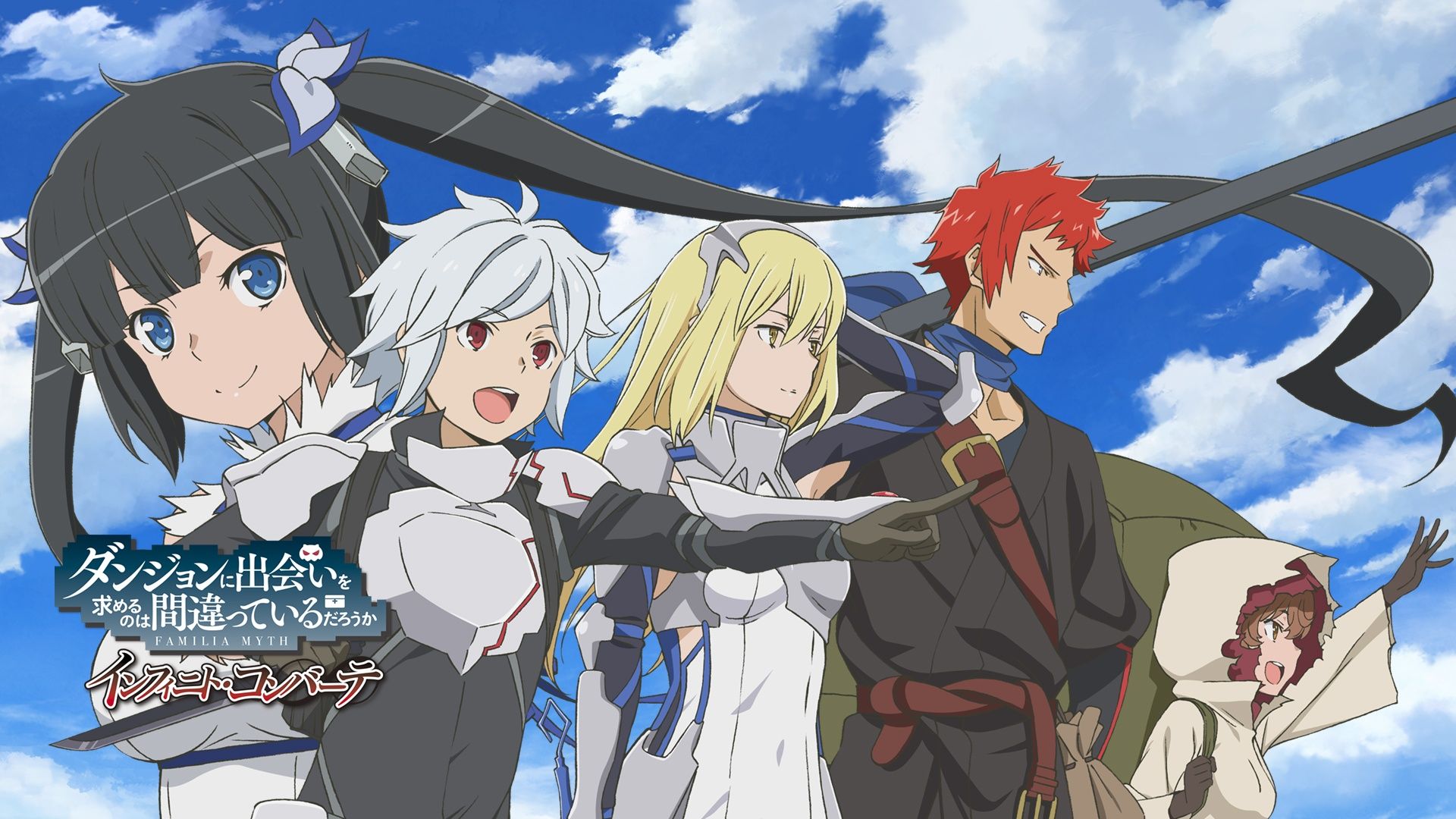
When Fujino Omori first unleashed Is It Wrong to Try to Pick Up Girls in a Dungeon? upon the light novel sphere over a decade ago, detractors quickly dismissed it under the umbrella of generic fantasy wish-fulfillment. That label has long since crumbled. Over the course of five blistering seasons, DanMachi has methodically reconstructed the heroic mythos, dragging its protagonist through visceral gauntlets that border on psychological horror and grand classical tragedy. Yet, nothing in the franchise’s storied catalog quite prepares the fandom for the seismic event looming on the horizon: the absolute crescendo of the Freya Familia arc, crowned by the titanic Great Faction War Game.
As discussions around the production and pacing of DanMachi Season 6 reach a fever pitch, it is clear we are standing on the precipice of the series’ most narrative-defining chapter. This is not merely another seasonal tournament arc; it is an existential crucible that systematically dismantles the geopolitical and emotional bedrock of the Labyrinth City of Orario. At the center of this storm lies an obsessive goddess, an enchanted populace, and an impossible war fought not for land or prestige, but for the autonomous soul of a single boy.
The Architecture of Obsession: Freya’s Divine Gaslighting
To understand the immense stakes facing Bell Cranel, one must first dissect the chilling brilliance of Omori’s subversion of romantic desire. Freya’s fixation on Bell—nurtured from the shadows since the series’ opening moments—sheds its playful, voyeuristic veneer to reveal an all-consuming divine tyranny. The unraveling of her dual identity as Syr Flova strips away any lingering romantic idealism, exposing a goddess who equates possession with salvation.
The prelude to the War Game serves as arguably the most psychological sequence in modern fantasy anime. By unleashing an absolute, city-wide Charm, Freya rewrites the collective memory of Orario. In this manufactured reality, Bell Cranel has always been a loyal, treasured pet of the Freya Familia, while the Hestia Familia is effectively erased from living memory. For Bell, the ordeal is not simply physical torture; it is an assault on his sanity. Wandering the cobblestone avenues of Orario only to be shunned or looked at like a madman by comrades like Eina, Lili, and Welf is a masterclass in cosmic alienation.
Liaris Freese as an Existential Anchor
What keeps Bell from fully shattering under this divine psychological siege is the narrative cornerstone of his character: the Liaris Freese skill. Manifested through his unyielding, pure devotion to Ais Wallenstein, the skill grants him total immunity to mental tampering. In an ironic stroke of poetic justice, the very trait born of Bell’s love for Ais becomes the metaphysical wedge that fractures Freya’s omnipotent domain. Freya demands Bell’s love, yet Bell’s soul remains entirely untouchable, proving that in Omori’s world, mortal will can indeed defy divine absolute decree.
The Gathering of the Outcasts: Structuring the Faction War Game
Once the illusion inevitably shatters—punctured by the sacrifice of Hedin Selland’s subversive chess moves, the unyielding loyalty of Bell’s true allies, and Hestia’s purifying flame—the conflict pivots from psychological thriller to an all-out military disaster movie. The resultant decree is unprecedented: a Faction War Game pitting the monolithic Freya Familia against the Hestia Familia and every rogue ally brave or foolish enough to answer their banner.
The scale of this confrontation dwarfs Season 2’s skirmish against the Apollo Familia by several orders of magnitude. The Freya Familia is not just an elite outfit; they are Orario’s ultimate military deterrent. Standing across the battlefield is a roster of living calamities:
Ottar the ‘King’: A Level 7 Beastman juggernaut whose sheer presence bends the rules of engagement.
The Gulliver Brothers: A four-man hivemind of tactical slaughter capable of overpowering Level 6 combatants through seamless synchronization.
Hogni Ragnar and Hedin Selland: Twin pillars of dark melee artistry and high-tier elven tactical artillery.
Allen Fromel: The swiftest spearman in the world, whose supersonic velocity turns battle lines into meat grinders.
For Bell and Hestia, survival requires unprecedented geopolitical diplomacy. Because the rules prohibit the direct involvement of the Loki Familia due to city-wide defense treaties, the Hestia Alliance transforms into an inspiring coalition of underdogs and shattered remnants: the Miach and Takemikazuchi Familias, Hephaistos’s master smiths, and key wildcards like Hermes Familia’s shadowy operatives.
Ryuu Lion’s Apotheosis: The Dual-Familia Miracle
No discussion of this arc’s kinetic power is complete without addressing the meteoric arc of Ryuu Lion. Coming off the traumatic depths of the 37th Floor in the previous season, Ryuu’s character arc reaches an emotional and power-scaling zenith during this conflict. Her transformation from an emotionally scarred, guilt-ridden fugitive to an anointed Level 6 powerhouse is one of the most earned pay-offs in modern fantasy writing.
The thematic weight of Ryuu receiving Astraea’s blessing while concurrently joining Hestia’s ranks rewrites the bureaucratic rigidity of divine status. When Ryuu steps onto the battlefield alongside Bell, wielding Luminous Wind with the force of an avenging Valkyrie, she isn’t merely an offensive counterweight to the Freya elites; she represents the living vindication of those Orario cast aside. Her dynamic with Bell shifts from weary mentor and traumatized survivor to genuine equal, offering a breathtaking combat spectacle that directly matches the physical prowess of Freya’s legendary vanguards.
Production Realities: Can J.C. Staff Realize Omori’s Grand Vision?
The looming visual execution of this arc inevitably raises critical questions regarding J.C. Staff’s production pipeline. While the studio faced intense scrutiny during earlier seasons for compressed pacing and inconsistent compositing, their work across Season 4 silenced the fiercest critics. The depiction of the Deep Floors possessed a brutal, visceral weight, underpinned by director Hideki Tachibana’s newfound grit and Keiji Inai’s peerless, opera-infused orchestral score.
Season 6, however, demands an even higher ceiling. The Faction War Game is fundamentally a multi-theater battle of attrition. It demands sustained high-frame-rate melee choreography, complex spatial logistics, and explosive magical pyrotechnics that rival industry benchmarks like Fate/stay night: Heaven’s Feel or Jujutsu Kaisen. Balancing the sheer volume of combat—ranging from the multi-man assault to pierce Ottar’s adamantine guard to Bell’s blinding, full-charge Argo Vesta—requires a level of resource allocation that J.C. Staff rarely dedicates to television productions. If the studio leans heavily into the kinetic, fluid combat sensibilities displayed in recent climaxes, this could cement DanMachi’s status among anime’s elite tier of battle-shonen/fantasy crossovers.
Redefining the Mythos: From Rabbit to Legend
When the dust settles over the torn earth of the battlefield, the fundamental dynamics of DanMachi will never be the same. This climax is not merely about surviving a belligerent goddess; it is the formal deconstruction of Orario’s old guard. For five seasons, the status quo of the city relied upon the dual hegemony of Freya and Loki, looming like immortal titans over the upstarts below. By challenging and systematically overcoming Freya’s sovereign domain, Bell Cranel fundamentally breaks the wheel.
More importantly, it forces Bell to redefine what it means to be a “Hero.” As Fujino Omori continually reminds us, a true hero in the world of DanMachi does not exist merely to slay mindless monsters; they exist to rescue those who have fallen beyond the reach of grace—even if the person who needs saving is an omnipotent goddess blinded by her own tragic isolation. Bell’s journey is not completed through the annihilation of Freya, but through the profound, unyielding rejection of her transactional view of love, replacing it with unconditional mortal compassion.
As we march closer to the official broadcast and adaptation of this monumental collision, one fact remains undeniably clear: DanMachi is no longer playing in the shallow end of the dungeon. It has morphed into a sprawling, tragic, and awe-inspiring epic about identity, free will, and the terrifying price of devotion. Prepare your hearts, adventurers; the battle for Orario’s soul is about to begin.
What are your predictions for the Faction War Game? Do you believe J.C. Staff can deliver on the monumental scale of Volumes 17 and 18, or will the pacing suffer under television constraints? Drop your theories in the comments below, and keep your notifications locked to Wibux.com for all your frontline anime analysis!