


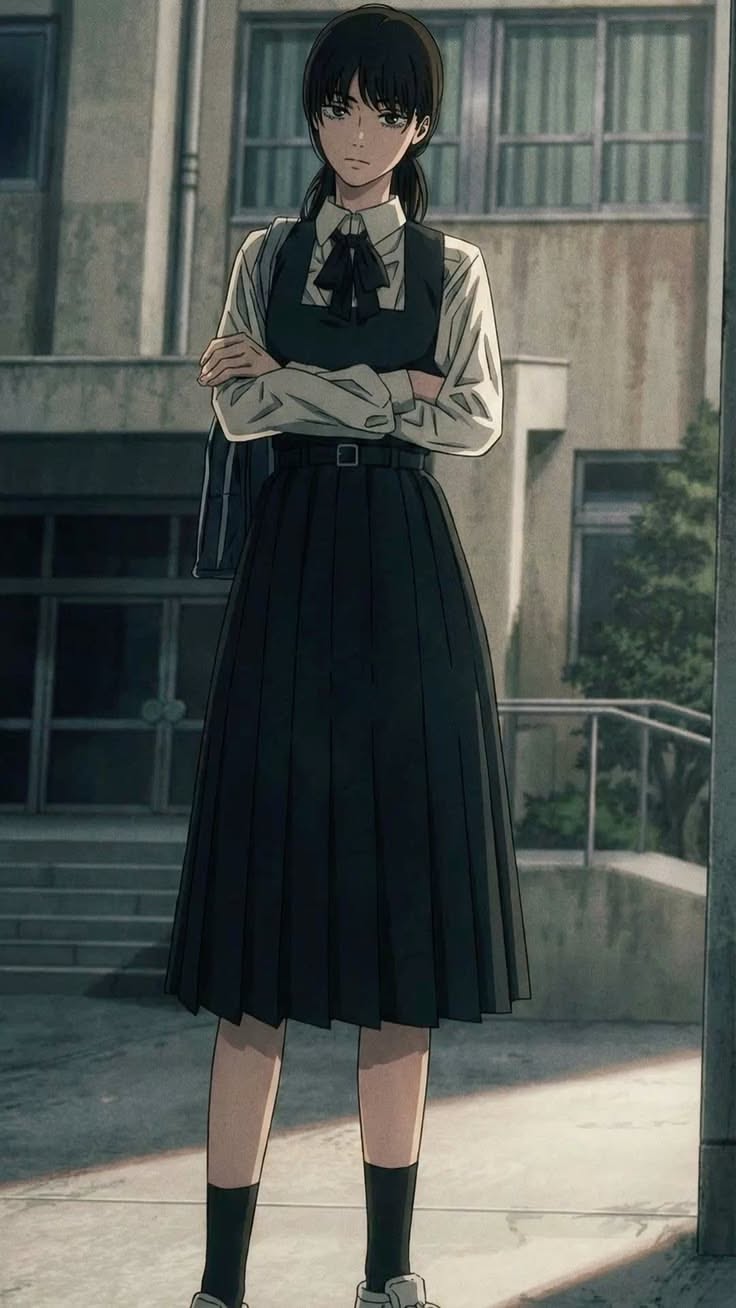
Tatsuki Fujimoto does not create sequels; he commits cinematic arson against his own foundations. When the final chapter of Chainsaw Man’s Public Safety Arc dropped in late 2020, it read like a scorched-earth finale. Denji had consumed his tormentor, inherited an orphaned incarnation of the Control Devil, and stepped into the mythic role of Tokyo’s neighborhood chainsaw-wielding vigilante. Yet when Part 2—the Academy Saga—ignited in serialization, Fujimoto pulled off one of the most audacious bait-and-switches in modern shonen history. He benched his titular superstar and handed the narrative engine to Asa Mitaka, an agonizingly relatable, misanthropic high school girl who quickly forms an unholy psychic co-tenancy with Yoru, the War Devil.
As the anime adaptation machine barrels forward—anchored by MAPPA’s upcoming cinematic treatment of the Reze Arc—the looming specter of a Part 2 anime adaptation presents a fascinating creative dilemma. Transforming the Academy Saga into motion is not merely a matter of animating heavier blood spatters; it requires translating an entirely different visual and psychological dialect. Fujimoto’s second act shifts from hyper-kinetic urban splatterpunk into a slow-boil psychological dread, redefining chaos through the prism of adolescent alienation.
From Splatterpunk Odyssey to Twisted High School Noir
The genius of Chainsaw Man Part 1 lay in its relentless velocity. It operated like a grindhouse exploitation flick curated by an arthouse auteur, hurtling from zombie massacres to interdimensional hotel traps and cosmic astronaut horrors without catching its breath. Part 2 intentionally slams on the brakes. Fujimoto replaces the bureaucratic brutality of Public Safety with the suffocating, mundane purgatory of suburban Japanese high schools, channeling the indie sensibilities of his celebrated one-shots Look Back and Goodbye, Eri.
Deconstructing the Shonen Battle Engine
In the Academy Saga, social anxiety is treated with the same apocalyptic dread as a primal devil attack. High school is not portrayed as the nostalgic, warm training ground popularized by My Hero Academia or Jujutsu Kaisen; it is rendered as an uncaring social meat grinder. Bullies are casual, isolation is pervasive, and the threat of death lurks behind everyday interactions. When violence erupts, it is rarely triumphant—it is messy, humiliating, and emotionally scarring. MAPPA will need to recalibrate its pacing, trading the breakneck rhythm of Part 1 for pregnant pauses, lingering environmental framing, and the quiet horror of teenage loneliness.
Asa Mitaka and Yoru: The Anatomy of Symbiotic Isolation
At the center of this thematic overhaul is Asa Mitaka, arguably the most nuanced protagonist Fujimoto has ever penned. Where Denji’s neuroses were born from profound physical deprivation—starvation, homelessness, extreme trauma—Asa suffers from the paralyzing afflictions of modern interiority: overthinking, self-righteous clumsiness, social paralysis, and acute self-loathing. She is painfully uncool, profoundly defensive, and desperately craving connection while actively pushing away anyone who extends a hand.
Guilt as the Ultimate Weapon
The introduction of Yoru, the War Devil, elevates Asa from a tragic teen archetype into a brilliant subversion of the Jekyll-and-Hyde dynamic. Stripped of her historical grandeur by Chainsaw Man’s stomach, Yoru is a diminished, impulsive force of nature who commandeers Asa’s brain, manifesting physically through flickering facial scars and unhinged vocal shifts. Yet their symbiotic curse carries a brilliantly perverse metaphysical mechanic: the strength of War’s weaponization depends entirely on the guilt Asa feels over destroying the object or person she claims.
This is where Fujimoto’s thematic mastery shines. War is traditionally fueled by malice, hatred, and imperial conquest. In Part 2, War’s most lethal power emerges from regret. To forge an unstoppable blade, Asa must forge genuine emotional bonds only to sacrifice them on the altar of survival. Every weapon crafted—from the iconic Uniform Sword to the tragic Room 606 Sword—is a psychological scar rendered physical. For the anime adaptation, visual artists will have to delicately capture this micro-expression acting, balancing Asa’s mortifying social awkwardness with Yoru’s razor-sharp, predatory shifts in body language.
Denji’s Reinvention: The Exhausted Hero in the Background
When Denji finally re-enters the frame in Part 2, he is virtually unrecognizable from the feral, chainsaw-revving madman who captivated viewers in Season 1. Stripped of Makima’s conditioning and left to fend for himself in an indifferent metropolis, Denji has transformed into an exhausted, working-class pseudo-parent. He lives in a squalid apartment, meticulously collecting discarded cigarette butts to melt down and resell, solely to fund the high school education of Nayuta, the reincarnated Control Devil.
Parenting Nayuta and the Devaluation of Glory
The tragedy of Denji in Part 2 is defined by a singular, heartbreaking paradox: nobody loves Denji; they only love Chainsaw Man. The entire city is plastered with his merchandise, cults worship his silhouette, and high schoolers mimic his poses, yet Denji the human boy remains broke, touch-starved, and thoroughly invisible. His desperate attempts to expose his secret identity are treated by his peers as the pathetic delusions of a schoolyard loser. When MAPPA tackles these sequences, they must resist the urge to romanticize Denji’s heroism; his heroism is now an unpaid, exhausting night job that actively prevents him from attaining the quiet, simple happiness he starved for in his childhood.
Translating Psychological Claustrophobia: MAPPA’s Directorial Hurdle
The first season of Chainsaw Man, spearheaded by director Ryu Nakayama, divided purists by adopting an uncompromising, photorealistic, prestige-cinema sheen rather than the erratic, pop-punk freneticism of the manga. While that cinematic methodology worked wonders for the quiet melancholia of Aki Hayakawa’s morning routine, Part 2 demands a completely distinct visual philosophy.
Moving Beyond Cinematic Polish to Awkward Intimacy
The Academy Saga thrives on cringe—the visceral, stomach-churning discomfort of real human failure. From Asa’s disastrous three-hour educational monologues during aquarium dates to surreal nightmares featuring oceans of disembodied corpses, Part 2 reads less like a high-budget Marvel flick and more like a collaboration between David Lynch and Inio Asano. MAPPA cannot simply rely on gorgeous compositing and dynamic 3D camera sweeps. To successfully translate the terrifying entrance of the Falling Devil or the claustrophobic dread of the Eternity Devil’s encore, the anime must embrace asymmetric framing, uncanny pacing, and jarring sound design that puts viewers directly inside Asa’s fracturing psyche.
The Post-Makima Paradigm: Why Part 2 Matters
When serialization started, portions of the global fandom initially bristled at Denji’s relegation to secondary status. Fast forward several dozen chapters, and Asa Mitaka has emerged as a generational anime icon before her animated debut has even been officially dated. She reflects a contemporary wave of storytelling where heroism is messy, survival is undignified, and moral victories are deeply ambiguous.
By shifting the battleground from Tokyo’s blood-soaked alleys to the fragile architecture of the human ego, Tatsuki Fujimoto has ensured that Chainsaw Man avoids the repetitive stagnation plaguing traditional long-running shonen. Part 2 is not just an escalation of power levels—it is an interrogation of loneliness, exploitation, and the tragic consequences of longing for love in a world built on fear.
When MAPPA finally unleashes Asa, Yoru, and a battle-worn Denji onto the small screen, it won’t just be a celebration of top-tier animation. It will be a testament to Fujimoto’s uncompromising commitment to breaking his own toys, forcing audiences to find beauty inside the wreckage. Are you ready to see Asa Mitaka turn her deepest regrets into lethal steel, or do you think Part 2’s psychological detour will alienate action purists? Drop your theories and character rankings in the comments below.



One thought on “Chainsaw Man Part 2 Anime Adaptation: How Asa Mitaka and the War Devil Redefine Tatsuki Fujimoto’s Chaos”