Every few months, like clockwork, the anime internet succumbs to a shared fever dream. A rogue Weibo leak, a suspicious domain registration, or a hyper-stylized fan animation surfaces, and the collective hive mind ignites: Is Vagabond finally getting an anime? For decades, Takehiko Inoue’s historical epic has occupied an untouchable pedestal in the seinen pantheon alongside Kentaro Miura’s Berserk and Makoto Yukimura’s Vinland Saga. Yet, while Thorfinn found redemption under Studio WIT and MAPPA, and Guts endured both golden-age cinematic glory and catastrophic CGI misfires, Miyamoto Musashi has remained conspicuously absent from television screens. The latest round of rumors alleging a high-budget, prestige adaptation or multimedia remaster has once again stoked the fires of fandom anticipation—but it has also rekindled an uncomfortable, foundational truth within anime critique. Vagabond is not just difficult to adapt; it may be the ultimate unadaptable manga in the history of the medium.
The Alchemy of Ink: Why Inoue’s Brushwork Defies Digital Interpolation
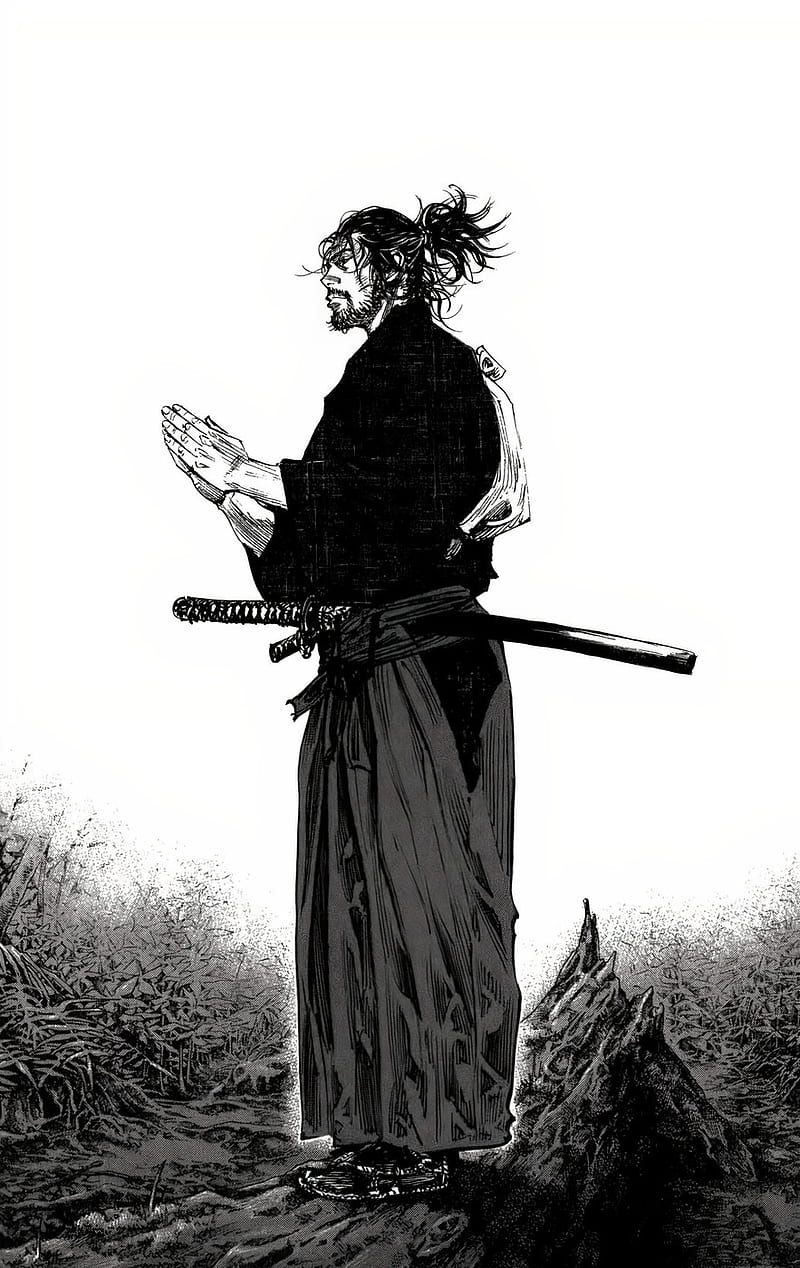
To understand why an anime adaptation of Vagabond induces cold sweats in even the most seasoned industry animators, one must look at how the manga was physically created. Takehiko Inoue began serializing his fictionalized retelling of Eiji Yoshikawa’s novel Musashi in 1998 using standard G-pens and technical tools. However, as Musashi’s spirit evolved, so did Inoue’s methodology. The author famously abandoned traditional dip pens in favor of calligraphy brushes, ink washes (sumi-e), and raw, intuitive strokes that mirrored the chaotic, fluid violence of 17th-century Japan.
The Problem of Kinetic Weight and Negative Space
Inoue’s visual mastery relies heavily on kintsugi-like spatial balance—the deliberate use of white space, rough-hewn hatching, and ink splatters that communicate velocity without speed lines. In modern 2D animation pipelines, line art must be clean, closed, and strictly vector-adjacent to allow for uniform color fills and frame-by-frame consistency. To translate Inoue’s textural, wet-brush illustrations into 24 frames per second requires an astronomical budget that almost no production committee can sustain.
The alternative, as the medium learned to its horror with 2016’s Berserk, is cell-shaded 3DCG. While modern CGI has evolved dramatically through studios like Orange (Land of the Lustrous, Trigun Stampede) and Inoue’s own self-directed masterpiece The First Slam Dunk, 3D modeling fundamentally operates on polygons and calculated lighting. It cannot authentically reproduce the accidental poetry of a dried brush catching the grain of pulp paper during Musashi’s fatal duel with Inshun. The medium of animation thrives on motion, but Vagabond derives its devastating power from the frozen threshold between life and death.
Beyond the Katana: Deconstructing the Myth of Invincibility
Casual observers often mistake Vagabond for a standard samurai battle manga punctuated by legendary sword duels. Producers seeking the next Demon Slayer or Jujutsu Kaisen would find themselves sorely disappointed by the glacial, introspective tempo of Musashi’s true arc. Inoue’s narrative is an explicit anti-power fantasy—a methodical, existential deconstruction of toxic masculine ambition and martial vanity.
The Psychological Trajectory: From Beast to Bodhisattva
When the narrative begins, the protagonist is not the revered swordsman of Japanese lore, but Shinmen Takezō: a feral, traumatized youth who views violence as the only valid proof of his existence. Inoue tracks Takezō’s metamorphosis into Miyamoto Musashi not by how cleanly he cleaves his foes, but by how acutely he understands his own insignificance. The psychological core of the series rests on Musashi’s painful realization that being “Invincible Under the Sun” is a hollow optical illusion—a mirage that only leads to an infinite spiral of death.
This internal philosophy peaks in the legendary Yoshioka Clan arc, where Musashi single-handedly butchers 70 men in a forest of blood and exhaustion. Far from glorifying the feat, Inoue frames the slaughter as an agonizing, clumsy, and morally bankrupt massacre that leaves Musashi physically crippled and spiritually broken. This leads directly into the celebrated, quiet farming arc in the village of Kōsuke. Adapting an arc where the legendary protagonist spends dozens of chapters wordlessly plowing mud, mourning dead crops, and understanding that life cannot be conquered with steel would test the narrative patience of any contemporary streaming platform.
The Creative Ghosts: Studio Pedigree and the Danger of Hubris
Whenever rumors circulate, fans immediately begin drafting wish-lists of studios: MAPPA, WIT, Ufotable, or Production I.G. Yet, examining these powerhouses reveals the systemic incompatibilities between commercial anime production and Inoue’s bespoke storytelling.
MAPPA’s hyper-kinetic compositing and aggressive time crunches would inevitably flatten the atmospheric dread that makes Musashi’s stillness so terrifying. Ufotable’s signature digital polish and visual-effects-heavy compositing—gorgeous though it is in Fate/stay night—would look distractingly synthetic against feudal dirt and blood. Studio WIT came closest with the gritty, grounded realism of Vinland Saga Season 1, but even their technical triumphs relied heavily on the kinetic, European-style momentum of Makoto Yukimura’s early chapters, not the Zen-Buddhist contemplative quietude of Inoue’s later volumes.
Furthermore, one cannot ignore how Inoue handled Sasaki Kojirō. In an audacious deviation from historical canon and Yoshikawa’s novel, Inoue rendered Kojirō completely deaf and mute. Kojirō’s chapters are masterpieces of pure, unfiltered visual storytelling—entire sequences pass without a single word of dialogue, relying entirely on micro-expressions, wind blowing through reeds, and the sheer joy of swordsmanship. Translating this visual poetry to the screen requires an auteur-level director with the restraint of Masaki Kobayashi or Akira Kurosawa, rather than the loud, dopamine-driven rhythm of modern television anime.
The Sacred Incompletion: Confronting the Unfinished Masterpiece
Perhaps the most insurmountable hurdle facing any prospective production company is the unresolved state of the source material. Vagabond has been frozen on Chapter 327 since 2015. Takehiko Inoue stepped away from the serialization citing profound emotional and spiritual fatigue, openly admitting that inhabiting Musashi’s psyche had taken a debilitating toll on his mental health.
In 2008, Inoue took the unprecedented step of crafting The Last Manga Exhibition, an ephemeral, museum-exclusive installation designed to serve as a thematic, spiritual epilogue to Musashi’s life. For Inoue, the physical act of painting Musashi on massive scrolls was the true culmination of the work. If an anime were to be greenlit today, it would inevitably collide with the ultimate adaptation paradox: does the studio fabricate an original conclusion to the greatest historical manga ever written, or do they intentionally lead audiences toward a narrative precipice that may never be bridged?
Verdict: Some Legends Belong on the Page
The recurring rumors of a Vagabond anime remaster or full-scale episodic adaptation are fundamentally born of love. Fans wish to see their favorite panels elevated by sound design, orchestral compositions, and fluid movement. But true reverence for a work of art means understanding the unique strengths of its medium. Vagabond was conceived as an intimate, physical communion between an artist’s brush and paper—a testament to human flaw, deliberate pacing, and philosophical silence that digital post-processing and standardized frame rates can only dilute.
Until a production entity emerges that is willing to sacrifice commercial efficiency for uncompromising artisanal animation, Musashi’s journey remains best experienced in the tactile quiet of the printed page. Sometimes, the sword is most powerful when left completely sheathed.
What do you think of the persistent Vagabond anime rumors? Would you trust a visionary director to take on Takehiko Inoue’s masterwork, or should the ink on Musashi’s canvas remain undisturbed? Sound off in the comments below!