


The Battle Over Artificial Intelligence Is Heating Up
If you had told anyone in 2025 that by September 2026 a major Japanese game developer would be fighting one of the biggest controversies in gaming history over artificial intelligence, they probably would have laughed. Well, Level-5 did it, and CEO Akihiro Hino stands firm despite global fan outrage that has spread across every corner of the gaming world.
This isn’t just another corporate PR disaster. This is about beloved franchises — games people grew up with, poured hundreds of hours into, and defended passionately. And now, fans are wondering if everything they loved was always going to be replaced by machines.
What Exactly Happened at Level-5?
During their recent showcase, Level-5 announced two highly anticipated titles: Professor Layton and the New World of Steam and a remake of the beloved Yo-Kai Watch 2. On the surface, these are exciting announcements for fans who have been waiting years for new entries in both franchises. But here lies the controversy — according to the company, both game previews were created using generative AI.
This wasn’t just about using AI for some background textures or placeholder art. The key marketing materials themselves, the very previews showcased to generate excitement among millions of fans worldwide, reportedly leveraged generative AI tools to produce visual content.
AmericanYoshi, a prominent fan analyst, pointed out concerning discrepancies between original game backgrounds and newly released promotional materials, noting strange details and inconsistencies that appeared suspiciously characteristic of AI-generated imagery. The comparison went viral across social media within hours.
A Global Backlash Erupts
The response was immediate and devastatingly negative. What makes this particularly interesting is the scope — this isn’t just American or European fans complaining. Japanese gamers, the people who built these franchises from the ground up, have been equally vocal in their criticism.
European fans raised similar concerns about ethical questions surrounding generative AI development pipelines and whether companies like Level-5 should prioritize speed over artistic integrity when dealing with beloved intellectual property.
Meanwhile, Japanese fans articulated their frustration more pragmatically. One prominent user argued that because generative AI systems train on data scraped from established creative works without consent, individual artists and smaller studios working manually are placed at a competitive disadvantage against corporations willing to automate production pipelines entirely.
Another user criticized Hino’s response to criticism directly, scoffing that the idea that depending on AI-generated results frees up time to “focus on the essence of creativity” sounds hollow when those results look so heavily based on other people’s work.
Level-5 Response? Not Enough.
CEO Akihiro Hino attempted damage control by urging fans that not all content inside Level-5 games is generated with AI, suggesting instead that the technology serves primarily as an efficiency tool to compress development timelines from five years down to two years.
This explanation didn’t sit well with many observers. DECAPOLICE — a futuristic detective RPG previously slated for 2026 release — has now been delayed into 2027, casting doubt on the claim that AI truly accelerates development.
The upcoming Yo-Kai Watch sequel titled Holy Horror Mansion has also faced another delay, moving its launch further into 2027 after being first announced in 2024. Every additional postponement undermines the CEO’s narrative about AI-driven efficiency gains.
Harvest Moon: Echoes of Teradea Enters the Fray
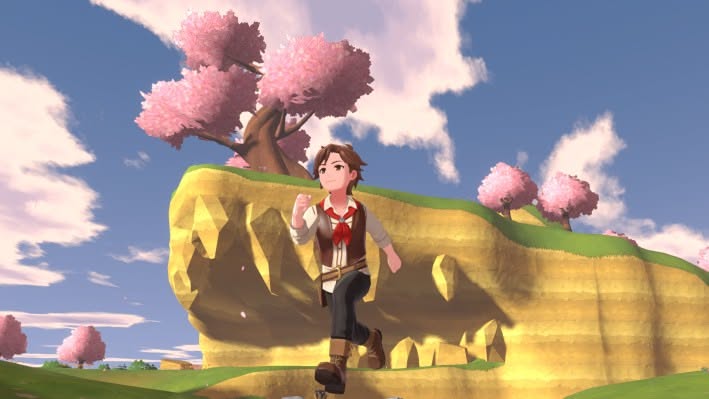
In what feels almost like a contrast to Level-5’s controversial approach, Natsume continues developing Harvest Moon: Echoes of Teradea with a very different philosophy. Released October 15, this farm simulation title takes players through four unique themed villages — rural town, tropical island, snowy tundra, and walkable city — each requiring assistance from local Guardians.
Animal husbandry returns as a core mechanic. You can tame everything from traditional farm animals like cows, sheep, and horses to exotic creatures including camels and reindeer, each possessing unique abilities suited to specific climates. Customization options extend beyond simple appearance choices, allowing complete farmhouse layout modifications and crafting systems for home improvement.
With planned DLC roadmaps stretching an entire year post-launch, Echoes of Teradea positions itself as a comprehensive farming experience built by humans, for humans — a stark juxtaposition against Level-5’s AI-powered direction. For readers curious about other recent Harvest Moon news, our earlier coverage of FF7 Seplothor at TGS 2026 shows how much buzz Tokyo Game Show generates for game franchises right now.
The KFC Spain Meme That Broke the Internet
In a moment that perfectly encapsulates fan sentiment, KFC Spain (@KFC_ES) dropped a brilliantly crafted meme declaring: “They can try to trick us with AI-powered remakes, they can try to steal physical formats, but they won’t get away with it! Don’t stop the memes, we’re only getting started!” The tweet featured a pixelated rotisserie chicken character settling into video game sessions with friends, humorously refusing any game revealed to use AI generation.
Meanwhile, one user took advantage of that goofy deep-frying meme going around to make a video where he deep-fried Hino’s animated mascot. The meme was struck with a DMCA claim the next day. Even a picture of Level-5’s Tokyo Game Show booth was found to have been generated by AI — sure, the booth hadn’t been constructed yet, but couldn’t folks get excited by drawing up sketches of it?
What Do You Think?
This is where we need YOUR voice. Here are the questions burning across every gaming forum right now:
Is there ever a place for generative AI in game development? Or does using it for anything visible to players cross a line that shouldn’t be crossed? Can AI assist in development without compromising the soul of a beloved franchise?
Should Level-5 be held accountable? They built their reputation on creativity and imagination — CEO Hino even self-inserted himself as a Yo-Kai named “Hinoshin” boasting of his creativity. Now, fans wonder: did they abandon what made their games special?
And what about Harvest Moon fans? While Natsume is taking the human-first approach, can Echoes of Teradea stand up to competitors like Stardew Valley, Fields of Mistria, and Marvelous’ own Story of Seasons? Or is the market already saturated? If you want to explore what else is happening in the Japanese gaming scene right now, check out our piece on Mabinogi Mobile launching October 7 and the massive TGS 2026 turnout.
Drop your thoughts below. This debate is far from over, and every opinion matters. The future of game development might depend on conversations exactly like this one.