

The Hidden Cycle Oda Is Hiding in Plain Sight
One Piece has always loved its mysteries — from the blank pages of the Void Century to the laugh that echoed across Laugh Tale. But the Elbaph Arc just dropped a piece of lore that might be the single most important key to the whole story, and the fandom is only starting to connect the dots: the Harley texts on the Jewel Tree Adam reveal that the world of One Piece has not been destroyed once, but twice before. Two entire worlds. Two full resets. And if Oda is the master storyteller we all believe he is, that means we are currently living through the third iteration of a repeating cycle — and the Final War is the moment the loop finally breaks.
What the Harley Texts Actually Tell Us
During the Elbaph Arc, Eiichiro Oda introduced the Harley — an ancient set of texts carved into the massive Jewel Tree Adam — alongside a sprawling mural that seems to depict the entire history (and pre-history) of the One Piece world. According to the lore delivered through this arc, the world has been destroyed twice before the current age. Two cataclysms. Two dark ages. Two endings.
This is enormous. It reframes the entire narrative from “a single war in the Void Century” to a cycle of destruction and rebirth, stretching back far beyond the events of 800 years ago. The Void Century isn’t the beginning of the tragedy — it’s just the most recent chapter of it.
The Ancient Weapons Are the Kill Switches
So what destroyed the previous two worlds? The answer has been sitting in front of us the whole time: the Ancient Weapons.
Pluton, Poseidon, and Uranus. Three weapons of mass destruction, each tied to one of the previous eras. Fans have spent years debating which weapon will fire in the Final War, but the Harley mural suggests something far darker: each world-ending cataclysm was carried out using one of these weapons. The Ancient Weapons aren’t just superweapons — they are the universe’s own doomsday mechanisms, designed to wipe the slate clean whenever a civilization reaches a certain point of arrogance or advancement.
If that’s true, then the version we know — the one Vegapunk revealed, where the Ancient Kingdom was defeated by twenty allied nations using weapons of their own — is just the most recent death of a world. And now, with the Mother Flame revealed as a power source for what is almost certainly Uranus, the stage is set for a third.
Imu Isn’t a Villain — He’s a Survivor
This is where the theory gets spicy. The Elbaph Arc confirmed that Imu was one of the original twenty rulers who founded the World Government, and revealed that the empty throne is surrounded by nineteen planted weapons belonging to those founding families — with Alabasta’s conspicuously absent. But what if Imu’s story goes back much further than the founding of the World Government?
What if Imu is the last surviving figure from the previous destroyed world? Someone who has witnessed the cycle of destruction once already, and who now believes the only way to prevent a third apocalypse is to control it — to become the world itself, to hold every weapon, to sit alone on the empty throne as a tyrant-god. In Imu’s twisted logic, the World Government isn’t about conquering. It’s about prevention. He’s not trying to destroy the world — he’s trying to make sure he is the only one who ever can.
That would make Imu less a cartoonish villain and more a tragic, terrified survivor trying desperately to hold back a catastrophe he’s already seen once. It doesn’t excuse the horrors — the erasure of Lulusia, the centuries of oppression — but it gives his madness a tragic root.
Luffy’s Dream Is the Loop-Breaker
And here’s where it all comes together. We still don’t know Luffy’s true dream — the one he shares with Gol D. Roger, the one that made even the crew laugh in wonder during Wano. But the Harley texts and the two-world cycle give us a beautiful framework: Each cycle ends because a world becomes too unfree, too controlled, too “complete.” The previous worlds died under the weight of their own order.
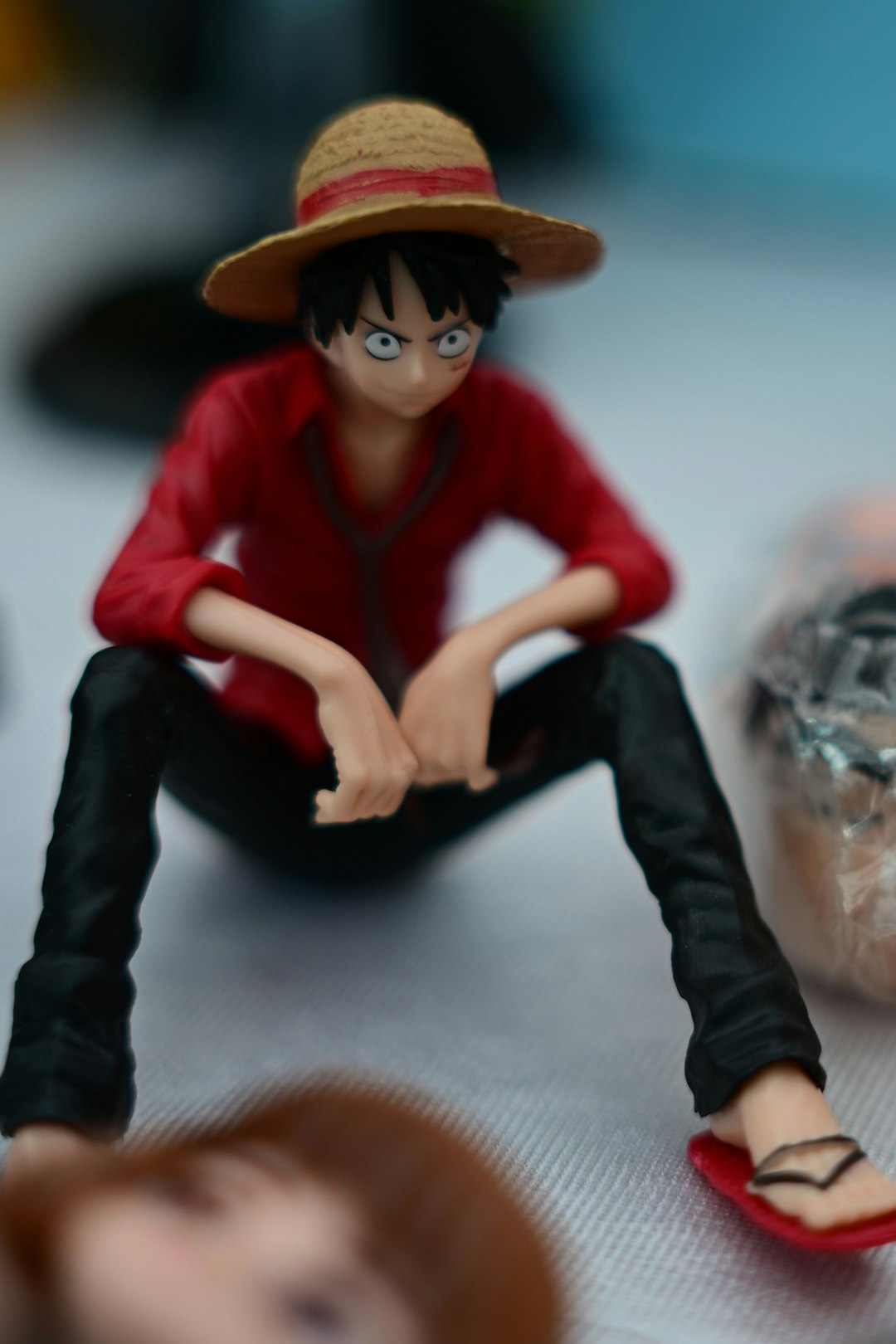
Luffy’s dream — and the One Piece treasure itself — isn’t about power. It’s about freedom. The kind of freedom that can’t be weaponized, controlled, or used to destroy a world. If the previous two worlds were ended by those who sought total control, then the third world will be saved by the one person who wants nothing but to set everyone free. Joy Boy’s prophecy isn’t about a great warrior — it’s about a boy who simply refuses to accept that worlds have to end.
Why This Changes the Finale
If this theory holds, the Final War isn’t just Luffy vs. Imu — it’s Luffy vs. an entire doomed timeline. The tragedy of the cycle means Imu might genuinely believe there’s no way out except control. And beating him won’t be enough; Luffy has to prove that a free world can survive. That’s a far more poignant, far more resonant ending than “punch the evil emperor real hard.”
It also gives real weight to the Loki and the Ancient Weapons threads explored on Elbaph, and explains why Oda has been planting Ancient Weapon hints since Chapter 1204 — the weapons are the ghost of every destruction that came before.
The Final Question
Oda has said the story is entering its final stretch, and with the God Valley film looming as a canon prequel, the pieces are lining up faster than ever. But the biggest question remains unanswered: Is Luffy destined to break the cycle — or is he unknowingly the trigger for the third and final world-ending war?
Drop your theories in the comments. Because whatever the truth is, Elbaph just handed us the biggest piece of the puzzle in 27 years — and I don’t think we’ve fully appreciated it yet. 🏴☠️


3 thoughts on “One Piece Theory: The Harley Texts Reveal the World Has Already Ended TWICE — and Luffy’s Dream Is the Only Way to Break the Loop”