The Chapter Title Said It All: “There’s Still Loki”
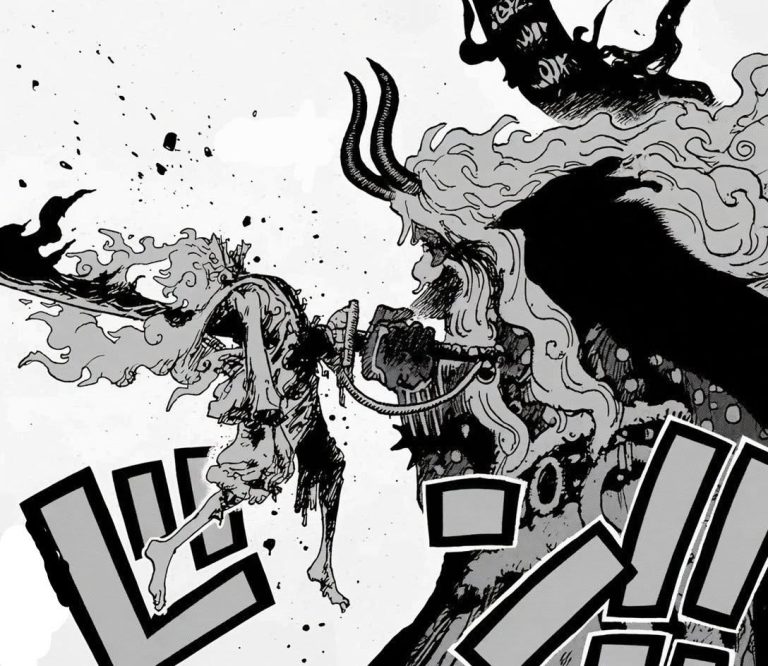
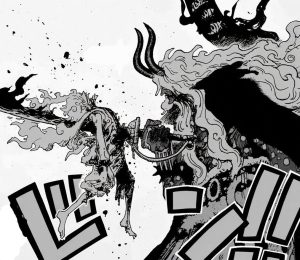
Just when Elbaf felt like it was about to collapse under Imu’s feet, One Piece Chapter 1191 dropped a title that sent the entire fandom into theory overdrive: “There’s Still Loki.” Luffy, covered in blood, crawling toward a one-armed Scopper Gaban. Hajrudin refusing to fall. And somewhere beneath it all, in the Underworld of Elbaf, the accursed prince finally stepping onto the board.
But here’s the thing that has everyone convinced Oda is playing a much longer game: the chapter’s closing beat wasn’t about Luffy at all. It was about the giant who has spent his entire life in chains, blamed for a king’s death, and whispered about as the being who could “destroy the world.” And after reading what happened next — including the brutal combined assault from Luffy, Loki, and Hajrudin that may have already sealed their fate — we’re more convinced than ever: Loki was never chained because he’s a monster. He was chained because he’s destined to kill a god.
If you’ve been following our coverage, you know the last two chapters changed everything. Gaban lost an arm shielding Luffy — a clash we flagged as one that could rewrite the entire Final Saga — and Imu unveiled a demonic four-horned transformation, and the fandom watched a self-proclaimed god walk into the land of giants like he owned it. (He kind of does, historically speaking — but more on that later.)
The Ragnarök Blueprint Hiding in Plain Sight
Let’s get the obvious out of the way: Elbaf is Norse mythology with the serial numbers barely filed off. The tree. The warriors. The afterlife-adjacent Underworld where dead warriors linger. Oda hasn’t been subtle about it for nearly thirty years.
So why are fans suddenly connecting every dot? Because Norse mythology contains a very specific story about a very specific figure:
- Loki, in myth, is bound in chains by the gods who fear him.
- His binding comes with a prophecy — one day he breaks free, and when he does, he fights against the gods at Ragnarök.
- Ragnarök isn’t just a battle. It’s the death of the old gods and the rebirth of the world.
Now look at One Piece Chapter 1191 through that lens. A prince named Loki. Chained since childhood. Feared because of what he might become. And now, at the endgame of the entire saga, the “gods” — the World Government, the Five Elders, and Imu himself — have arrived at his doorstep. If Oda is following the mythological playbook even halfway, the conclusion writes itself: the chains were never punishment. They were containment. And containment always fails at Ragnarök.
The Detail That Broke the Fandom: Harald’s Final Order
The flashback chapters gave us the gut-punch that recontextualizes everything: King Harald wasn’t killed by Loki in a act of betrayal — by every indication we’ve been given, Harald ordered his own son to kill him, to spare Elbaf from the World Government’s wrath. Loki has been carrying the corpse of his father’s reputation ever since, wearing the mask of the villain so a kingdom could survive.
That’s not the story of a monster. That’s the origin story of a sacrifice play waiting for its final act. And if Harald knew — truly knew — what his younger son carried inside him, then those chains around Loki aren’t just seastone and steel. They’re a promise waiting to be kept.
Why the World Government Wanted This Prince Dead
Zoom out and ask the question the manga keeps teasing: why would the ruler of the world care this much about one chained giant on one semi-isolated island?
The answer fans keep circling back to is power. Loki has openly boasted about having the strength to destroy the world, and the flashbacks strongly implied there is something inherent to him — something Harald protected, and something the World Government considered dangerous enough to demand blood over. The most popular theory making the rounds right now connects Loki to the legendary fruit guarded by Elbaf’s royal line, with some fans going further and tying it to the Sun God imagery woven through the Harley text and the mural.
We’ve already covered how Imu’s own demonic form appears to have validated an ancient Nika prophecy — almost as if the King of the World is speedrunning a script written a thousand years ago. If that mural truly depicts a final war between the Sun God and Imu, then every piece on this board matters. And right now, the piece nobody priced in is waking up underground.
What Chapter 1191 Actually Confirmed
Strip away the hype and look at what the chapter put on the table:
- Gaban, one arm short, still standing between Imu and Luffy — and notably calling Imu a “god” not out of worship, but recognition.
- Hajrudin refusing to kneel, embodying the new generation of giants even while outmatched.
- Loki moving, finally — which means whatever restraint held him back is gone.
- Imu escalating, burning power at a rate that suggests even the immortal King of the World feels the clock ticking.
The Theory: Loki Is the Counterweight Imu Can’t Afford
Here’s our full read of where this is heading. The combined assault from Luffy, Loki, and Hajrudin — impressive as it is — probably doesn’t finish Imu here. The power gap is still a canyon, and Oda rarely resolves the biggest fight of an arc before the emotional pieces are all in position. But that assault accomplishes something else: it buys time, it bleeds Imu’s focus, and it forces the King of the World to take the giants seriously.
Then comes the real play. Every version of the Ragnarök parallel points the same direction: Loki breaks his chains fully — not to save Luffy, but to settle a debt. His father ordered his death to protect Elbaf. His brother refuses to abandon him. His kingdom burns above him. And the being responsible styled itself a god. In Norse myth, Loki’s freedom signals the beginning of the gods’ end. In One Piece? We think Loki’s liberation marks the moment Imu stops being the hunter and becomes the prey.
Does that mean Loki lands the killing blow? Not necessarily — this is still Luffy’s story, and Joy Boy’s inheritance has to matter. But there’s a version of this arc where Loki does the one thing no one else can: makes Imu bleed first. Shatters the aura. Proves mortality. And in a war against an untouchable god, proving mortality might be worth more than any Gear Fifth punch. Ask yourself why Oda had Gaban — a man who was presumably at God Valley — call Imu a god with that particular tone. Recognition implies history. History implies weakness known.
The Dark Version: Loki Dies Free
We’d be lying if we said the fandom’s bleakest theory doesn’t keep us up at night. One Piece has a pattern: the ones who carry a kingdom’s sin die redeeming it. If Oda wants maximum devastation, Loki breaks free, turns the tide, saves his brother and the Straw Hats — and falls, finally free, finally loved by the people who chained him. It would rhyme brutally with Harald’s sacrifice. Two generations, one kingdom, both princes paying the price so giants could stay free.
We’re betting against it — but only slightly.
So, Is Elbaf About to Have Its Own Ragnarök?
All the ingredients are on the table: a bound trickster prince, a self-declared god descending on the land of giants, a prophecy etched into ancient walls, and a protagonist who happens to be the living embodiment of the Sun God’s will. Either Oda is trolling us with the mythology parallels, or Elbaf is about to host the opening act of the actual Final War.
One thing is certain: the chapter title wasn’t a warning for Imu. It was a promise.
What do you think — is Loki destined to be the one who makes Imu mortal, or is he walking straight into a hero’s death? Drop your theory in the comments below.