


If your social media feed is anything to go by, the world has officially crowned its next viral obsession. Move over, Labubu. There is a tiny, impossibly cute robot from Tokyo that just raised over $500,000 on Kickstarter, and it is about to become the biggest accessory trend of 2026.
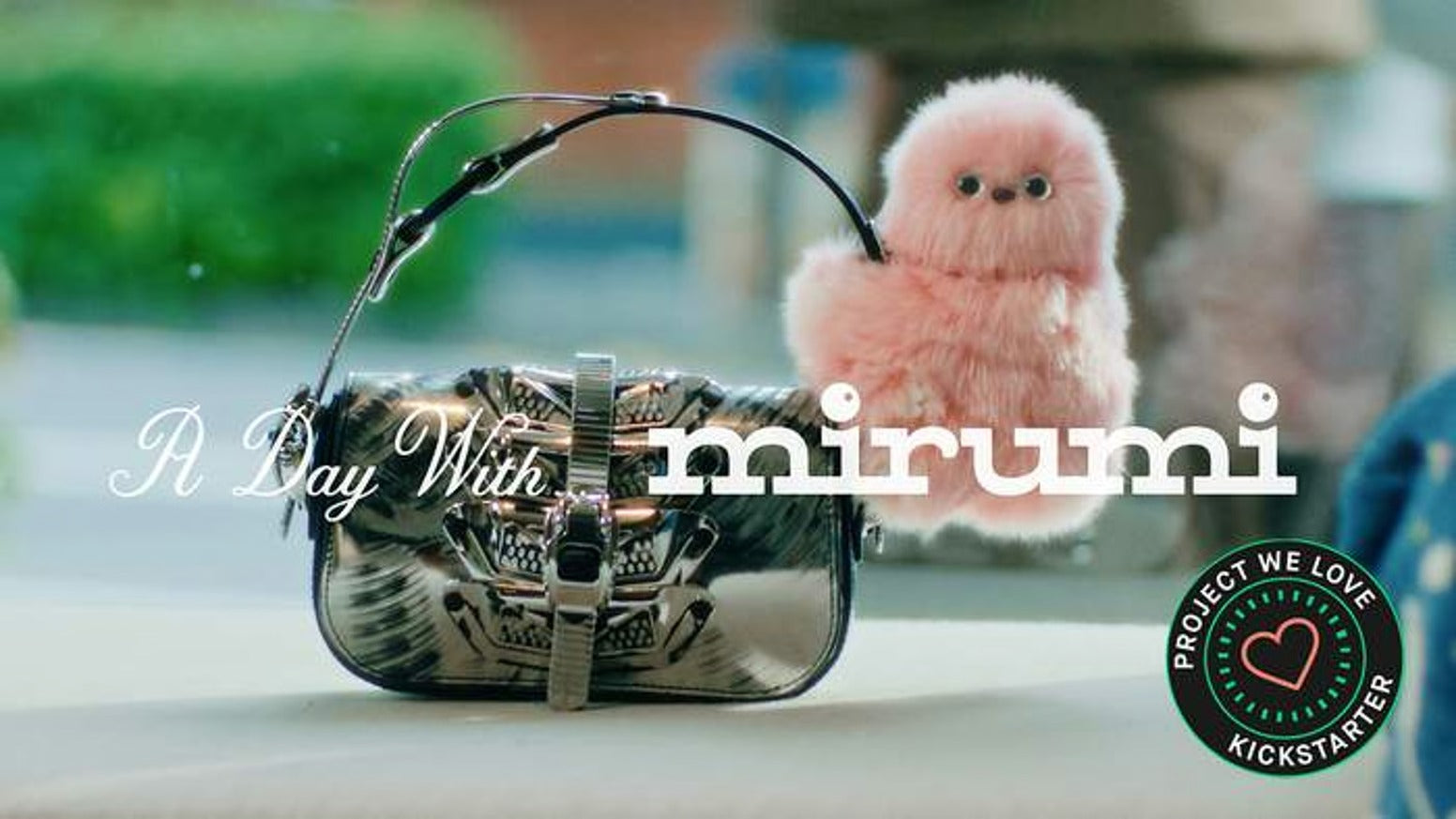
Meet Mirumi. Part plush toy, part artificial intelligence, and part fashion statement, this little creature from robotics startup Yukai Engineering is being called the Labubu of 2026. But calling it just a plush charm misses the point entirely. Mirumi is something the world has never really seen before: a wearable robot that actually looks back at you.
What Exactly Is Mirumi?
At first glance, Mirumi looks like a premium bag charm. Standing at 5.5 inches tall and weighing just 155 grams, it comes in three minimalist colors pink, gray, and ivory and is crafted from incredibly soft material produced by Japan Okada Textile. Its flexible plush arms wrap securely around bag straps, backpacks, or clothing handles.
But Mirumi is not a passive accessory. It is a motion-responsive charm robot equipped with a touch sensor on its head, two sound sensors in its body, an onboard IC chip, and responsive servo motors. When you pat its head or call out to it, it reacts in real time.
The Heart-Melting Technology
Yukai Engineering, led by CEO Shunsuke Aoki, has built its reputation on creating robots that bring joy to everyday life. With Mirumi, the team drew inspiration from one of the most universally heartwarming human experiences: that unexpected moment when your eyes meet the gaze of a baby or a small child.
What sets Mirumi apart from every other interactive toy on the market is its proprietary algorithm. Instead of cycling through predictable robotic loops, Mirumi randomizes its reactions. It might tilt its head in curiosity, nod along to your voice, shuffle excitedly, or look away with endearing hesitation. It even exhibits autonomous behavior when no one is interacting with it, spontaneously turning its head to glance up at you.
The attention to detail is genuinely impressive. When Mirumi runs low on battery, it shakes its head side to side to signal it is tired. Plug it into a USB Type-C cable to recharge, and it perks its head back up, ready for more.
From ¥765,000 Goal to ¥79 Million Raised
When Yukai Engineering launched Mirumi on Kickstarter, their initial funding target was a modest ¥765,000 roughly $4,957. They had no idea what was about to hit them.
By the time the campaign closed, Mirumi had raised a staggering ¥79,419,523 that is over $500,000 from more than 2,053 backers, demolishing its original target by nearly 100 times. This was not just a successful crowdfunding campaign. It was a cultural moment.
Mirumi momentum carried into January 2026, when it made its global debut at CES in Las Vegas. The tiny robot drew massive crowds and widespread praise from international tech reviewers, content creators, and reporters who lined up just to experience its lifelike gaze firsthand.
Labubu vs Mirumi: A Cultural Shift
The comparison to Pop Mart Labubu is inevitable. Both are bag charms that went absolutely viral. But trend watchers point out a significant cultural pivot between the two.
Labubu captured hearts with its mischievous, slightly eerie, monster-like aesthetic. Mirumi represents a complete shift toward wholesome happiness and emotional comfort. Analysts are calling it the dawn of wearable emotional tech accessories that serve as fashion statements while doubling as responsive, comforting companions.
Social media platforms, especially Instagram, have been flooded with fans calling Mirumi the ultimate happiness ambassador. And honestly, it is hard to argue with that. The same Japanese pop culture machine that gave us Ado selling out Nissan Stadium and brought us Cyberpunk Edgerunners 2 at Anime Expo 2026 is now delivering interactive emotional companions you can carry on your bag.
How to Get One
Because of its complex internal components and delicate machinery, Mirumi is officially recommended for ages 15 and up. Individual units are priced at approximately ¥22,951 which works out to around $114 to $150.
For those who backed the Kickstarter or secured pre-orders, shipments are rolling out through mid-2026, starting with Asia and Oceania before expanding to Europe and North America. If you missed the initial wave, keep an eye on Yukai Engineering official channels for future drops.
Why This Matters
Mirumi is not just another viral toy. It represents a genuinely new category at the intersection of fashion, robotics, and emotional connection. In a world where Gen Z is increasingly seeking out meaningful, interactive experiences over static collectibles, Mirumi hits a nerve that no one saw coming.
Japan has a long history of creating robots that blur the line between machine and companion from AIBO to LOVOT to Pepper. Mirumi takes that philosophy and shrinks it down into something you can clip onto your bag. That is both brilliant and a little bit terrifying for your wallet.
What do you think? Is Mirumi the next big viral trend worth getting into, or is it just another internet hype that will fade by next season? Drop your thoughts in the comments below and let us know whether you would clip this little robot to your bag.