Ever since the bittersweet, universe-altering finale of Stone Ocean aired, an electric hush has fallen over the anime community. For casual viewers, the ending marked the conclusion of the Joestar bloodline’s multi-generational crusade against the lingering shadow of DIO. But for manga acolytes and seasoned franchise purists, the true promised land still lies ahead, glittering across a dust-choked, late-19th-century American horizon. We are talking, of course, about JoJo’s Bizarre Adventure: Steel Ball Run.
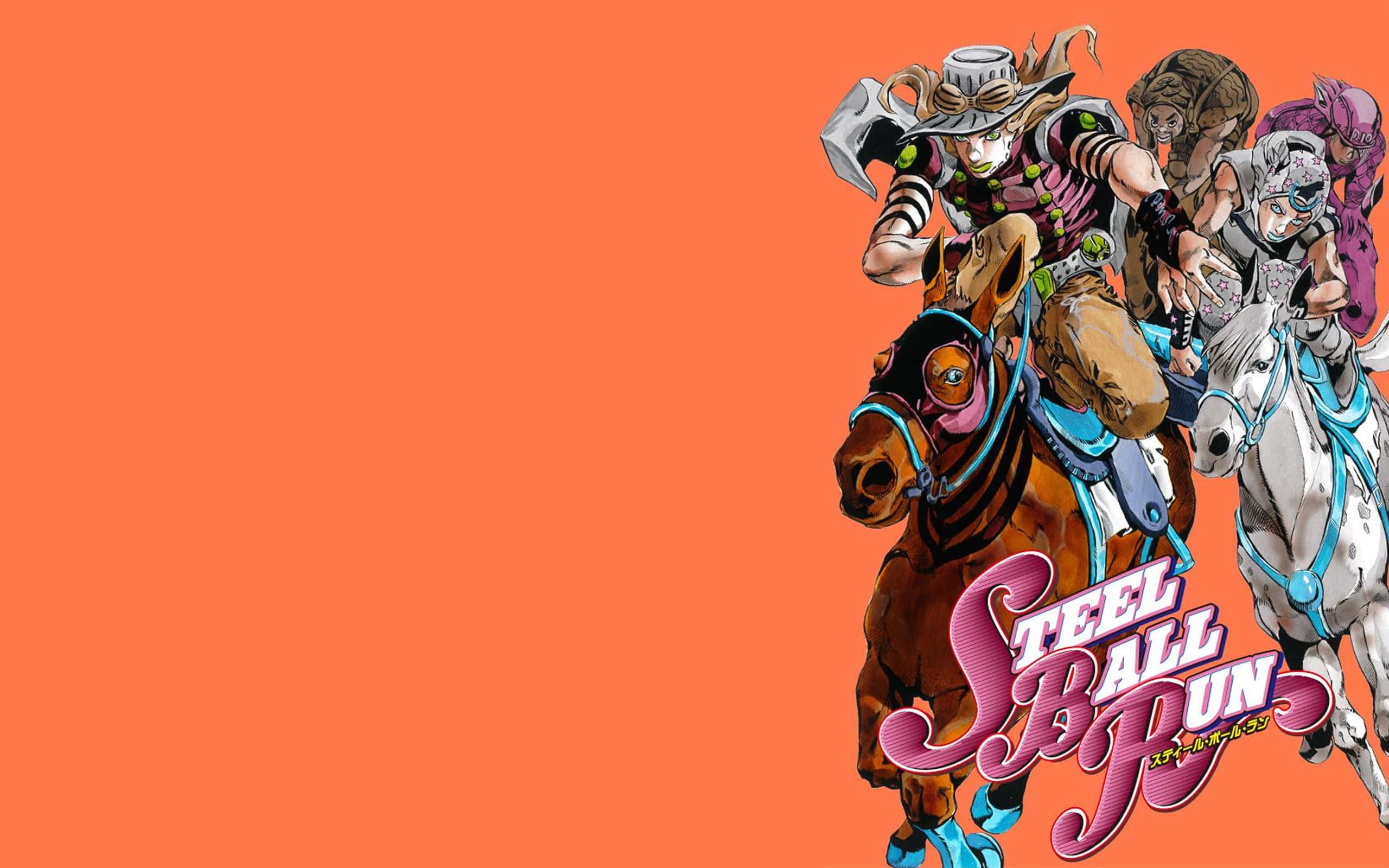
Widely revered as Hirohiko Araki’s undisputed magnum opus, Steel Ball Run (Part 7) holds an almost mythical status in contemporary pop culture. Consistently hovering within the top two highest-rated manga of all time on MyAnimeList, the series transcends the traditional confines of battle shonen, operating instead as a gritty, hyper-stylized Western odyssey that fundamentally reimagines the entire JoJo mythos. As whispers and speculation surrounding David Production’s pipeline reach a fever pitch, the industry finds itself asking: How do you adapt an uncompromised masterpiece that is as technically terrifying to animate as it is narratively sublime?
The Seinen Evolution: Johnny, Gyro, and the Geometry of the Spin
To understand the ravenous buzz surrounding Steel Ball Run, one must grasp the seismic shift that occurred during its serialized run. Beginning in Weekly Shōnen Jump in 2004 before shifting to the monthly seinen publication Ultra Jump, the series unshackled Araki from the grueling weekly deadlines and thematic constraints of standard youth manga. The result was an unprecedented elevation in pacing, visual fidelity, and philosophical complexity.
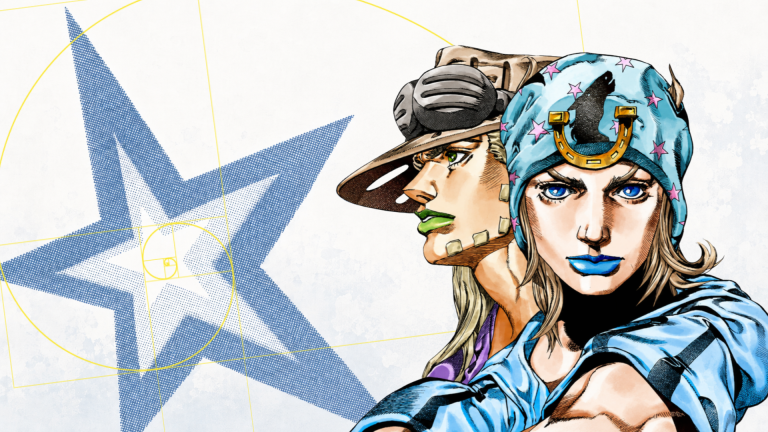
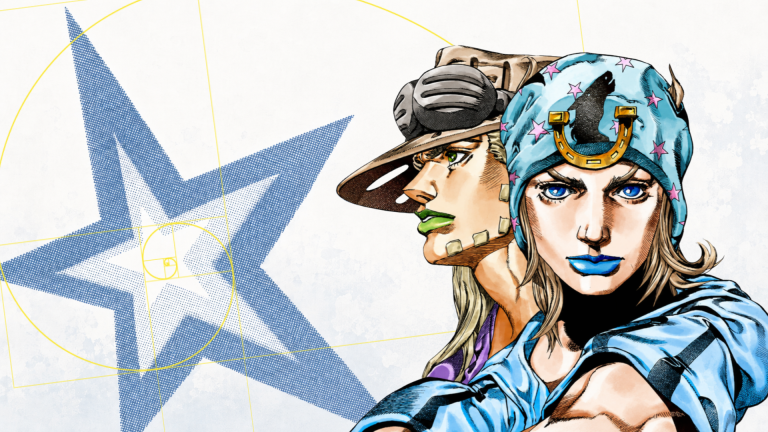
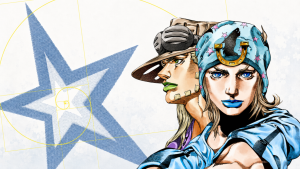
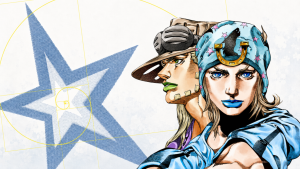
Nowhere is this maturity more palpable than in the psychological architecture of its protagonists: Johnny Joestar and Gyro Zeppeli.
Beyond Shonen Archetypes: Flawed Heroes and “Dark Determination”
Unlike his upright, noble predecessors, Johnny Joestar begins his journey not as a champion of justice, but as a disgraced, paraplegic former jockey consumed by cynicism, vanity, and depression. His quest to master the mysterious “Spin” technique—a rotational supernatural martial art passed down through the Neapolitan Zeppeli executioner lineage—is initially driven by raw, desperate self-interest: the fleeting sensation of moving his legs again. Johnny possesses what Araki explicitly characterizes as “dark determination”—an unhesitating willingness to kill or cross moral boundaries to reclaim his sense of self.
Contrasting Johnny’s brooding desperation is Gyro Zeppeli, a magnetic, grill-wearing eccentric whose flamboyant humor veils a profound existential nobility. Gyro enters the transcontinental, 6,000-kilometer cross-country horse race not for the colossal $50 million grand prize, but to secure amnesty for an innocent child marked for state execution back home. Their bond evolves far past the conventional “mentor-student” dynamic; it is an intimate, hard-won brotherhood forged in campfires, coffee, and sheer kinetic terror.
The Spin: Recontextualizing Stands Through Sacred Geometry
Narratively, Part 7 introduces the Spin, an intricate kinetic system rooted in the Golden Ratio (the Fibonacci sequence). By tapping into the mathematical perfection of nature, the Spin operates as an organic spiritual precursor and complement to Stands. Rather than abandoning Stand battles, Araki refines them—yielding visceral, high-concept duels like the spatial distortions of Tusk and the dimensional tears of D4C that demand a level of visual direction rarely attempted in television animation.
The Equestrian Bottleneck: David Production’s Greatest Technical Gamble
While the story’s literary merits are uncontested, the discourse surrounding the anime adaptation inevitably collides with a notorious, industry-wide reality: horses are an animator’s nightmare.
The entire premise of Steel Ball Run centers around hundreds of elite equestrians sprinting across diverse, punishing terrains—from the scorched salt flats of San Diego to the treacherous mountain passes of the Rockies. Drawing a single galloping horse with correct anatomical mass, muscle contraction, and foreshortening requires immense skill. Drawing dozens of them in dynamic, perspective-bending sakuga shots over a multi-cour production run has historically brought even prestigious studios to their knees.
The 2D vs. 3D Hybrid Dilemma
David Production has built its sterling reputation on honoring Araki’s idiosyncratic aesthetic: the radical color palette swaps, the exaggerated hatching lines, and the fluid choreography seen in Golden Wind and Diamond is Unbreakable. However, an adaptation of SBR will almost certainly require an innovative hybrid pipeline:
- Advanced Cel-Shaded 3D CGI: Utilizing sophisticated 3D models for dynamic tracking shots of stampedes and continuous race sequences, seamlessly shaded to mimic Araki’s cross-hatching.
- Hand-Drawn 2D Finishes: Retaining traditional 2D animation for key emotional exchanges, character close-ups, and the tactile impact of high-stakes Stand clashes.
- Rotoscoping and Physics Integration: Learning from both the industry’s past triumphs (such as Wit Studio’s equine sequences in early Attack on Titan) and historical CGI pitfalls to avoid the dreaded “uncanny valley” that ruined iterations of franchises like Berserk.
David Production’s recent work on the visually opulent Urusei Yatsura reboot and their seasoned mastery of the franchise suggest they are well aware of the stakes. They cannot simply cut corners; Steel Ball Run demands an auteur-level synthesis of tech and craftsmanship.
Americana, Manifest Destiny, and the Relics of the Saint
Beyond its horse-powered kineticism, Part 7 stands as one of the most daring deconstructions of American history and political philosophy ever penned by a Japanese mangaka. Set in 1890, the race serves as an elaborate geopolitical conspiracy orchestrated by the charismatic, unyielding 23rd President of the United States: Funny Valentine.
Valentine’s quest to collect the scattered, mummified remains of a miraculous biblical figure—subtly understood to be Jesus Christ—redefines the series’ thematic core. Valentine is not a cartoonish supervillain; he is an absolute patriot whose Stand, Dirty Deeds Done Dirt Cheap (D4C), allows him to traverse parallel dimensions to ensure the United States secures an impregnable global hegemony. Araki boldly asks the audience to weigh Valentine’s selfless, imperialist vision of the “First Napkin” against Johnny Joestar’s deeply selfish, localized struggle for individual salvation.
This nuanced moral ambiguity elevates Steel Ball Run from an action-adventure into a layered historical tragedy, exploring the violence, environmental hostility, and spiritual ruin that underpinned the frontier era.
The Global Fandom’s Crucible: Anticipation, Leaks, and Expectations
The collective appetite for an official announcement has sparked rampant discourse across social platforms, Reddit communities, and anime conventions worldwide. Following the fragmented, controversial batch-release model of Stone Ocean on Netflix—which many fans argue dampened the show’s cultural visibility—there is an overwhelming demand for Steel Ball Run to return to a classic weekly television broadcast model. A weekly release allows the episodic nature of the race’s distinct “Stages” to build the communal suspense it fundamentally warrants.
Speculation regarding voice casting remains equally fervent. While veteran voice actors like Shin-ichiro Miki (Gyro) and Yūki Kaji (Johnny) delivered iconic performances in the All-Star Battle and Eyes of Heaven video games, David Production has historically recast roles for their anime adaptations to align with fresh director visions. Fans are watching studio trademark filings and voice-actor schedules with forensic precision.
The Horizon Awaits
JoJo’s Bizarre Adventure: Steel Ball Run is more than just another season of a beloved anime; it represents the threshold of David Production’s legacy and a pivotal moment for prestige anime adaptations at large. The technical hurdles are terrifying, the narrative expectations are impossibly astronomical, and the source material demands unyielding artistic bravery.
Yet, if any creative team has earned the benefit of the doubt, it is the one that transformed Araki’s eccentric poses and wild onomatopoeia into an international pop-culture phenomenon over the last decade. When that race starter pistol finally echoes, anime history will be written anew.
How do you think David Production should tackle the legendary horse animations of Steel Ball Run? Are you team weekly broadcast or binge-drop? Drop your theories, dream voice casts, and hot takes in the comments below, and stay tuned to Wibux.com for all breaking anime updates.