
In the vast, sprawling canon of modern manga, few transitions are as culturally seismic as Hirohiko Araki’s pivot from the flamboyant, generational tragedy of the original Joestar bloodline to the dusty, wind-scoured plains of late-19th-century America. For over two decades, JoJo’s Bizarre Adventure redefined style, kinetic action, and narrative audacity. Yet, when Araki launched Steel Ball Run in 2004, he wasn’t merely continuing a franchise—he was rebuilding it from the bedrock up. Consistently rubbing shoulders with Berserk at the absolute pinnacle of global manga rankings, Part 7 is celebrated as Araki’s definitive magnum opus. Now, with the dust long settled on Stone Ocean’s bittersweet climax, the global anime ecosystem is consumed by a singular, deafening question: How and when will David Production bring this masterpiece to the screen?
The Seinen Rebirth: Araki’s Masterstroke on the Open Frontier
To understand why the adaptation of Steel Ball Run commands such reverent hype, one must grasp its foundational departure from what came before. When serialization transitioned from the frantic weekly deadlines of Weekly Shonen Jump to the broader, mature horizons of Ultra Jump, Araki was granted narrative breathing room he had never previously enjoyed. The result was a radical aesthetic and thematic leap forward. Gone were the rapid-fire monster-of-the-week formulas, replaced by an expansive, 6,000-kilometer cross-country equestrian race spanning from San Diego Beach to New York City.
The 1890 Steel Ball Run race serves as both stage and catalyst for an exploration of rugged American mythmaking spliced with grotesque body horror and cosmic intrigue. It presents a world stripped of the primary-color certainty that defined earlier arcs. Instead, readers were plunged into an unforgiving, sun-baked landscape where survival dictates morality, and where ambition is weighed against the physical toll of dehydration, gunshot wounds, and psychological trauma. It is mature, deliberate, and extraordinarily cinematic—qualities that position an eventual anime adaptation as potentially the most visually prestigious event in modern anime history.
Johnny Joestar and Gyro Zeppeli: Deconstructing the JoJo Archetype
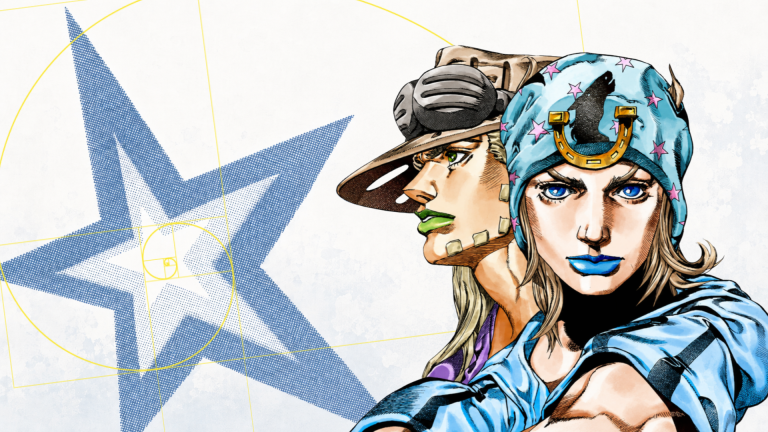
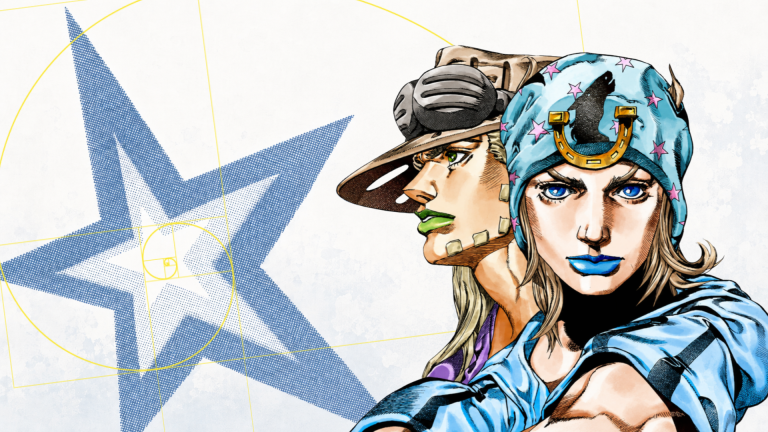
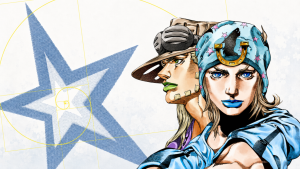
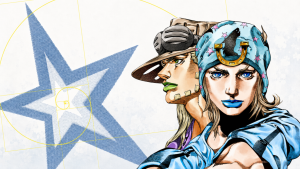
At the beating heart of this Western-supernatural hybrid is the singular dynamic between its co-protagonists: Johnny Joestar and Gyro Zeppeli. Their partnership completely subverts the traditional shonen dynamic, offering a masterclass in nuanced character psychology.
Johnny Joestar: The Paraplegic Sinner Driven by “Dark Determination”
Johnny is not Jonathan Joestar. He lacks the archetypal chivalry of his namesake ancestor; he is a broken, disgraced former horse-racing prodigy whose arrogance previously cost him his legs and his dignity. Confined to a wheelchair, Johnny is cynical, resentful, and visibly haunted. His journey across the American frontier is not initially sparked by an idealistic quest to save the world, but by an intensely selfish, painfully human desperation: the discovery that Gyro’s rotational technology might allow him to stand again. Araki often visualizes Johnny’s inner state through an iconic, chilling visual cue—a pitch-black flame of pure resolve ignited in his eyes, often dubbed his “Dark Determination.” Johnny is willing to cross lines, sacrifice others, and walk through damnation to reach his goal, making him arguably the most morally intricate protagonist in the entire franchise.
Gyro Zeppeli: The Executioner, The Clowning Sage
Counterbalancing Johnny’s brooding desperation is Gyro Zeppeli, a disgraced Neapolitan royal executioner who enters the race to win an amnesty plea for an innocent child condemned to death. Gyro is flamboyant, absurdly charismatic, and fundamentally compassionate, yet he conceals his immense guilt beneath a veneer of eccentric dad jokes, bizarre musical compositions, and gold-plated teeth. Gyro acts as Johnny’s mentor, brother, and foil, driving one of the most organic, emotionally devastating character arcs in graphic literature. Their shared campfires, philosophical debates, and shared silent glances ground the surreal chaos of the cross-country sprint in genuine, unvarnished humanity.
The Metaphysics of the Golden Spin
Rather than simply relying on traditional Stand battles, Steel Ball Run re-contextualizes combat through the concept of the Spin. Derived from Renaissance mathematical theories and the Golden Ratio found within nature, the Spin is an ancient, kinetic discipline that manipulates rotational energy. By fusing advanced geometric theory with supernatural horse-riding techniques, Araki elevated the combat from purely psychic Stand punching matches to tactical, physics-bending encounters where environmental awareness, anatomical precision, and pure momentum determine life and death.
The David Production Dilemma: The Dreaded Equestrian Hurdle
While the demand for an anime adaptation is at an all-time high, the delay in an official production announcement comes down to a terrifying reality of the animation industry: horses. In the realm of 2D traditional hand-drawn animation, equines are notorious production killers. A galloping horse possesses a complex, rhythmic skeletal movement that demands immense structural discipline across dozens of frames per second. Now multiply that by dozens of competing riders, charging neck-and-neck through fluctuating dust storms, dynamic camera angles, and changing terrain across hundreds of chapters.
David Production, who have adapted parts 1 through 6 with unparalleled stylistic fidelity and passion, find themselves at a technological crossroads. Modern industry standards—as seen in large-scale productions like Attack on Titan or Vinland Saga—regularly leverage 3D CGI models to render complex animal movement. However, the distinct, hyper-stylized hatch-shading and iconic anatomy of Araki’s Part 7 art style run the risk of looking sterile or disjointed if rendered poorly in three dimensions.
Industry insiders and community animators speculate that for Steel Ball Run to succeed, David Production will need to pioneer an unprecedented hybrid pipeline. This would entail heavily stylized, cel-shaded 3D rigs for wide-angle equestrian choreography, seamlessly blended into painstakingly hand-drawn 2D close-ups for Stand clashes, emotional beats, and facial expressions. The sheer logistical and financial weight of such an endeavor explains why the studio has taken a deliberate, measured pause following the release of Stone Ocean.
Patriotism, Relics, and the Ultimate Consequentialist
Beyond the logistical mountains and character studies lies the thematic apex of Steel Ball Run: its narrative engine. The race across America is eventually revealed to be an elaborate cover orchestrated by the 23rd President of the United States, Funny Valentine, to gather the scattered mummified fragments of a mysterious Holy Relic across the continent.
Valentine stands as one of anime and manga’s most complex antagonists. Armed with an ideology of radical consequentialism, he acts not out of sheer villainous malice, but out of an unshakeable, hyper-nationalistic desire to ensure America’s perpetual prosperity at the direct expense of the rest of the world. Valentine’s multiversal Stand ability—Dirty Deeds Done Dirt Cheap (D4C)—introduces mind-bending spatial tactics and existential stakes that dwarf anything previously seen in the franchise. The philosophical clash between Valentine’s collectivist tyranny and Johnny Joestar’s individualized redemption lifts the narrative far above typical battle manga, elevating it to an opera of political occultism.
The Inevitable Horizon
The hunger for JoJo’s Bizarre Adventure: Steel Ball Run is not a passing internet trend; it is the crest of a cultural wave that has been swelling for a decade. Across YouTube, TikTok, and Twitter, fan-made trailers, animated concept clips, and vocal dubs routinely pull in millions of views, demonstrating an audience primed for what could be the defining anime event of the late 2020s.
David Production has proven time and again that they understand the beating soul of Hirohiko Araki’s work. When they finally announce Johnny and Gyro’s journey, it will mark the beginning of their most ambitious endeavor yet—a grueling, beautiful race that will demand every ounce of creative grit the studio has to offer. The saddles are ready, the spin is winding up, and the world is waiting for the starting gun to fire.
What are your expectations for David Production’s potential handling of the equestrian animation? Do you think Steel Ball Run can surpass the cultural peak of Golden Wind? Sound off in the comments below, and stay locked to Wibux.com for all your frontline anime news.