
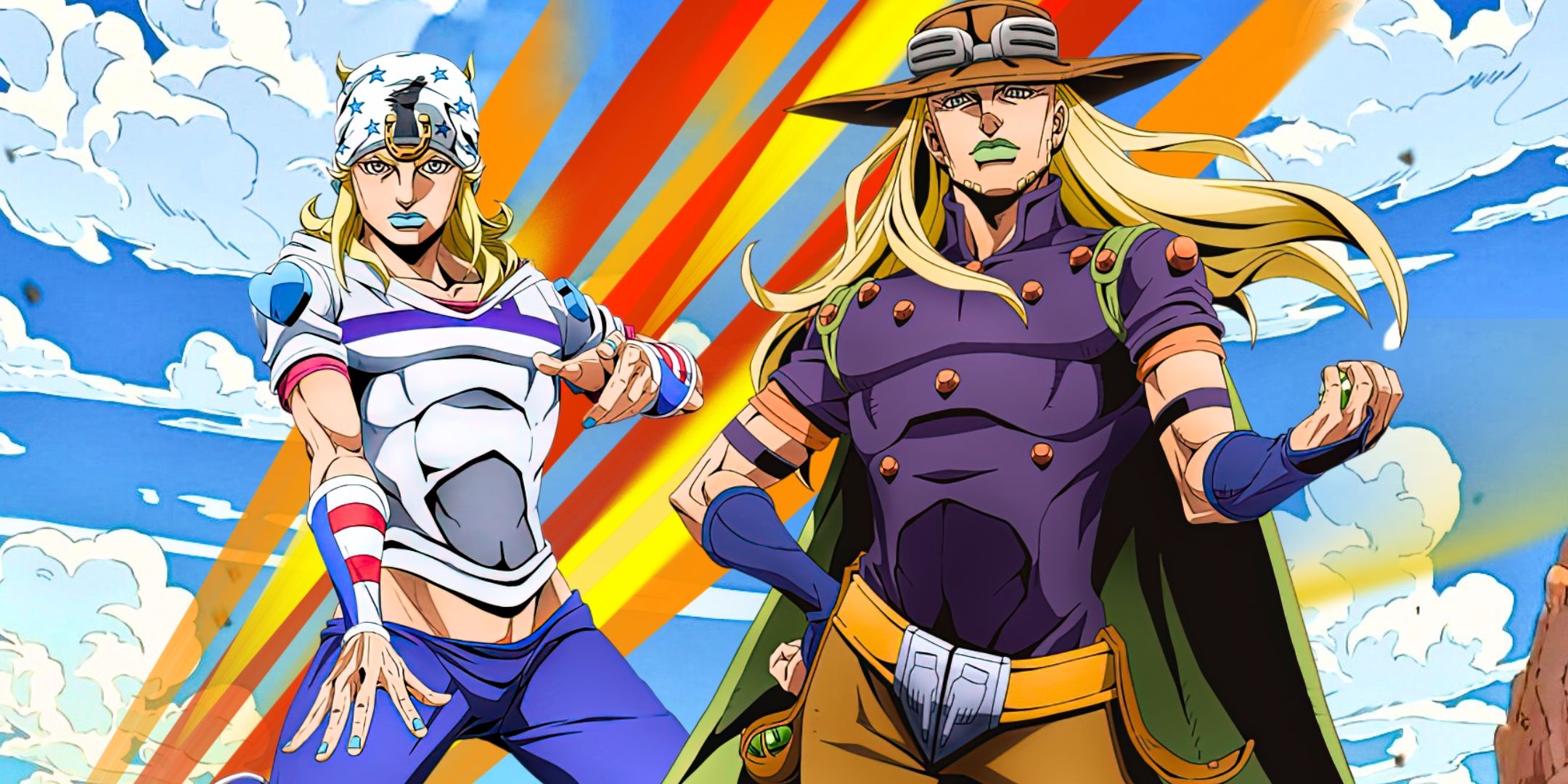
When the final credits rolled on Stone Ocean in late 2022, bringing Hirohiko Araki’s original multi-generational Joestar bloodline saga to an emotionally devastating crescendo, an immediate, deafening silence settled over the anime landscape. It was not a silence born of indifference, but rather the breathless intake of air before a collective scream. For over a decade, David Production pulled off what was once deemed impossible: faithfully adapting the labyrinthine, genre-defying world of JoJo’s Bizarre Adventure from its Victorian gothic origins straight through to a sun-bleached Florida penitentiary. Yet for the global anime community, everything up to this point has merely been the prelude. The true holy grail still looms on the horizon: Steel Ball Run.
Consistently locked in a dogfight with Berserk for the highest-rated manga spots on critical aggregators like MyAnimeList, Part 7 represents an epochal pivot in Araki’s career. It is an unsparing, wildly imaginative reinvention of the franchise that trades urban Japanese alleys and European plazas for the dust, blood, and existential grime of an alternate late-nineteenth-century America. As speculation mounts regarding David Production’s development slate, the hype surrounding Steel Ball Run is no longer just fandom wish-fulfillment; it has evolved into a high-stakes cultural conversation regarding technical ambition, creative evolution, and narrative transcendence.
A Trans-Continental Reset: Reimagining the JoJo Mythos
To understand the sheer magnitude of the anticipation, one must understand what Steel Ball Run actually achieved upon its publication. Originally launched in 2004 without the explicit “JoJo” moniker before pivoting to Shueisha’s monthly seinen magazine, Ultra Jump, the story unshackled Araki from the strictures of weekly deadlines and juvenile demographics. The result was a dramatic maturation in pacing, anatomical precision, and psychological grit.
Set against the backdrop of an unprecedented cross-country equestrian race spanning 6,000 kilometers from the Pacific coast of San Diego to the concrete sprawl of New York City, Steel Ball Run acts as a structural and thematic reboot. This is not simply another episodic villain-of-the-week road trip. Araki crafts a sweeping historical epic disguised as a supernatural Western, interrogating the cost of ambition, American exceptionalism, and the nature of destiny. For David Production, the transition into this parallel continuity means discarding familiar stylistic shortcuts and building an aesthetic language from the bedrock up.
Johnny Joestar and Gyro Zeppeli: Subverting the Heroic Paradigm
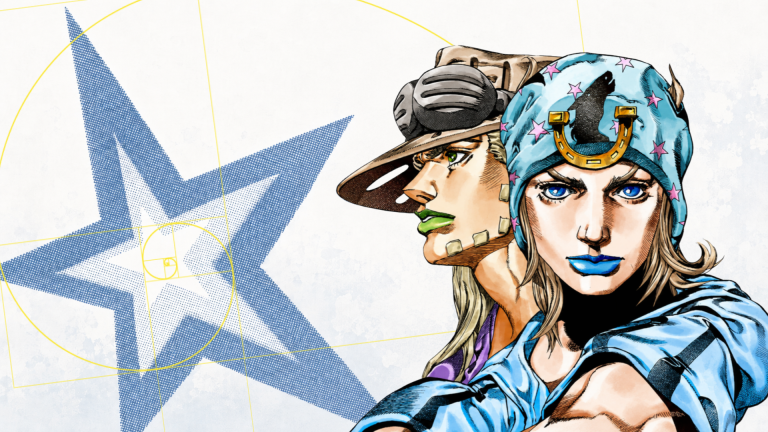
At the center of this grueling race is arguably the most complex dynamic Araki has ever penned: the fractured partnership between Johnny Joestar and Gyro Zeppeli. Moving away from the stoic nobility of Jonathan Joestar or the slick, untouchable swagger of Jotaro Kujo, Johnny enters the narrative as a deeply flawed, paraplegic ex-jockey paralyzed by a mixture of tragedy and his own past arrogance. His quest across the desert is devoid of altruism; he is a man willing to harbor “dark determination”—an unblinking, borderline-sociopathic impulse to walk again, no matter the human collateral.
The Dark Determination and the Golden Spiral
Counterbalancing Johnny’s brooding desperation is Gyro Zeppeli, a disgraced Neapolitan executioner whose eccentricities—punctuated by gold-engraved teeth and nonsensical gags—mask a profound moral burden. Gyro introduces the narrative’s definitive esoteric power: the Spin. Rooted in the mathematical perfection of the Golden Ratio and the legacy of the Italian Renaissance, the Spin is far more than a flashy alternative to Hamon or conventional Stands. It is an intricate martial science, demanding spatial discipline, anatomical manipulation, and absolute environmental awareness.
Johnny’s progressive awakening of his Stand, Tusk—evolving through distinct Acts that mirror his psychological restoration and mastery of the Golden Rectangle—creates an organic fusion between internal trauma and combat progression. The emotional resonance of Johnny and Gyro’s journey stems not from mutual infallibility, but from shared brokenness. Their campfires, philosophical arguments, and desperate firefights across the American frontier give the series a literary warmth rarely captured in action-oriented anime.
The Technical Crucible: David Production’s Equestrian Rubicon
If the thematic depth of Steel Ball Run is a creative dream, its execution is an animator’s logistical nightmare. The elephant in the production room has never been the surreal gore or the mind-bending reality warping; it has always been the horses.
Equestrian animation is widely regarded by industry veterans as one of the most punishing disciplines in hand-drawn media. Animating a single horse in motion requires calculating the realistic weight distribution of four independent legs, the muscular ripple beneath the coat, and the rhythmic bobbing of the mane and rider. Steel Ball Run demands dozens of these complex creatures engaged in high-speed stampedes, treacherous river crossings, and violently kinetic shootouts—frequently from unconventional, dynamic camera angles that defy perspective.
Navigating the 2D vs. CGI Conundrum
The modern anime industry’s default solution to massive herds and complex machinery is 3D CGI integration. However, modern fandom has grown notoriously wary of jarring, poorly shaded 3D models clashing against hand-drawn 2D backgrounds. If David Production leans too heavily into unpolished CGI, they risk flattening Araki’s meticulously detailed, cross-hatched linework. Conversely, attempting to animate hundreds of running horses in traditional 2D would buckle even the most well-funded studio’s schedule.
Insiders suspect that David Production’s extended gestation period following Stone Ocean represents a deliberate recalibration of their pipeline. Studio precedents—such as their hyper-stylized work on Fire Force and the visual reinvention seen in Urusei Yatsura—demonstrate that they possess elite visual architects. To conquer Steel Ball Run, the studio must pioneer a seamless hybrid aesthetic: utilizing sophisticated cel-shaded 3D rigs for baseline motion capture, painstakingly overlaid with hand-drawn character expressions and Araki’s signature anatomical flair. Anything less will fail to capture the kinetic poetry of the race.
Geopolitical Mythmaking: Stands, Miracles, and Dirty Deeds
Beyond its protagonists, an adaptation’s success hinges on capturing the majesty of its primary antagonist: the 23rd President of the United States, Funny Valentine. Armed with an immovable patriotic conviction and the trans-dimensional dread of his Stand, Dirty Deeds Done Dirt Cheap (D4C), Valentine avoids the theatrical villainy of Dio Brando or the paranoid isolationism of Yoshikage Kira. He represents a chilling vision of nationalistic fervor, justifying atrocities under the guise of acquiring the “Corpse Parts”—the mummified remains of a biblical figure scattered across North America.
The race is merely the stage; the Corpse is the prize. Araki weaves religious mysticism, alternate reality metaphysics, and brutal historical grit into a narrative tapestry where Stand abilities feel truly transcendent rather than mundane parlor tricks. Seeing the dread of Diego Brando’s Scary Monsters or the mind-shattering sequence of the “Who Shot Johnny Joestar?” mystery rendered with cinematic prestige is precisely why the anticipation borders on religious devotion.
The Road Ahead: Cultivating the Magnum Opus
The buzz surrounding Steel Ball Run is neither premature nor unfounded. It marks the convergence of a legendary studio testing its absolute mechanical limits and a generational manga author reaching the absolute zenith of his creative powers. For David Production, greenlighting Part 7 is not merely the continuation of a profitable franchise; it is their shot at entering the historical pantheon of all-time great adaptations alongside works like Mob Psycho 100, Vinland Saga, and Chainsaw Man.
Whenever that fateful promotional teaser finally drops—whether it features the rhythmic, thudding bass of a galloping horse or Gyro’s metallic sphere cleaving through the air—the anime landscape will shift on its axis. Until then, the community remains in a state of hyper-vigilant anticipation, ready to mount their saddles for the greatest race in pop-culture history.
Which sequence from the Steel Ball Run manga do you think will be the ultimate visual test for David Production? Can a CGI/2D hybrid truly capture the majesty of the trans-continental race? Drop your predictions in the comments below, and stay tuned to Wibux.com for breaking updates on the next frontier of JoJo’s Bizarre Adventure.