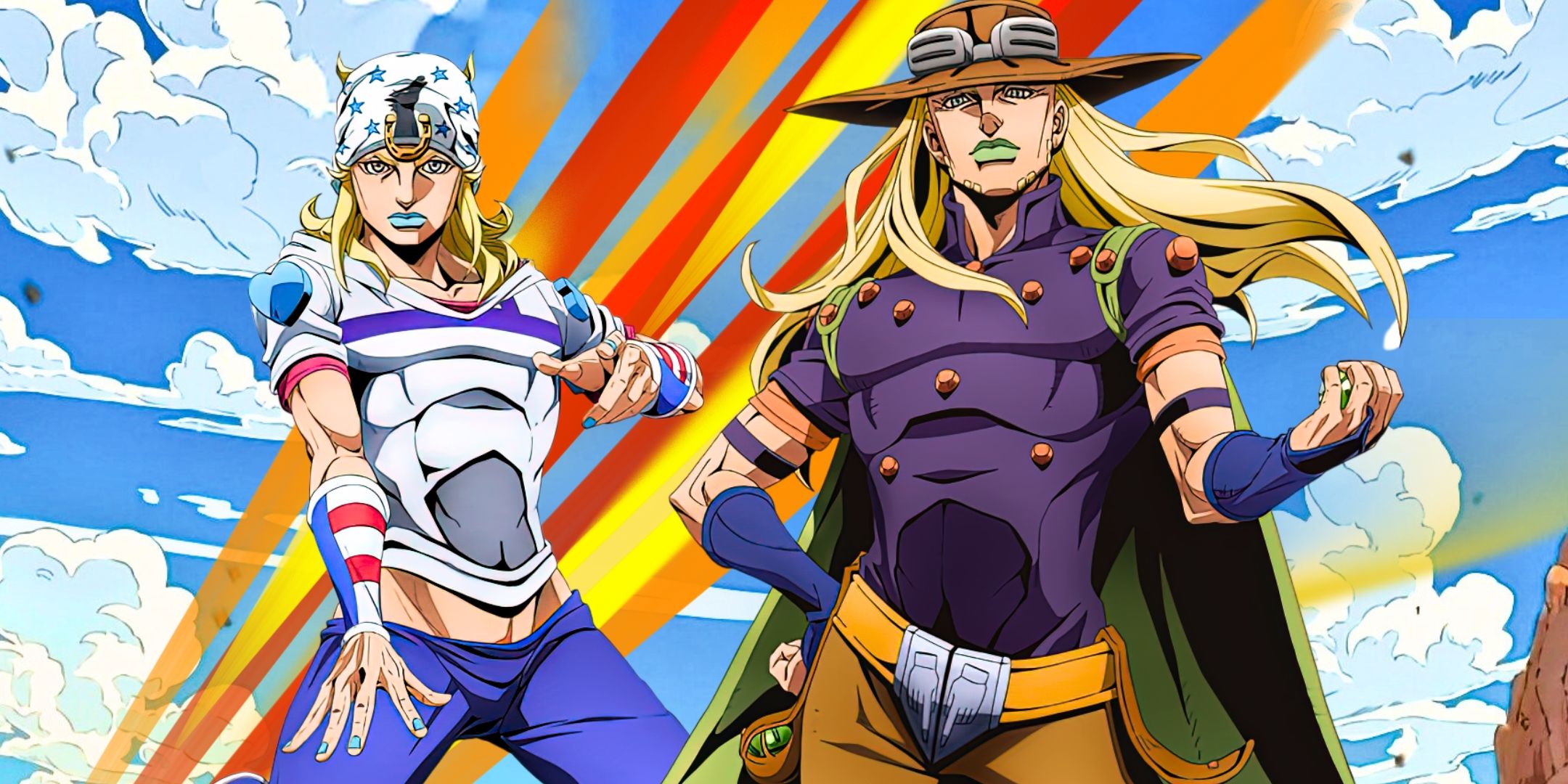
Ever since the melancholic, bittersweet notes of Duffy’s “Distant Dreamer” faded over the rebooted horizon of Stone Ocean, the anime community has inhabited a state of breathless, collective anticipation. For over a decade, David Production has pulled off one of the most audacious feats in modern television: faithfully adapting Hirohiko Araki’s multi-generational, genre-defying epic across six distinct eras. Yet, despite the triumph of concluding the original Joestar lineage, every seasoned fan knows that the true summit still looms in the distance. The whisper has become a roaring demand across social feeds, forums, and convention halls: JoJo’s Bizarre Adventure: Steel Ball Run is next, and its eventual screen debut will either cement David Production as legendary alchemists of animation or push the studio to its absolute breaking point.
Widely regarded by critics and bibliophiles as Araki’s undisputed magnum opus, Steel Ball Run (Part 7) sits proudly near the peak of MyAnimeList’s all-time manga rankings for a reason. It is not merely an extension of the franchise; it is a seismic reimagining. Transporting audiences to an alternate 1890s America, the narrative follows a grueling, cross-continental horse race from San Diego to New York City. Beneath the surface of this fifty-million-dollar spectacle lies an esoteric conspiracy involving sacred relics, terrifying spatial Stand abilities, and an obsessive exploration of human determination. But as buzz builds and industry insiders speculate on when—not if—an adaptation will be greenlit, the conversation inevitably turns to what makes Part 7 so uniquely transcendent, and terrifyingly complex, to bring to life.
The Holy Grail of Shonen-to-Seinen Evolution
To understand why the hype surrounding Steel Ball Run eclipses almost any upcoming project in the anime sphere, one must understand its historical pivot. When serialization began in 2004 in Weekly Shonen Jump, it was initially uncoupled from the “JoJo” moniker, masquerading as a standalone period adventure. However, its subsequent migration to the monthly seinen publication Ultra Jump in 2005 cracked the story wide open. Unshackled from weekly deadlines and the demographic constraints of adolescent fiction, Araki flourished.
The pacing transformed into a cinematic, prestige-drama burn. Araki’s draftsmanship evolved into hyper-detailed renaissance anatomical realism, while his storytelling abandoned clean-cut heroics in favor of gritty, existential survivalism. The trans-American trail is not a heroic playground; it is an unforgiving expanse of desert, snow, and gunfire, where dehydration and gangrene are as deadly as supernatural assassins. Adapting Steel Ball Run means David Production cannot simply replicate the hyper-saturated, pop-art kineticism of Diamond is Unbreakable or the sleek fashion-runway violence of Golden Wind. It demands a sweeping, dusty, Leone-esque Western aesthetic drenched in prestige-television gravitas.
Johnny Joestar & Gyro Zeppeli: A Masterclass in Character Psychology
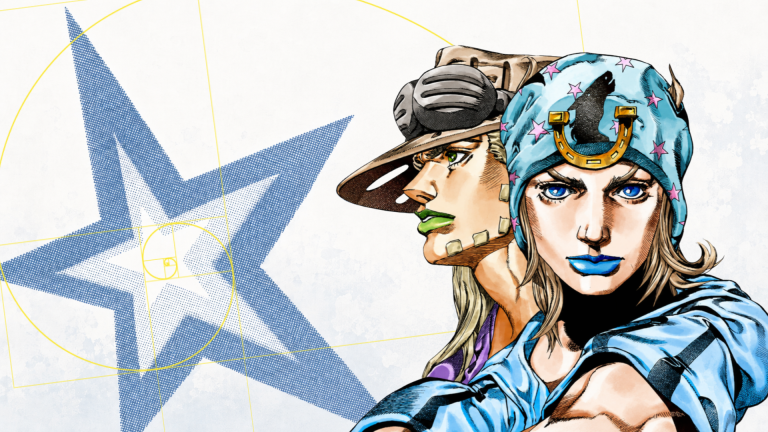
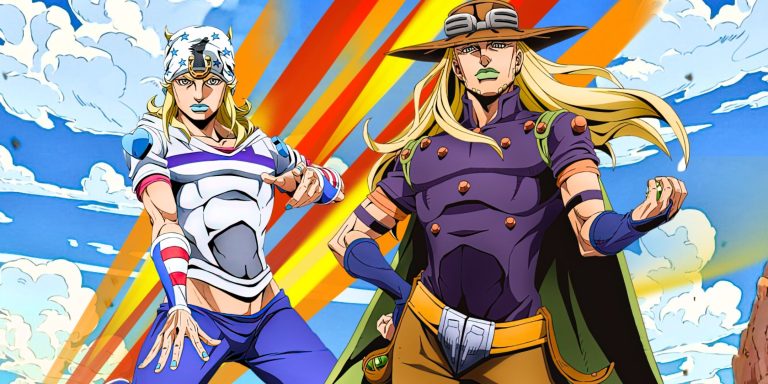
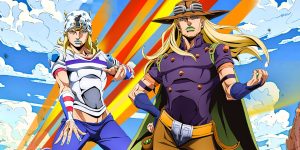
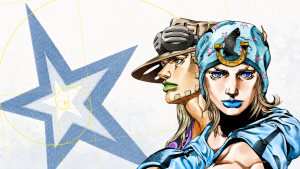
At the beating heart of Part 7’s critical reverence is the relationship between its dual protagonists. Where earlier JoJo pairings relied on charismatic bravado and immediate brotherhood, Johnny Joestar and Gyro Zeppeli share an intricate, painfully human dynamic that takes volumes to mature.
The Fall and Flaws of Johnny Joestar
Unlike his noble ancestor Jonathan or the infallible coolness of Jotaro, Johnny Joestar begins his journey as an unlikable, fallen prodigy. Struck down by a bullet after letting his arrogance run unchecked, Johnny is a paraplegic former horse-racing prodigy whose spirit has withered alongside his legs. He is not driven by altruism or a quest to save the world; he is propelled by a desperate, frankly selfish longing to regain sensation in his lower body. Johnny possesses what Araki famously terms “dark determination”—an eerie, unflinching willingness to kill or sacrifice anything to claw his way out of the abyss. Watching him evolve from a cynical wreck into a terrifyingly focused Stand user alongside his Stand, Tusk, is one of the most compelling psychological trajectories ever penned in graphic fiction.
Gyro Zeppeli and the Burden of the Golden Spin
Balancing Johnny’s brooding darkness is Gyro Zeppeli, a disgraced Neapolitan executioner’s son armed with steel spheres, a grill engraved with “GO! GO! ZEPPELI,” and a penchant for nonsensical musical compositions about mozzarella cheese. Yet, beneath Gyro’s eccentric swagger lies a profound, suffocating sense of duty. He rides in the Steel Ball Run not for fame or wealth, but to win amnesty for an innocent child condemned to death by the brutal legalities of his homeland. Gyro acts as mentor, foil, and emotional anchor to Johnny, replacing the supernatural power of Hamon with the Spin—a deadly martial science harnessing the geometric perfection of the Fibonacci sequence. The tragic lineage of the Zeppeli family hangs heavy over his head, making their bond an emotional crucible that anime-only viewers will scarcely be prepared to endure.
The Equine Elephant in the Room: David Production’s Technical Gauntlet
If Steel Ball Run is universally adored, why has an official production announcement remained conspicuously absent? The answer is simple, logistical, and four-legged: horses.
In the animation industry, horses are notoriously considered the single most difficult subject to animate organically. Their complex skeletal movement, shifting muscle contours, and dynamic galloping mechanics demand astronomical budget and top-tier key animators to render in traditional 2D. Steel Ball Run features hundreds of them, navigating dynamic, changing terrains across thousands of miles of wilderness, often while engaging in high-speed tactical shootouts.
Historical precedents within the medium paint a cautionary tale. Productions from Attack on Titan to Vinland Saga have leaned heavily on 3D CGI models for equestrian sequences, often yielding jarring results that fail to blend with hand-drawn characters. For David Production—a studio whose reputation is intrinsically tied to delivering expressive, hand-drawn character poses that mirror Araki’s ink strokes—tackling Steel Ball Run represents a colossal technical hurdle. Speculation suggests the studio may be waiting to develop or license bespoke hybrid cel-shading pipelines capable of seamlessly integrating 3D horse rigs with Araki’s intricate, textured character models without sacrificing the soul of the line art.
From Stands to the Golden Spiral: Metaphysics and Geopolitics
Beyond the logistical nightmare of the race itself lies the sheer thematic complexity of Part 7’s narrative engine. As Johnny and Gyro cross the American frontier, the race unmasks itself as a scavenger hunt for the mummified parts of the Holy Corpse—heavily implied to be Jesus Christ himself. This spiritual artifact serves as the catalyst for Stand manifestations that are far more metaphysical than the punch-ghost skirmishes of Stardust Crusaders.
Nowhere is this philosophical elevation clearer than in the saga’s primary antagonist: the 23rd President of the United States, Funny Valentine. Armed with the dimension-hopping Stand Dirty Deeds Done Dirt Cheap (D4C), Valentine is not an archetype of cartoonish villainy like Dio Brando or a paranoid recluse like Diavolo. He is a terrifyingly dedicated, silver-tongued nationalist who genuinely believes that seizing the Corpse will bring eternal prosperity to his country—even if it plunges the rest of the planet into ruin. The confrontation between Johnny’s desperate individualism and Valentine’s fanatical utilitarianism elevates the climax of Part 7 into an ideological war that challenges the moral compass of the audience.
The Verdict: An Inevitable Masterwork Worth the Wait
The cultural appetite for JoJo’s Bizarre Adventure: Steel Ball Run has transitioned from casual optimism into an absolute mandate. The memes, the fan-animated trailers, and the analytical essays have built a monument of expectation that few adaptations ever face. But if David Production has taught us anything over the past twelve years, it is that they hold Hirohiko Araki’s vision with an almost religious reverence.
Whenever the starting gun finally sounds—whether it arrives as a multi-cour television epic or a prestige seasonal series—Steel Ball Run has all the ingredients to transcend its own franchise. It is a story about the agonizing struggle to stand on one’s own feet, the philosophical geometry of the universe, and the quiet beauty of two broken souls riding side-by-side into an American sunset. Anime fans should not rush the process; when the Spin finally manifests on screen, it must be nothing short of absolute perfection.
What part of Steel Ball Run are you most desperate to see animated? Can David Production pull off the infamous equestrian races without breaking the illusion? Sound off in the comments below, and let us know your dream voice cast for Johnny and Gyro!