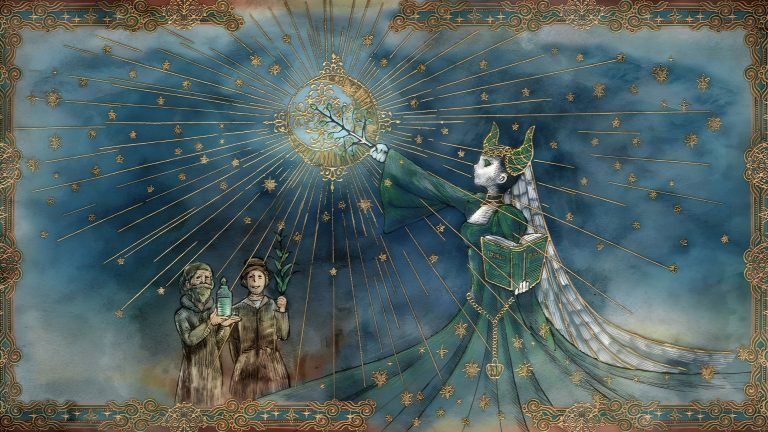

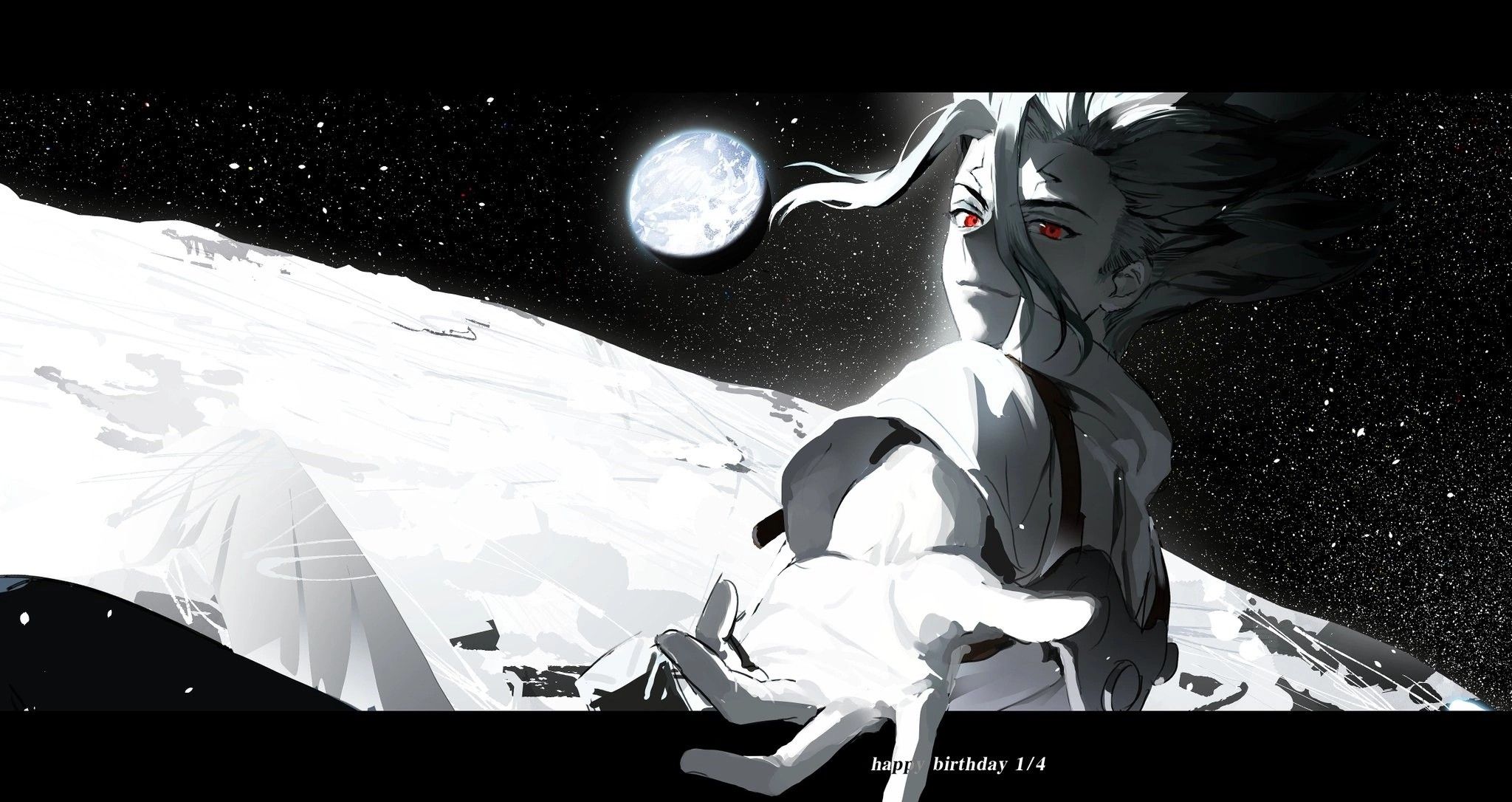
When the modern renaissance of *Weekly Shonen Jump* is dissected by future anime historians, Dr. STONE will not be remembered for supernatural bloodlines, cursed energy, or mystical power systems. Its legacy rests on an entirely different sort of shonen magic: the uncompromising, euphoric power of human empiricism. Since its debut in 2017, the masterwork crafted by writer Riichiro Inagaki and visionary illustrator Boichi has transformed the daunting periodic table into the ultimate hero’s journey. Now, with the official announcement of its fourth and final chapter—Dr. STONE: Science Future—the Kingdom of Science prepares for its curtain call. Senku Ishigami is no longer merely fighting to survive the Stone World; he is aiming directly at the cosmos, setting the stage for an audaciously technical moon landing and the definitive, universe-altering confrontation with the enigmatic entity known as Why-Man.
The Lunar Gamble: Transforming Stone Age Earth into Cape Canaveral
The progression of Dr. STONE has always hinged on a brilliant, escalating narrative momentum. What began with the chemical synthesis of calcium carbonate to make soap has exploded across continents. Over three seasons—spanning Stone Wars and the globe-trotting maritime expansion of New World—Senku and his eclectic ensemble have systematically rebuilt millennia of human infrastructure in a matter of years. Yet, *Science Future* demands a logistical and psychological leap that dwarf everything that came before: entering the Space Age.
Reaching the moon from scratch is not a mere plot beat; it represents the absolute zenith of engineering ingenuity. Adapting the final sprint of the manga requires TMS Entertainment to visually articulate the staggering complexity of aerospace development. We are talking about raw resource extraction on an unprecedented global scale: refining aluminum, synthesizing volatile rocket propellants, crafting microprocessors without silicon foundries, and developing vacuum-sealed telemetry computers with Stone World tools. It turns the shonen training arc on its head. Senku’s crew is not learning a new finishing move; they are drafting mathematical matrices, testing liquid-fuel propulsion stages, and surviving high-altitude pressure drops where a single fractional error guarantees instant incineration.
The Final Crew Dynamic: The Triumvirate of Mind, Muscle, and Ambition
Unlike standard exploration missions, the journey to the lunar surface in *Science Future* requires an agonizingly deliberate economy of payload. Building a craft capable of escaping Earth’s gravitational well with primitive resources means weight constraints are ruthlessly tight. This introduces one of the manga’s most celebrated narrative conflicts: the selection of the three-person crew. It forces a collision between Senku’s pure scientific intellect, Ryusui Nanami’s peerless navigation and boundless greed for exploration, and the raw, martial perfection of Tsukasa Shishio. Watching former mortal adversaries strap into a microscopic command capsule exemplifies Inagaki’s core thesis—that science is the great unifier of disparate human wills.
Deconstructing Why-Man: Cosmic Horror Meets Empirical Rationalism
Ever since that spine-chilling moment in Season 2 when an unauthorized radio frequency hijacked Senku’s signal with a single word—“WHY”—repeated in Senku’s own synthesized voice, Dr. STONE subtly incorporated elements of existential sci-fi horror. Why-Man has never operated like a typical battle manga antagonist. There are no monologues, no arrogant declarations of supremacy, and no visible displays of brute force. Instead, Why-Man exists as a silent, terrifying celestial surveillance system: an intelligence anchored on the lunar surface that weaponized the petrification beam to freeze global civilization into stone 3,700 years ago.
The impending lunar confrontation shifts the thematic stakes from historical rebuilding to cosmic revelation. Is Why-Man an extraterrestrial biological entity, a rogue artificial general intelligence, or something far more uncanny? Without spoiling the paradigm-shifting revelations that await anime-only viewers, the nature of the Medusa petrification devices challenges the fundamental boundary between technology and biology. What makes this final showdown so compelling is Senku’s philosophical approach to conflict. Where other shonen protagonists seek to eradicate their foes, Senku approaches Why-Man as an unsolved differential equation. To Senku, even an existential threat that eradicated global society is not an evil god to be feared—it is a subject of observation, negotiation, and scientific understanding.
The Architecture of Legacy: Byakuya’s Echo Across 3,700 Years
Beneath the blueprints and chemical compounds, the emotional spine of *Dr. STONE* has always been the profound paternal bond between Senku and his adoptive father, Byakuya Ishigami. The series’ emotional high-water mark occurred when Byakuya and the International Space Station cosmonauts watched the petrification wave swallow the Earth from orbit, realizing they were the last surviving humans. Byakuya spent the rest of his life leaving physical and technological breadcrumbs across millennia so that his son might one day inherit the tools to reclaim the world.
Science Future brings this generational relay race to its poetic symmetry. By venturing into low Earth orbit and pressing toward the moon, Senku is not merely pursuing Why-Man; he is retracing Byakuya’s final vantage point. The final season directly ties the thematic threads of human continuity together. It serves as a love letter to the stubborn, immortal resilience of humanity’s shared knowledge. Culture, technology, and empathy can survive the collapse of entire civilizations, so long as there are curious minds brave enough to gaze at the stars and ask what comes next.
TMS Entertainment’s Final Frontier: Production, Pacing, and Visual Execution
The weight on TMS Entertainment’s shoulders for this concluding season is monumental. The production committee previously demonstrated masterclass execution with the visual kineticism of New World and the cinematic fluidity of the Ryusui TV special. However, the Moon Mission arc features some of Boichi’s most breathtaking, intricately drafted mechanical splash pages in the history of modern manga. Replicating the visceral mechanical weight of rocket launches, orbital burns, and the stark, hyper-contrasted desolation of the lunar surface requires top-tier art direction.
Furthermore, structural pacing will make or break this finale. Adapting the remaining manga chapters demands either a multi-cour structure or an extended seasonal split to prevent the narrative from feeling like an engineering montage on fast-forward. The animators must preserve the granular, problem-solving tension that makes *Dr. STONE* unique while maintaining the breathless velocity of an apocalyptic countdown. If early production whispers and key visuals are any indicator, the studio is treating *Science Future* not simply as an adaptation, but as a definitive monument to the intellectual ambition of the medium.
The Final Countdown for the Kingdom of Science
In an industry increasingly crowded by dark fantasy deconstructions and formulaic isekai power trips, Dr. STONE has remained an astonishingly bright beacon of rational optimism. It daringly argues that our greatest human superpower is not the capacity for violence, but the relentless urge to understand the mechanics of our reality. As the Kingdom of Science constructs its Saturn-class ambition and counts down to zero, Dr. STONE: Science Future promises to deliver one of the most intellectually satisfying, emotionally resonant conclusions in modern anime history.
Are you prepared for the launch? What are your ultimate theories regarding Why-Man’s origins, and how do you think TMS Entertainment will pace the climactic lunar finale? Drop your equations, predictions, and theories in the comments below!