Ever since the melancholic, universe-resetting strings of “What a Wonderful World” closed the book on Stone Ocean, the anime zeitgeist has found itself trapped in an agonizing, collective state of suspended animation. For the uninitiated, the conclusion of Jolyne Cujoh’s Florida penitentiary crusade was the end of a multi-generational bloodline epic that began in Victorian England. But for the dedicated disciple of Hirohiko Araki, it was merely the clearing of the board. The real holy grail remains tantalizingly close on the horizon: an anime adaptation of Part 7: Steel Ball Run.
Widely regarded not just as the crowning achievement of the JoJo’s Bizarre Adventure canon, but as one of the greatest manga runs in the history of the medium, Steel Ball Run sits proudly alongside Berserk atop global critical aggregators. The prospect of David Production tackling this epic has sent ripples across internet forums, social media channels, and convention floors. Yet, between the creative brilliance of its reinvention and the logistical nightmare of bringing a 6,000-kilometer equestrian race to life, the road to the starting line is paved with unprecedented production hurdles and sky-high expectations.
The Seinen Evolution: Why Steel Ball Run is Araki’s Magnum Opus
To understand the sheer reverence surrounding Steel Ball Run, one must understand the tectonic shift in Araki’s creative career between 2004 and 2005. Originally launched in Weekly Shonen Jump as an ambiguous spin-off unburdened by the JoJo moniker, the series quickly transitioned to Shueisha’s monthly seinen vehicle, Ultra Jump. That creative pivot fundamentally transformed the narrative DNA of the franchise.
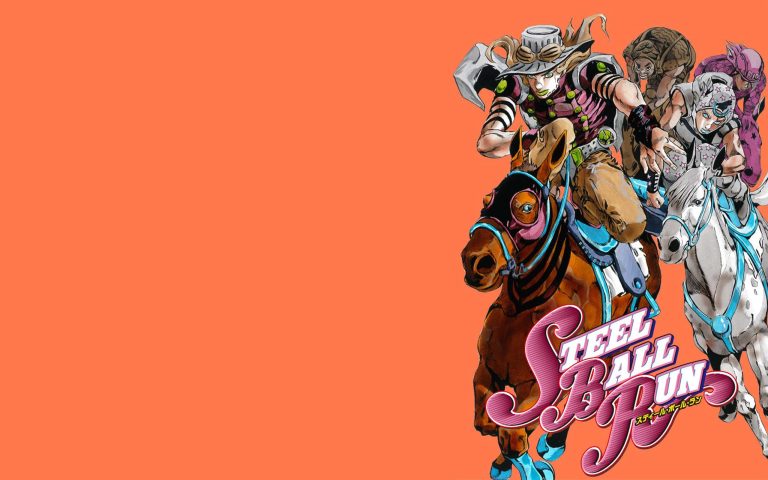
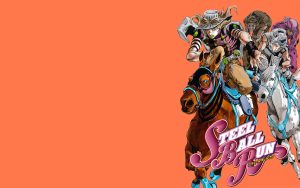
No longer shackled by the hyper-accelerated pacing, commercial constraints, and content censorship of standard shonen demographics, Araki crafted a sprawling, dust-choked neo-western. Set against the sun-baked panorama of 1890 North America, the plot follows an eccentric collection of international outlaws, aristocrats, and scoundrels competing in the eponymous Steel Ball Run: a cross-country endurance horse race from San Diego Beach to New York City with a staggering $50 million grand prize.
Underneath the racing pageantry, however, lies an existential pilgrimage. Araki seamlessly fused historic Americana with Lovecraftian mysticism, reframing Stand battles not as street-brawling “punch ghosts,” but as metaphysical manifestations tied to the terrestrial landscape, esoteric geometry, and the quest for the mummified relics of an ancient Saint. The result is a work of breathtaking literary maturity, boasting moral shades of gray rarely glimpsed in conventional action manga.
Johnny Joestar and Gyro Zeppeli: A Masterclass in Character Synergy
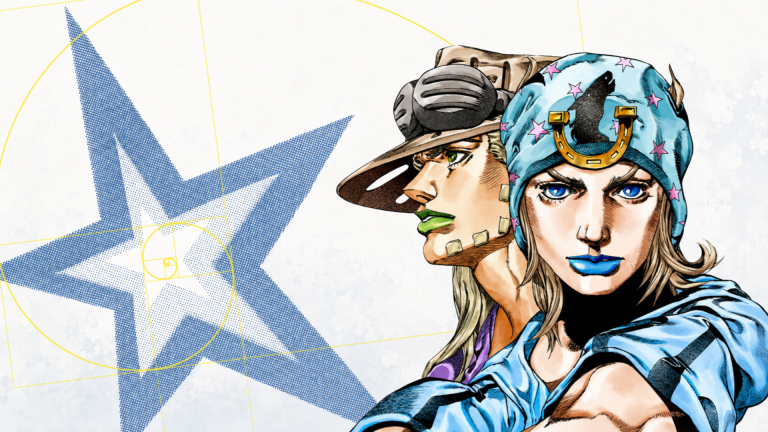
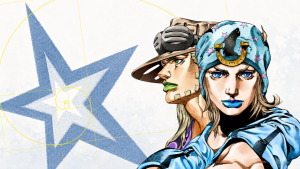
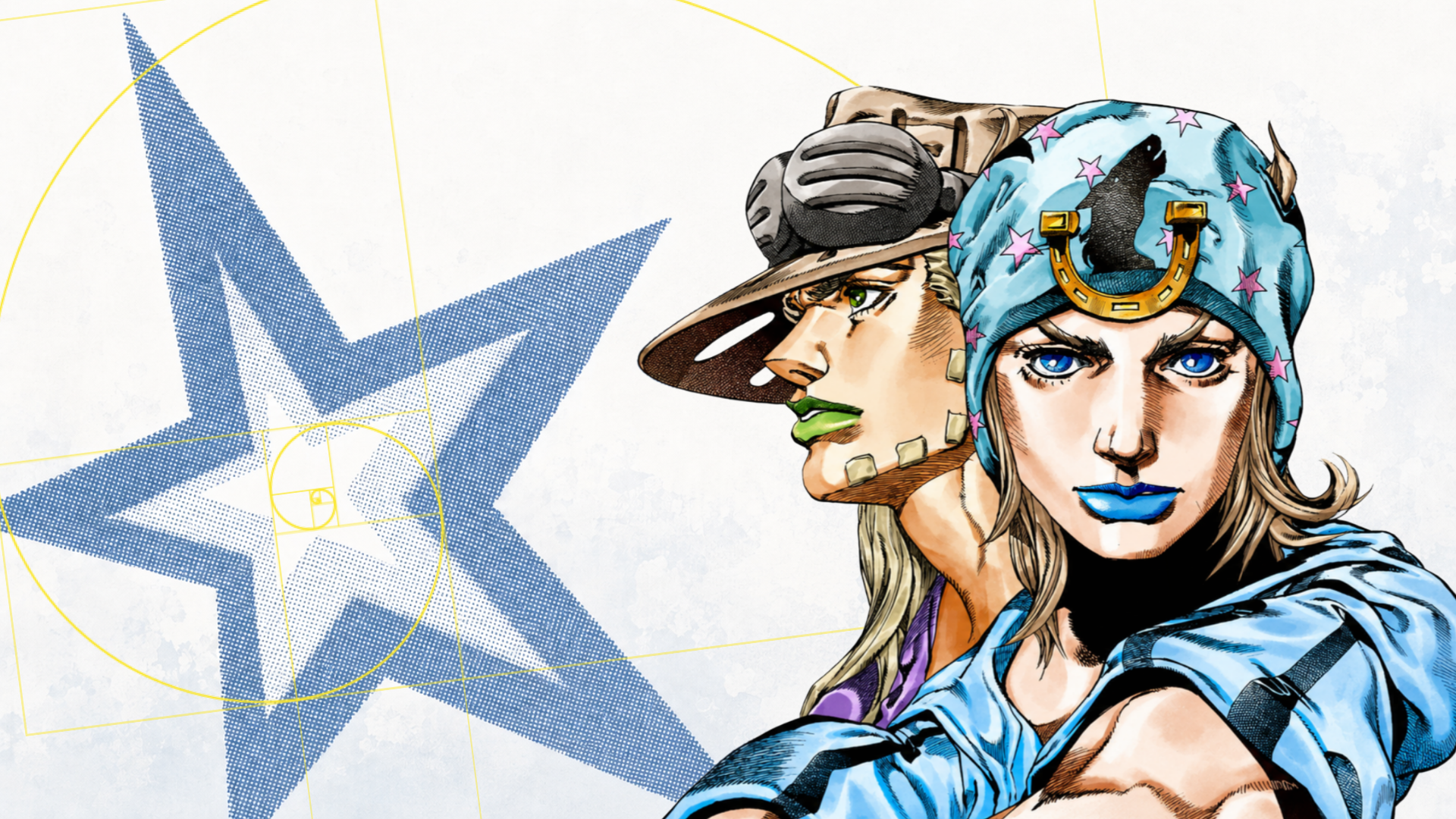
At the center of this sun-scorched odyssey is arguably the most compelling dual-protagonist dynamic in modern sequential art. Where previous JoJo duos thrived on theatrical machismo or mentor-student paradigms, the relationship between Johnny Joestar and Gyro Zeppeli is a raw, agonizing dissection of human vulnerability and co-dependency.
A Broken Prodigy: Johnny’s Dark Determination
Johnny Joestar is unlike any protagonist who carries the Joestar moniker. Stripped of his former glory as a prodigy jockey by a reckless stunt that left him paralyzed from the waist down, Johnny begins his journey not as a champion of justice, but as a cynical, self-pitying shell of a man. His primary motivation is brutally selfish: he joins the race merely because touching one of Gyro’s mystical steel spheres momentarily restored feeling to his legs.
Araki endows Johnny with what the narrative overtly terms “dark determination”—an unyielding, sometimes terrifying willingness to commit moral atrocities to achieve his goals. His Stand, Tusk, mirrors his psychological reconstruction, evolving across four distinct “Acts” from an infantile, fingernail-shooting anomaly into an interdimensional colossus driven by infinite kinetic energy.
The Executioner’s Burden and the Esoteric “Spin”
In sharp contrast to Johnny’s quiet desperation stands Gyro Zeppeli, a disgraced executioner from the Kingdom of Naples whose ostentatious grill (“GO! GO! ZEPPELI”), absurd puns, and eccentric bravado mask an agonizing crisis of conscience. Gyro is running the race to secure an amnesty pardon for an innocent young boy sentenced to death back home.
Rather than relying primarily on a Stand, Gyro utilizes The Spin (Kaiten)—an ancient, family-kept martial science based on the Golden Ratio and Fibonacci sequence. The Spin represents one of Araki’s most inventive combat philosophies: harnessing the natural, infinite rotation found within nature, plants, and human muscle to create miraculous gravitational forces. The interplay between Gyro’s pragmatic mysticism and Johnny’s desperate pursuit of self-worth gives the series an emotional resonance that hits far harder than standard battle-anime camaraderie.
The David Production Dilemma: The Equestrian Animation Wall
If the narrative of Steel Ball Run is a flawless blueprint, the actual architectural construction of the anime represents an industry-wide panic attack. There is an open secret within the Tokyo animation industry: horses are career-killers for animators.
The mammalian anatomy of a horse in motion involves an intricate, rhythmic coordination of bones, flexed tendons, and shifted center-of-gravity that cannot be easily cheated via standard keyframing shortcuts. In Steel Ball Run, Araki does not draw horses as static background props; they are kinetic, sweat-drenched, dynamic co-stars locked in pack charges across rivers, plateaus, and treacherous snowscapes.
For David Production, who has helmed the franchise since the 2012 premiere of Phantom Blood, adapting this series requires a paradigm shift:
The 3DCG Hybrid Requirement: To survive the sheer volume of equestrian combat, David Production must inevitably rely on heavy 3D CGI integration for the horses. While the studio demonstrated fantastic digital asset blending in Fire Force and the later parts of Stone Ocean, the fandom remains historically wary of stiff, low-framerate CGI in prestige anime.
Maintaining the Araki Aesthetic: The studio’s signature visual identity—on-screen sound effects (katakana), bold hatching lines, saturated pop-art color shifts—must successfully translate onto sweeping, wide-lens frontier vistas without losing the tactile grit of the manga’s physical inkwork.
Funny Valentine, D4C, and the Metaphysics of Manifest Destiny
An adaptation discussion cannot omit the series’ colossal antagonist: President Funny Valentine. Standing tall among anime’s all-time greatest villains, Valentine embodies hyper-patriotic zealotry, wielding his iconic philosophical monologue of the “First Napkin” to justify global conquest under the banner of American exceptionalism.
Valentine’s Stand, Dirty Deeds Done Dirt Cheap (D4C), weaponizes the multiverse, allowing him to traverse parallel realities simply by pressing himself between two objects. When D4C eventually clashes with the apex of Johnny’s Golden Spin, the manga transcends physical brawling into high-concept metaphysical horror. Bringing these mind-bending spatial paradoxes, alternate universe duplicates, and terrifying dimensional shears to life with sound design and cinematic pacing will be the ultimate trial of David Production’s technical direction.
The Verdict: The Most Demanded Project in Modern Anime
The anticipation for Steel Ball Run is no longer quiet speculation; it is an echoing war cry across the pop-culture landscape. Following the fragmented, controversial batch-release model that hindered Stone Ocean’s cultural momentum on Netflix, fans are desperately advocating for a return to a weekly, serialized television broadcast model. A weekly release is the only way to do justice to the serialized drama, cliffhangers, and collective community analysis that an event of this magnitude demands.
David Production has not officially stamped an airdate on the project, but the breadcrumbs of pre-production murmurs continue to stir the pot. Whenever the starting pistol finally fires, JoJo’s Bizarre Adventure: Steel Ball Run will not merely be another seasonal anime drop—it will be an industry-defining reckoning. Saddle up, lock in your horses, and practice your Golden Spirals. The race across the American frontier is coming, and anime will never be the same.
What are your biggest hopes and fears for David Production’s Steel Ball Run adaptation? Drop your thoughts in the comments below, and stay tuned to Wibux.com for breaking updates, production leaks, and deep-dive anime analyses.