Ever since the bittersweet, melancholic chords of “Distant Dreamer” faded over the rebooted horizon of Stone Ocean, the anime community has existed in a collective state of suspended animation. For over a decade, David Production pulled off what critics once considered impossible: adapting Hirohiko Araki’s baroque, hyper-stylized generational saga without diluting its eccentricity. Yet, every celebrated premiere—from the neon-drenched streets of Morioh to the gilded tragedy of Naples—served as a preamble to an even greater artistic reckoning. The anime industry is now staring down the barrel of modern manga’s undisputed Holy Grail: JoJo’s Bizarre Adventure: Part 7 – Steel Ball Run.
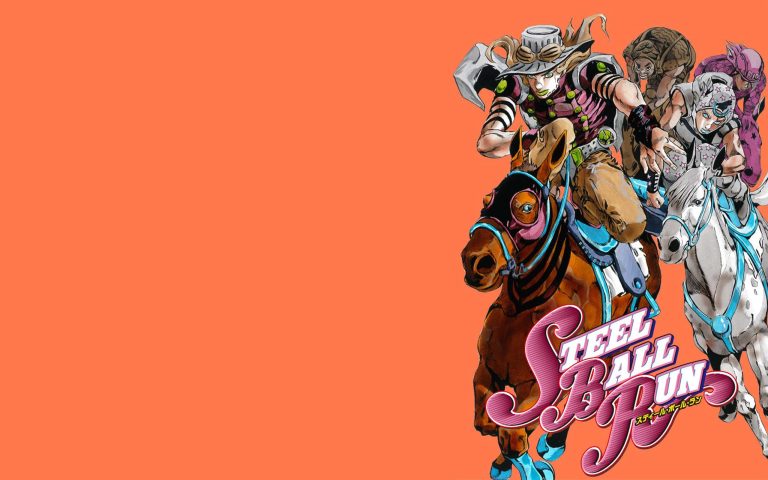
Currently reigning near the zenith of MyAnimeList’s all-time rankings, nestled right behind Kentaro Miura’s Berserk, Steel Ball Run is more than just another sequential narrative arc. It is Araki’s creative reinvention—a dust-caked, existential, transcontinental race through a reimagined 1890s America. As speculation builds regarding David Production’s production pipeline, the dialogue surrounding Steel Ball Run has shifted from a question of if to a terrifyingly ambitious question of how.
The Seinen Shift: Why Steel Ball Run Stands as Araki’s Magnum Opus
To understand the sheer magnitude of the anticipation, one must understand the tectonic creative shift that birthed Part 7 in 2004. Beginning serialization in Weekly Shonen Jump before migrating to the monthly pages of Ultra Jump, Steel Ball Run unshackled Araki from the grueling weekly deadlines and the demographic guardrails of traditional adolescent shonen. The monthly canvas granted him panoramic double-page spreads, nuanced historical texture, and psychological depth unprecedented in his earlier works.
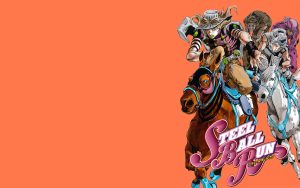
Set across a grueling 6,000-kilometer horseback race from San Diego Beach to New York City, the series pits international outlaws, fallen prodigies, and supernatural operatives against one another for a staggering $50 million purse. But behind the sporting spectacle lies a macabre search for the mummified, divine Corpse Parts scattered across the American frontier. Araki traded the urban runway fashion of Diamond is Unbreakable and Golden Wind for a gritty revisionist Western, steeped in religious iconography, political intrigue, and existential philosophy.
Reinventing the Multiverse Without Nostalgia Baits
Unlike contemporary Hollywood reboots that lean on cheap callbacks, Araki used the clean slate of the post-Part 6 cosmos to radically deconstruct his own mythos. Familiar names—Joestar, Zeppeli, Brando—reappear, but stripped of their prior moral simplifications. The American landscape feels vast, desolate, and genuinely hazardous, mirroring the psychological transformation of its protagonists.
Johnny Joestar and Gyro Zeppeli: The Deconstruction of the JoJo Dynamic
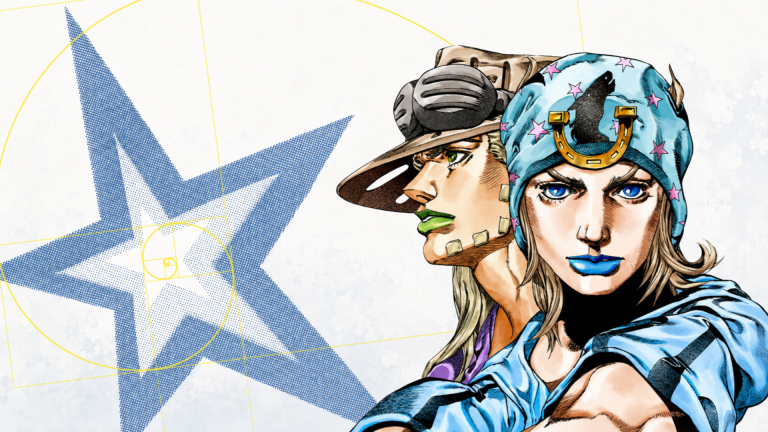
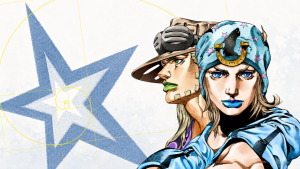
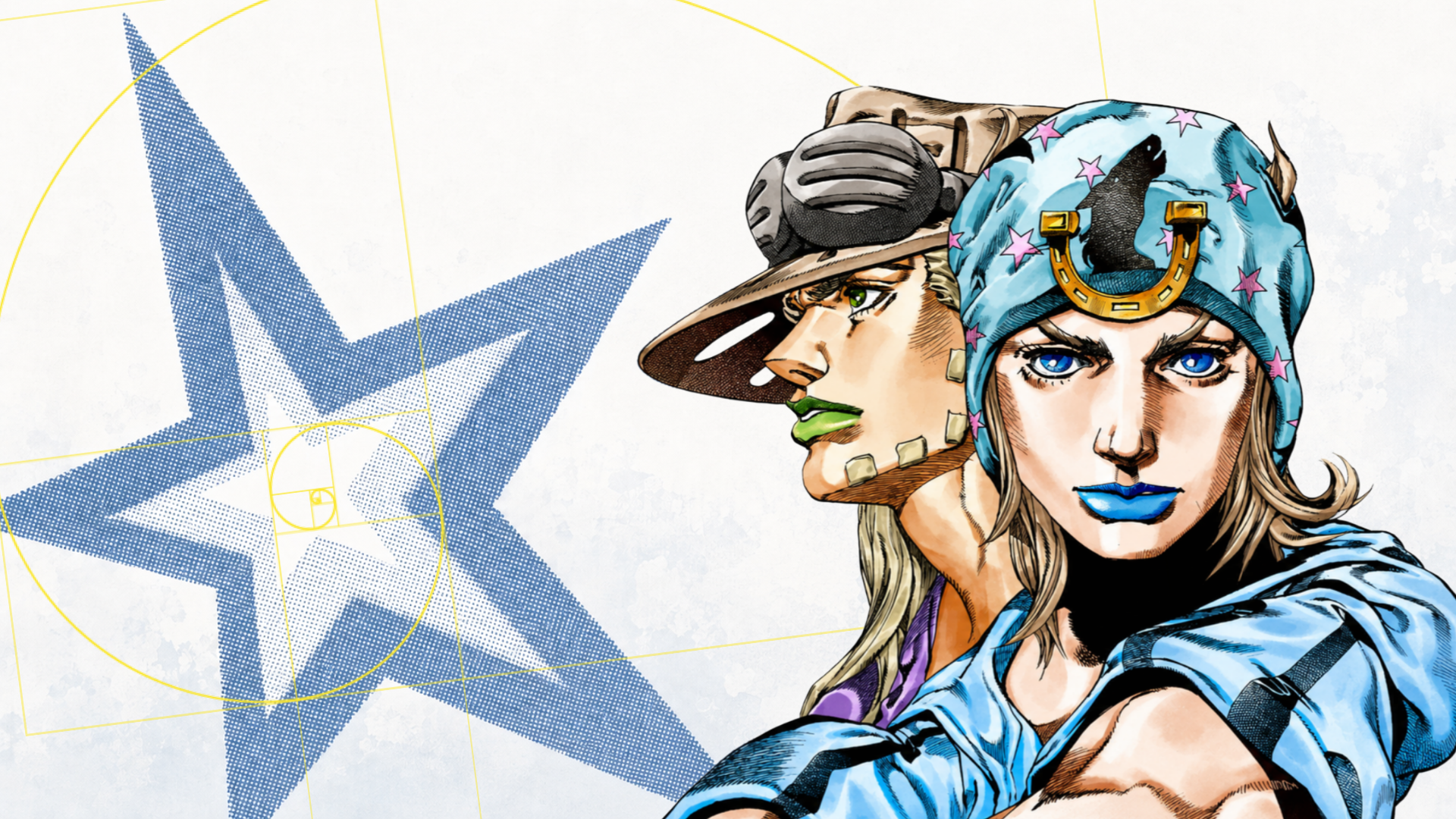
At the beating heart of this sprawling trans-American odyssey is the finest duo Araki has ever penned: Johnny Joestar and Gyro Zeppeli. Their dynamic elevates Steel Ball Run above its predecessors, shifting the thematic focus from unambiguous heroism to mutual, agonizing self-reclamation.
Johnny Joestar is not Jonathan’s gentlemanly paragon or Jotaro’s stoic knight. He begins as a disgraced, arrogant horse-racing prodigy who was paralyzed from the waist down in a petty altercation. Depressed, cynical, and desperate, Johnny is driven by what characters in the narrative repeatedly identify as “dark determination”—an unrelenting, pitch-black desperation to reach “zero” from “negative.” He is an unabashedly flawed anti-hero willing to sacrifice morality if it means regaining the use of his legs and reclaiming his spirit.
Enter Gyro Zeppeli, a disgraced Neapolitan executioner’s son armed with steel spheres, a grill carved with “GO! GO! ZEPPELI,” and an absurd penchant for operatic comedy routines about cheese. Behind his flamboyant exterior, Gyro is carrying the weight of a condemned boy’s impending execution back in his homeland. Gyro becomes Johnny’s reluctant mentor, not through grand speeches, but through a shared road trip forged in campfire banter, shared misery, and the rigorous mechanics of an ancient martial discipline.
From Hamon to Stands, to the Golden Ratio: The Lore of the Spin
Combat in Steel Ball Run represents the apex of Araki’s mechanical creativity. While Stands remain integral to the combat ecosystem, they are contextualized through a brand-new mystical framework: The Spin.
Serving as the spiritual successor to Part 1 and 2’s Hamon, the Spin is rooted in Renaissance geometry, physics, and the golden ratio—the Fibonacci sequence manifested as kinetic energy. Gyro manipulates this rotational force through steel spheres to distort flesh, alter environments, and bend biological systems. When Johnny adopts this discipline, his evolving Stand, Tusk, maps his journey across four distinct developmental “Acts”:
- Act 1: Basic nail-spinning projectiles born of raw desperation.
- Act 2: Golden-ratio-infused spatial movement via rotating nail holes.
- Act 3: Spatial suicide and repositioning through self-inflicted vortexes.
- Act 4: An interdimensional powerhouse representing the realization of the infinite rotation.
This systematic progression transforms battle encounters from standard anime brawls into lethal, psychological games of chess, culminating in an ideological clash against Funny Valentine, a United States President whose Stand, Dirty Deeds Done Dirt Cheap (D4C), weaponizes parallel realities in the name of twisted, utilitarian patriotism.
The David Production Dilemma: The Terrifying Burden of Equestrian Animation
If the narrative demands of Steel Ball Run are staggering, the technical demands on David Production are practically unprecedented in modern TV animation. There is an industry-wide adage among animators: never draw horses if you can avoid it. Animating a four-legged gallop requires complex skeletal shifts, muscular deformation, and dynamic foreshortening—a reality that broke productions like Attack on Titan, which had to rely on clever staging and selective cuts to mask the difficulty.
The 2D vs. 3D Hybrid Equation
Steel Ball Run features dozens of racers charging simultaneously across open terrain at breakneck velocities. Hand-drawing hundreds of cuts of galloping stallions over a projected 36-to-48-episode run is an economic and physical impossibility for any studio operating on modern broadcast deadlines. David Production must successfully integrate hyper-sophisticated, cel-shaded CGI horses with meticulously hand-drawn riders.
The studio proved its mastery of stylistic integration in the CG openings of Parts 1 through 3 produced by Kamikaze Douga, as well as the stylized vehicular sequences in Golden Wind. However, Part 7 requires a tonal subtlety that prior CGI experiments lacked. The texture of sweat, churned dirt, and the tactile recoil of a Winchester rifle must merge seamlessly with Araki’s heavy hatching and signature saturated color shifts. How David Production tackles this logistical nightmare will set a technical precedent for the entire anime industry.
The Anticipation Horizon: Anime’s Next Landmark Adaptation
The global hype surrounding Steel Ball Run has ceased to be an insular fandom quirk; it is a full-blown cultural event waiting for a release date. Fan animations, orchestral mockups of Gyro’s musical tangents, and concept trailers routinely garner millions of views across YouTube and social platforms. The audience is not merely hungry for Part 7; they are reverent of it.
Whenever David Production chooses to pull the curtain back—whether at an upcoming Jump Festa or an exclusive Warner Bros. Japan showcase—it will mark the beginning of an era that could fundamentally shift how mature, literary manga adaptations are perceived on the global stage. Steel Ball Run is a tragic, beautiful, and profoundly bizarre chronicle of human fallibility. All that remains is for the starting pistol to fire.
Which sequence from the race are you most desperate to see David Production bring to life—the mind-bending mystery of “A Silent Way,” the stoic tragedy of Ringo Roadagain’s “True Man’s World,” or Valentine’s dimensional convergence? Let us know in the comments below!