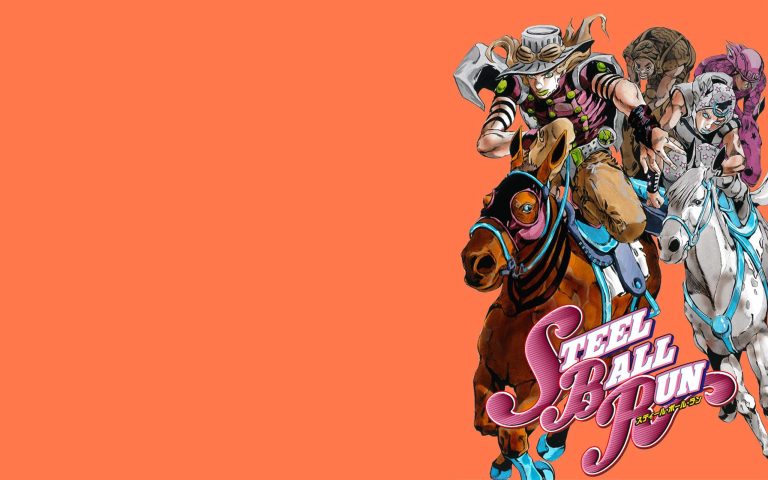

Ever since Jolyne Cujoh gazed into the rain-slicked skies of Cape Canaveral at the climax of Stone Ocean, a singular, obsessive question has reverberated through the global anime zeitgeist: When does the race begin? For over a decade, Hirohiko Araki’s seventh serialized entry, JoJo’s Bizarre Adventure: Steel Ball Run, has existed as both the promised land of modern manga and an intimidating white whale for television animation. Perched immovably atop critical aggregators like MyAnimeList as one of the highest-rated sequential narratives in history, Steel Ball Run is not just another seasonal cour in waiting—it is a monumental paradigm shift. As David Production catches its breath following a grueling decade of bringing Parts 1 through 6 to life, the rumblings surrounding Johnny Joestar and Gyro Zeppeli’s transcontinental trek have transformed from wishful internet chatter into an industry-defining anticipation.
A Transcontinental Pilgrimage: The Seinen Rebirth
To understand why the adaptation buzz around Steel Ball Run hits with tectonic force, one must understand its unique publication history. When serialization began in 2004 under the banner of Weekly Shonen Jump, it was cryptically marketed merely as Steel Ball Run, distancing itself from the generational brand of JoJo. However, its true metamorphosis occurred a year later with a migration to the monthly pages of Ultra Jump. Unshackled from the suffocating editorial boundaries and frantic weekly deadlines of shonen demographics, Hirohiko Araki executed a creative reinvention of staggering proportion.
Set against the sprawling, mythic backdrop of late-nineteenth-century America, the narrative follows a brutal, 6,000-kilometer cross-country horseback race boasting an unprecedented fifty-million-dollar bounty. But beneath the dust, gunpowder, and roaring steam engines lies an audacious soft reboot of the franchise’s continuity. Araki utilized this alternate timeline not to discard his past work, but to deconstruct it. The melodramatic Victorian virtue of Jonathan Joestar was burned away, replaced by the moral ambiguity, gritty violence, and poetic despair of a frontier nation tearing itself open in search of identity.
Johnny and Gyro: A Masterclass in Character Deconstruction
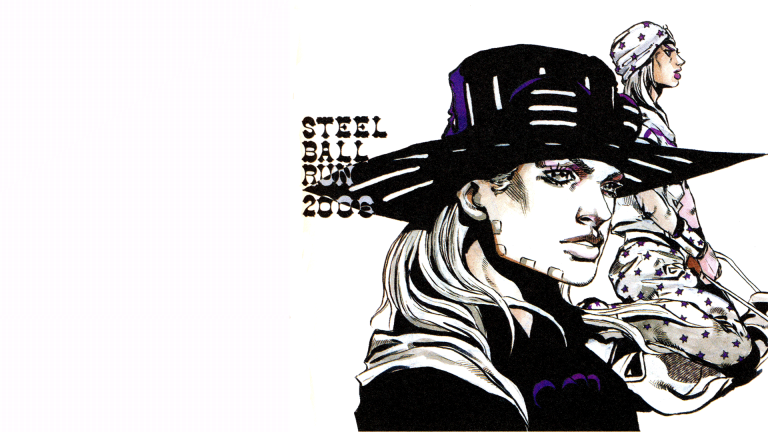
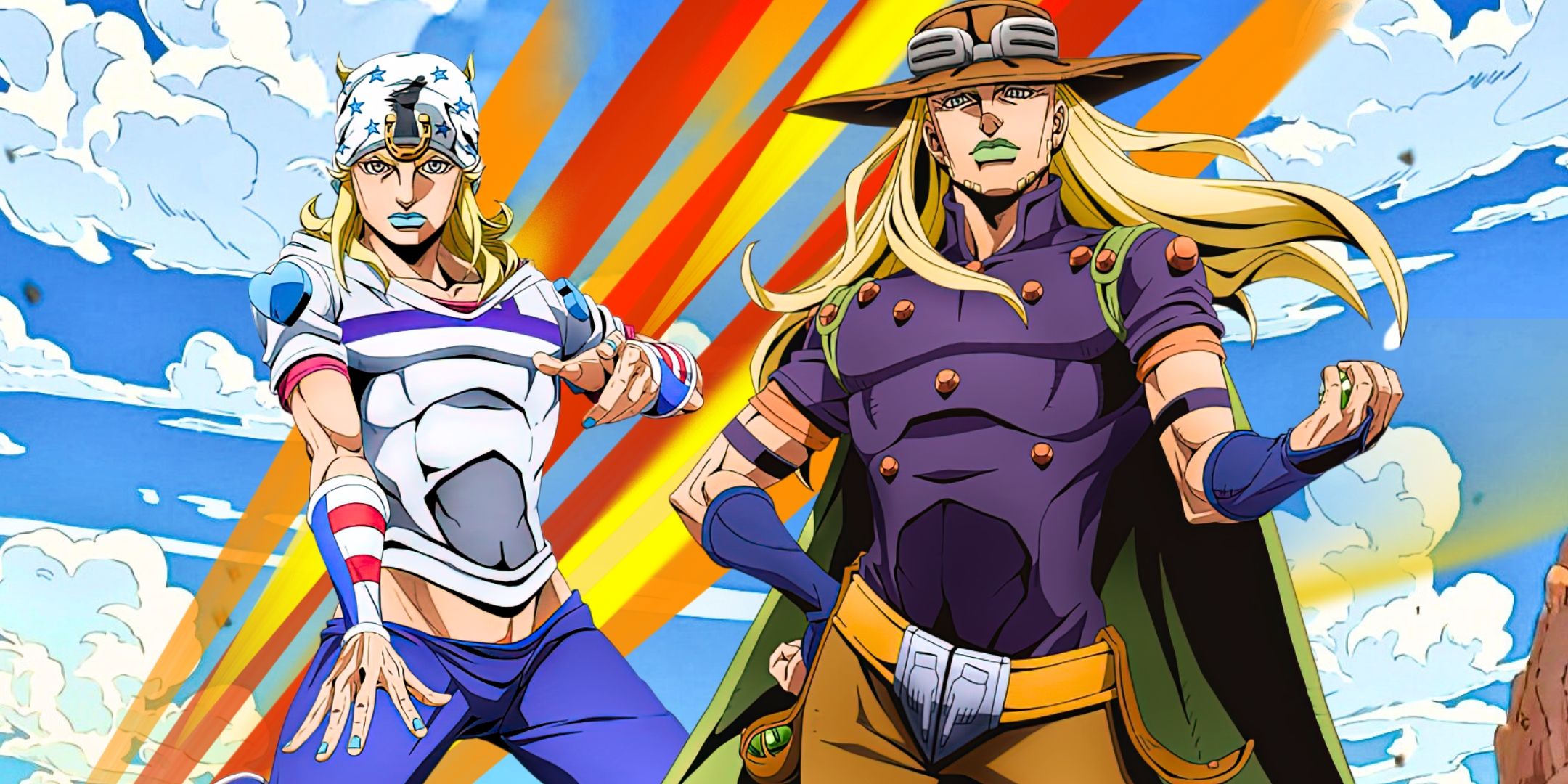
At the beating heart of this sprawling Western epic is arguably the finest dynamic duo ever drafted in sequential art: Johnny Joestar and Gyro Zeppeli. Their rapport elevates Steel Ball Run beyond mere genre homage into a sublime study of trauma, existentialism, and redemption.
Johnny Joestar is a deliberate antithesis to classic heroic tropes. Paralyzed from the waist down following a youthful display of arrogance, Johnny is neither noble nor altruistic. He begins the journey driven by self-pity and a raw, gnawing hunger to regain the function of his legs. He possesses what Araki canonically refers to as “dark determination”—an unblinking willingness to kill if it advances his survival or brings him an inch closer to his goals. Watching Johnny drag his paralyzed body through freezing mud and arid deserts is uncomfortable, harrowing, and profoundly human. His Stand, Tusk, mirrors this psychological journey, evolving across four distinct “Acts” from fragile physical nails into a reality-shattering cosmic force.
Balanced against Johnny’s brooding desperation is Gyro Zeppeli, a disgraced Neapolitan executioner’s son racing to save an innocent child from political death row. Brash, flamboyantly comedic, yet weighed down by familial obligation, Gyro acts as both Johnny’s mentor and spiritual anchor. Whether delivering absurd musical improvisations about Italian cuisine or philosophizing on the brutal realities of the frontier, Gyro represents the tragic, noble core of the Zeppeli bloodline perfected.
The Philosophy of the Spin vs. Traditional Stands
Narratively, Part 7 radically recontextualizes the series’ supernatural power system. While Stands remain present—often manifesting as eerie, utilitarian tools of death—they take a backseat to The Spin. Rooted in Renaissance mathematics, the golden rectangle, and anatomical biomechanics, the Spin is an ancient kinetic martial art mastered via specially crafted steel spheres. It brings a grounded, tactical weight back to the fights, prioritizing trajectory, environmental physics, and mental stamina over brute force. When translated to screen, the visualization of the golden spiral promises a geometric and kinetic ballet unlike anything David Production has previously staged.
The Animator’s Crucible: David Production and the Equestrian Hurdle
If Steel Ball Run is universally regarded as a narrative masterpiece, why has it taken so long to manifest on the small screen? The answer lies in a single, terrifying word for animators: horses.
Equine locomotion is widely recognized in the animation industry as one of the most notoriously complex and labor-intensive feats to execute in two dimensions. Part 7 does not merely feature occasional cavalry charges; it features hundreds of individual race participants, galloping across dynamic, changing terrains across nine grueling stages. Animating dynamic muscle flexion, correct four-beat gait cadence, realistic harness physics, and camera parity in standard hand-drawn 2D for a 36-to-48-episode run would bankrupt traditional production pipelines and crush animators under inhuman workloads.
David Production faces a profound technical crossroads that will define the project’s visual identity:
- Hybrid 3DCG Integration: The studio must likely adopt and refine the high-end cel-shaded 3DCG pioneered by studios like Orange (Land of the Lustrous, Trigun Stampede) or MAPPA’s complex rendering for mechanical sequences. Low-cost CGI horses have derailed countless high-profile anime in the past; Part 7 demands bespoke, artist-driven modeling where riders and mounts blend seamlessly.
- Production Scope and Pipeline Overhaul: The chaotic scheduling that burdened the release batches of Stone Ocean on Netflix cannot be repeated. An adaptation of this magnitude requires an extended pre-production cycle, deep collaboration with veteran action directors, and a pacing framework that respects Araki’s expansive splash pages and sweeping desert vistas.
Manifest Destiny and Moral Ambiguity: The Valentine Factor
Beyond the logistical nightmare of its animation, Steel Ball Run captivates the community because its narrative stakes are philosophically dense. Enter Funny Valentine, the 23rd President of the United States and undeniably Araki’s most layered antagonist. Valentine is not a cartoonish serial killer like Yoshikage Kira or a power-hungry apex predator like Dio Brando. He is an uncompromising patriot whose pursuit of the mummified Corpse of Jesus Christ—scattered across the American heartland—is driven by an ideological desire to secure his country’s absolute geopolitical and divine dominance.
Armed with his dimension-traversing Stand, Dirty Deeds Done Dirt Cheap (D4C), Valentine challenges the audience by asking difficult questions: Does unyielding patriotism justify atrocious means? Who is truly evil: an elected leader striving to make his nation invulnerable to tragedy, or two desperate outlaws murdering for personal closure and divine artifacts? When the final clash arrives, the philosophical friction is as devastating as the physical blows.
The Starting Line Awaits
We are currently standing in the quiet eye of the storm. Industry rumblings, cryptic domain updates, and anniversary retrospectives suggest that David Production has not forgotten Johnny and Gyro; rather, they are taking the necessary time to forge a pipeline capable of carrying Araki’s magnum opus. When the starting gun finally sounds, it will not merely mark the return of a beloved anime franchise. It will test the absolute limits of contemporary TV animation and deliver an uncompromising, dirt-stained odyssey that will redefine what high-tier anime storytelling can achieve.
How do you think David Production should tackle the legendary horse animation hurdle—pure 2D, or stylized 3D hybrid? Drop your theories, favorite Part 7 moments, and dream voice casts in the comments below, and stay tuned to Wibux.com for breaking updates on the JoJo universe!