
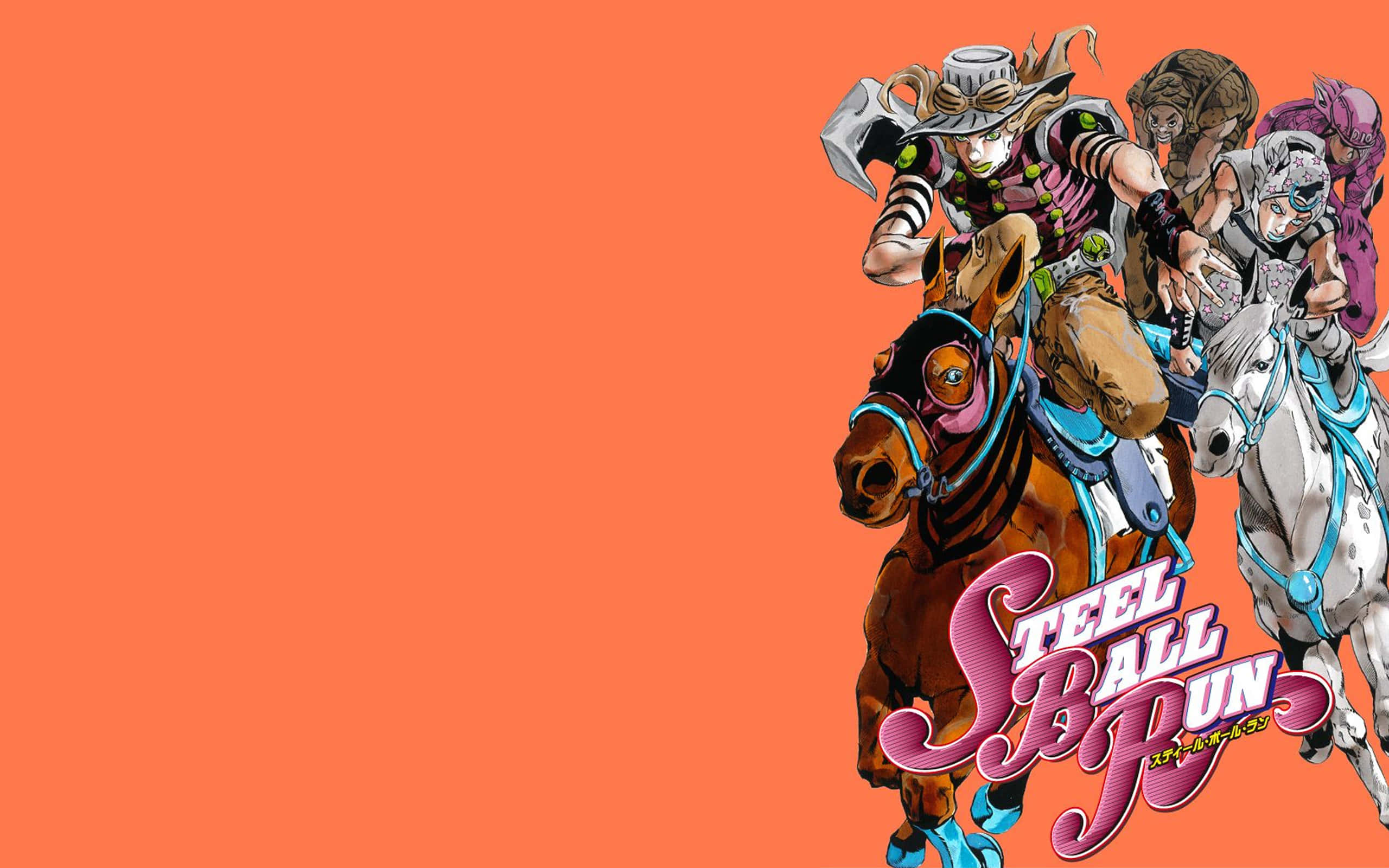
Ever since the bittersweet, melancholic chords of “Roundabout” faded out and the universe-resetting deluge swept across the climax of Stone Ocean, the anime community has lived in a perpetual state of suspended animation. The cultural footprint of Hirohiko Araki’s multi-generational saga is undeniable, but within the hallowed halls of manga discourse, one milestone stands taller than the rest: JoJo’s Bizarre Adventure: Steel Ball Run. Long regarded as Araki’s magnum opus—sitting comfortably alongside Berserk atop global critical rankings—Part 7 is less of a typical shonen transition and more of an ontological shift. For David Production, adapting this trans-American odyssey represents their greatest creative and technical frontier to date.
The rumor mills are churning, social media forums parse every studio job listing for horse-rigging animators, and fans are hungry for confirmation. But bringing Steel Ball Run to life is not merely a matter of greenlighting another cour; it requires orchestrating a historical, thematic, and technical reinvention of modern television anime.
A Transcontinental Canvas: The Seinen Evolution of Hirohiko Araki
To understand the sheer magnitude of the Steel Ball Run anticipation, one must understand its historical context within the medium. Serialized in 2004, the story initially carried little explicit connection to the JoJo lineage, debuting in Weekly Shonen Jump before migrating to the monthly seinen publication Ultra Jump in 2005. That editorial shift unlocked something primal in Araki. Freed from the relentless weekly turnaround and the censorship shackles of youth-oriented demographics, Araki leaned into sweeping vistas, mature existential angst, nuanced political commentary, and grotesque body horror.
Set against the sprawling backdrop of 1890 North America, the premise is deceptively accessible: eccentric philanthropist Steven Steel organizes a cross-country equestrian race spanning 6,000 kilometers from San Diego Beach to New York City, dangling a staggering $50 million grand prize. Yet, beneath the dust, hooves, and gunsmoke lies a multi-layered supernatural conspiracy revolving around the pursuit of the mummified Corpse Parts of an unnamed holy figure. It is an American mythos rewritten through Araki’s high-fashion, surrealist lens, discarding the straightforward battle-of-the-week framework in favor of an unrelenting survival thriller.
The Paraplegic and the Executioner: Character Symbiosis at its Peak
Johnny Joestar’s Dark Determination
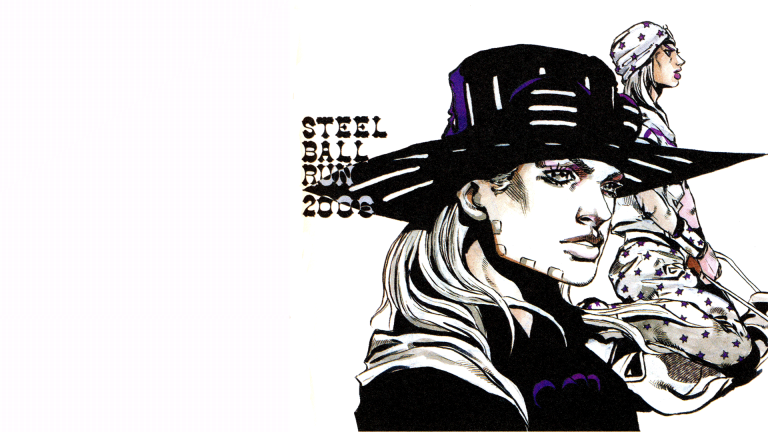
At the center of this grueling pilgrimage sits Johnny Joestar, perhaps the most psychologically complex protagonist ever penned under the “JoJo” moniker. Unlike the altruistic gentlemen Jonathan or the effortlessly cool Jotaro, Johnny begins his journey as an arrogant former prodigy jockey who was shot, paralyzed from the waist down, and discarded by high society. He is profoundly flawed, bitter, and driven by a desperate, almost terrifying hunger to walk again—a psychological state Araki explicitly terms “dark determination.” Johnny is not a savior; he is a broken man clawing his way out of spiritual and physical damnation, making his moral ambiguity a fascinating engine for the overarching narrative.
Gyro Zeppeli and the Mastery of the Spin
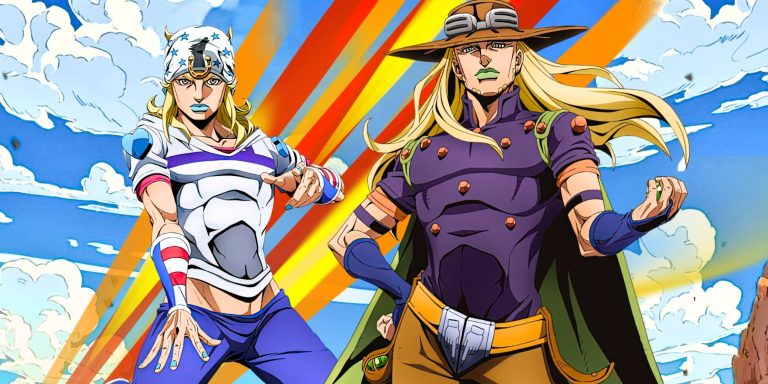
Counterbalancing Johnny’s brooding desperation is Gyro Zeppeli, a disgraced Neapolitan executioner armed with steel spheres, a grill featuring “GO! GO! ZEPPELI,” and a seemingly bottomless well of eccentric humor. Gyro does not run the race for glory; he runs to secure royal clemency for an innocent boy sentenced to death back home. The dynamic between Johnny and Gyro represents the pinnacle of Araki’s character writing: an organic, brotherly symbiosis forged through shared campfire banter, bizarre Italian pop ballads, and agonizing mutual trauma.
Furthermore, Gyro introduces The Spin, an ingenious power system rooted in the Fibonacci sequence and the Golden Ratio. Where Stands had previously dominated the franchise, the Spin brings a tactile, pseudo-scientific weight back to the combat. It isn’t just about punching ghosts faster; it is about momentum, kinetic energy, anatomical manipulation, and the sublime harmony between nature and human will. When Johnny eventually begins developing his own Stand, Tusk, through the lessons of the Spin, the evolution feels intensely earned—a physical manifestation of spiritual rehabilitation.
The Galloping Nightmare: David Production’s Equestrian Mountain
If Steel Ball Run is universally celebrated on paper, why has the anime adaptation taken so long to manifest? The answer can be summed up in a single word: horses.
Any seasoned animator will tell you that the four-legged gait of an equestrian animal is among the most notoriously complex feats to illustrate by hand. Capturing the hyper-kinetic anatomy, muscular expansion, shifting perspective, and sheer velocity of dozens of horses racing neck-and-neck through prairies, deserts, and blizzards is an industrial nightmare. Historically, modern anime studios that attempt extensive horse sequences either succumb to schedule collapses or pivot to stiff, uninspired 3D CGI that alienates viewers.
David Production, which has lovingly nurtured the JoJo franchise since 2012, faces a monumental task. The studio cannot afford the shortcuts of the past. To preserve Araki’s intensely detailed line work and chiaroscuro cross-hatching while depicting an uninterrupted cross-country derby, David Production will likely need to pioneer an unprecedented hybrid pipeline. Speculation within production circles suggests a bespoke workflow utilizing high-framerate 3D models augmented with extensive hand-drawn corrective layers—similar to the approach utilized in modern cinematic spectacles like Chainsaw Man or the action sequences in Orange’s Trigun Stampede.
Coming off their work on Undead Unluck, Urusei Yatsura, and the upcoming slate of projects, the studio’s talent pool has matured, but the production pipeline requires meticulous resource allocation. Fandom consensus is clear: audiences are willing to endure a lengthy wait, provided the visual execution matches the prestige of the source material.
Funny Valentine and the Moral Abyss of Patriotism
An adaptation of Steel Ball Run would also introduce anime audiences to what is arguably Araki’s greatest antagonist: Funny Valentine, the 23rd President of the United States. Valentine is neither a tyrannical madman seeking world domination for vanity’s sake nor an unhinged serial killer hiding in suburbia. He is an ultra-nationalist driven by deep-seated utilitarian ideology—the philosophical belief that the ultimate leader must be the one who “takes the first napkin.”
Through his reality-bending Stand, Dirty Deeds Done Dirt Cheap (D4C), Valentine weaponizes parallel dimensions, shifting the conflict from standard martial engagements to disorienting, multi-layered spatial puzzles. The thematic clash between Johnny’s selfish pursuit of personal rebirth and Valentine’s absolute, self-righteous sacrifice for national supremacy elevates the third act of Part 7 into an operatic showdown rarely rivaled in sequential art.
The Inevitable Horizon: When Will the Race Begin?
The cultural gravity of JoJo’s Bizarre Adventure ensures that Steel Ball Run is an inevitability, not an uncertainty. It marks the definitive gateway into the modern, alternate-continuity era of the franchise, serving as the thematic cornerstone that leads directly into JoJolion and the ongoing The JOJOLands. With physical manga releases from VIZ Media continuing to post explosive sales figures in the West, the commercial appetite for the Steel Ball Run derby is at an all-time peak.
Whether the official announcement arrives via an anniversary stream or an unannounced seasonal teaser, one reality remains resolute: David Production’s next chapter will either break the production studio or cement its place among the legendary animation powerhouses of our generation. When those steel spheres finally start spinning on television screens, the landscape of prestige anime will never be quite the same.
How do you think David Production should tackle the equestrian animation challenge? Are you holding out hope for a traditional 2D masterclass, or are you prepared to embrace high-end hybrid CGI? Drop your theories and character casting wishes in the comments below, and stay tuned to Wibux.com for breaking updates on the JoJo universe!