
Ever since the bittersweet, universe-altering crescendo of Stone Ocean faded to black in late 2022, a palpable, electrified silence has settled over the anime landscape. For over a decade, David Production pulled off what critics once deemed an impossible task: systematically adapting Hirohiko Araki’s labyrinthine, genre-defying generational saga with unflinching stylistic reverence. Yet, every milestone—from Jonathan Joestar’s gentlemanly clash with Dio Brando to Jolyne Cujoh’s high-stakes standoff at Cape Canaveral—has felt like a prelude to one singular, titanic monolith. We have finally reached the foothills of Part 7: Steel Ball Run.
Widely regarded by critics and purists alike as Araki’s magnum opus, Steel Ball Run is not just another seasonal cour waiting in the wings; it represents a monumental pivot in manga history. It is a grueling, 4,000-mile trans-American equestrian race wrapped in historical fantasy, cosmic horror, and political conspiracy. As rumblings within the industry intensify and David Production remains tight-lipped about their next big move, the anticipation surrounding how the studio will conquer this narrative frontier has reached a fever pitch. The question is no longer whether it will happen, but how any animation house can possibly shoulder its staggering technical and thematic weight.
The Seinen Evolution: Araki’s Narrative Masterstroke
To grasp why Steel Ball Run commands such reverence, one must understand its tumultuous genesis. Serialized initially in Weekly Shonen Jump in 2004 before migrating to the monthly, mature pages of Ultra Jump in 2005, Part 7 unshackled Araki from the editorial confines of typical teenage demographics. The move gave him the canvas to indulge in visceral realism, existential contemplation, and unprecedented moral ambiguity.
Set against the dusty, sun-bleached expanse of 1890s America, the Steel Ball Run race—conceived by the eccentric promoter Steven Steel—promises a $50 million purse to the victor who can navigate the unforgiving terrain from San Diego Beach to New York City. Beneath this spectacle of manifest destiny lies a covert, metaphysical scramble orchestrating historical warfare: the search for the scattered, sacred mummified relics of the Saint’s Corpse. Araki took the grand supernatural mechanics he invented in Part 3 and transposed them into a Sergio Leone-infused period epic, fusing historical Americana with cosmic terror. The result is a work of breathtaking ambition that permanently altered the creative DNA of JoJo’s Bizarre Adventure.
Johnny Joestar and Gyro Zeppeli: A Masterclass in Character Psychology
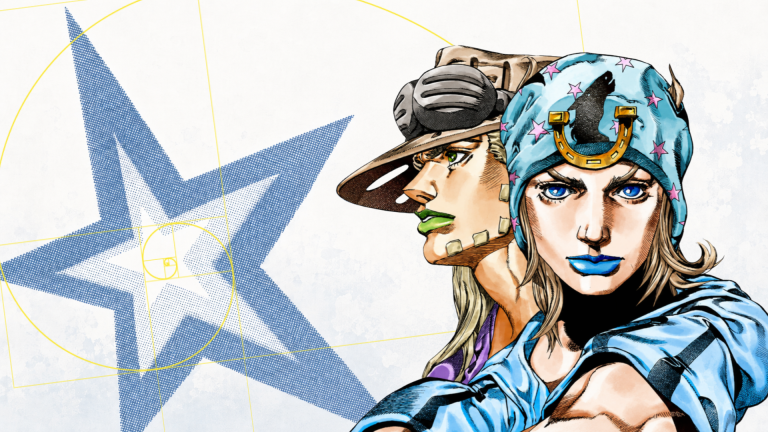
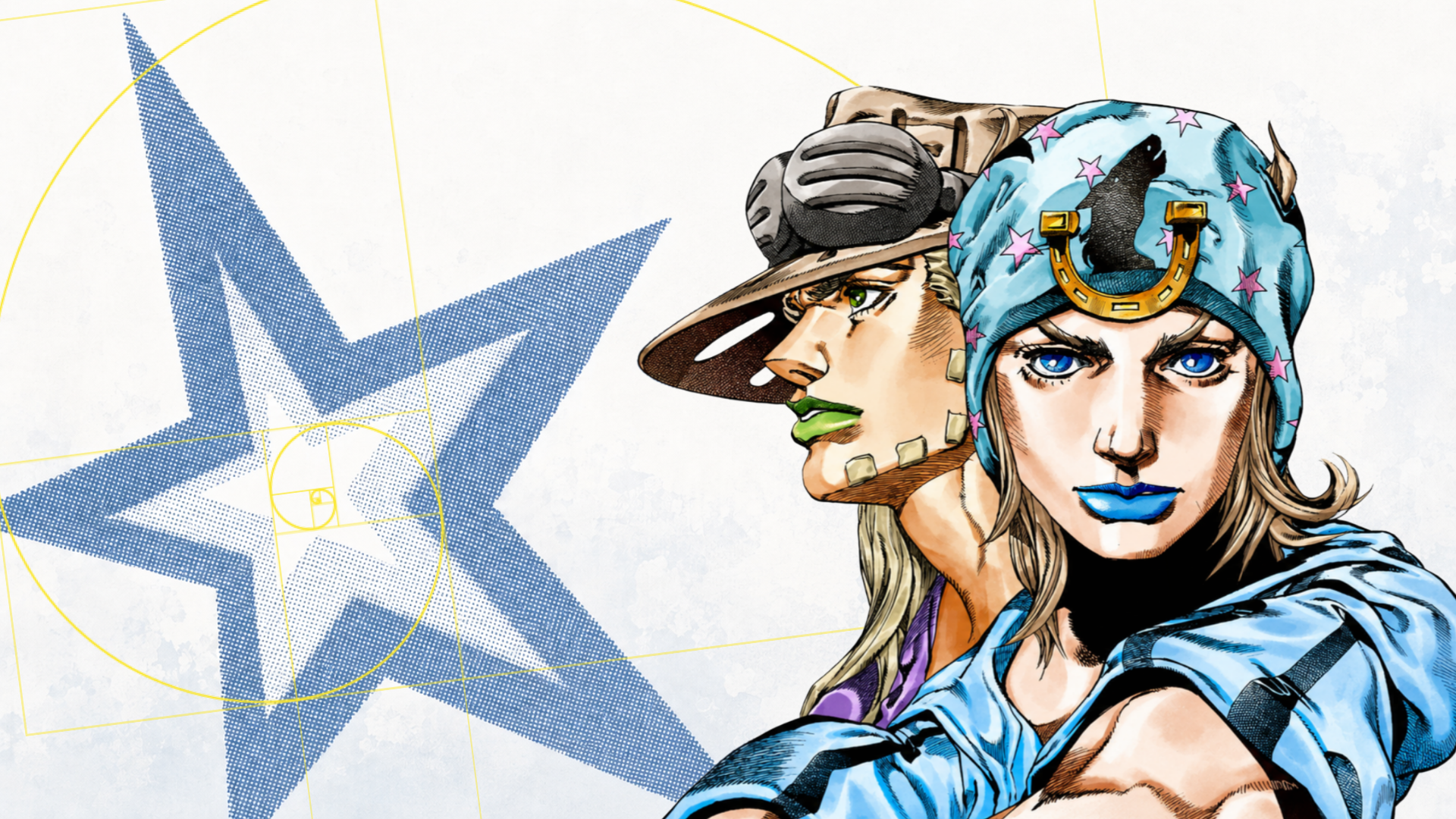
At the beating heart of this sprawling race is what may stand as the most complex deuteragonist dynamic in modern sequential art: Johnny Joestar and Gyro Zeppeli. Their partnership completely subverts the traditional shonen protagonist archetype.
The Crippled Prodigy: Johnny Joestar
Johnny is a former horse-racing prodigy whose reckless vanity cost him the use of his legs and his social standing. Unlike Jonathan’s unblemished virtue or Jotaro’s stoic coolness, Johnny is defined by an all-consuming desperation. He possesses what Araki often calls “Dark Determination”—a chilling, black-flame resolve willing to sacrifice morality, allies, or his own soul just to reclaim the feeling of his feet touching the earth. Johnny’s Stand, Tusk, visually tracks this psychological resurrection, evolving from a fragile, infantile creature into a colossal, dimension-shattering embodiment of raw consequence.
The Cynical Mentor: Gyro Zeppeli
Standing beside him is Gyro Zeppeli, a disgraced executioner from the Kingdom of Naples whose boisterous, grilled-gold-tooth exterior masks deep familial trauma and an agonizing quest to save an innocent child from the gallows. Gyro serves as Johnny’s mentor, companion, and philosophical anchor. The interplay between them—shifting seamlessly from philosophical debates on the curvature of nature to absurd, deadpan running gags like the “Pizza Mozzarella” song—grounds the mythic scale of the narrative in raw, beating humanity. They are two broken men dragging each other across a hostile continent toward personal salvation.
The Golden Ratio and Stand Evolution: Deconstructing the “Spin”
Where previous parts relied on the kinetic martial artistry of Hamon or the punch-ghost dynamics of Stands, Steel Ball Run re-contextualizes the series’ magic system through the Spin. Rooted in Renaissance geometry, the Fibonacci sequence, and cellular physics, the Spin is an ancient, medical, and martial tradition of harnessing rotational energy through spherical projectiles.
Araki treats the Golden Rectangle not merely as an art-class axiom, but as the fundamental resonance of the universe. When weaponized via Gyro’s steel balls or Johnny’s rotating fingernail bullets, the Spin bridges science and the supernatural. As the narrative escalates, this mathematical philosophy clashes head-on with classical Stand powers, peaking with complex spatial-temporal threats like Funny Valentine’s dimension-hopping Stand, Dirty Deeds Done Dirt Cheap (D4C). Translating these intricate, theoretical visual mechanics into dynamic 24-frame-per-second animation requires an unprecedented level of visual clarity and abstract artistry.
The Animation Everest: David Production’s Equestrian Nightmare
Why has the wait for a Steel Ball Run anime announcement felt so interminable? The answer comes down to cold, hard logistical reality: horses. Ask any veteran animator in Tokyo, and they will tell you that quadrupedal locomotion—particularly the anatomical anatomy of a galloping stallion—is the single most notoriously difficult and labor-intensive subject to animate by hand.
Steel Ball Run isn’t a story where horses occasionally gallop in the background of a sequence; the horses are the vehicles, the pacing, and the lifeblood of almost every major battle. Over 3,800 competitors charge through shifting biomes: scorching deserts, torrential rivers, snowy mountain passes, and dense urban sprawl. To animate dozens of uniquely designed equines interacting with human jockeys in high-velocity, close-quarters combat over the course of an estimated 36 to 48 episodes is an astronomical undertaking.
Industry insiders have long speculated how David Production will tackle this operational mountain:
- Hybrid 3D CGI: Utilizing sophisticated 3D models with hand-drawn cel-shading overlays—similar to methods perfected by Studio Orange (Beastars, Trigun Stampede)—to render the horses while keeping the riders hand-drawn.
- Production Timelines: Allocating an unprecedented pre-production buffer to map out camera angles, lighting conditions, and dynamic tracking shots that mask anatomical shortcuts without sacrificing Araki’s signature, heavy crosshatching style.
- Art Direction Overhaul: Adapting the painterly, hyper-detailed Renaissance aesthetic that Araki cultivated during the monthly serialization, which radically differs from the cleaner line work of Part 6.
David Production has consistently proven its devotion to the franchise, pioneering idiosyncratic color-palette shifts and sound-effect typography that define the anime’s pop-art identity. But Steel Ball Run is a completely different beast—it is David Production’s ultimate frontier.
The Horizon Awaits: A Cultural Event in the Making
The cultural appetite for Part 7 is deafening. Over the years, the internet has become a sprawling gallery of fan-made animatics, localized voice dub concepts, and orchestral reinterpretations of Western scores, highlighting a global audience primed to catapult this adaptation into the upper echelons of pop-culture relevance. Casting speculation alone—debating whether voice actors like Shinichiro Miki, Kaito Ishikawa, or fresh industry talents will step into the stirrups of Gyro and Johnny—routinely trends across social media platforms.
When the starting pistol finally fires, the Steel Ball Run adaptation will not merely be the continuation of a beloved franchise; it will be an industry litmus test for how modern television animation can translate ambitious, literary-grade graphic fiction to the screen. Araki gave the world a masterpiece of grit, grace, and redemption. Now, the baton—and the reins—rest in the hands of the animators tasked with making it run.
Are you holding out hope for a fully hand-drawn adaptation, or do you think high-end CGI is the only way to do justice to the Steel Ball Run race? Who is your dream voice casting for Johnny Joestar and Gyro Zeppeli? Sound off in the comments below, and keep your browsers locked to Wibux.com for all your frontline anime news!