
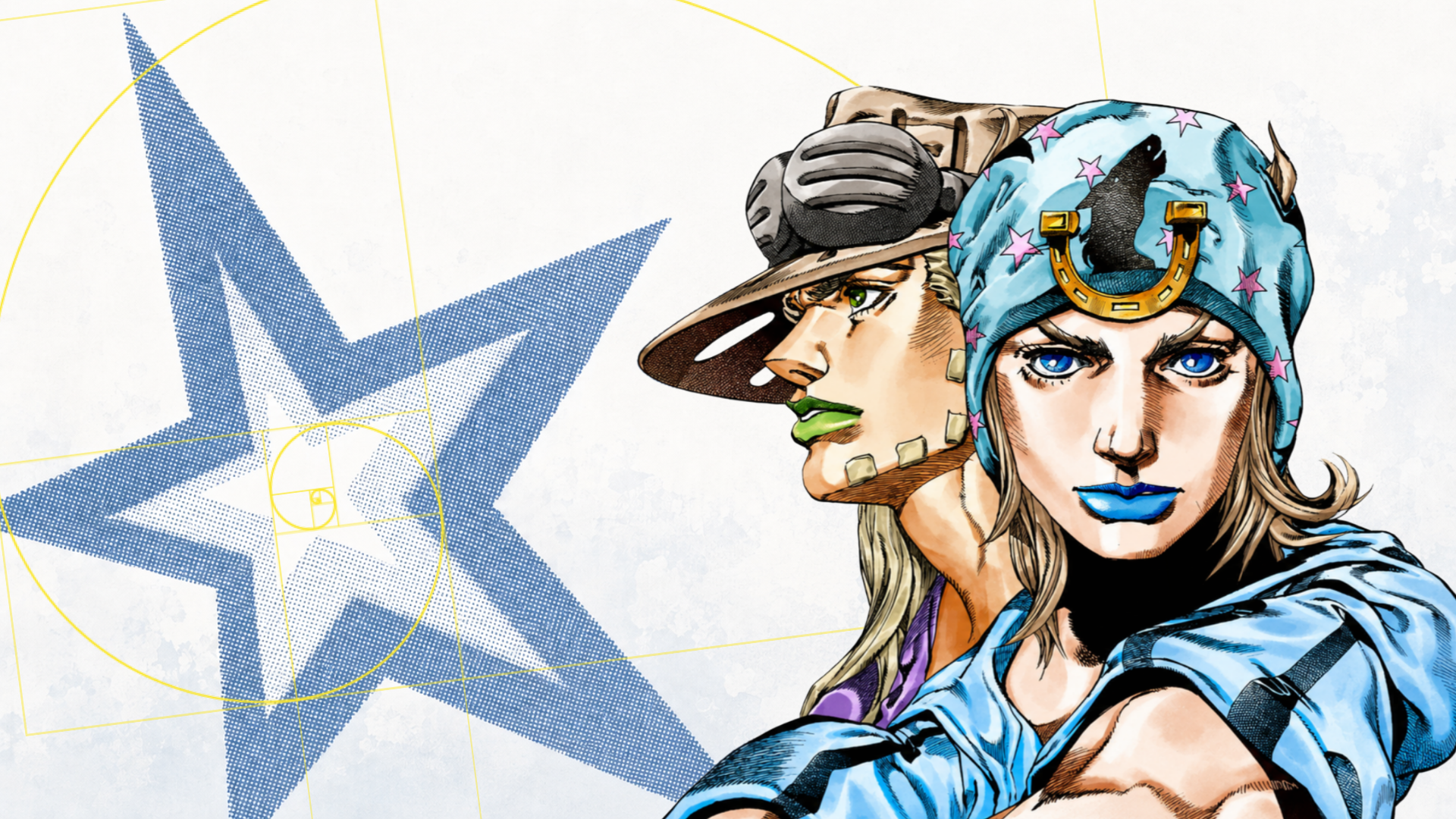
Few manga in the medium’s storied history carry the near-mythic reputation of Hirohiko Araki’s JoJo’s Bizarre Adventure: Part 7 – Steel Ball Run. Consistently jockeying for the runner-up spot on MyAnimeList’s all-time rankings—second only to Kentaro Miura’s Berserk—this trans-continental epic sits at the absolute zenith of graphic storytelling. Ever since the melancholic finale of Stone Ocean aired in late 2022, a singular, obsessive question has swept through anime conventions, Discord servers, and production industry rumor mills: When is David Production taking us to the starting line of the San Diego coast?
The anticipation is not mere nostalgia or routine sequel-lust; it is an acknowledgment that Steel Ball Run marks the moment Araki transcended his own stylistic boundaries. It represents a paradigm shift where classic Shonen Jump tropes were abandoned for the mature, morally ambiguous freedom of Ultra Jump. Yet behind the astronomical hype lies a daunting production reality. Bringing this 1890s horseback race across the American frontier to animated life is arguably the most terrifying technical hurdle in modern anime production.
The Seinen Evolution: Araki’s Narrative Reinvention
To understand the hunger for a Steel Ball Run anime, one must first recognize its radical departure from everything that preceded it. Following the cosmic universe reset orchestrated by Enrico Pucci in Part 6, Araki did not simply continue the Joestar bloodline—he hit the evolutionary restart button. Transported back to 1890, readers were presented with a historical reimagining that shed the adolescent pacing of mainstream battle manga in favor of a sprawling, dust-caked Western noir.
The transition from Weekly Shonen Jump to the monthly seinen imprint Ultra Jump during the manga’s serialization gave Araki breathable canvas space. Panels transformed from claustrophobic urban clashes to sprawling, panoramic landscapes filled with visceral brutality, psychological depth, and existential weight. The narrative engine—a grueling, 6,000-kilometer cross-country horse race with a $50 million grand prize—is merely the catalyst for an intricate web of espionage, religious philosophy, and personal redemption.
The Equestrian Nightmare: David Production’s Technical Crucible
David Production has been the custodian of Araki’s visual language since 2012, demonstrating an uncanny ability to translate his jagged, hyper-stylized line art, iconic color palettes, and famous onomatopoeic katakana onto the screen. However, Steel Ball Run presents an unprecedented operational crisis: horses.
The Dreaded Quadruped Trap
In traditional 2D animation, quadrupeds—and horses in particular—are notoriously grueling to animate. Their skeletal and muscular anatomy during trotting, galloping, and sudden deceleration demands immense anatomical precision and high frame counts. In Part 7, horses are not incidental background set dressing; they are central combatants, extensions of the riders’ wills, and narrative conduits. Dozens of mounts navigating canyons, snow drifts, and rivers while caught in Stand skirmishes would utterly collapse a standard television production schedule if rendered purely by hand.
The CGI Hybrid Dilemma
The inevitable industry consensus points toward a heavy reliance on 3DCG models for the horses, a method frequently deployed by studios tackling massive cavalry clashes, such as MAPPA on Attack on Titan or Studio Signpost on Kingdom. Yet the JoJo fandom’s discerning eye expects organic integration. David Production must avoid the jarring, weightless uncanny valley that plagued early 3DCG experiments in the industry. For Steel Ball Run to succeed, the studio will likely need to develop a dedicated pipeline: proprietary 3D rigs featuring hyper-dense cel-shading layered beneath hand-drawn close-ups of riders, sweat, mane physics, and kicking dirt. The time required to develop and stress-test this engine largely explains the deliberate radio silence surrounding the project.
Johnny and Gyro: A Dual Study in Broken Men
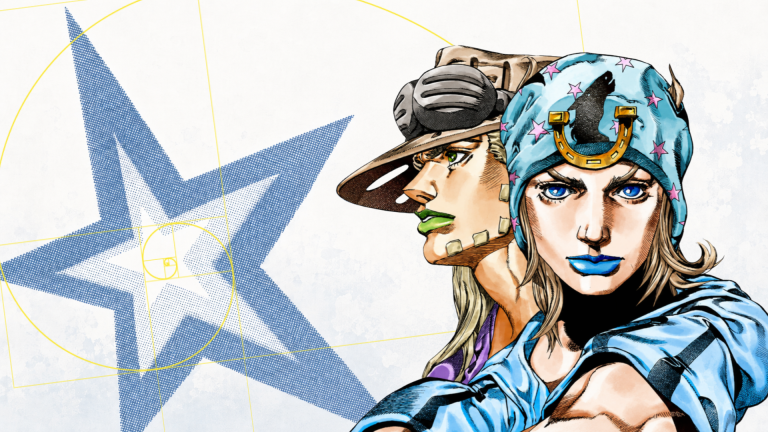
While the kinetic action of Stand battles remains a trademark, the emotional core of Steel Ball Run rests upon the peerless dynamic between Johnny Joestar and Gyro Zeppeli—arguably the best-written duo in comic history.
Johnny Joestar’s Moral “Zero”
Unlike Jonathan Joestar’s unwavering chivalry or Jotaro Kujo’s stoic righteousness, Johnny Joestar is fundamentally broken. A former horse-racing prodigy whose reckless hubris ended with a bullet in his spine, Johnny begins his journey not seeking to save the world, but simply to claw his way back to “zero.” He is bitter, manipulative, and possesses what Araki chillingly visualizes as the “dark determination”—the pitch-black flame in a man’s eyes when he is fully willing to murder to achieve his goals. Watching his Stand, Tusk, evolve across four distinct Acts mirrors Johnny’s agonizing psychological crawl out of self-loathing.
Gyro Zeppeli and the Philosophy of the Spin
Serving as mentor, rival, and brother-in-arms, Gyro Zeppeli provides the narrative counterweight. Exiled from the Kingdom of Naples, Gyro is an executioner’s son carrying the burden of an unjust child execution he hopes to stay via race winnings. Through Gyro, Araki reinterprets Ripple (Hamon) into the Spin—a profound martial science rooted in the Golden Ratio, Fibonacci sequences, and kinetic centrifugal force. The witty repartee, surreal running gags (such as the infamous “Pizza Mozzarella” song), and gradual philosophical bond between these two men humanize an otherwise brutal journey through the wasteland.
The Holy Corpse and the American Manifest Destiny
As the race progresses, the plot pivots from an athletic derby to a metaphysical geopolitical conspiracy. The ultimate prize is revealed to be the scattered, mummified relics of the Holy Corpse—implied to be Jesus Christ—which grant god-tier Stand abilities to whoever possesses them.
Enter Funny Valentine, the 23rd President of the United States and one of fiction’s most compelling antagonists. Armed with Dirty Deeds Done Dirt Cheap (D4C)—a Stand that allows him to traverse parallel dimensions—Valentine does not operate out of megalomaniacal cruelty, but out of an unyielding, hyper-nationalist belief in American exceptionalism. His declaration to seize the “first napkin” and guarantee his nation’s eternal dominance presents a chilling thematic paradox: Valentine’s motivations are patriotic, yet his methods leave a trail of collateral destruction. Translating this complex philosophical debate, steeped in historical revisionism and supernatural horror, will demand delicate tonal direction.
The Road Ahead: High Expectations and Release Strategy
Beyond the animation hurdles, David Production and Warner Bros. Japan must also navigate the distribution landscape. The controversial “batch release” strategy that Netflix utilized for Stone Ocean significantly dampened organic weekly community discussions, meme cultivation, and widespread cultural resonance. For an odyssey as grand as Steel Ball Run, fans and critics alike are clamoring for a return to traditional weekly broadcasts, allowing each race stage and tactical Stand duel to dominate the cultural conversation over an extended, multi-cour run.
Adapting Part 7 is David Production’s ultimate trial by fire. If handled with the reverence, technical innovation, and artistic audacity it warrants, the Steel Ball Run anime will not merely be another celebrated entry in the JoJo pantheon—it will stand as an epochal landmark for the entire medium of Japanese animation.
What are your expectations for the animated iteration of the Steel Ball Run race? Do you believe David Production can flawlessly blend 2D and 3D animation for the horses, or should they take all the time they need? Let us know in the comments below, and stay tuned to Wibux.com for breaking updates on the JoJo universe.