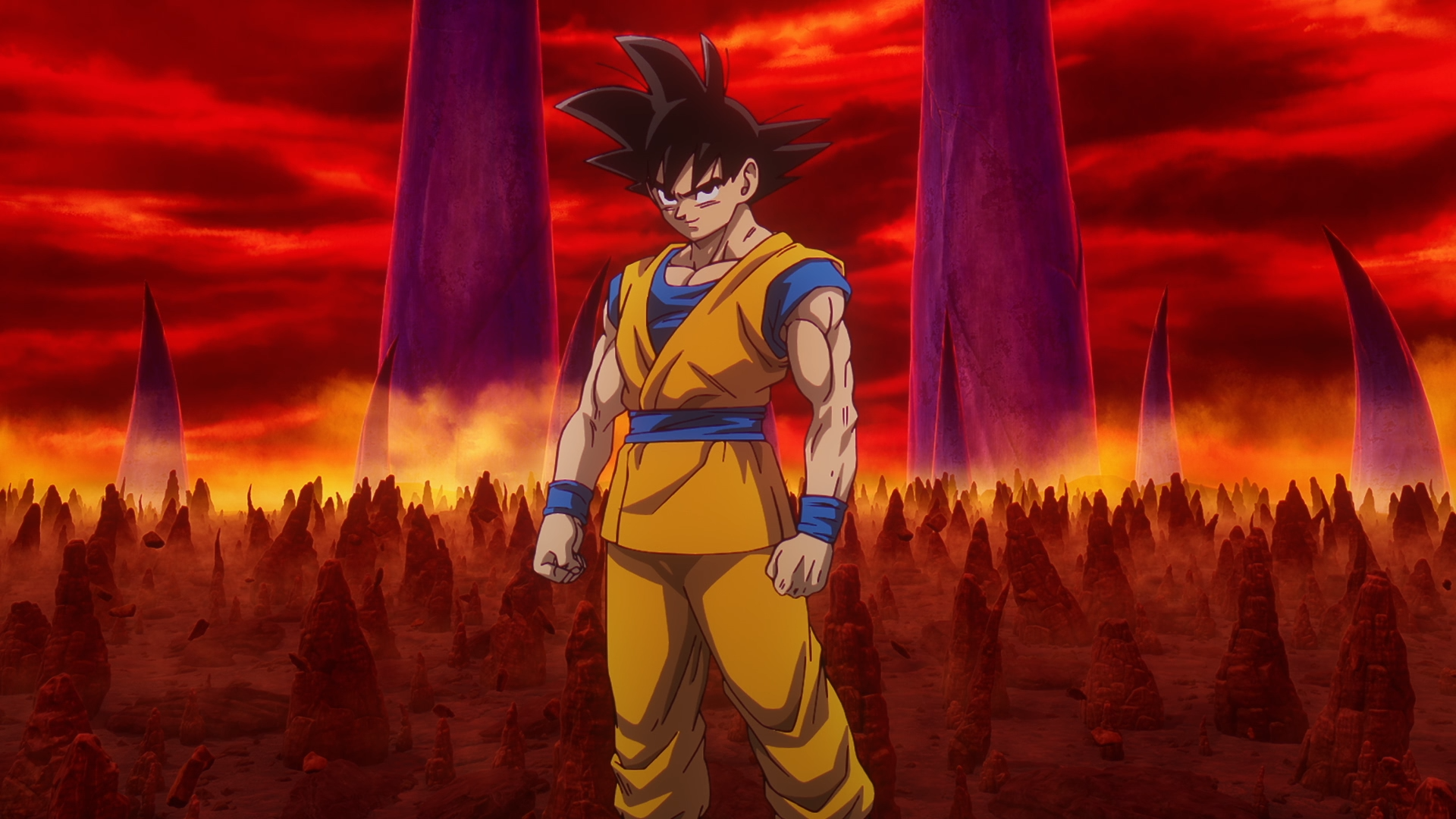
There is an unspoken, reverent weight hanging over the premiere of Dragon Ball Daima. What was originally teased as a vibrant, celebratory spin-off to commemorate the 40th anniversary of the world’s most influential shonen franchise transformed overnight into something infinitely more poignant. Following the tragic passing of master manga visionary Akira Toriyama in March 2024, Daima ceased being merely the next animated chapter; it became the maestro’s final grand offering. For fans across four decades, the premiere is both a celebration and an emotional wake, offering one last unadulterated glimpse into Toriyama’s playful, eccentric, and peerlessly imaginative universe.
Far from feeling like a hollow corporate continuation, the premiere episode delivers an unexpected statement of intent. By bypassing the endlessly escalating cosmic arms race of Dragon Ball Super, Daima takes a sharp, confident detour backward into adventure, tactical martial arts, and unexplored mythical corners. Goku and his companions have been rendered small, but the ambition behind this project is gargantuan.
Unlocking the Makai: Toriyama’s Grand Expansion of the Demon Realm
For decades, the “Demon Realm” (Makai) stood as one of the most tantalizing blind spots in Dragon Ball cosmology. Aside from glimpses during the Dabura skirmishes of the Majin Buu Saga and non-canon side jaunts in games like Super Dragon Ball Heroes, Toriyama rarely shone a direct light into the abyss. Daima wastes zero time rectifying this, dedicating much of its premiere to establishing the sociopolitical hierarchy, bizarre ecology, and eerie architecture of this forgotten dimension.
A Courtroom of Scheming Underdogs
The premiere grounds itself through the eyes of King Gomah, the newly elevated supreme sovereign of the Demon Realm, alongside his scheming aide Degesu and the delightfully eccentric scientist Dr. Arinsu. In a stroke of narrative brilliance, these characters observe the climatic events of the Majin Buu arc via ancient, archival monitoring crystals. To them, Goku and the Z-Fighters are not celebrated saviors; they are terrifying, god-slaying anomalies capable of unraveling galactic balances.
Gomah’s terror feels refreshingly grounded. Rather than attempting to overpower Universe 7 with raw destructive might, he opts for bureaucratic subversion. Toriyama introduces the structural division of the Demon Realm into three distinct worlds, safeguarded by enigmatic guardians known as the Tamagami, who protect a separate set of mysterious Dragon Balls. This clever piece of myth-making re-contextualizes the entire franchise’s foundational artifact, proving that even after four decades, Toriyama could effortlessly weave new tapestry without breaking existing continuity.
Beyond the “Mini” Gimmick: Rekindling Pure Martial Arts and the Power Pole
When Toei Animation first revealed that Goku and his friends would be turned into children, cynical groans reverberated through social media. The collective fandom suffered immediate flashbacks to Dragon Ball GT’s infamous de-aging plotline. However, Daima executes this shift with an entirely different thematic ethos. This is not a regressive stunt; it is an ingenious mechanical reset.
By shrinking the cast, Toriyama and the creative team effectively strip the heroes of their god-like, multi-dimensional power-scaling. There are no earth-shattering God Ki transformations or galaxy-level ki blasts here. Instead, Goku is forced to adapt his fighting style back to spatial awareness, raw physical conditioning, and center-of-gravity balance. The triumphant return of the Nyoibo (Power Pole) is not mere nostalgia-bait; it serves as a practical, kinetic extension of Goku’s newly limited reach.
Psychologically, the premiere highlights the infectious genius of Goku’s character. While Vegeta simmers in furious indignity and Piccolo assesses the crisis with stoic pragmatism, Goku views his miniature body with wide-eyed, giddy curiosity. He tests his shortened limbs, chuckles at his shifted center of mass, and immediately seeks ways to push his martial prowess within new parameters. It reminds us why the world fell in love with Son Goku in 1984: he is not a superhero driven by brooding trauma, but an eternal student of combat who sees every obstacle as an irresistible game.
Cinematic Precision: Toei Animation’s Kinetic Rebirth
Visually, the premiere of Daima is an absolute revelation. Toei Animation, often scrutinized during the early broadcast days of Super for inconsistent quality, has treated this production with the prestige of a mainline theatrical feature. Under the dual directorial stewardship of veteran Yoshitaka Yashima (whose kinetic fight framing defined iconic franchise moments) and Aya Komaki (fresh off her celebrated work on One Piece Film: Red), the aesthetic lands in a golden pocket between modern polish and hand-drawn retro charm.
The Shintani Philosophy Reborn
The visual continuity borrows heavily from the fluid, softer linework established by Naohiro Shintani in Dragon Ball Super: Broly, augmented by legendary character designer Katsuyoshi Nakatsuru. Gone are the stiff, hyper-shaded, plastic textures of the 2010s. In their place, Daima embraces:
– Expressive Character Acting: Micro-expressions, comedic physical beats, and exaggerated squash-and-stretch animation that capture Toriyama’s vintage Dr. Slump roots.
– Impact-Driven Choreography: Hand-to-hand brawls prioritize weight, bone-crunching choreography, and fluid momentum over sterile laser-light shows.
– Atmospheric Worldbuilding: The Demon Realm is rendered in rich, evocative color palettes—deep purples, sulfur yellows, and moody ceruleans—contrasting brilliantly with Earth’s familiar, sunlit landscapes.
The Bittersweet Swansong: Toriyama’s Playful DNA Laid Bare
What stuns the most about Daima’s premiere is how profoundly Toriyama’s unique voice echoes through every frame. Modern shonen has evolved into a realm of grim psychological stakes, intricate power systems, and apocalyptic angst. Toriyama, conversely, was always a comedic artist at heart who accidentally redefined the action genre. Daima feels like an unapologetic celebration of his idiosyncrasies.
From the whimsical vehicle designs that look like retro-futuristic bugs to the casual, absurd dialogue exchanges over snacks during world-ending events, Toriyama’s DNA permeates the story. It is a work crafted by a creator who was clearly having fun, unburdened by corporate dictates or fan expectations to constantly introduce a stronger, multi-colored hair transformation. Watching Goku journey into an unknown magical expanse evokes the pure, intoxicating thrill of the original Dragon Ball quest for the Dragon Balls in Mount Paozu.
Verdict: A Masterclass in Legacy and Adventure
Dragon Ball Daima’s premiere is far more than a safe anniversary celebration; it is a vital, energetic reclamation of the franchise’s adventurous soul. It bridges forty years of history while paying ultimate tribute to Akira Toriyama’s singular genius. By grounding its scale, revitalizing its production values, and bravely taking its cast into the bizarre unknown of the Demon Realm, Daima promises to be the heartfelt, kinetic swansong that the legendary creator deserved all along.
How did you react to Goku’s return to his Power Pole, and what are your wildest theories about the King of the Demon Realm? Sound off in the comments below, and stay tuned to Wibux.com for our weekly Dragon Ball Daima episode analyses and deep-dive lore breakdowns!