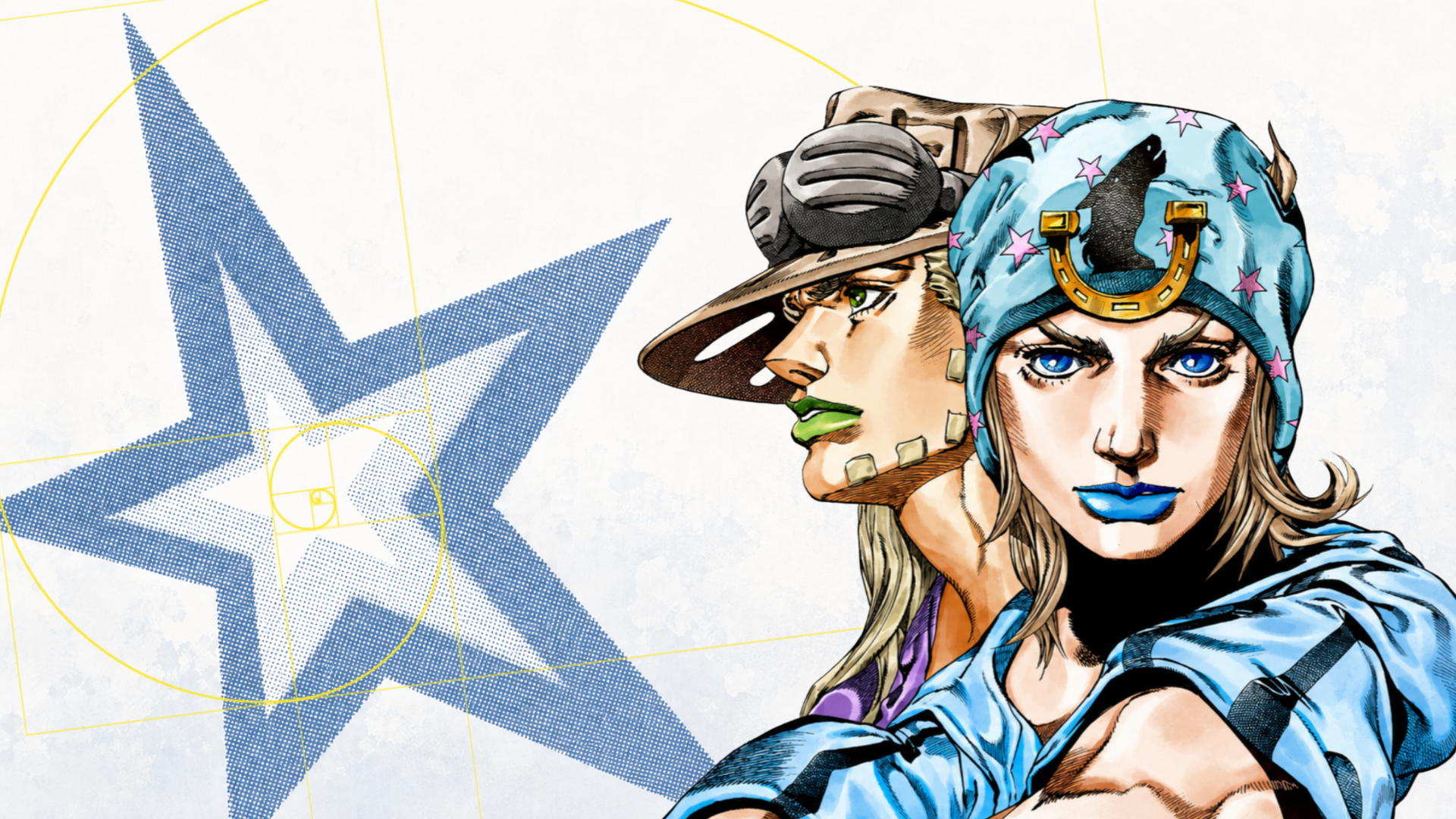
Ever since the melancholic final chords of Roundabout faded into the ocean breeze at the conclusion of Stone Ocean, a collective, breathless murmur has echoed across the anime landscape: When does the race begin? For more than a decade, Hirohiko Araki’s JoJo’s Bizarre Adventure: Steel Ball Run has occupied an almost mythical status among manga connoisseurs. Consistently ranking alongside masterpieces like Berserk and Vinland Saga in critical acclaim, Part 7 is not merely the continuation of a beloved franchise; it is Araki’s undisputed magnum opus. As David Production catches its breath following an uninterrupted ten-year gauntlet of adapting Parts 1 through 6, the rumblings surrounding a Steel Ball Run anime adaptation have transitioned from hopeful fan theories to an industry-wide inevitability. Yet, tackling this trans-continental odyssey presents the studio with what might be the most daunting production trial in modern anime history.
A Trans-Continental Crucible: The Seinen Rebirth of Hirohiko Araki
To understand the unprecedented fervor surrounding Steel Ball Run, one must appreciate its historic context. Serialized initially in Weekly Shonen Jump before migrating to the monthly, mature pages of Ultra Jump in 2005, Part 7 signaled a dramatic metamorphosis in Araki’s storytelling. Freed from the pacing demands and editorial censorship of shonen publishing, Araki completely reinvented his canvas. The result is a sprawling, dust-choked, supernatural western set in 1890, chronicling a grueling 6,000-kilometer cross-country horse race from San Diego Beach to New York City with a staggering fifty-million-dollar prize on the line.
Far beyond the adrenaline of its high-stakes sports structure, Steel Ball Run is a thematic exploration of existential desperation, divine providence, and ruthless ambition. The race is quickly revealed as a front for something far more sinister: the retrieval of the scattered, mummified relics of the Holy Corpse. In this new universe—divorced from the generational Joestar lineage of the previous continuity—morality is completely painted in shades of charcoal. There are no righteous Crusaders saving the world out of noble obligation here. Instead, every participant gallops across the American frontier driven by trauma, greed, patriotism, or survival.
The Dynamic of the Damned: Johnny Joestar and Gyro Zeppeli
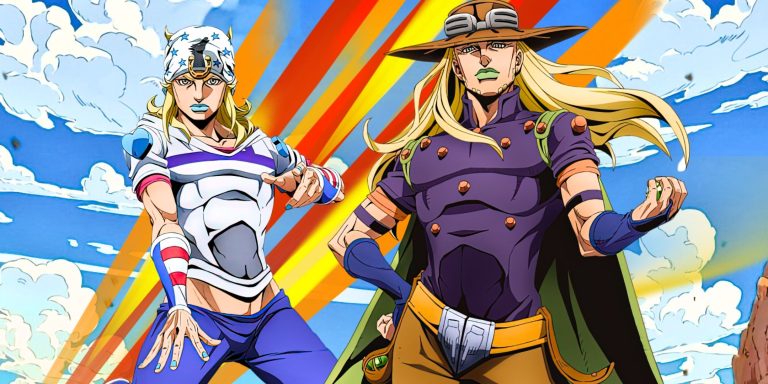
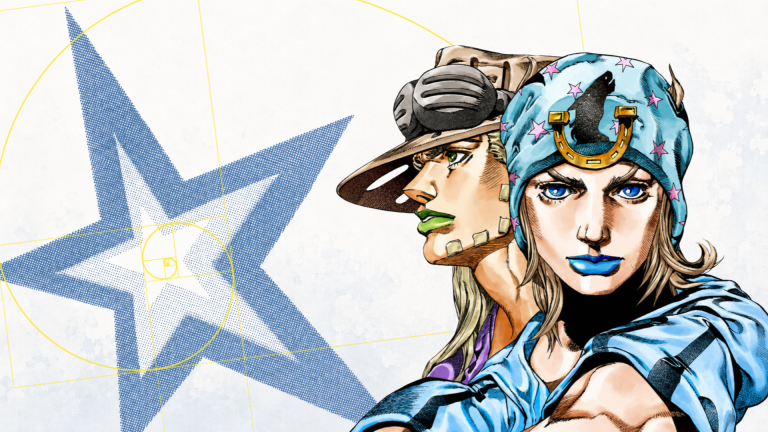
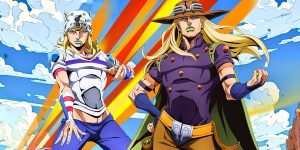
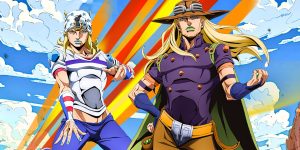
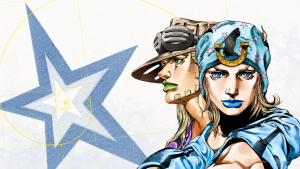
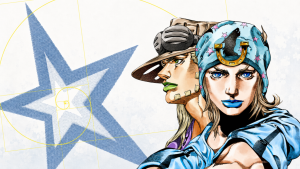
At the beating heart of this frontier epic lies the most brilliantly realized partnership Araki has ever penned. In subverting the standard shonen protagonist, Araki introduced Johnny Joestar, a former prodigy jockey whose meteoric rise was cut short by arrogance, leaving him paraplegic, deeply cynical, and emotionally hollowed out. Johnny is not a typical hero; he possesses what the narrative repeatedly calls the “dark determination”—an unhesitating willingness to kill and sacrifice anything to regain what he lost. He doesn’t seek to save humanity; he simply wants to go from “negative to zero.”
The Steel Sphere and the Sacred Geometry
Enter Gyro Zeppeli, a disgraced Neapolitan executioner’s son armed with twin revolving steel spheres, a golden grill bearing the words “GO! GO! ZEPPELI,” and a razor-sharp, eccentric wit. Where Johnny is brooding and pragmatic, Gyro is bombastic yet burdened by an agonizing moral duty to save an innocent child slated for death in his homeland. Their rapport—punctuated by campfire gags about days of the week, impromptu musical numbers about mozzarella, and lethal tactical standoffs—forms the emotional backbone of the entire narrative.
Crucially, Part 7 dismantles and re-engineers the franchise’s power systems. Before Stands fully take center stage, Araki introduces the Spin: an ancient, physics-defying martial art harnessing the Golden Ratio. Watching Johnny slowly evolve his Stand, Tusk, through sequential “Acts” by learning the mathematics of nature’s spiral under Gyro’s mentorship offers an intensely satisfying mechanical and psychological journey. Translating this visual blend of sacred geometry, kinetic inertia, and kinetic combat into animation demands an unprecedented degree of stylistic precision.
The Equestrian Nightmare: David Production’s Technical Everest
There is a running joke among veteran animators that drawing a horse is the quickest way to end a director’s career. Animating a single quadruped requires complex anatomical calculations, dynamic muscle shifting, and rhythmic weight distribution. Now, multiply that difficulty by dozens of steeds thundering across sandstorms, blizzards, riverbeds, and canyon ravines at breakneck speeds, and you have the technical nightmare of Steel Ball Run.
David Production has rightfully earned its stellar reputation. Their transformative work across earlier parts established an industry gold standard for artistic flair, dynamic typography, and chromatic color shifts. However, producing twenty-four to thirty-nine episodes dominated by nonstop equestrian action pushes even the most prestigious studio pipelines to the brink. The community’s paramount concern is the integration of 3D CGI. While hybrid animation has made leaps and bounds—as demonstrated by Studio Orange or MAPPA’s intricate sequences—poorly weighted 3D models could completely shatter the visceral weight of Araki’s penmanship.
Insiders note that if David Production commits to adapting the race, it will necessitate an ambitious composite pipeline: meticulously rigged 3D models for sweeping wide-angle tracks, seamlessly blended with hand-drawn, highly expressive 2D close-ups for jockey maneuvers and Stand deployments. Balancing this budgetary and labor-intensive tightrope without succumbing to the production crunches that briefly marred Stone Ocean‘s release will dictate the project’s ultimate success.
The Saint, the President, and the Multiverse
An adaptation of Steel Ball Run is incomplete without addressing its phenomenal antagonist: Funny Valentine, the 23rd President of the United States. Driven by an uncompromising, chauvinistic philosophy to secure “the first napkin” and position America as the unchallenged pillar of global fortune, Valentine stands as one of anime’s most chillingly charismatic visionaries. His dimensional Stand, Dirty Deeds Done Dirt Cheap (D4C), introduces reality-shattering multiverse skirmishes that predate the current mainstream pop-culture obsession with alternate realities by over a decade.
The philosophical clash between Valentine’s utilitarian patriotism and Johnny’s raw, individualistic yearning for redemption culminates in some of the most emotionally devastating climaxes Araki has ever constructed. For David Production, realizing the surrealist visual horror of D4C’s spatial travel and the terrifying, transcendent velocity of Johnny’s ultimate Stand manifestation will be their crowning creative achievement.
The Verdict: Bracing for the Starting Gun
The appetite for Steel Ball Run has crossed the threshold from eager anticipation to pure cultural gravity. It represents a vital pivot point: the moment anime embraces Hirohiko Araki not just as an architect of flamboyant, camp-infused action spectacles, but as a world-class literary auteur capable of historical gravity, razor-sharp psychological depth, and visceral tragedy.
Whether David Production delivers an initial teaser tomorrow or two years from now, the horizon is clear. The starting pistol is cocked, the racers are positioned at the starting line in San Diego, and the world is waiting for the definitive western anime of our generation. Will the studio conquer the equestrian gauntlet, or will the weight of the Golden Ratio prove too heavy to bear? The journey across America approaches, and we are ready to take the ride.
What are your biggest hopes and fears for the Steel Ball Run anime adaptation? Do you think David Production can pull off the horses with hybrid 3D animation, or should they take a multi-year hiatus to animate it fully by hand? Drop your theories and favorite Gyro jokes in the comments below!