
There is a profound, almost sacred gravity surrounding the premiere of Dragon Ball Daima. For four decades, the late, incomparable Akira Toriyama dictated the visual grammar and comedic pulse of global shonen anime. When the master unexpectedly passed away in March 2024, the anime community was plunged into collective mourning, leaving fans worldwide wondering what his final creative statement would look like. The answer has arrived not as a somber retrospective, but as a dazzling, joyfully irreverent adventure that recaptures the very soul of his early works. Dragon Ball Daima is Toriyama’s definitive swansong—a project where he held unprecedented creative dominion over the story, character designs, vehicle schematics, and foundational worldbuilding. By whisking Goku and the Z-Fighters away to the treacherous, uncharted expanse of the Demon Realm, Daima establishes itself not as a nostalgic novelty, but as an essential, lore-expanding masterpiece.
The Shadow of the Demon Realm: Untangling Makai Lore
For decades, the Demon Realm (or Makai) lingered on the periphery of Dragon Ball canon. Outside of Dabura’s brief tenure as Babidi’s mind-controlled pawn during the Majin Buu Saga, and the sprawling, non-canon excursions found in spin-offs like Super Dragon Ball Heroes and the Xenoverse video games, Toriyama largely kept the subterranean multiverse veiled in mystery. The premiere of Daima immediately shatters that mystique, elevating Makai from an obscure cosmological footnote into the primary theatrical stage of the franchise’s 40th-anniversary celebration.
Beyond Dabura: King Gomah and the Mechanics of the Conspiracy
The premiere’s opening act functions as an audacious retrospective, reframing the catastrophic climax of the Buu Saga through the paranoid gaze of Makai’s ruling elite. Enter King Gomah, the newly minted sovereign of the Demon Realm, alongside his scheming aide Degesu. Watching archival footage of Earth’s greatest warriors annihilating Kid Buu, Gomah is seized by terror. Rather than seeking out an escalating confrontation of raw, apocalyptic power—a trope Dragon Ball Super indulged in relentlessly—Gomah’s countermeasure is hilariously pragmatic: collect Earth’s Dragon Balls and wish the Z-Fighters into harmless pint-sized children.
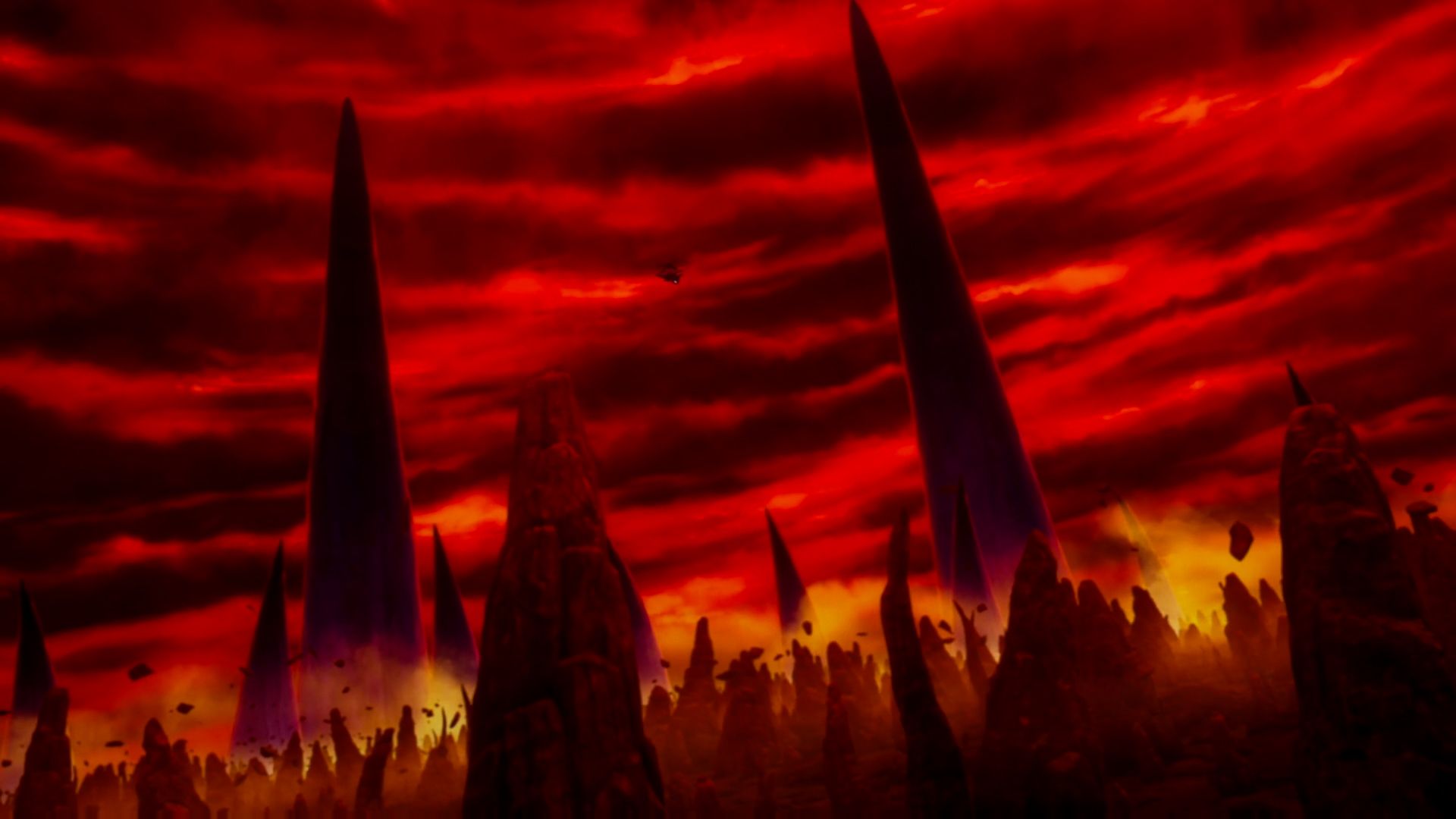
This narrative pivot is a stroke of Toriyama genius. It neatly sidesteps the infinite power creep that has plagued the franchise since the introduction of Ultra Instinct and divine deities. By dragging the cast down to the three-tiered Demon World—a surreal, atmospheric landscape ruled by capricious physics and bizarre biomes—the story shifts its genre from galactic warfare back to fantastical pulp odyssey.
The Art of the De-Aging: Narrative Gimmick or Thematic Rebirth?
When the initial teaser for Dragon Ball Daima dropped, cynical corners of the internet reflexively cried, “Dragon Ball GT 2.0.” However, the execution of Goku and company’s transformation (dubbed “Mini”) demonstrates an entirely different creative philosophy. Where GT alienated audiences by isolating Goku and relying on an accidental, stakes-free wish via the Black Star Dragon Balls, Daima treats the transformation as a calculated political demotion that affects the entire ensemble cast, including Vegeta, Piccolo, Bulma, and the Supreme Kai.
Recalibrating Character Psychology and Combat Weight
Goku’s psychological response to his diminutive stature tells you everything you need to know about Toriyama’s tonal North Star. Goku doesn’t despair; he giggles, tests his lowered center of gravity, and embraces the challenge. The de-aging directly destabilizes the fighters’ muscle memory. Decades of refined ki mastery, instinctual spatial awareness, and heavy-weight brawling are suddenly thrown into disarray. For Vegeta, it is a blow to his warrior pride; for Goku, it is the ultimate playground.
Crucially, this design choice facilitates the glorious, triumphant resurrection of the Nyoibo (the Power Pole). In stripping Goku of his ability to effortlessly shatter planets with casual energy volleys, the narrative forces him to revert to weapon-based martial arts. The Power Pole is no longer just a vintage relic; it is an ergonomic necessity. It grounds the combat, turning skirmishes into kinetic puzzles where reach, momentum, and physical leverage reign supreme.
Visual Alchemy: Toei Animation’s All-Star Pedigree
It is impossible to discuss the Daima premiere without praising the technical tour-de-force delivered by Toei Animation. Under the shared directorial helm of Yoshitaka Yashima (a legendary veteran animator from Dragon Ball Z) and Aya Komaki (celebrated for her visionary, emotionally charged direction on One Piece’s Wano Arc), Daima boasts arguably the most cohesive, aesthetically brilliant television debut the franchise has ever produced.
Working alongside character designer Katsuyoshi Nakatsuru—whose fluid, expressive lines were famously praised by Toriyama himself during the 1990s—the production team has abandoned the rigid, hyper-glossy digital sheen that alienated fans during the early stretches of Dragon Ball Super. Instead, Daima leans heavily into organic, hand-crafted visual storytelling:
- Choreography with Tangible Mass: Punches carry sickening momentum; footwork kicks up genuine environmental debris; and combat exchanges are staged with clear spatial geography rather than dizzying bursts of flashing lights.
- Toriyama’s Mechanical Precision: The premiere indulges heavily in Toriyama’s love for idiosyncratic vehicular engineering. Airships, teleportation planes, and demonic communication devices are animated with mechanical weight and meticulous cross-sectional detail.
- Vibrant Atmospheric Lighting: The Demon Realm is rendered not as a boring, red-skied hellscape, but as a rich ecosystem of bioluminescent flora, weird purple sands, and whimsical, shadowy architecture that feels pulled straight from an 80s fantasy manga.
The Bittersweet Resonance of Toriyama’s Farewell
The global community reception to Daima has been uniquely celebratory. Social media channels and fan forums have lit up not with bitter power-scaling debates, but with tears, laughter, and a sense of collective catharsis. Toriyama did not leave behind a monument to divine violence or universe-destroying gods; he left behind a love letter to curiosity, adventure, and the foundational thrill of the unknown.
Watching Goku scarf down oversized devil-fruits, marvel at absurd alien creatures, and playfully spar against oddball monsters reminds us why we fell in love with this franchise in the first place. Dragon Ball didn’t conquer the world solely because Goku could punch hard; it conquered the world because Toriyama understood how to infuse genuine heart, juvenile wonder, and timeless martial arts philosophy into every frame. Daima feels deeply, unapologetically pure—an auteur playing in his personal sandbox one last time, completely unburdened by commercial expectations.
Final Verdict: A New Golden Era for the Franchise
Dragon Ball Daima’s premiere is a triumphant, emotionally resonant home run. It honors forty years of sprawling shonen history while boldly pivoting away from modern franchise fatigue. By steering the narrative toward the unexplored borders of the Demon Realm, grounding Goku’s move-set, and investing in peerless animation talent, the series sets a high-water mark that modern anime productions will struggle to match.
Toriyama’s curtain call is a magnificent adventure waiting to unfold. As Goku adjusts his belt, twirls his Power Pole, and steps through the threshold into Makai, we aren’t just watching a new anime arc—we are witnessing the enduring immortality of an artist who shaped our collective childhoods.
Over to you, Wibux readers: How did you react to seeing Goku wield the Power Pole again? Does Daima’s return to adventure-focused martial arts surpass the cosmic stakes of Dragon Ball Super? Drop your thoughts, theories, and emotional reactions in the comments below!